
Having seen so many movies, made note of your favorite directors, and developed crushes on certain actors and actresses, do you ever watch a movie convinced that one of the performers on-screen is—contrary to the credits you’ve just read—another actor entirely? You’re not alone. What follows is a completely subjective list of acting doppelgängers, people who, to my eyes, bear more than a passing resemblance to one of their cohorts. I call some sets “twins,” and it’s been a bit of a struggle finding photos that can accurately show you how I could ever mistake them for each other. Admittedly, though, I’m so familiar with some of these performers that it’s impossible for me to confuse them with anyone else. Most of the pairs below represent struggles I had in my childhood identifying who’s who. Please feel free to sound out in the comments section below the pairs who regularly confuse you, too. (For the record, I extracted these photos from Google Images after conducting basic searches.)
 Let’s start things off with a pair of actresses whose
  heydays were in the 1980s. Honestly, I couldn’t have asked for better photos to bring out the physical similarities between Kathleen Turner (left) and Kelly McGillis, as she hangs on Top Gun (Tony Scott, 1986) co-star Tom Cruise. They’re both sporting off-the-shoulder tops, accentuating their wavy hair. Both stars were sex symbols in their day. Turner made her big-screen debut as a femme fatale in Body Heat (Lawrence Kasdan, 1981) and later embodied the curvaceous cartoon Jessica Rabbit with just her husky voice in Who Framed Roger Rabbit? (Robert Zemeckis, 1988). Besides Top Gun, McGillis was in Witness (Peter Weir, 1985), as Harrison Ford’s Amish love interest, and in The Accused (Jonathan Kapaln, 1988), as the attorney for Jodie Foster’s brutal rape victim, a decidedly less sexy role. I should note that I only think they look alike when they were younger, as today the women couldn’t look any more different. Presently, we don’t see either actress much, particularly McGillis since she came out of the closet in 2009. Turner, who suffers from rheumatoid arthritis, has been busy walking the floorboards, notably starring in a theatrical production of Who’s Afraid of Virginia Woolf? in 2005.
 Next we have the British actor Ben Miller—not to be confused
  with Ben Miles of Coupling fame—and his lookalike the Welsh comic Rob Brydon (right). I first spotted Miller in Johnny English (Peter Howitt, 2003) as Rowan Atkinson’s sidekick Bough, and since he’s made a name for himself playing super-serious corporate or governmental honchos, including James Lester on the silly BBC sci-fi series Primeval (2007-2011). Rob Brydon, on the other hand, I’m much more familiar with. He starred in the 2000-2003 series Marion & Geoff as a taxi driver who records confessional monologues while stalking outside the residence his ex-wife, Marion, shares with the man she left him for, Geoff, of course. You might know Brydon as “Himself” in the Michael Winterbottom classics Tristram Shandy: A Cock and Bull Story (2005) and The Trip (2010), opposite Steve Coogan, who also plays a version of himself in those movies. It may not be easy to tell from these thumbnail photos (the only way I could publish images of all the doppelgängers), but Miller and Brydon look so much alike that when you search Google Images for pictures of either one, “Ben Miller Rob Brydon” is a suggested search term. Hell, even I needed to look multiple times to identify who’s who in this image that I found online with the actors already juxtaposed:

 Speaking of Steve Coogan, I think he looks a lot
  like Jack Davenport (right), from the Pirates of the Caribbean blockbusters. He played Commodore Norrington who so wanted Keira Knightley’s Elizabeth Swan but lost out to Orlando Bloom and Johnny Depp’s swashbucklers. He’s currently on the NBC backstage musical soap opera Smash (2011-present), which I’ve never seen. As a fan of Steve Coogan’s work, including I’m Alan Partridge (1997, 2002) and Saxondale (2006-2007) to name but a few, I should make it clear that I don’t actually mistake these actors for each other. Searching for comparable photos was tricky, as Coogan typically has long, wavy hair these days, and Davenport has short and spiky hair. There’s something about the way they play pompous or clueless that makes me sense a closeness. At right, Davenport appears in character as the immature Steve from the British comedy series Coupling (2000-2004), and Coogan, at left, is the arrogant TV presenter Tony Wilson in Winterbottom’s 24 Hour Party People (2002), which is my favorite film.
 My sister is going to shake her head when she reads this:
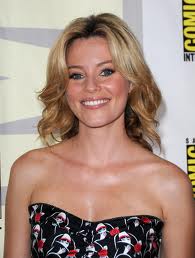 I continually mistake two actresses who are on the rise, Rachel McAdams (left) and Elizabeth Banks. My sister thinks I’m crazy, but hear me out. It has to do with their toothy grins, broad jawlines, and wide foreheads. It doesn’t help any that they regularly appear as blondes (I believe they’re both natural brunettes) and balance their filmographies with pretty much equal helpings of comedy and drama these days. In other words, when I watch a film that stars either one of them, I imagine that the other may have also been on the casting director’s list of actresses for the same role. For example, despite writer-director Woody Allen’s more pointed search for actors to fill parts in his almost yearly produced movies, I can see Elizabeth Banks as Inez, Owen Wilson’s shrill and obnoxious fiancee in Midnight in Paris (2011), a role that McAdams played. Similarly, isn’t it possible to see McAdams in Man on a Ledge (Asger Leth, 2012) or People Like Us (Alex Kurtzman, 2012) instead of Banks? Or is my sister right; am I crazy?
 Let’s move Down Under and take a look at Noah Taylor (left)
  and Ben Mendelsohn. These Aussie actors are hardly ever up for the same parts nowadays, their physiognomies seemingly worlds apart. Mendelsohn makes for a much more imposing presence now, having played baddies in the superb 2010 Australian crime family drama Animal Kingdom (David Michôd) and the straight-to-DVD Nicolas Cage-Nicole Kidman starrer Trespass (Joel Shumacher, 2011), whereas Taylor looks like he’s withering away nowadays, as evidenced in Tim Burton’s Charlie and the Chocolate Factory (2005) and Richard Ayoade’s fun directorial debut Submarine (2010), movies in which he played each of the teen protagonists’ withdrawn dad. When I was younger, I used to mistake them for each other all the time (it’s in their mouths and speech!), but now they probably couldn’t be any more different. By the way, to add to the confusion, they have both appeared in the same films, including The Year My Voice Broke (John Duigan, 1987) and The New World (Terrence Malick, 2005).
 In much the same way that time has made Noah Taylor and
  Ben Mendelsohn look less and less alike, so too has it placed the doppelgängers Henry Thomas and Jeremy Davies on opposite ends of the spectrum. I guess what I’m trying to say is that today, the skinny child-star Thomas (left) has put on weight, particularly in his face, while Davies seems only to have gotten thinner and thinner. But look at them in these old photos; don’t they at least look like brothers? At least grant me that Thomas looks more like Davies than he does Brad Pitt or Aidan Quinn, who both played his older siblings in the classic melodrama Legends of the Fall (Edward Zwick, 1994). We haven’t seen much of Thomas lately, but Davies plays the sniveling snake Dickie Bennett on FX’s Justified (2010-present), a show whose just-aired third season I tried several times to watch but just couldn’t get into. I think these guys resemble each other because they have the same face shapes and they have been in films where they weren’t, shall we say, the manliest of men. See how soft-spoken Thomas is in I Capture the Castle (Tim Fywell, 2003) and Davies is in CQ (Roman Coppola, 2001).
 The next pairing arrives courtesy of my dad,
  who hit the nail on the head when he said that the English actresses Gabrielle Anwar (left) and Emily Blunt look an awful lot alike. It’s impossible to mistake them, really, as there are more than thirteen years between them, but the similarities in their features are striking. It all hinges on their mouths, though Anwar may have a greater overbite than Blunt (sorry, there’s no nicer way of putting it!). If you do a Google image search for each woman, you will see how they both prefer to pout when posing on the red carpet, and neither likes to give big, toothy smiles (yes, these stills are something of a rarity on Google). Anwar had a bigger film career in the 1990s, appearing in such hits as Scent of a Woman (Martin Brest, 1992) and The Three Musketeers (Stephen Herek, 1993), which was beloved in my childhood. She has since re-found fame on the USA TV series Burn Notice (2007-present). Blunt, on the other hand, has been on the ascendant since her breakout role in The Devil Wears Prada (David Frankel, 2006).
 A few nights ago, I caught, again, Dutch writer-director
 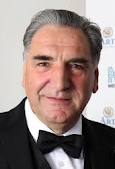 Marleen Gorris’s Oscar-winning Antonia, better known in English as Antonia’s Line (1995). Watching Jan Decleir, the famous Dutch actor (left), I couldn’t believe how much he looks like the beloved English actor Jim Carter, probably best known as Mr. Carson, the butler of Downton Abbey (2010-present), ITV and PBS’s pop culture phenomenon about the fading British aristocracy at the beginning of the 20th century. But oh, how do I love Jim Carter! He’s in everything: Shakespeare in Love (John Madden, 1998); Cranford (2007, 2009), which is one of my favorite British miniseries; and Bright Young Things (Stephen Fry, 2003), where he makes a hilarious cameo. I haven’t seen even the smallest percentage of Decleir’s many credits, but I remember him especially from Character (Mike van Diem, 1997), which also took home the Academy Award for Best Foreign Language Film (for the Netherlands). The actors are roughly the same age (Decleir is two years older); isn’t their resemblance uncanny?!
 So far, all of these acting doppelgängers have been
 contemporaries. They have all lived in the same era (our current time). But now I want to offer a different kind of comparison. Turner Classic Movies has featured Englishman Leslie Howard in marathons of his movies every Tuesday night this month. Although his credits span from the 1910s up to 1942 (his last movie was the Howard-directed R.J. Mitchell biopic The First of the Few aka Spitfire, which premiered in the U.S. less than two weeks after he died, his plane shot down by Germans), I see a lot of the actor Michael Fassbender in him. Catching the hilarious comedy Stand-In (Tay Garnett, 1937) on TCM, I was struck by how Howard’s uptight New York-based banker, out of his element as the head of a struggling movie studio in Hollywood, reminded me of Fassbender’s suave British Lieutenant Archie Hicox in Inglourious Basterds (Quentin Tarantino, 2009). They’re very different characters, but the way they carry themselves seemed very similar to me. And the more I studied Howard, who I might add, is probably most recognizable as Ashley in Gone with the Wind (Victor Fleming, et. al, 1939), the more I could discern Fassbender’s affinities to him: they both have very long, narrow visages with tall foreheads; extra slim, long, and narrow torsos; and when Fassbender plays posh Englishmen (or androids), as in Basterds or Prometheus (Ridley Scott, 2012), he sounds a lot like Howard, who also directed and starred in Pygmalion (1938) as the condescending Professor Henry Higgins. My DVR is virtually full of Howard movies; I’m as drawn to him as I am to the magnetic Fassbender.
 Since I’m in an historical mood, I thought I would point
  out that I have actually confused the younger versions of Karen Allen (left) and Brooke Adams. Allen is probably most known for playing Marion Ravenwood in Raiders of the Lost Ark (Steven Spielberg, 1981), a role she later reprised in Indiana Jones and the Kingdom of the Crystal Skull (Spielberg, 2008), and Jeff Bridges’s alarmed wife in Starman (John Carpenter, 1984). Adams is two years older and has more credits from the 1970s, including her starring role in Terrence Malick’s debut Days of Heaven (1978). I could never remember that it was Adams in Heaven and not Allen, Allen in Starman and not Adams. Both actresses have widely spaced eyes, wide faces with high cheekbones, and dimples in their chins. Not to mention, they both have pretty low voices. They don’t look so alike these days, and they haven’t been productive in recent years.
 This last pair of celebrity lookalikes aren’t actors. Well, one is: Robert Carlyle (left), the prolific Scottish thesp best known for his stunning turn as Begbie in Trainspotting (Danny Boyle, 1996), which is incidentally one of my favorite films of all time. His doppelgänger? Hockey great Wayne Gretzky!
 From 1979 to 1999, he played with one of the four following teams: the Edmonton Oilers, LA Kings, St. Louis Blues, and NY Rangers. If you cannot see the resemblance, I don’t know what to say. But a little back-story is in order. I really should credit my dad with this comparison because he refers to Carlyle, jokingly, as “Wayne Gretzky.” He learned of Carlyle when the actor starred in the 1997 British sleeper hit The Full Monty (Peter Cattaneo), where he wore his hair blond, thereby more closely resembling a young Gretzky. So whenever he catches a glimpse of him today, usually on my TV screen, he’ll ask, “Who’s in this? Oh, Wayne Gretzky!” even though Carlyle, to my knowledge, hasn’t been blond since. You can currently check him out on ABC’s Once Upon a Time (2011-present), where he looks like the ghost of his former self. Whereas Carlyle has turned hauntingly thin, Gretzky, who’s less than four months older, has filled out more in middle age.





 CINE FEEL YEAH