Movie Travel Diary: New York City

The first photo I ever took in NYC, it’s of the Washington Square Arch in the park of the same name. The fence around it expresses how unwelcoming we found the city to be in May 2008. Just over one year later, I would start studying at New York University, also in Greenwich Village.

Alongside London and Paris, New York City is one of the most cinematic cities in the world. It is such a frequent backdrop for film-stories that you might be tricked into thinking that you know the place from these audiovisual documents alone. Directors such as Martin Scorsese, Woody Allen, and Spike Lee have, until recently, made their names producing movies set there, and in turn, they have vividly shown us what life in the Big Apple is or can be like. Perhaps owing to its density and diversity, New York City is a versatile setting for different kinds of films: police detective stories, romantic comedies, post-apocalyptic sci-fi actioners, period costumes dramas, family melodramas, coming-of-age character studies, and corporate thrillers, to name but a handful. Hell, NYC has even hosted a western: The Cowboy Way (Gregg Champion, 1994). So, you see, there is no one definitive handle on New York City.

That being said, it’s time to take stock of how the city I know from personal experience has been represented on-screen. Before moving there in August 2009 to attend graduate school at New York University, I had only been to New York twice: first in May 2008 (the week-long trip with my sister was a college graduation gift from my father) and later in July 2009 with my dad to find a place to live there. Coming of age, I was embarrassed that I had never been to “The Greatest City in the World,” or so says practically everyone in our society. Eventually, I embraced the irony (for I like to think of myself as an urban rather than suburban person) and learned to laugh at my “cultural handicap.” Although New York’s only 225 miles away from home and Los Angeles is over 3,000 miles west of it, I had been to the latter city first!

Honestly, the only scene on our 2008 trip that I remember being awed during was when the huddle of skyscrapers came into view as our bus slowly approached the Holland Tunnel. Oh, I was so excited to finally set foot in New York City! But for whatever reason, my sister and I were unimpressed with NYC. It probably had to do with the heat and humidity, the horrendous stench that follows you everywhere you go (the one thing I said, upon moving away from NYC, that I would never miss), the exorbitantly high cost of living, and the unfriendly residents. Wait! I take it back; I also don’t miss the appallingly bad customer service. Being un-enamored with NYC came as both a shock and a disappointment to us. My sister and I, fancying ourselves city people, thought we would fit right in. We weren’t going to let the fast-paced lifestyle deter us from making the most of our trip. And it didn’t; if anything, New Yorkers and other tourists don’t move fast enough for us (this observation really dawned on me once I started living, working, and going to school there). To top it all off, the sandwiches at Katz’s Delicatessen on the Lower East Side, where Meg Ryan and Billy Crystal memorably dine in When Harry Met Sally… (Rob Reiner, 1989), were anything but orgasmic. I don’t even have many photos of that 2008 trip, and I have absolutely zero from all the time that I lived in the city.

I didn’t have what she’s having: Meg Ryan and Billy Crystal dine at Katz’s in When Harry Met Sally…. Image courtesy of http://www.gothamist.com

The following isn’t so much about New York’s on-screen appearance in the film as it is about what the city symbolizes within the movie’s narrative. There is only one scene set in New York in Greg Mottola’s Adventureland (2009): Jesse Eisenberg appears on Kristen Stewart’s East Village doorstep, soaked from the pouring rain. Though his spot at Columbia’s journalism school is no longer guaranteed, he risks the financial security of living at home and leaps toward achieving his dreams of living in the city he’s long romanticized as a bastion of creative independence. It doesn’t hurt that she lives there, too. Anyway, I remember sitting in a movie theater in Burbank, CA, my sister nudging me every time NYU’s name was mentioned in the film. I was generally apprehensive about moving to New York, the cost of the master’s program the greatest deterrent. So the question became, do I have the balls to try to make it in the Big Apple, too? I grappled at answering this for a long time and eventually let my father and sister’s shared enthusiasm for the opportunity given to me influence my decision to try.

The director Woody Allen. Seems about right. Photo courtesy of http://www.waitalia.tripod.com.

But what of the films that are mostly set in New York? Which ones speak to me and how I have lived my life there? Well, for starters, Woody Allen looms large in our house. Not only has his oeuvre informed me throughout the years of what to expect in certain pockets of the city (admittedly rather restricted pockets), it has also shaped who I am as a person. In a word: neurotic. Anyway, upon moving to the Upper East Side in August 2009, I recognized straightaway the cinematic universe of Woody Allen. Everything from the rich old biddies in their fur coats to the quiet, tree- and brownstone-lined streets. Living on the East River, about fifteen minutes from the 77th Street station, I got to know the wide, pedestrian-friendly sidewalks very well (downtown, there really aren’t such luxuries). When I first moved to the city, I hated my commute, but eventually I came to revel in it. It was one of the few times I genuinely savored my loneliness, and I would often reflect on how strange it was that I was living on Woody Allen’s Upper East Side, an old-timey blues score playing in my head. Throughout his filmography, there are many seemingly trivial scenes set on these sidewalks, the characters either entering or leaving ritzy doorman-appointed apartment buildings. But I think of Manhattan Murder Mystery (1993) whenever I specifically think of the sidewalks of the Upper East Side. An even weirder coincidence emerged between the movies and real-life when I found out that my roommate at the time worked at the school where Woody Allen’s children are enrolled. She had seen him on a few occasions, either picking them up from school or hosting a Q&A there, ostensibly for the benefit of the children but adults crowded the standing-room-only venue.

I only lived on the Upper East Side for about four and a half months, and I barely went out—apart from attending classes in Greenwich Village, grocery shopping at the Trader Joe’s in Union Square, and working and going to the movies in the area around Lexington and 86th Street. Then I moved to Prospect Heights in Brooklyn, where the rents were (somewhat) cheaper and the available space more generous. Regrettably, I barely explored Brooklyn during the roughly two years that I lived there (December 2009 to November 2011). Living on the 2/3 Seventh Avenue express line, however, I soon became very knowledgeable of the city’s west side, which, aside from the couple of times I wanted to show Lincoln Center to my visiting sister or dad, I largely ignored beforehand. In fact, I now spent so much time on the west side—whether working in Tribeca, walking to school from the subway stop in the West Village, or going to the movies on the Upper West Side—that I began telling people, “I eat and sleep in Brooklyn, but I live in Manhattan.” At the risk of sounding like the execrable women of Sex and the City (1998-2004), I loved Manhattan (it made sense to me, culturally and geographically) and thought Brooklyn was overrated.

As you already know, going to the movies is my favorite pastime. I frequented theaters all over Manhattan (if you need further proof of my preference for this borough over Brooklyn: the only theater I ever went to in Brooklyn was BAM Rose Cinemas). They include—but are by no means limited to—Cinema Village, aptly named for Greenwich Village and where the screens are no bigger than most bedroom walls; Village East Cinema, where I took advantage of their $7 student tickets every Tuesday (you get a free small popcorn, too); Film Forum in the West Village, where the programming is superb but the physical layout of the auditoriums are not for the vertically challenged like myself; Landmark Sunshine Cinema on the Bowery/Lower East Side, where I saw Almodóvar’s two latest features; and the IFC Center in the West Village, where I was a member for a period of time (the price of the Red Riding roadshow event convinced me to join). I even braved throngs and throngs of tourists in Times Square to go to the movies. But none of these great and not-so-great theaters was my favorite. That distinction belongs to the AMC Lincoln Square on Broadway at 68th Street, a stone’s throw away from Lincoln Center. I was hooked the first time I attended a show there; it was Fantastic Mr. Fox (Wes Anderson, 2009), and I saw it with my sister in the largest non-IMAX theater. We sat in the balcony. Yes! the balcony! Unlike most multiplexes, this outpost of the national chain doesn’t distinguish its auditoriums by number. It gives them names that recall the golden age of Egyptian- and neoclassical-themed movie palaces (like “Loews,” “Kings,” “Paradise” and “Olympia”), a motif that runs rampant on the entrances to individual screening rooms and on the mural-filled walls in the lobby.

In fact, these exact details helped me identify the AMC Lincoln Square as the theater where Meg Ryan and Greg Kinnear have a confrontation in You’ve Got Mail (Nora Ephron, 1998). That the filmmakers used this location isn’t so surprising since the Pride and Prejudice-tinged romantic comedy, a more technologically advanced (and now equally quaint) adaptation of Ernst Lubitsch’s Budapest-set The Shop Around the Corner (1940), is basically Ephron’s love letter to the Upper West Side neighborhood. Full disclosure: when my sister and I first came to NYC in May 2008, we made a pilgrimage here, specifically to Zabar’s, the specialty grocery store where the bookstore rivals Meg Ryan and Tom Hanks meet again—awkwardly and with terse words. (Note: If you do a Google images search for “Zabar’s” and “You’ve Got Mail,” you get tons of the movie’s fans standing outside the establishment.) Much later, after I began coming to the area regularly (to see a new film at least once a week), I couldn’t help but notice the irony in the nearby Barnes & Noble permanently closing its doors sometime last year or in late 2010. After all, Tom Hanks’s Fox Books is a thinly veiled stand-in for Barnes & Noble, and Meg Ryan’s children’s bookshop owner goes out of business after mounting an attention-grabbing smear campaign against Tom Hanks’s ruthless businessman. That is, of course, as they fall in love as anonymous online pen pals. It’s funny, but because of You’ve Got Mail, whenever I think about the Upper West Side, I always imagine it as it is during autumn, with colorful leaves strewn about, the scent of “bouquets of sharpened pencils” in the air. When I think about it, I remember that, though I was alone in New York, I wasn’t always lonely. I wrapped myself up in the city’s happening film culture, the one part of the city I truly miss the most.

The entrance to Zabar’s on the Upper West Side, where Tom Hanks and Meg Ryan trade passive-aggressive insults in You’ve Got Mail. Photo courtesy of essential-new-york-city-guide.com.

I’ve been all around Manhattan—up and down, east and west—in pursuit of entertaining film-viewing experiences, educational museum exhibitions, and cheap and delicious meals, but the Upper West Side, and to a lesser extent its eastern counterpart, emerges as the section of the city I most associate with my life in New York City. As I stated at the top of this article (and which should come across as a running theme throughout Movie Travel Diary), it is impossible to know a large city through film and travel alone, though this guy aims to traverse every street in the five boroughs and take portraits of the people he meets. Still, you can’t even rely on a combination of film and travel, for we’re limited by what filmmakers choose to put on screen, and I couldn’t visit every block on every street in NYC even if I wanted to. But maybe this is more so the case for some cities than it is for others. For example, while Paris, je t’aime (2006) may have captured so many cultural reaches of the titular city that I experienced myself, New York, I Love You (2009), the second entry in the franchise, barely presents a New York I recognize. It relies too much on stereotypes when establishing place, thereby rendering boundaries ill-defined, the built environment stolidly the same. Then again, I might just be unfairly comparing the films (due to their similar approach to framing a city) because I merely visited Paris as a tourist whereas I lived in New York for over two years. I lived in New York for over two years? You’ll have to pinch me, because I can barely believe it. In fact, this disbelief overcame me often, even as I lived there. It usually hit me while I was on the subway (I felt like I was always on the subway), listening to music and reading a book, in my own world. That reminds me: I love seeing how (in)accurate New York geography is represented in the movies. Off the top of my head, When in Rome (Mark Steven Johnson, 2010) is one of the most egregious in this respect, sending Kristen Bell running from work at the Guggenheim Museum to Columbus Circle, and Shame (Steve McQueen, 2011) has a continuity error that puts Michael Fassbender riding the 6 train through the same station twice in a row. Oops!
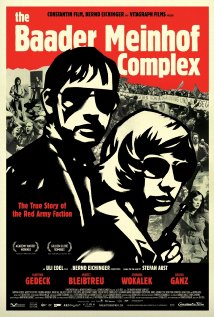
By way of conclusion, I’d like to offer another movie-related New York moment. I recently wrote a true memoir about the independent film-going habits that I fostered while living in New York, and I submitted the essay to a humor writing contest (which explains why I haven’t published it on CINE FEEL YEAH). I didn’t specifically mention this episode in the piece, but I can recall that the first film I saw in New York on my own was Der Baader Meinhof Komplex (Uli Edel, 2008) at City Cinemas 1, 2, 3 on Third Avenue between 59th and 60th. Other than in LA, where I relied on my sister to get places (particularly to art-house cinemas), I had never felt so fortunate to see a foreign film in the theater, for they always play about twenty miles away from my hometown. Unfortunately, this one wasn’t any good. But that’s not the point of this anecdote. This is: on my last day of work at a high traffic Starbucks in LA, one of my favorite customers gave me $10 to spend on a movie ticket. She said that when she moved to Paris, someone else had done the same thing for her. Touched that her gesture pays cinephilia forward, I rushed at the chance to use it on Der Baader Meinhof Komplex. Looking at my ticket stub now, I see that I had to shell out an extra $2.50 for the ticket. I hope to one day do the same for a cinephile about to embark on a similar life-changing journey.

Tomorrow: the last entry of Movie Travel Diary. But I’m not ready to leave NYC just yet; tell me about your movie-related experiences in the city. Which film(s) shows off the New York that you know from your own jaunts around the metropolis?

News Clip: Give Michael Keaton More Comedic Roles

I read today in Vulture that Michael Keaton has been cast as the villain in next year’s RoboCop remake. He will play the head honcho of Omnicorp, the manufacturer of RoboCop. No, I’m not looking forward to another remake, even if it is RoboCop and now has a robust cast that Zach Dionne of Vulture can drool over. No, but I am excited that Michael Keaton is going to be on the big screen again. I just wish he would re-enter our movie-going lives in more comedic roles. I don’t think I really need to remind you that he has a great sense of comedic timing—haven’t you seen Beetlejuice (Tim Burton, 1988) or even the otherwise tedious Multiplicity (Harold Ramis, 1996)? More recently, though, he has stolen The Other Guys (Adam McKay, 2010) and Toy Story 3 (Lee Unkrich, 2010) right out from under their bigger name stars. OK. So all I’m saying is, give the man a juicy comedic role.

Movie Travel Diary: Los Angeles

Is this what you see when you think of LA? A view of the ocean from Santa Monica, without submerging your feet in the sand. Photo by the author.

In Jim Jarmusch’s omnibus film Coffee and Cigarettes (2003), Steve Coogan, playing a version of himself (as he is wont to do), says that “Los Angeles is a nice place to visit; it’s an even nicer place to leave.” This sentiment pretty much sums up how I always imagined the city to be, too. Before my sister moved out there in 2005 to begin a PhD in urban history and planning at the University of Southern California, I never wanted to go there. The collage of images plastered in my mind featured stereotypical scenes I couldn’t see myself playing out: hard-bodies sunning themselves on the beach a la Baywatch, snobby Beverly Hills salesgirls turning away Hollywood Boulevard prostitutes from their designer fashion boutiques, and members of warring gangs killing each other and innocent bystanders in drive-by shootings—in John Singleton’s Boyz in the Hood (1991), Edward James Olmos’s American Me (1992), and more crucially, on TV news broadcasts. But overall, I thought Los Angeles was teeming with vapid and superficial people; they don’t call it La La Land for nothing. It’s where every aspiring film actor goes to realize his or her dream of becoming famous, and they still won’t admit it’s nowhere near coming true even as they’ve slung espresso drinks at Starbucks or waited tables for years.

Now my idea of the metropolis is (almost) completely changed. Believe it or not, not everyone in Los Angeles works in the film industry or even wants to. And people actually are born and raised in the city; they don’t just disembark from buses that originated in far-flung places. Aside from the year I lived in LA with my sister, I have been to LA on several occasions. The most recent was in May of this year. I have come to know the city as more than just a tourist would, even if I still can’t get my head around the linkages between freeways. You take the 101 to the 405 to the what? Oh, forget it. I leave all of that for my sister to parse, as she knows the freeways and “surface streets” like the back of her hand.

When I first came to LA in June 2005 with my dad and sister to help her find a place to live, we stayed in a budget hotel not far from MacArthur Park so that we could be near the USC campus and within striking distance of the other parts of the city we wanted to see. The area surrounding the park caters mostly to Spanish-speaking residents originally from Mexico and Central America, a reality you know is there but is hardly ever represented in the media. In fact, the movies present a Los Angeles that is overwhelmingly white, and growing up I relied on such pictures as  Speed (Jan de Bont, 1994), Clueless (Amy Heckerling, 1995), and The Truth About Cats & Dogs (Michael Lehmann, 1996) as well as prime-time TV soap operas like Beverly Hills, 90210 (1990-2000) and Melrose Place (1992-1999) to understand citylife in LA. I’m happy to tell you there’s far more to it than this limited purview would have you witness. That being said, my family could think of nowhere else to go on our first day other than the ocean (pictured above). So we went to Santa Monica, even though none of us likes the beach.

My sister eventually settled at Sunset Junction, where Sunset and Santa Monica Boulevards converge in Silver Lake, a one-time street-car suburb (if you can believe it!) and now a happening neighborhood lined with cafes, shops, and gay nightclubs. It’s situated between Hollywood and downtown (if that means anything to you). Yes, hipsters are here, but most of them don’t live here. When she moved in, one of the ways she described her apartment’s location was by saying that the laundromat where Claire Danes meets Jason Schwartzman in Shopgirl (Anand Tucker, 2005) was just across the street on Sunset. That’s all well and good, but I’d never been to that part of the city before. In December of 2005, I visited Silver Lake for the first time, recognizing landmarks such as the laundromat (it’s no longer in business) and marveling at just how real the city became as a result of my sister and best friend now living here. I got rather acquainted with Silver Lake over the course of a few trips west, and suddenly, “my Los Angeles” popped up in movies everywhere. If you look closely, you will also see regular neighborhood businesses featured in The Last Word (Geoffrey Haley, 2008), though the eatery Town and Country is now the eatery Forage; I Love You, Man (John Hamburg, 2009), wherein Paul Rudd drives by a bio-diesel fueling station at Sunset Junction on his way to work (it’s moved since then); and Beginners (Mike Mills, 2010), when the newly out-of-the-closet Christopher Plummer cruises Akbar and hears house music for the first time. Cute.

The LaunderLand where Claire Danes and Jason Schwartzman meet-cute in Shopgirl. It no longer exists, so you can’t expect to find them there anymore. Photo by the author or her sister—I can’t recall exactly who.

Although Silver Lake is someplace very different from Laurel Canyon, I came to associate the bohemian atmosphere on display throughout Lisa Cholodenko’s Laurel Canyon (2002) with the laid-back attitude of Silver Lake. While living in England, I repeatedly watched the loose rock ‘n’ roll meets uptight intellectualism culture clash drama because at the time it reminded me of home (wherever my sister is). I savored the opening credits sequence set to Mercury Rev’s symphonic song “On a Summer Day” and featuring stunning aerial cinematography of the LA freeways (clearly their entanglements come to symbolize the painful and dysfunctional relationships between and among the film’s characters). Furthermore, whenever I apply a certain daily moisturizing body lotion with a very distinctive scent, I immediately think of the LA I remember from my late 2005 trip because that’s where I first required it. The vision I have, no matter how incongruous it is to my lived experience? Laurel Canyon‘s opening montage.

A few months after this trip, my sister moved to another Silver Lake apartment, one where you can see the Hollywood sign from the window. After graduating from college in May 2008 and with a dour outlook on job prospects, I joined my sister there and didn’t leave until July 2009. So far, it’s probably been one of the best years of my life. When we weren’t at work or school, we spent practically every waking moment together. We walked around the neighborhood as often as we could to gain exercise, and we started the tradition of waving and shouting, “Hi, Steve!” whenever we passed by the 4101 Bar on Santa Monica at Sunset Junction—whether on foot or by car—because that’s exactly where Steve Coogan gets knocked out in the little-seen comedy Lies & Alibis (Matt Checkowski & Kurt Mattila, 2006). We went to the movies religiously, alternating among a national multiplex’s outpost in Burbank, a regional chain’s art-house location in Pasadena, and even ArcLight Cinemas in Hollywood. We dined out at our favorite restaurants: Mako in Los Feliz (RIP), California Chicken Cafe in Hollywood, Spitz in Little Tokyo, and The Oinkster in Eagle Rock, to name but a few. What can I say? We got around!

We ventured to the west side less often, mainly just keeping to Century City’s shopping mall or the Hammer Museum in Westwood (near UCLA). You don’t typically see these places on-screen, but Ruby Sparks (Jonathan Dayton & Valerie Faris, 2012) caught my attention earlier this summer when I saw that Paul Dano’s reclusive author participates in a Q&A at the Hammer that’s hosted by his mentor, who’s played by none other than Steve Coogan. For someone who apparently doesn’t like LA, he sure can’t get enough of it, eh? Anyway, I also recognized Skylight Books on Vermont Avenue in Los Feliz as the bookstore where Dano gives a reading from his new book, which is all about his experience with a made-up girlfriend (and that incidentally forms the basis of the film, too). Additionally, Dano meets Alia Shawkat for a meal at Figaro Cafe on the same street. For some strange reason, this section of Vermont is perceived as so indistinctly LA that it doubles for New York in Made of Honor (Paul Weiland, 2008) and Seattle in Grey’s Anatomy (2005-present). I’ll never forget Sandra Oh either giving or receiving directions while standing across the street from the Figaro and the orientation being completely inaccurate. (It may supposed to be Seattle, but couldn’t they at least maintain Vermont’s north-south directional axis?)

No matter how long I lived in LA or how often I’ve visited, before the family’s May 2012 trip out there (to attend my sister’s graduation), I never managed to see the historic Bradbury Building located downtown. On our very last day in the city, I made sure that we made pilgrimage there and paid homage to Blade Runner (Ridley Scott, 1982), which you may recall is one of my favorite movies. The Bradbury, one of the oldest, continuously occupied buildings in downtown LA is where J.F. Sebastian (William Sanderson) squats in the movie’s future dystopic LA. From the photo below, you can easily see that it is far from being the squalid skyscraper on display in Blade Runner. More recently, it has appeared in (500) Days of Summer (Marc Webb, 2009) and The Artist (Michel Hazanavicius, 2011), both of which lend it a more romantic varnish. Hey, that’s how I’m going to remember it, too.

Although I have lived here, I have only begun scraping the surface. As my sister would be quick to point out, LA is so goddamn expansive and diverse, it’s impossible to know it inside and out, but that shouldn’t stop you from trying. Unlike with Dublin, London, Edinburgh, and Paris (to an extent), there isn’t even just one or two “LA movies” that best frame my LA experience. They’re all over the place. Speaking of which, I would really like to view Thom Andersen’s approximately three-hour-long documentary Los Angeles Plays Itself (2003) some time, preferably in the city. Wouldn’t that make the montage of movie scenes set in LA all the more hyper-real?

The majestic Bradbury Building in downtown Los Angeles. This is where Rick Deckard never saw natural light, only floating jumbotron screens. Photo by the author.

In roughly 24 hours (hopefully): another entry of Movie Travel Diary. But let’s discuss this city some more; tell me about your movie-related experiences in Los Angeles. Which film(s) shows off the LA that you know from your own wanderings around the metropolis?

Jump Cut: “Tell Me That One About Kenny G Again”

Some films—good and bad—stick with you long after you’ve seen them, for a variety of reasons. There’s an intricately choreographed five-minute-long tracking shot re-enacting the British evacuation of Dunkirk. The guffaw-inducing sight of a soft mannequin, a stand-in for a bad guy, being dragged along the subway tracks. John Williams’s two-note theme for the mostly unseen underwater villain. But cinema being an audiovisual storytelling medium, it is often what is said that grabs your attention and refuses to let go.

I love collecting movie quotes, but in preparation for this article, I actually had difficulty listing my favorite lines. Watching as many films as I do, dialogue from movies I love and feel disinterest toward inevitably and unconsciously wind up in my idiolect. My movie-mad sister is my best friend, and we often communicate in Movie Talk. But even now, I’m struggling to come up with an example of something that we say to each other—with and without hints of irony. Just as it is for practically all cinephiles, I guess films are just so ingrained in our brains, so tightly knit into the fabric of our everyday lives, that the origins of some movie references we make regularly go unexamined. Let’s attempt to change that.

Then again, there are also memorable movie quotes that don’t fit easily into everyone’s daily conversations. Most of the entries on the following list of my favorite movie lines fall into this category. I should also note that this inventory is by no means comprehensive; I may continually add to it as they come to me. I invite you to tell me your favorites, too, in the comments section below.

——————–

Let’s start with the line that inspired me to post on this topic: in Sydney Pollack’s 1995 remake of the classic romance Sabrina, a charming Julia Ormond stars as the titular daughter of a chauffeur who has loved the younger, commitment-phobic Larrabee brother David (played by Greg Kinnear) all of her life. During the opening credits, which unravel as she narrates her lovelorn situation (he doesn’t know that she exists, that she watches him routinely woo rich women from her perch in the tree outside her apartment above the garage on his family’s estate), Sabrina heavily breathes, with the slightest hesitation, “David… did a GAP ad.” I love the combination of her sincerity and the ridiculousness of her words. It’s as if—at what age? 30?—she is a teenybopper.

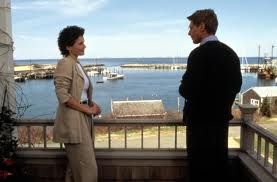
To be fair to poor Sabrina, she also makes an astute, perhaps even eloquent, observation later on in the film, after she’s returned from Paris elegant and confident. David’s older, uptight brother Linus (Harrison Ford) whisks her away to Martha’s Vineyard. He pretends to want to sell his house there so as to keep her away from a now-smitten David (but who’s now engaged to the daughter of a tech tycoon Linus is doing business with), so the conniving businessman invites her to take photos of his property. An amateur photographer, Sabrina reflects on her lonely, voyeuristic existence growing up, all while snapping views from the Linus’s house: “Every time I look through a camera, I’m surprised. It’s like finding yourself in the middle of a story… I think I’ve been taking pictures all my life, long before I ever had a camera.” Doesn’t that make up for her simple, pathetic idolization of a smug, rich jerk? Besides, opening up to Linus (and influencing his heart to melt in the process) is just the beginning of her journey to discover of who she really wants.

Sabrina and Linus enjoy the view of the harbor—and then of each other. Image courtesy of http://www.cineplex.com.

——————–

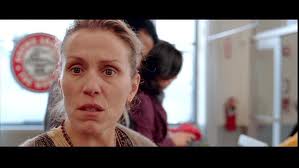
Friends with Money (Nicole Holofcener, 2006) is about a group of four middle-aged women in Los Angeles, three of whom are either extremely wealthy or very well-off. Yeah, yeah, it may be best remembered because Jennifer Aniston plays against type as the fourth friend who has no money—and some questionable taste in men—but the real star of the show is Frances McDormand, who plays a successful clothing designer with anger management issues. In my favorite scene, she waits in line at Old Navy and flips out when a couple jumps in front of her as she walks toward the cash register. During the confrontation, in which neither the cashier nor the manager sympathizes with her passed-over situation, she points her finger in the butting pair’s faces, accusing them of ignoring her and shouting, “Yes, those two people! With their stupid fucking faces!” Why do I love this line? First of all, I should note that I’m biased: McDormand is one of my favorite actresses. I always find her entertaining. But because she lowers her voice as she spits out this line, it sounds as if she’s a monster saying, “stupidfuckingfaces!” Brilliant.

Be warned: if you butt in front of her while she’s waiting in line, Frances McDormand’s gonna come after you! Image courtesy of http://www.hotflick.net.

——————–

If you’ve even just skimmed through the About the Site page on CINE FEEL YEAH, you might have noticed that one of my favorite comfort films (yes, like the food) is The Truth About Cats & Dogs (Michael Lehmann, 1996). A woman-centered adaptation of Cyrano de Bergerac, it stars Janeane Garofalo and Uma Thurman as neighbors who start spending a lot of time together after insecure veterinarian radio host Garofalo tells an amorous listener that she looks like the “dumb blonde” Thurman when he asks her out on a date. It’s a long story as to how he’s given this impression when he first meets them both at the radio station. More importantly, there are many choice lines in the film, but my absolute favorite is a quick exchange between the two women. Garofalo is sobbing in the department store where she let a cosmetics saleswoman make over her face. Pissed off that society dictates women make themselves attractive to men through cosmetic enhancement, she says, “If I was a guy, I think women would like, line up to go out with me. I’m smart. I have a good sense of humor. I make a great living.” Without missing a beat, Thurman nods, “I’d fuck you.” Garofalo responds, “Thank you, honey. I know you would.” This dialogue effortlessly gets at the root of female friendships. They don’t know each other well at this point, but they support one another in the face of seemingly absurd adversity—especially from the small voices deep within.

Opposites attract: Janeane Garofalo and Uma Thurman are best friends and know just how to comfort one another. Image courtesy of http://www.iluvcinema.com.

——————–

The last two quotes I have for you right now are actually part of my everyday speech. Not only that, they are also the only two lines spoken by men to make the list. The first (or second-to-last, depending on how you look at it), comes courtesy of David Deblinger’s character in the sweet but acerbic and little-seen rom-com/satire of the fashion industry Intern (Michael Lange, 2000). Dominique Swain plays the eponymous gofer at a fashion magazine. During her tenure, she falls for the dreamy deputy art director, rolls her eyes at the shallowness of the industry’s top decision-makers, and even uncovers an editor’s selling insider information to a rival glossy rag. The intern befriends Deblinger’s flamboyant, straight-talking accessories editor, who, in the end, confronts another frustrated co-worker with the immortal line, “What’s with the angry?” Despite his sentence’s despicable lack of grammatical cohesion, I love to repeat it—ironically. You never know, if you use it to ask someone about what is making him or her upset, you might just put a smile on that person’s face.

I apologize: I couldn’t find a photo of Deblinger in Intern during my Google Image search. In its place, I’ll offer that I’m 99.99% certain I saw the actor riding the subway in Brooklyn once while on my way home (I think it was the No. 2 train). He was talking with his female companion, so I didn’t dare interrupt their chat to say anything. And definitely not to ask, “What’s with the angry?”

——————–

24 Hour Party People (Michael Winterbottom, 2002) is my all-time favorite film, and it is so highly quotable. I know it like the back of my hand, which is why I am usually disappointed in others’ estimations of its quotiness (can I coin that right now?). For example, I’d waited years to meet someone who had ever even heard of it. (Generally, whenever someone asks me for the name of my fave film, I have to repeat the title at least twice.) And when I finally did, while studying abroad in Northwest England, he quoted the movie back to me. How exciting, right?! Well, he chose the least creative line (“There’s a barbed wire fence! There’s a barbed wire fence!”). Well, to each his own, right?

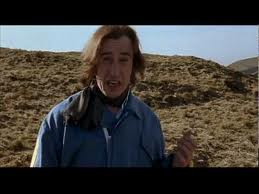
Anyway, my favorite utterance comes early in the film, too. Steve Coogan, as real-life TV personality and Factory Records co-founder Tony Wilson, directly addresses the camera following his exhilarating hang gliding experience in the Pennines (director Winterbottom uses mostly real footage of Wilson himself performing the stunt). In doing so, Coogan/Wilson steps outside of the film while remaining fixed in the frame: “You’re gonna be seeing a lot more of that sort of thing in the film. All of that actually did happen. Obviously, it’s symbolic. It works on both levels. I don’t want to tell you too much, don’t want to spoil the film. But I’ll just say, ‘Icarus.’ OK? If you know what I mean, great. If you don’t, doesn’t matter. But you should probably read more.” Obviously, this is a pretty long, context-specific quote (he’s referring to the fame and fortune he and others attached to Manchester’s music scene cyclically gain and lose, by the way), so I don’t use the whole thing. I abridge it (“You should probably read more”) and try to imitate his flippant, condescending tone. Again, I never earnestly deploy the line, and I mainly just say it to my sister, who gets it, about someone else. After all, the movie’s all about irony.

Who is it? Steve Coogan or Tony Wilson tells you what to expect—without spoiling anything.

Quick Edit: How Do You Solve a Problem Like Bernie?

Viewed August 21, 2012

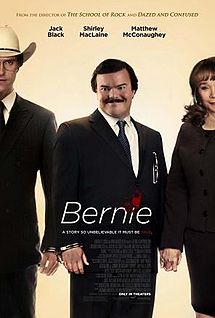
Director Richard Linklater originally made a name for himself with film-stories set in his native Texas, everything from Slacker (1991) and Dazed and Confused (1993) to SubUrbia(1996) and The Newton Boys (1998). Even his beloved European-set Before Sunrise “franchise” has a Texas connection: Ethan Hawke’s writer, who in some small part might be based on Linklater himself, also hails from the southwestern state. The comedic true crime story Bernie (2011) returns Linklater to Texas for the first time since 2006’s Fast Food Nation and reunites him with the star of 2003’s The School of Rock, Jack Black, as well as early muse Matthew McConaughey.

I passed on Bernie when the film hit select theaters in late April of this year, not because I wasn’t interested in the story of a much fawned-over gay assistant funeral director shooting dead his 81-year-old multi-millionaire companion, the small town’s wicked witch, but because I already knew all of its plot details. I had read a New York Times Magazine article by Joe Rhodes, the nephew of the victim Mrs. Marjorie Nugent, and learned that for nine months Bernie kept up the pretense that Marjorie, stuffed in a freezer, was alive while he spent millions of her dollars, “generously” gifting people all over town. Despite Bernie’s, uh, indiscretions, Rhodes, like practically everyone involved, seems to find him the more sympathetic character. It’s a fascinating story, but I wonder if Bernie‘s storytelling format was the best choice. In any case, I heartily recommend Rhodes’s examination of the events leading up to and following Bernie Tiede’s killing Mrs. Nugent that, as the movie’s tagline says, constitutes a story “so unbelievable it must be true.” You just might want to see the movie first, because it does spoil the plot. As does this review of the film Bernie.

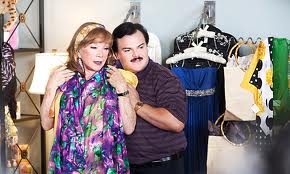
East Texas. The date? I’m not quite sure, as the true events took place in the 1990s. But while the production and costume design seem to indicate this period, Bernie (played by Jack Black) has an iPhone, which wasn’t released until summer 2007. So what can you do? Anyway, as the assistant funeral director in Carthage (approximately 7,000 inhabitants strong), Bernie is well-known for his attentive care of the recently bereaved (particularly elderly widows), and his boss especially values his employee’s superb up-selling skills. Bernie manages to thaw Marjorie’s (Shirley MacLaine) cold, miserly heart following his supervision of her bank-owning husband’s funeral (which actually took place in 1990). From that point on, they are virtually inseparable. They travel everywhere together, go on extensive shopping sprees, and eat at the finest restaurants as well as the local, rustic watering holes. (Hilariously, in one scene, Marjorie pesters Bernie to help her pick out a nice dress for dinner, forcing him to stop whatever he was doing at the time he received her call. Then, in an unfussy cut, it’s revealed that they’re only dining at a chintzy Mexican cantina in town). People speculate that Bernie has to be supplying sexual favors in order to receive that kind of lavish, undivided attention from Marjorie, who has alienated everyone who has ever come in her path, including her family members. Marjorie becomes so attached to Bernie that she demands to know where he is and what he is doing at every hour. In his defense, the word that Bernie constantly uses to describe Marjorie’s dependency on him is “possessive.” Then, in an impulsive move one day in 1996 (again, according to actual events), Bernie takes the shotgun for killing pesky armadillos and shoots Marjorie in the back four times, the symbolism not lost on the audience. Immediately remorseful, Bernie prays, but instead of alerting the police, he packs her into the freezer in the garage and goes about life as if she is merely the house-bound victim of a series of strokes. No one else likes to see or talk to her, anyway—except for her nosy stockbroker (Richard Robichaux), who’s onto Bernie’s misdeeds.

As they grow closer, Marjorie defers to Bernie on all matters of fashion. She even starts to wear her hair down. Image courtesy of http://www.nytimes.com.

No matter how overly prepared I was to watch Bernie, I never expected that Linklater, who co-wrote the script with Texas Monthly crime reporter Skip Hollandsworth, would choose to frame the narrative as a docudrama, complete with historical reenactments starring Black, McConaughey, and MacLaine; numerous talking head interviews with real townspeople; and title-cards that read “Who is Bernie?” and “Was Bernie gay?” One might even be tempted to label the film a mockumentary, for it gently pokes fun at the residents’ bigotry and simple-mindedness. For instance, knowing Bernie to be an outstanding Christian for all his involvement in church activities, including orgiastically singing hymns and paying for a new prayer wing (with Marjorie’s money, of course), the people of Carthage refuse to believe Bernie killed the town’s least popular resident—even after he confesses to the crime once Marjorie’s financial adviser and family members start investigating his trail of lies. In fact, Bernie is so well-liked for his caring and easygoing demeanor that District Attorney Danny Buck Davidson (McConaughey, made comically un-handsome and outfitted with shirts—baggy ones, at that—big, round eyeglasses, and short, matted hair) successfully motions for Bernie’s murder trial to be moved 50 miles away to ensure that selected jurors are unbiased. In the end, he’s sentenced to life in prison, and according to Rhodes, he will be eligible for parole in 2027, when he is sixty-nine-years-old.

One of the real, colorful townspeople of Carthage gives us a handy-dandy geography lesson, enumerating the cultural differences among almost all of the republics of Texas. Image courtesy of http://www.largepopcorn–nobutter.blogspot.com.

In exploring the surreal circumstances of Bernie and Marjorie’s relationship, the film regrettably relies too much on the testimonials of real Carthagians. It’s unclear if their lines are scripted, improvised, or unrehearsed. But the warm, burnt cinematography by Dick Pope seamlessly blends their one-sided conversations (with the documentary lens) with the scenes featuring the trio of the top-lining professional actors and their supporting cast. In other words, despite the fragmented structure of Bernie, Carthage comes across as a fully realized universe and lived-in place, even if Black, McConaughey, and MacLaine barely share any screen-time with the “real” people. However, though all three turn in captivating performances (particularly Black, who dials his trademark zaniness way down), I couldn’t help wishing that Linklater and co. had given the stars more to do. Earlier, I labeled their scenes “historical reenactments” because they mostly just serve the narrative as related by practically everyone in town. They seemingly act out scenes in order to support the Carthagians’ arguments about how gregarious a fellow Bernie was (cue Jack Black, in character, directing and performing in a high school production of The Music Man) and how downright nasty Marjorie was (see MacLaine throw a Hispanic family’s mortgage loan in the garbage as soon as they leave the bank).

Admittedly, one of the best scenes integrates the documentary and comedy-drama bits and, unsurprisingly, unfolds at the very end, allowing the story to come full-circle: one of Bernie’s real-life apologists visits him in jail, still in denial, and reiterates her request that he sing at her own funeral, whenever it is. Touched, Bernie tries to tell her that it’s impossible, as he doubts he’ll ever get permission. But she’s just not hearing him. When their time together is forced to close, the camera follows Bernie contentedly walk back toward his cell, eventually staying put to capture his receding presence—and slightly sashaying hips. As if to say again, “Can you believe this man is a convicted murderer?” This isn’t to say that the filmmakers think Bernie is innocent. He is most definitely not. Having formed my first impression of Bernie Tiede based on Joe Rhodes’s interpretation of his aunt’s life partner-turned-killer, I can see that the filmmakers find him just as sympathetic as Rhodes does. We’re meant to perceive Bernie as simply a good person who snapped and did a very bad thing. More tellingly, to some degree, I think the storytelling structure of Bernie precludes the spectator from strongly identifying with Marjorie. That is, representing the real townspeople’s overwhelmingly sentimental observations about Bernie does very little to redeem Marjorie; no one comes to bat for her. To add insult to injury, MacLaine’s limited screen presence means her character isn’t as fleshed out as Jack Black’s Bernie, leading my dad to comment that her bickering Marjorie recalls her performance as a grumpy and difficult First Lady to Nicolas Cage’s secret serviceman in Guarding Tess (Hugh Wilson, 1994).

It was only during my Google search for images to accompany this article that I made the connection that Bernie has a premise not-too-dissimilar from the one guiding Weekend at Bernie’s (Ted Kotcheff, 1989), wherein Andrew McCarthy and Jonathan Silverman live large at their horrible boss’s vacation home after the titular schmuck (Terry Kiser) dies unexpectedly during their stay; like Bernie, the pathetic stooges pretend their employer is still alive and try to outrun the cops (among others). But whereas Weekend at Bernie’s takes a slapstick approach to defiling the sanctity of the human corpse, Bernie explores the all-too-realness of this possibility. It’s an intriguing little story, and it’s shocking that Carthage still sings his praises. Just what exactly is in the well-water over there? I wonder how the town’s residents responded to the film, too.

Long Take: Mirror Mirror, Off the Wall

Viewed August 18 & 19, 2012

Two “subversive” re-hashings of the fairytale Snow White and the Seven Dwarfs premiered in theaters this year, Mirror Mirror (Tarsem Singh Dhandwar) in late March and Snow White and the Huntsman (Rupert Sanders) in early June, the studios’ schedules leaving barely two months between their releases. In the battle for my interest, the latter prevailed. At the time, I found its darker vision more intriguing, the welcome prospect of meeting an active—even kick-ass—heroine more certain, despite dull-as-wood Kristen Stewart’s playing the part. Mirror Mirror, on the other hand, appeared to be a campy, self-conscious comedy that tries-too-hard. Having now seen it on DVD, I can say that looks aren’t deceiving in this case.

At first glance, it’s easy to identify the colorful, other-worldly mise-en-scène of Mirror Mirror as exactly what we have come to expect from “visionary director” Tarsem (as he is usually credited), whose earlier works include The Cell (2000), The Fall (2006), and the extremely loose adaptation of the Theseus-starring Greek myth Immortals (2011). On closer inspection, however, Tarsem’s characteristic style-over-substance M.O. impresses the observation that Mirror Mirror looks as if Tim Burton had made it as a sort of companion piece to the 2010 revisionist megahit Alice in Wonderland, as both films attempt to give their young heroines more feminist agency while on their journeys toward adult womanhood. There’s just one caveat: the new Snow White adaptation, unlike any Tim Burton film, doesn’t take itself seriously. It is a pastiche of styles and attitudes, mixing a prologue featuring porcelain-like puppets with an epilogue that consists of a Bollywood musical dance number. It’s overwhelmingly cynical but hopelessly romantic at the same time. Crucially, too, the film’s less-than-spectacular special effects are no match for its opulent, golden production and costume design (the latter of which comprises legendary designer Eiko Ishioka’s last on-screen effort).

Mirror Mirror turns the all-too-familiar fairytale upside down—especially its story structure. Unfortunately, though, it doesn’t subvert the form and instead reaffirms the romantic ideal, even after doing so much to tear it down. If I haven’t already spoiled it for you, I’m definitely going to do so now.

Julia Roberts, as The Queen and evil stepmother of Snow White (a likeable if thickly browed Lily Collins), narrates the tale from her perspective, asserting that it is her story. Most likely responsible for the King’s presumed death when Snow was a little girl, the beauty-obsessed Queen tyrannically reigns over the kingdom in his absence, for more than a decade by the time the film story begins. Cash-strapped and insecure, she keeps a now teenaged Snow White locked up in her room, demands exorbitant taxes from the destitute commoners to pay for gala events and chemical peels, and desires a new rich husband to ensure her lavish spending habits continue unabated. On her eighteenth birthday, Snow White finally leaves the castle to see what the Queen’s rule has subjected her people to, and en route to town, she encounters the arrogant but handsome Prince Alcott of Valencia (Armie Hammer) and his valet Renbock (Robert Emms). Strung upside down on the branch of a tree in the frosty forest, the men are so ashamed to be the victims of a mugging by a band of dwarfs on stilts that Alcott insists they are commoners. Sparks fly after she cuts them free, and they go their separate ways.

Snow White and Prince Alcott meet again later that night—this time as themselves—at the ball that the Queen throws in his honor, an over-the-top attempt to woo him since he comes from a country with lucrative industry and trade. Jealous of the attention he bestows upon her stepdaughter, the Queen demands that her “executive bootlicker” Brighton (Nathan Lane) abandon the girl in the woods so that the mythic but very real beast gobbles her up. Brighton goes so far as to bring Snow White to the forest, but he sets her free. She eventually happens upon the hideout of the seven dwarf bandits and convinces them to let her stay. Her heretofore untainted moral compass directs her to make-over their image by returning to the commoners, in the dwarfs’ name, the Queen’s tax collection that they stole, thereby elevating the social rejects’ status in the eyes of the people. That’s one mission accomplished. By turning the bandits into Robin Hoods, Snow White invites them to transform her into a member of their gang, a partner in arms against the indignities of the Queen. A Karate Kid-like training montage ensues as the leader Butcher (Martin Klebba) intones maxims on thieving. Yep, this sure isn’t your Disney-bred Snow White. But this is just one trope that Mirror Mirror turns on its head; most of them hinge on Snow White’s relationships with the Queen and Prince Alcott.

According to Tarsem, the Queen isn’t “evil; she’s just insecure.” I beg to differ (for reasons already enumerated), but there is something to be said for her vanity. One of the most amusing scenes revolves around her intensive beauty regimen before the gala. All kinds of disgusting “creams,” including animal dung, and insects that burrow in her bellybutton are applied. The Queen, reclining with her eyes covered, admonishes her attendants for taking pleasure in her revolting appearance. It’s unclear, given her quips and the servants’ smiling-to-frowning faces, whether the Queen delivers or receives the brunt of the joke about the ugliness of beauty’s upkeep. After all, she still comes out looking like Julia Roberts, whose casting is definitely meant to be a meta-commentary on the Hollywood edict that proclaims women of a certain age (or women who are not as desirable as they were when they were younger) utterly useless. In Snow White and the Huntsman, thirty-seven-year-old Charlize Theron plays the equivalent role, but rather than exploit her beauty for money (to buy things), Theron’s vampiric Ravenna uses it to usurp power and make everyone suffer under her rule because she has been abused by kings the world over. This constitutes a hyperbolic but provocative feminist assertion, that a woman subverts the culture’s idealization of femininity through an aggressive, albeit aberrant (or murderous), sexuality. Mirror Mirror‘s representation of power is cartoonish by comparison. So Tarsem may want to believe that the Queen’s vanity isn’t her motivation and that it doesn’t make her evil, but he forgets that insecurity and vanity are two sides of the same coin and together they make the Queen commit copious crimes.

If looks could kill, it’d be a much shorter movie. The unambiguously evil despot Ravenna in Snow White and the Huntsman. Image courtesy of http://www.ew.com.

And this is what makes troublesome Prince Alcott’s motivation in visiting the kingdom: to explore the prospect of marriage to the much older Queen. He hasn’t come to seek Snow White’s hand; in fact, before they meet at the ball, equally ridiculous dressed as a swan (Snow White) or rabbit (Prince Alcott), the prince seems to have no idea that she has ever existed. This is probably because the Queen has kept her beautiful stepdaughter under lock and key, but that doesn’t answer the question why Prince Alcott would ever be moved to pursue the Queen. Hasn’t he ever heard stories of the horrible treatment she inflicts on her people? Doesn’t he know that she’s bleeding money and wouldn’t have much to offer his country by way of wealth or prestige? Does he just not care about her character because she’s supposed to be the fairest of them all (of course, due to a little magic)? This isn’t the first time Prince Charming has ever come across as superficial, but Tarsem and screenwriters Marc Klein and Jason Keller are dead-set on deconstructing the character as an avatar of masculinity and an expression of women’s wish fulfillment. To his credit, the actor Armie Hammer is pretty game.

For starters, Prince Alcott’s shirtlessness at various points throughout the film offers more than just a little comic relief. His arrogance so inextricably linked to his body, whenever he is half-naked he feels vulnerable and emasculated (hence why he won’t admit that dwarfs overpowered him and stole his clothes). The scene of his meeting the Queen, who’s distracted by his nudity, reminded me of the scene in Brave (Mark Andrews, Brenda Chapman & Steve Purcell, 2012) wherein the queen and princess look at each other from afar while sizing up the grotesquely muscular would-be suitor standing before their thrones. Similarly, it’s clear from Prince Alcott’s introduction as a beautiful man whose body is on display for each of the warring women (as well as for the audience) that Mirror Mirror aims to turn the fairytale upside down by sexually objectifying the prince. But that’s not the only way the filmmakers degrade the character.

Prince Alcott, as seen from the Queen’s perspective, makes quite an alluring first impression. Image courtesy of http://www.mynewplaidpants.blogspot.com.

As I previously mentioned, Prince Alcott arrives at the Queen’s ball (which itself made me wonder whether the filmmakers were confusing Snow White with Cinderella) outfitted with over-sized bunny ears. The Playboy/Playgirl aesthetic wasn’t lost on me, but his costume serves more to humiliate and endear him to Snow White, who is portentously dressed as a swan (although never an ugly duckling, she’s bound to come into her own as a confident woman). As if this didn’t sufficiently make Prince Alcott feel like a giant ass, the filmmakers’ story calls for further debasement. Midway through the film, the Queen seeks a magic love potion from her twisted psyche, which only manifests in the mirror where she sees a version of herself that as calm, wise, and, notably, unwrinkled. Predictably, things go awry, and Prince Alcott, by now in love with the Snow White who lives with the dwarf robbers, becomes hopelessly enamored of the Queen in the same way that a dog is loyal to his master. For a good fifteen minutes or so, the six-foot-five Hammer gets to act like a tiny lap dog, complete with heavy panting, tongue wagging, and non-diegetic yapping and whimpering sounds. At first annoyed by the mix-up in her plan, the Queen accepts this brand of fealty, memorably shooing him away, out of the castle, with a game of fetch.

The Puppy Love Potion cleverly demonstrates how easily Prince Charming is manipulated according to the Queen’s and Snow White’s individual needs and desires. The Queen just needs him to be present for their wedding, but when news first gets out that Prince Alcott has agreed to marry the Queen, Snow White kidnaps him. Notably, rather than use this language (or even “take hostage”), everyone, including both women, says that “Prince Alcott has been stolen,” thereby suggesting his objectified status as both moneybags and lover. And this is where one of the most perplexing instances takes place in the film’s rewriting of the Brothers Grimm fairytale.

Poor Prince Alcott. Napoleon has at him, but only Snow White has the antidote to the Queen’s Puppy Love Potion.

To break the spell, Snow White and the dwarfs try all manner of things: knocking him on the head, slapping his cheek, tickling his sides, whatever will inflict pain. Mainly, it’s just an excuse for the angry woodsmen to exact revenge on the pompous prince who has constantly belittled them. Eventually, Snow White deduces that a kiss will return him to her. OK. We get it, this Snow White is active and not passive, a sexual being rather than a rape victim (a fairytale situation made even more complex in novelist Julia Leigh’s debut feature from 2011, Sleeping Beauty). Upon hearing that this puckering up will constitute her first kiss, one of the dwarfs, Napoleon (Jordan Prentice), splashes powder on her face, reddens her lips with strawberries (didn’t the fruit make an appearance somewhere in the 1937 animated Disney feature?), and ties up her long black locks. It’s unclear whom this gesture is meant to arouse, because Prince Alcott for all intents and purposes is still a dog tied up in a chair. In fact, this scene is incredibly cringe-inducing because Snow White essentially violates the man, despite his emphatic protestations. So instead of Snow White requiring an unsolicited sexual overture to bring her back to consciousness, in Mirror Mirror she is the sexual predator who gets to act out this fairytale wish on the unconscious man of her dreams. And voilà! It works! This isn’t exactly what I had in mind for subverting the kissyface portion of the fairytale.

Honestly, the filmmakers lay thick throughout the picture how hopelessly smitten with Snow White one of the dwarfs is that I wish their romantic union could have had more of a shot. Sure, all seven of them come to love and respect her. But Half Pint (Mark Povinelli) in particular desires a romantic future with her, about which his family of friends wishes he would stop dreaming. Very tellingly, he’s heartbroken that Snow White chooses Prince Alcott over him, and at the dinner table when they all learn that the prince is to marry the Queen, some of the dwarfs wonder aloud how she could love such a jerk. Recalling Prince Alcott and Snow White’s sword-fighting duel, Chuckles (Ronald Lee Clark) says, “But he tried to kill her yesterday” simply because she’s in cahoots with the woodsmen who are the bane of his existence. Napoleon’s reply? “Exactly.” In this way, accepting Prince Alcott’s violent behavior from the day before as indicative of their belonging together makes for a extreme case of gendered playground role playing. Apparently, this is no different than a boy, who likes a girl, pushing her down in the sandbox because expressing interest and concern in girls isn’t manly behavior he wants to replicate in front of everyone. I know that the dwarfs act as a unit and therefore not a single one of them could ever make a play for Snow White’s affection. But imagine a story in which this romantic entanglement does take place. The comedy and/or drama could emerge from the friction between Snow White and the others. They might feel threatened by her presence; she might Yoko the band. And maybe she would have difficulty adjusting to his rustic way of life. Oh, to dream of the movies not yet made.

Snow White and her merry band of misfits. Would-be paramour Half Pint’s to the right of her face, in the red cap. Image courtesy of http://www.teaser-trailer.com.

The dwarfs build a charming collective. Racially diverse, with different interests and opinions, they complicate past representations of the group. They may have strange or slightly offensive names (Butcher? Half Pint? Chuckles? Wolf? Grimm? Grub?), but at least they are portrayed by dwarf actors. The dwarfs of Snow White and the Huntsman, you may recall, were played by such British heavyweights as Bob Hoskins, Ian McShane, Ray Winstone, and others, whose heads were digitally super-imposed on those of dwarf actors. But enough about that; it’s puzzling why in the end the dwarfs throw all of their weight behind Prince Alcott. Touted as his personal army, they never actually fight beside him. Especially since Snow White locks Prince Alcott and her friends inside their hillside hut because, as she says, she wants to rewrite the fairytale ending by not relying on Prince Charming to rescue her from the evil forces of her stepmother. Hilariously, Prince Alcott pleads that she not change the story structure; it’s been “focus-grouped” to death and thus satisfies audiences. If only Snow White had remained so ardently independent through to the end of the picture.

After their “special” kiss, the vengeful Queen arrives in the forest hell-bent on killing them all. She sicks the beast on them, and later, once he has our heroine within his grasp, Snow White understands how the Queen can control him. She uses her father’s dagger to cut off the beast’s half-moon necklace, the exact same style that the Queen wears about her neck. In the slow resolution of this scene, I assumed that the Queen would reveal herself to be the beast, as if all the magic at her disposal has only ever gone toward presenting her in Julia Roberts’s pretty form. Nope. Nothing so cool. Instead, the beast is Snow White’s father, who morphs back into his human self (Sean Bean). He goes on to officiate Snow White and Prince Alcott’s wedding in the next scene. Rather than going on to rule benevolently and independently, as the triumphant Kristen Stewart does in Snow White and the Huntsman, in one fell swoop, Snow White’s relationships with the men in her life are redefined yet again. At once, she is an adult, married woman who has proven herself a brave and capable ruler, as well as a subordinate daughter. When I told my sister how much of a letdown I found this ending to be, she chastised me for wishing the King had stayed dead. “Wouldn’t you rather have your dad than be queen?” she asked. Well, yes, I would, but I wanted Snow White to remain free and powerful!

Finally, the last Snow White and the Seven Dwarfs trope that Mirror Mirror unravels concerns Snow White’s vanquishing of the Queen. The villainess attends the wedding ceremony as a peasant hag and gifts Snow White a poisoned apple. Her voice and cryptic diction give her away, and before Snow White takes a bite, she cuts a slice and offers it to the hag, telling her, “It’s important to know when you’ve been beaten.” That’s the exact phrase the Queen used to silence her stepdaughter early in the film. In this way, Snow White gives the Queen a taste of her own medicine, which this time proves lethal. So ding dong, the witch is dead! As if that wasn’t going to happen. Then the Queen, as narrator of the film-story (from beyond the grave?), concedes that it has been Snow White’s tale all along. Again, tell me something I don’t know.

Long Take: Hope Springs, Not Exactly as Promised

Viewed August 11, 2012

This past Saturday was my birthday, and in my family—as in many families, I would suspect—we go to the movies to celebrate before dining out. We’re just not that creative. Unfortunately, there were slim pickings to choose from this year. I had no desire to get confused during The Bourne Legacy (Tony Gilroy, 2012) or to catch up by seeing last month’s The Dark Knight Rises (Christopher Nolan, 2012). So I opted for Hope Springs (David Frankel, 2012), the sweet little comedy about a couple in their sixties rekindling the romance and spicing up their sex lives after thirty-one years of marriage. When I told my film critic friend Gabe of my plans to see this movie, he joked, “I had no idea you were a sixty-something sex-starved housewife with zero interests.” My response? “Now you do!”

It’s not that I regret my choice, but Hope Springs did very little to impress me. I wasn’t expecting much, as I had somewhat foolishly read reviews beforehand, positive and negative alike. In particular, I knew not to expect a zany battle-of-the-sexes-type romantic comedy that the trailers and TV spots implied. In fact, while Hope Springs is not without its funny moments, it should be more accurately classified as a drama, for it treats Kay (Meryl Streep) and Arnold’s (Tommy Lee Jones) lack of physical and emotional intimacy in their marriage as a deathly serious problem. And that’s fine by me. When a couple that has been together for over thirty years and raised two children (who are now out of the house), sleep in separate rooms and barely talk to each other, getting them to reconnect is serious business. Washington Post chief film critic Ann Hornaday claims, “Hope Springs is a minor miracle of a movie,” as it tackles its subject “with a degree of integrity and candor rarely seen in American movies.” I agree, but to an extent. Here’s why. Fair warning: spoilers follow!

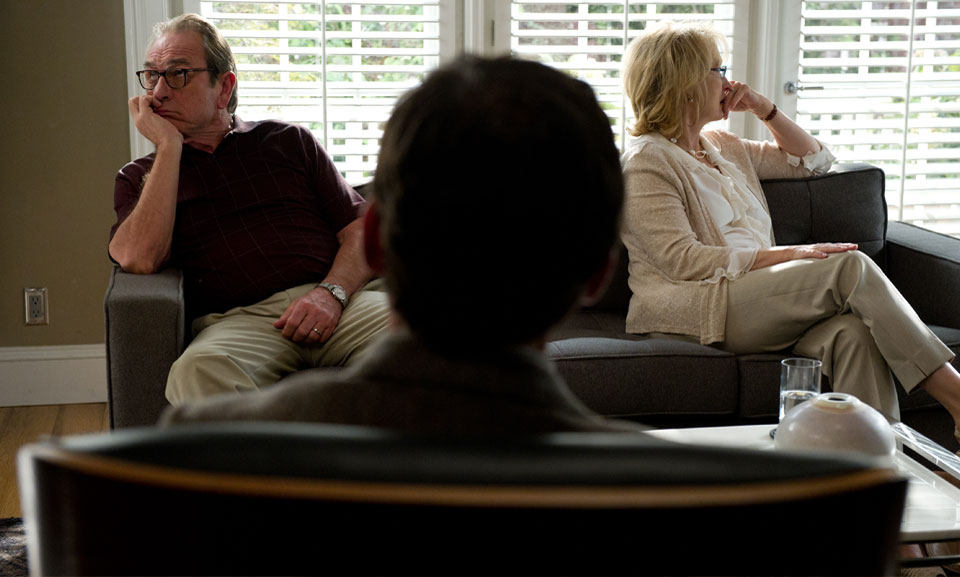
Omaha, Nebraska. We meet Kay and Arnold right around their thirty-first wedding anniversary. And that’s the first of many implausibilities. Given their socially conservative backgrounds, having met and married when Kay was in college or just graduated, they should be married for longer and with older kids, too. Anyway, stuck in a deep rut wherein they sleep in separate rooms (owing to Arnold’s years-old back injury) and gift each other a new cable subscription, Kay intends to break free, taking Arnold with her. A retail clerk at a Coldwater Creek fashion outlet for conservatively inclined middle-aged women shoppers, she takes what little money she’s saved over the years and splashes out on a week of intensive couple’s counseling sessions with Dr. Bernard Feld (Steve Carell as subdued as ever) in Great Hope Springs, Maine. (I imagine that screenwriter Vanessa Taylor grants Kay this job so as to distance her from earlier iterations of this sad-sack character. In other words, Kay isn’t simply a fed-up homemaker, she’s a fed-up former housewife who in recent years as reentered the workforce, albeit only the service industry.) From the beginning, and throughout most of their sojourn, Arnold is hostile to Kay’s expensive, faraway effort to save their marriage, but of course he gradually becomes more game, more willing to open up to Kay, at Dr. Feld’s insistence.

Arnold and Kay, as seen from Dr. Feld’s perspective, before they inevitably get back together in the end. First step: turning around to look at one another. Image courtesy of Sony Pictures and http://www.hopesprings-movie.com.

Hope Springs is highly uncinematic and not at all like the promotional image seen directly above. It mainly cuts between long scenes set in Dr. Feld’s office, where he prods each with questions about his or her sexual history and fantasies, and short scenes that take place around the small, idyllic town, whether at the staid motel room, kitschy diner, bar, or lighthouse museum. Director David Frankel, who previously worked with Streep on her Oscar-nominated role in The Devil Wears Prada (2006), adds no flourishes. What he’s produced is an awfully boring film whose scenes—let alone frames—hardly look different from each other. It doesn’t help matters that cliched pop songs dominate the soundtrack, everything from Annie Lennox’s “Why” to Al Green’s “Let’s Stay Together” (the latter of which sounds during a failed attempt to have sex). The instrumental score is almost non-existent; I noticed it in only one scene. Bad form.

But what of these therapy sessions? Although I have never seen either program, I suspect that the HBO series The Sopranos (1999-2007) and In Treatment (2008-2011) more innovatively shoot conversations between a therapist and his or her patient, appropriately heightening the tension between them. To the contrary, everything in Hope Springs is straight-forward. I can only recall one interesting editing technique in all of the scenes at Dr. Feld’s: we hear him ask Arnold questions he doesn’t want to answer, and the camera focuses on Arnold’s anguished face in close-up as he listens to Dr. Feld. Then again, I also appreciated those zoomings in on Kay’s face as she listens to Arnold’s confessions. Whereas my dad liked that Steve Carell managed to reel in his trademark goofy mania, I endlessly tried to come up with names that could play the part with more… oomph. This is not to say that Carell turned in a weak or bad performance, as it probably has more to do with the way Taylor wrote Dr. Feld and how Frankel interpreted the character from her script. What if Dr. Feld had been less calm? Hell, what if he had a sense of humor?

Speaking of casting, let’s address Streep’s and Jones’s performances and their characters. A living legend, Streep predictably embodies her character to the fullest (at least as fully as she can, given the limited script), complete with timid mannerisms and speech and an incredibly dowdy hairstyle. But like Hornaday, I couldn’t help wishing that “her sweet, naive character had just one more layer to make her sharper and more complex,” like her character in It’s Complicated (Nancy Meyers, 2009). As the instigator of the project to rebuild their marriage, Kay begins as the more sympathetic of the pair. We root for her to get what she wants; after all, her desires are more than reasonable. But when Dr. Feld coaxes her sexual fantasies out of her, and she comes up short, not only did I feel sorry for Kay (who claims that she has only ever wanted Arnold, in vanilla-flavored sexual positions and scenarios), I wondered, what is the point? Why should I care about this woman if she doesn’t want something, for lack of a better word, interesting? It’s not enough that, after Dr. Feld’s encouraging her to experiment and act on her fantasies, she attempts to give Arnold a blow job in a movie theater. “Attempts,” being the operative word there. She’s too embarrassed, uncomfortable, and ill-experienced to finish, and she crawls away in shame. What’s worse is that she only ever wants to please Arnold. Other than wanting him to kiss and touch her in innocent ways, she never asks for him to pleasure her in any way. Presented entirely for laughs, Kay doesn’t realize that oral sex isn’t just performed on the man; I wanted to pull my eyes out. Ugh. Compounding all of this is the final scene during the end credits: at the pair’s vow renewal ceremony on the Maine beach a year later, with Dr. Feld and family gathered, Kay pledges to keep her hair long because she knows that Arnold likes it that way. So much for wishing that the original trip had given her a backbone and an independent spirit, which was in evidence when she first boarded the plane in Omaha without Arnold (who showed up, hemming and hawing, at the last possible moment).

Kay and Arnold during one of Dr. Feld’s “intimacy homework assignments.” Woozy. Image courtesy of http://www.washingtonpost.com.

Admittedly, one of the reasons why I had not wanted to see Hope Springs was because I found Tommy Lee Jones unappealing as Meryl Streep’s romantic lead. I didn’t think his on- and off-screen persona meshed well with the demands of what I thought at the time was a romantic comedy. But now I am happy to say that his casting and performance are spot-on. He’s less the grizzled lawman in No Country for Old Men (Joel & Ethan Coen, 2007) or The Fugitive (Andrew Davis, 1993) and more the grizzled businessman in The Company Men (John Wells, 2010). Whereas the chameleon-like Streep alters her voice and appearance when playing Kay (looking older and mousy), Jones looks the same as he always does, except his principal prop is a suitcase rather than a shotgun. As an avatar of a chiseled and mythically strong American masculinity—aging but active, a maverick for the greater good—it’s interesting to see how easily Jones transfers this to his portrayal of Arnold, who’s emotionally stunted, uncommunicative, non-confrontational, and angry. New York‘s film critic, David Edelstein, proposes that Kay’s withholding sexual favors for years frustrated Arnold to the point where he never returned to the bedroom, even after his back got better. As if to say, you did it to yourself, Kay. Ouch. Having said this, though, Jones easily earns the most laughs since he’s the only one, say, really uncomfortable discussing his sex life with a complete stranger. He comes up with many wisecracks, memorably about Dr. Feld’s monotone approach to sexuality (if you’ve seen the trailer, you know what I mean), and Jones is a gifted physical comedian. Who knew?!

According to the movie’s trivia page on the Internet Movie Database, Jeff Bridges was originally offered Jones’s role. When my sister brought this little factoid to my attention, I contemplated how different the movie would be. It definitely would have been more pleasant to sit through the sex scenes (more on those in a moment), since Bridges is a considerably more attractive man. We can’t know why Bridges turned it down unless he ever publicly addresses the question, but we can take comfort that he co-starred in a much more sophisticated romantic drama (with comedic elements) in 1996: The Mirror Has Two Faces, with director-star Barbra Streisand. While Columbia University professors Gregory Larkin (Bridges) and Rose Morgan (Streisand) may be unmarried when the film begins, The Mirror Has Two Faces similarly tracks their platonic relationship as it morphs first into a platonic marriage and later, once she’s had enough of a shared life without passion and romance, a fully-fledged sexual marriage. Granted, I don’t approve of how Rose’s third-act makeover from ugly duckling to stunning swan fixes the sexual intimacy problem of their marriage (in fact, Gregory and Rose marry late in life because they’ve finally found their intellectual equals), but The Mirror Has Two Faces doesn’t shy away from addressing a middle-aged couple’s sexual desires and fantasies. Rose is a fiercely intelligent, neurotic, cosmopolitan, and desirous woman. So much easier to relate to than the bland Midwestern housewife Kay. (By the way, shouldn’t Nebraskans be offended that the Coasts, both East and West, continue to culturally belittle them?)

Actually, now’s a good time to look at those Hope Springs sex scenes. I bet that the filmmakers and the studio behind it think they pushed the envelope simply by making a movie about a husband and wife in their sixties trying to rediscover each other and themselves sexually. Oh, whatever. They don’t go very far. Yes, they push the PG-13 rating, but only in terms of language. For example, Dr. Feld asks if Kay ever wishes they assumed more than just the missionary position during sex. Would she, he asks, prefer to try out anal sex? Blushes and hand-waving ensue. Out of the question. But when sex between Kay and Arnold is represented on-screen, after a romantic dinner at a high-class restaurant in town (for a change!), we see no sexagenarian flesh. Just a lot of fully-clothed groping. Even when Arnold gets on top of her, their clothes stay on completely. I hate it in movies when characters have sex fully dressed. Unless you’re in public and having sex standing up, there is no excuse. How confrontational and realistic do the filmmakers—and I’m talking about those of Hope Springs specifically now—think they are when these sex scenes leave so much to be desired? Maybe I’m being too harsh. It is, after all, a big studio picture that clearly wants to appeal most to Middle American viewers of a certain age, who should find Kay and Arnold hopelessly familiar.

Still, after years of watching films from around the world about people—young and old alike—desperately trying to make a (sexual) connection with someone else, Hope Springs simply comes up short. Ann Hornaday mentions in her Washington Post review that the film is “like the more cheerful, reassuring and commercially palatable version” of a story similar to Michael Haneke’s Palme d’Or-winning Amour (2012), about an elderly man faced with losing his terminally ill wife. I haven’t seen Amour yet, but somehow I just can’t imagine this to be the case. A more appropriate “world cinema”/”art-house”/auteurist comparison is Andreas Dresen’s Cloud 9 (2008), a small, German character study in which a sixty-something-year-old woman, after thirty-odd years of a happy if routine marriage, embarks on a torrid affair with a man in his seventies! With disastrous consequences, of course. As if that were not enough, the director shows the adulterous couple, who, I might add, are nowhere near as glamorous or fit as Streep or Jones, fornicating in graphic detail, their flabby flesh rolling all over each other. It may not be a pretty sight, but it’s certainly more frank, and in its frankness, a beautiful thing. And when you turn to more commercial (read: simply American) output, even It’s Complicated provides a more nuanced view of people approaching 60 who let go of their inhibitions and assert their sexuality in aggressive ways. It’s not for nothing that Alec Baldwin says to his ex-wife Meryl Streep that their affair is like something out of a French film.

Can Female Film Characters Rise to Their Potential?

For the past week or so, one image has stuck with me. It’s of a woman riding alone in a tiny space capsule, hurtling ever closer to the outer reaches of the earth’s orbit. It’s unclear where she’s going and what she will do there upon arrival. I imagine she has a purpose; I just don’t know what it is. No matter how many times she returns to me as a vision, during the day and at night, I can’t see what’s ahead of her or what she’s left behind. I want to know her story. I think it might be potentially interesting.

Despite being unable to develop the lone astronaut’s narrative, I can easily trace the different threads of information that likely led to her appearance in my mind’s eye. First and foremost, the first American woman in space, Dr. Sally Ride, died on July 23 at the age of 61, after quietly suffering from pancreatic cancer for more than a year. After her groundbreaking trips on the shuttle Challenger in 1983 and 1984 and their attendant media circuses, she lived out of the limelight, retiring from NASA in 1987 and then pouring all her energy into teaching and running the company she founded in 2001, Sally Ride Science. Ride’s high school classmate and sometime book collaborator Dr. Susan Okie recounts in The Washington Post her driven friend’s company mission to promote science and technology as “cool” for middle school students and their teachers, to inspire young girls especially to pursue careers in these fields. I don’t have a scientific or mathematical mind (I really wish I did!), but I so deeply respect Sally Ride and all of her accomplishments.

The pioneering American astronaut Sally Ride. Photo courtesy of NASA, via Agence France-Presse — Getty Images. Accessed at The New York Times.

Then I read, before the August 1 premiere at Georgetown University, about a show titled History Matters/Back to the Future, Scenes by Historic Women Playwrights: Read by Luminaries of the Stage. I’m no authority on the theater, but I know enough to understand where the event’s organizers are coming from: there is an alarming disparity between the number of produced plays written by men and those by women. Washington Post reporter DeNeen L. Brown opens her account of the theatrical production, which coincides with the university’s Women and Theatre Program’s yearly conference, stating the cold, hard truth:

It is a peculiar distinction in the world of playwrights: Works written by men are often called plays. But works written by women are often categorized as “women’s plays.”

“There is a notion in the canon, when men write plays, they speak to the entire human condition, and plays written by women speak to women,” said actress Kathleen Chalfant, a 1993 Tony Award nominee for best actress in a play for her role in Angels in America: Millennium Approaches.

Even plays written by men that are “particularly masculine and talk about issues particular to men, are never called ‘men’s plays,’ ” she added.

Now, I don’t envision the lone astronaut’s narrative trajectory taking place on the stage (I don’t think in terms of the theater). But Brown’s and Chalfant’s observations made an impression on my psyche. Specifically, Chalfant’s choice of words really struck a chord with me, when she argues that there is a perception that plays written by men “speak to the entire human condition” whereas ones by and/or about women can only hope to speak to women, as if the woman’s experience is less than or at least incapable of elucidating the human experience for everyone. Certainly, this isn’t a new controversy or even one confined to the theater. There is a persistent gender bias across all art forms, manifest in libraries and bookstores, museums and galleries, and—most precious to me—cinemas. I think the image of the female space cruiser appeared to me unconsciously as a direct response to the bone-headed notion that women playwrights can’t, in Chalfant’s words, “speak to the entire human condition.” The drive to explore the worlds beyond our own and the desire to comprehend our purpose and beginnings are characteristically human. I know the lone astronaut’s journey of self-discovery is something of a hyperbole, but what if her story could capture for men and women alike a uniquely feminine take on the human experience?

Admittedly, I can’t wave any sci-fi geek flag, having never read Isaac Asimov, Philip K. Dick, George Orwell, or even Ray Bradbury. (But tell me, does Aldous Huxley’s Brave New World grant me at least a few colors? ‘cuz I loved that as a teen.) I’ve only ever seen two episodes of Star Trek, and that number indexes all iterations of the series. I’ve never cracked open a comic book, let alone picked one up. However, I can and do appreciate smart, sophisticated, hard-core sci-fi movies, particularly the kinds that tackle what it means to be human. This is why I love Blade Runner (Ridley Scott, 1982) and will never tire of it. I also like Duncan Jones’s directorial debut Moon (2009), starring the criminally underrated Sam Rockwell as the lone astronaut on a three-year-mission stationed on the massive titular rock. While I don’t suspect the female space explorer of my imagination is ultimately on a quest to discover her true identity in the same way that Rockwell’s Sam Bell does (see, I’m trying not to spoiling anything!), I see her journey as equally alienating, mundane, but also extraordinary.

Most importantly, I envision her story as one that doesn’t hinge on her relationships with men or children. She isn’t escaping a tumultuous love affair, or searching for her true love on another planet, for that matter. She isn’t trying to put her life back together because she lost a child or because she can’t have one. Don’t get me wrong: she’s not without her problems, but her problems don’t define her. And I’ll be damned if I ever base her entire identity on whether or not she has a significant other and/or whether or not she is a mother. After all, wife and mother are historically the only culturally acceptable roles prescribed to women. And in the cyclical culture wars about women’s place in society, debates about the constitutionality of accessible birth control measures and the (im)possibility of a woman “having it all” (meaning: balancing a rewarding career with a family) abound today. Just look at the uproar new Yahoo! CEO Marissa Mayer caused when she announced that she plans to return to work soon after the birth of her first child. The first hot-button issue affects me directly, whereas the conversation about rich white women’s struggles to negotiate their seemingly opposed desires for a career and family addresses me in no way at all. I have no career to speak of and, as of right now, I would be happy never to have children.

——————————

The roles afforded women in movies are no better. We’ve heard this a million times before. Writing an op-ed piece for The Washington Post, Melissa Silverstein, the founder and editor of the Indiewire blog Women and Hollywood and the co-founder and artistic director of the woman-centric Athena Film Festival, argues that the upper echelons of the American film industrial complex, aka “Hollywood,” should be more accommodating to stories about women because they represent half the ticket-buying public in the U.S. (she cites data from the Motion Picture Association of America). Silverstein writes,

Imagine the successes if there were more female characters onscreen than the 33 percent that appeared in the 100 top-grossing films in 2011. And imagine if more than 11 percent of those movies had female protagonists.

I find it alarming that the films she uses as evidence that female-driven movies can be resounding box-office successes include Sex and the City (Michael Patrick King, 2008), Mamma Mia! (Phyllida Lloyd, 2008), and Twilight (Catherine Hardwicke, 2008) as well as its first sequel. Especially since this is coming a little more than two months after she published a short editorial about how purging “chick flicks” from our culture is absolutely necessary. I know, I know, she’s merely pointing out that there is a “hungry, underserved female audience” for movies about women, but all of these examples represent just what she wants to see banished:

You know the kind of movies I mean. They inevitably star Kate Hudson or Katherine Heigl. Most involve a wedding, a boyfriend or, usually, both. And they’re often just bad movies.

Arguing that even Oscar-winning films like Terms of Endearment (James L. Brooks, 1983) and Thelma & Louise (Ridley Scott, 1991) are tainted with the label “chick flick,” Silverstein opines, “I want Hollywood to stop making these formulaic films and branding all movies starring women, good and bad, as chick flicks.” I definitely agree with this sentiment, and if we return to Silverstein’s first op-ed piece I mentioned, I also concur that having more women directing, producing, writing, photographing, and editing films would help alleviate the problem. Though, when you look at her three examples for women-focused blockbusters, Mamma Mia! and Twilight are both written and directed by women. Yikes.

I will say this: Silverstein sure does like to invoke Bridesmaids (Paul Feig, 2011) and its approximately $170 million domestic overhaul. But she fails to draw attention to the fact that its star, Kristen Wiig, wrote the screenplay with her old friend from their days with the improv group The Groundlings, Annie Mumolo. You’ve read me attest to Bridesmaids‘s assets before, so I won’t indulge in too much praise here now. Suffice it to say that, despite a subplot involving Wiig’s romantic dalliances with two diametrically opposed males, the film is actually about female friendship, as Wiig the maid of honor and Maya Rudolph the bride must adjust their long-term intimacy in expectation of the latter’s nuptials. Moreover, I think remembering that Wiig, the darling of Saturday Night Live from 2005 to 2012 and the scene-stealer from the likes of Knocked Up (Judd Apatow, 2007) and Adventureland (Greg Mottola, 2009), co-wrote her own breakout role isn’t just necessary, it is also a starting point when examining the trend making the rounds this year in film and on television.

——————————

Of course, I’m talking about actresses making their debuts as produced screenwriters in order to address the dearth of quality film roles for women. Within the last two weeks alone, indie starlet Zoe Kazan has released Ruby Sparks (Jonathan Dayton & Valerie Faris, 2012), her critical dissection of the Manic Pixie Dream Girl archetype that men often write for their male protagonists, and just two days ago Rashida Jones went against type in Lee Toland Krieger’s Celeste and Jesse Forever (2012). A regular from my favorite TV comedy, Parks and Recreation (2009-present), Jones acknowledges in an interview with Melena Ryzik of The New York Times that she usually plays “the dependable, affable, loving, friend-wife-girlfriend,” and that as co-scribe with former boyfriend-turned-best-friend Will McCormack, she was finally able to star as “a character that’s maybe less than likable.”

French-American actress Julie Delpy’s fourth feature, the sequel to 2 Days in Paris (2007), hits theaters next Friday. 2 Days in New York (2012) may not be her first film as writer-director-star, but like Kazan and Jones, she aims to write a “real” woman, not a fantasy that men have of (French) women, she tells Karina Longworth of LA Weekly. In the new film, she co-stars with Chris Rock as a successful, artistic/intellectual couple forging a blended family, and the arrival of her father, sister, and former lover from France threatens to upturn what they’ve built, albeit comically so. Casting Chris Rock as her romantic lead may provide a pointed commentary on race in contemporary America, especially since neither Marion nor Mingus make a big deal of their interracial coupling (it’s presented matter-of-fact, according to Longworth), but you might even say that as much as the role is a welcome leap for Rock, it may also bring fans of his raunchy stand-up into the art-house.

Mingus and Marion in bed, trying to overcome the vagaries of adult life in 2 Days in New York. Image courtesy of http://www.girls-can-play.blogspot.com.

I wish to avoid analyzing a film I have yet to see (for the record, though, I really like 2 Days in Paris), and I want to acknowledge Delpy’s frustration with being categorized as a woman filmmaker: “By making it obvious that it’s rare, you also minimize my work.” In this way, she echoes Nora Ephron, who, of When Harry Met Sally… (Rob Reiner, 1989) and You’ve Got Mail (Ephron, 1998) fame, died June 26 of pneumonia at age 71 (she had suffered from acute myeloid leukemia). As recounted in Charles McGrath’s obituary in The New York Times, Ephron wrote in I Remember Nothing, one of her book of essays, that she won’t miss panels on Women in Film when she dies (sorry, Melissa Silverstein). Although Ephron’s films are dominated by female protagonists and might even have been branded “chick flicks,” her screenplay for When Harry Met Sally… is such a cultural touchstone that men and women often agree that the film is, in the words of Vulture’s editors, “arguably the greatest rom-com of all time.” In conversation with All Things Considered‘s Audie Cornish on NPR, Rashida Jones interpreted the interviewer’s observation that Celeste and Jesse Forever resembles Ephron’s beloved story about friends turning into lovers, although in reverse, as “the biggest compliment.” I haven’t seen Jones’s film yet, so I cannot weigh in on that score.

Upon their arrival in New York, Sally and Harry enjoy a bite at Katz’s—much to Sally’s memorable delight. Image courtesy of http://www.impassionedcinema.com.

But are these women of summer, written and actualized in each case by the same woman, really a step in the right direction? According to The Washington Post‘s chief film critic, Ann Hornaday, that answer is “no.” She recently published a critical inventory of the season’s female characters, girls and women alike. While she finds much to celebrate when it comes to young women defying stereotypical roles, she finds the women leave much to be desired. And I quote:

At the box office, the summer of 2012 may be about breaking records with movies about boys and their toys (“Hulk smash,” indeed). But culturally, the season’s been all about the girls. Beginning with Snow White and the Huntsman, continuing through Brave and with a dash of talk-worthy premium cable thrown in, girls seem to have taken over screens both large and small, their inner struggles magnified into mythic battles, their most mundane problems examined with probing, disarmingly frank intimacy.

Hornaday also reminds us that Tim Burton’s version of Alice in Wonderland (2010) and this spring’s mega-hit The Hunger Games (Gary Ross, 2012) also feature strong-willed female teens who don’t need a Prince Charming to rescue them, as they fight epic duels on their respective quests to right evil social injustices. By comparison, the female leads of Ruby Sparks and Celeste and Jesse Forever, for example, are pathetic. In particular, Hornaday writes,

But as clever as Ruby Sparks is in puncturing the male wish-fulfillment fantasy of unconditional acceptance and worship, Kazan’s Ruby never gets to be her own fully realized character, instead playing a role similar to that of the Magical Negro, who exists chiefly in order to help the white male hero find transcendence, meaning and the happy ending that was somehow never in doubt.

As you might recall, I had similar misgivings about the conclusion of Ruby Sparks; it upholds the convention of other love stories featuring Manic Pixie Dream Girls when the narcissistic novelist finally releases his titular creation from his magical spell and later goes on to meet the girl of his dreams who resembles his ideal far too much. When it comes to Celeste and Jesse Forever, Hornaday laments that Jones’s eponymous character, a

put-together and on-track young woman who, as she navigates a complicated relationship with the far less directed man in her life (played by Andy Samberg), is made to look either uptight, witchily judgmental or miserably alone — before she sees the light and realizes that she’s the problem, what with her intelligence and high expectations and all [emphasis in original].

Celeste and Jesse Forever: a couple tries to stay best friends through a painful divorce. Image courtesy of http://www.cnn.com.

Certainly, I cannot just take this one critic’s word as the gospel truth. I will see these movies, eventually, to make up my own mind, but I can understand what Hornaday is saying. After all, both Ruby and Celeste are characters defined by the relationships that they have with the men in their lives. Marion of 2 Days in New York, which Hornaday doesn’t discuss, also fits the bill, and she’s also a mom.

But there’s one last facet to this trend of actresses writing their own parts: overwhelmingly, their chosen genre is the romantic comedy, which is historically perceived as a woman’s form (even though, of course, it has more male writers than it does female ones). As if men don’t enjoy movies about the pursuit of love and that very special happy ending! (There are enough movies focalized through the heterosexual male point-of-view, such as Annie Hall [Woody Allen, 1977] and Knocked Up, which are both written by men, to warrant a future article about the so-called masculinization of the romantic comedy.) To cut a long story short, I would like to see more female filmmakers work in other idioms and elevate female film characters to be more than just the wife and mother, the Madonna or the Whore. How about a chilling thriller or detective story? or a smart and sophisticated actioner? I would love a provocative sci-fi movie, too. I know what you’re thinking, doesn’t Another Earth (Mike Cahill, 2011) qualify? Well, star Brit Marling may have co-written the script about the possibility of finding redemption as if in a parallel universe, but—spoiler alert!—her character winds up having a sexual affair with the man whose family she killed in the car accident, an irreparable act for which she seeks forgiveness as a means of escape. This plot point is hardly original, as it falls into that same class of tropes I can’t stand.

There is some hope, though, that more complex female characters will continue to spring up. I would venture that at the moment only Girls, the controversial HBO comedy-drama series created by its star Lena Dunham (who also writes and/or directs some episodes), presents a convincing and nuanced vision of (young) women’s relationships—to men, parents, work, culture, and friends. The program follows the runaway success of Dunham’s first full-length motion picture, Tiny Furniture (2010), which she also wrote, directed, and starred in; it’s an acerbic and poignant study of the post-college malaise and the attendant struggles to understand the world and be understood within it. Girls may ostensibly be an urban exploration of recent college grads’ experiences with love and sex, tracking their conflicting desires for independence and dependable partnership, but in actuality it is a brilliant love story about two best friends, Hannah (Dunham) and Marnie (Allison Williams), who live together and grow apart while trying to make it big in the city.

Hannah and Marnie are Girls and best friends who try hard not to let their dealings with men dictate who they are as individuals. Image courtesy of http://www.trippedmedia.com.

In the fall, Mindy Kaling, a staff writer, producer, and regular cast member of The Office (2005-present), will premiere her own show, entitled The Mindy Project (check out the trailer here). Yeah, I sincerely hope that as the program’s creator, producer, and writer, she changes the name before it first airs; as it stands, the title makes it sound like the comedy series, in which she plays a gynecologist, is a celebrity-hosted reality show or stand-up special. The trailer demonstrates that the self-professed lover of romantic comedies has deployed many generic conventions in creating this universe of characters and situations, including, but not limited to a drunken toast at an ex-boyfriend’s wedding, women’s anxiety over aging, and a female sidekick who tells her, “Your life is not a romantic comedy!” I know, I probably shouldn’t be looking forward to this, but I like Mindy Kaling, and I hope that her show—in the very least—offers an interesting critique of socially acceptable behavior for women. If not that, then maybe I’ll watch it just to dissect it.

——————————

Let’s return once more to the image I have of a woman astronaut gliding through space alone. I’m still nowhere closer to developing her back-story or devising her narrative purpose. Right now, she just represents the potential of female characters in fiction, but films in particular, who have interesting, fully realized inner lives that eschew all the narrative tropes that heretofore define women. She’s out there, doing it her own way, and if she comes back, maybe then I can make sense of her. Perhaps she will fulfill my fantasy and teach us something about what it means to be human—and not just a woman.

Long Take: In Defense of Ruby Sparks

Viewed July 26, 2012

For months, I’d been looking forward to seeing Ruby Sparks (2012), a quirky romantic comedy by directors Jonathan Dayton and Valerie Faris, their first film since 2006’s runaway indie success Little Miss Sunshine. But on the eve of its release, I became slightly less interested after I read a surprisingly spoiler-less interview with the film’s screenwriter and titular star Zoe Kazan. In it, not only does she dismiss the label Manic Pixie Dream Girl from any talk about her character, she also, in my opinion, makes a bone-headed argument about why the term “should die.” I can appreciate that Kazan finds the term misogynistic, that it smacks of men failing to see women (or, in this case, female film characters) as fully fledged people with rich, inner lives who shouldn’t be reduced to their tastes in music and clothes. However, it’s misguided for her to believe that because a random “blogger” (she means the film critic Nathan Rabin of The A.V. Club) coined the term, it has no creative clout. Surely she must understand that critics and creatives are in constant dialogue with each other, if not explicitly, then implicitly. (She is, after all, relating her views to an entertainment reporter.) Ultimately, though, Kazan’s argument falls apart because even she acknowledges that “sometimes filmmakers have not used their imagination in imbuing their female characters with real life.” Yes, that’s what Rabin lamented, too. The Manic Pixie Dream Girl (herein MPDG) persists as an archetype in film production and criticism, especially on the webpages of Vulture, with whom she granted the interview, despite critics’ and audiences’ frustration with repeatedly seeing this kind of female character. (Pop culture website Flavorwire recently posted a supercut montage purporting to capture, with mock enthusiasm, 75 years of cinema’s MPDGs.)

Having now seen Ruby Sparks, I am disappointed that, when asked by Vulture if she sees Ruby as a MPDG, Kazan did not say that, yes, in fact she is one because this film is a deconstruction of this archetype and thus explores why this kind of male fantasy is not only degrading and realistically implausible but also potentially dangerous. But just what is the Manic Pixie Dream Girl, and how does Ruby Sparks tackle it as a subject? I’ll warn you now: there are spoilers aplenty ahead.

According to The A.V. Club’s Rabin, who first used the term to describe Kirsten Dunst’s flight attendant in Cameron Crowe’s Elizabethtown (2007), the MPDG is a polarizing figure, inducing film spectators to either want to marry them (for real) or murder them because they are so annoying (not for real). These happy-go-lucky, good-looking, kooky young women are never the main protagonists in films and “[exist] solely in the fevered imaginations of sensitive writer-directors to teach broodingly soulful young men to embrace life and its infinite mysteries and adventures.” As Rabin rightly points out, Natalie Portman’s Sam in Zach Braff’s directorial debut Garden State (2004) neatly conforms to this supposed ideal, bouncing across the screen all carefree, her love bringing Braff’s depressive TV actor out of a personal and professional rut. Because she’s cute. And the love of a cute woman is really all you need to solve your problems.

Well, Kazan takes a different approach in her first produced screenplay, which she admits she only started writing as a vehicle for herself and her boyfriend, the actor Paul Dano, after he suggested, upon reading the first pages she produced, that it would be a good idea for them to collaborate on their own film project. In Ruby Sparks, Dano stars as the novelist Calvin Weir-Fields, a prodigious “genius” who hasn’t been able to follow up his remarkable debut from ten years ago. Spurred on by a writing task that his psychologist Dr. Rosenthal (Elliot Gould) assigns him, he finally harnesses some inspiration and begins writing about a twenty-six-year-old high-school drop-out from Dayton, Ohio, who doesn’t drive. He finds all of these tiny details hopelessly romantic; I find them alarmingly sexist, as he fantasizes about a helpless girl. Calvin confesses to Dr. Rosenthal that he has fallen in love with her, which Rosenthal encourages so that his patient might finally finish a novel. Then, one day, after finding women’s intimates strewn all throughout his modern bachelor pad, Ruby (Kazan) suddenly appears in his kitchen, behaving as if they are in a serious, long-term relationship. Is this Pygmalion crazy or just plain lucky?

At first, Calvin is convinced he’s going insane. But once he realizes that other people can see her, too, he’s less concerned about his sanity, and he begins to question the ethics of the situation. Can he date his creation, a woman who has inhabited his dreams, sprung from his spilled ink? Calvin’s older brother and only friend, Harry (Chris Messina), had originally admonished him for writing a one-dimensional character, asserting that real women aren’t like Ruby Sparks because they have problems and ambitions, changing moods and opinions. They don’t exist to stroke your ego, to love you unconditionally. Harry, as a stand-in for the audience, speaks from his own experience with his wife, which has its ups and downs. He hasn’t so much settled as he has learned to compromise. This is not to say that Harry doesn’t embrace fantasy as a natural, healthy expression of desire; he wants to live vicariously through whatever sexual encounters—real or imaginary—that Calvin has to speak of. However, when he meets Ruby and helps Calvin innocuously manipulate her to comic effect, inserting Ruby’s French fluency into his little brother’s manuscript, Harry thinks Calvin is the luckiest man alive because, as her author, he can make her do anything… especially in bed. This scene is in the trailer, which, when I first saw it, rubbed me the wrong way. Harry’s sexist sense of wonder offended me to no end, but once I saw it in context, I understood that screenwriter Kazan includes his juvenile reaction to Calvin’s magical realist luck simply to subvert it. In other words, that Ruby Sparks is a film written about a man by a woman shouldn’t be taken for granted.

Calvin gets to know his Galatea before they take a dip in the pool fully clothed, a quintessential first date for Manic Pixie Dream Girls and their beaus. Image courtesy of http://www.laweekly.com.

Like (500) Days of Summer (Marc Webb, 2009), Ruby Sparks is a heterosexual romance focalized through the man’s point-of-view. In both movies, the woman is a MPDG and exists as something of an enigma to the man in her life. In the earlier film, Joseph Gordon-Levitt reflects on his now-defunct relationship with a spunky co-worker played by Zooey Deschanel, an actress most associated with the controversial archetype, having appeared as a MPDG in The Hitchhiker’s Guide to the Galaxy (Garth Jennings, 2005), The Go-Getter (Martin Hynes, 2007), and Gigantic (Matt Aselton, 2008) to name but a few. (It should be noted that she stars opposite Paul Dano in Gigantic as an eccentric, mystery woman named Happy Lolly. I kid you not.) As Gordon-Levitt’s Tom Hansen goes through his sunny memories of their time together, he sees things he never noticed before, such as early signs of Summer’s emotional withdrawal from him. Due to the fragmented, non-chronological storytelling structure ofthe film, the viewer really only knows Summer through what Tom remembers and shows us. Summer‘s scribes are two men, Scott Neustadter and Michael H. Weber, and they purposely keep her at a distance, but characterizing her so that she conforms to all of the MPDG’s contours is arguably lazy writing. In an interview with Tasha Robinson of The A.V. Club, screenwriter Kazan mentions that Neustadter and Weber’s keeping Summer’s interior life outside of the margins of their narrow focus partly inspired her to examine the process by which men imagine and write idealized women, making “it textual, rather than subtextual” in Ruby Sparks. Thus, in her script, there are shades of Summer in Ruby: as part of a montage, Ruby rides around on her bicycle much like Summer does, and she’s sexually adventurous, tempting Calvin into public sex with her confession on the dance floor that she took off her underwear (Summer persuades Tom to try a difficult sexual position in the shower).

Ruby is the girl of Calvin’s dreams. But why does he fantasize about someone like her? He’s looking for someone to draw him out of his shell, now that his new terrier Scotty has disappointed him so. (He had pinned all his hopes on using Scotty to meet people in the park, but he’s embarrassed that his male pooch squats to pee and wonders aloud who could like such a dog. In his dream, Ruby, of course, does, as would any mature human being.) Calvin’s an old fuddy-duddy, resistant to change. For a man of twenty-nine years, he has some strange affectations. For instance, he shuns working on a computer, opting for a typewriter instead. He appears to have rummaged through Woody Allen’s closet. And just look how at odds he is with his own environment: he lives in a sleek, modern open-plan house in the hills of Los Angeles, surrounded by white walls and wooden floors. The indoor staircase railings mimic the one leading down to the outdoor swimming pool, and vice versa. He is so socially inept that it’s as if he could never take advantage of turning his house inside out before Ruby’s magical appearance.

I am always drawn to a film’s set design, interested in how a character’s living quarters reflect his or her personality (or not) and how other personages respond to it, too, and the filmmakers behind Ruby Sparks didn’t disappoint here. Nor when Calvin begrudgingly takes Ruby to meet his mother (Annette Bening) and her lover (Antonio Banderas) in Big Sur. Gertrude and Mort live in a kind of Eden, a sprawling estate overtaken by all types of vegetation and built with recycled materials. Mort, a sculptor who works with wood, has designed the house himself, much to Gertrude’s delight. Ruby gets along with everyone attendant for the weekend, but Calvin retreats to the tree-house and seems withdrawn during dinner. He treats the hosts’ shared lifestyle with contempt because he sees his mother’s radical change from preppy subservient housewife to outspoken hippie artist as a betrayal against his deceased father. He refuses to see how happy his mother is. As a man literally in control of his girlfriend’s actions and emotions, it’s safe to assume he just doesn’t care.

Ruby Sparks takes a dark turn after the improbable lovers’ Big Sur getaway. Ruby asks for more space between them, to which he reluctantly agrees. Missing her on nights that she spends at an art class or with friends, Calvin breaks his own rule and begins rewriting her. First, he casts her as “miserable without him,” but when her clinginess proves too depressing, too suffocating, he adds another line that puts her in a constant state of ecstatic joy, which is unbearable, too. Eventually, he writes for her to be herself, to act and feel as she would on her own. Later, at a book party, the lecherous author Langdon Tharp (Steve Coogan, typecast again!), who is also Calvin’s mentor, hits on Ruby and talks her into stripping down to her underwear and getting in the pool. Catching her before she dipped her toe in the water, Calvin blows up. At home, he reveals that he can control her with his printed words. The fight that ensues is truly upsetting, as Calvin maniacally sits at his desk, pounding away humiliating scenarios that Ruby has no choice but to act out. The ominous score, as if plucked from a super-serious sci-fi picture and thus so out of place in a romantic comedy, melodramatically highlights the torture of this scene. It’s in this moment that, if you have not already begun to dislike Calvin’s manipulative mean-streak, then you might totally turn against him. Ruby is no longer his creation or a MPDG; by the time this scene rolls around, you sympathize with her and what she is going through. When the bombast finally settles, she locks herself in his room, and he rewrites the ending, releasing her from his influence and his life. I was so worried that something magical would happen overnight and she would instead choose to stay with him because she loves him. I was relieved that in the morning, Calvin awoke to find her gone.

The film inches toward its conclusion as Calvin buys a computer and begins work on a novel based on his magical realist romance with Ruby, published to great success as The Girlfriend. He returns to Dr. Rosenthal and pleads with the doctor to understand that he doesn’t need to believe his nutty story and that he, Calvin, doesn’t need to comprehend how it happened in order to move on with his life. At first, what happens next, in the last scene, ruined the film for me. Like Washington Post film critic Ann Hornaday, I argue that “Kazan winds up indulging in the very wish-fulfillment she initially sets out to deconstruct” when, walking in the park with Scotty, Calvin bumps into a young woman who is Ruby’s spitting image. She’s ditzy like her, wondering aloud how she might know him since he looks strangely familiar; after listening to her wishy washy evaluation of The Girlfriend, which she is reading when Scotty runs over to her, he opens the back of the hardcover book and points to his picture on the flap. Palm-face! They hit it off, and we’re meant to believe that they have a future together.

Calvin meets a girl who uncannily resembles his creation Ruby Sparks. Image courtesy of http://www.vulture.com.

This is the wrong ending to an otherwise acute examination of fantasy, control, and wish-fulfillment. For starters, Calvin isn’t deserving of a woman’s love. Not yet. He hasn’t fully redeemed himself, in my eyes, after constricting Ruby’s independence. He may have let her go because he loves her, but he may easily have done so because their relationship was no longer tenable. Writing The Girlfriend barely atones for his maltreatment of Ruby; he’s still using her for inspiration and is now actually profiting from it. Plus, this conclusion bears too close a resemblance to the end of Eternal Sunshine of the Spotless Mind (Michel Gondry, 2004). In it, the one-time lovers Jim Carrey and MPDG Kate Winslet independently undergo a procedure that erases his or her memories of the other. In the end, however, they meet again as new strangers, and we’re led to believe that they’re both fated to be together and to repeatedly break each other’s heart. I’m sure that Hornaday had Eternal Sunshine in mind when she griped that Kazan isn’t brave enough to follow through with her otherwise biting critique. Funnily enough, though, Calvin’s new romance with a Ruby lookalike also echoes the ending of (500) Days of Summer. At the close of that film, Tom has finally gotten over Summer and meets an attractive, interested brunette at a job interview. Sure, she doesn’t look like Summer, but her name is Autumn, representative of a new cyclical beginning.

In fact, the more I thought about the last scene of Ruby Sparks, the more I became convinced that Kazan is really hinting that a union sprouts between Calvin and the Ruby lookalike along the lines of the one in Summer rather than a reconciliation between Calvin and Ruby, her memory of him swiped clean because of his last words about her. Specifically, there is some ambiguity as to whether Calvin and Ruby’s love story ever happened to begin with. Calvin’s conviction that he doesn’t need his psychologist to understand that it was real to him or necessarily comprehend how it could have ever possibly occurred suggests Calvin is either in denial, crazy, or imaginative. I like to think it’s the last option, for The Girlfriend represents the novelization of the film story we have, until that moment, seen unfold on-screen. In this way, it’s possible that Calvin’s relationship with Ruby as we have seen it is actually confined to the page. The fact that the redhead in the park never introduces herself—and certainly not as Ruby—encourages the interpretation that she is someone new a la Autumn from (500) Days of Summer. Contrary to what we’re initially led to believe, Calvin’s only just met in the flesh the girl of his dreams/book. While this reading of the end is ultimately more satisfying than my first reactions, it’s still problematic because it means that his immature fantasy comes true after all. This mystery woman stuns Calvin when she says that she likes Scotty just as he is, neutered urinating position and all. Really, Calvin? That remains a sticking point with you? Your dream girl must not only look and act like the Ruby of your book, she must also shower affection on the dog you’re so ashamed to own?

David Edelstein of New York rejects Ruby Sparks on the grounds that it’s merely “a thesis film, with one joke and one variation” (he’s referring to Gertrude’s happy co-dependence with Mort here). First of all, Stephen Holden of The New York Times definitely disagrees, cooing as he does about how the film is “a sleek, beautifully written and acted romantic comedy that glides down to earth in a gently satisfying soft landing.” But I have to ask, what’s wrong with a thesis film? Ruby Sparks isn’t perfect, but it is entertaining and emotionally and intellectually involving. It is more than, in Edelstein’s words, “a fairly engaging parable about the crap men project on their wives and girlfriends, the sort of controlling fantasies that wreak havoc on a woman’s sense of self.” It is a necessary deconstruction of the Manic Pixie Dream Girl archetype, a woman-powered corrective to the prevalent on-screen desire for, as Harry puts it in the movie, “The quirky, messy women whose problems make them appealing [and who] are not real.” More than this, Calvin’s experience with Ruby demonstrates how such a dream girl becoming a real-life partner is not only an unsustainable situation but ultimately an undesirable one, too (he may not tire of her completely, but at least he recognizes that her resistance to his power makes him unfit to be with her and that’s why he lets her go). You should want a real person, not an archetype or fantasy. Ruby Sparks is about how, when your wildest dreams come true, your reality and fantasy lives become unfulfilling.

When Nick Pinkerton writes in LA Weekly that Ruby Sparks “aspires to” “the sort of middle-of-the-road, battle-of-the-sexes comic fantasy” that is Nancy Meyers’s What Women Want (2000), in which a sexist pig played by none other than Mel Gibson miraculously gains access to women’s unexpressed thoughts, it’s clear that he, like Edelstein, has failed to grasp Kazan’s message. Is this because these critics, but perhaps men in general, may not like being told that even fantasizing about a one-dimensional woman who represents a panacea to all their problems is wrong, especially when they probably are mature enough to never really want such a woman? I couldn’t help sensing Edelstein’s and Pinkerton’s underlying sexism when they each referred to the four-year relationship screenwriter and star Kazan shares with leading man Paul Dano. Edelstein begins his review describing Ruby Sparks as “Written by actress Zoe Kazan for her and her boyfriend, Paul Dano…,” circumstances which suggest that it was all the more easy for him to brush the movie off as “not a great movie.” (Remember, he called it a “thesis film.”) Pinkerton is worse, coming across as skeptical of Kazan and Dano’s off-screen connection when he writes that they are “apparently ‘romantically linked.'” It should be added, too, that he thinks that, since Kazan wrote the script, which he accuses of having “missed opportunities and withholdings,” it “begs interpretation as a frustrated actress’ commentary on the way that even ostensibly serious writers write women—that is, for maximum convenience.” The first missed opportunity he mentions? Potentially hilarious sex scenes. This reminds me of directors Daryl Wein and Zoe Lister-Jones’s grumbling that (older) male critics just couldn’t understand and appreciate their newest film, Lola Versus (2012), about a young woman confronting her messy life.

It’s true that Jonathan Dayton and Valerie Faris’s direction isn’t anything to write home about. I can agree with Edelstein and Pinkerton on that front. But are the expectations that the whiz kids behind Little Miss Sunshine will deliver a masterpiece too damn high for some? I prefer Ruby Sparks to that not-so-original comedic family melodrama. I like to think that Calvin’s struggle to pen another book in the same league as his stunning debut imitates Dayton and Faris’s attempt to avoid a sophomore slump. Apparently, they’re really picky when choosing projects and love working with first-time screenwriters. So take that!

Jump Cut: Doppelgängers

Having seen so many movies, made note of your favorite directors, and developed crushes on certain actors and actresses, do you ever watch a movie convinced that one of the performers on-screen is—contrary to the credits you’ve just read—another actor entirely? You’re not alone. What follows is a completely subjective list of acting doppelgängers, people who, to my eyes, bear more than a passing resemblance to one of their cohorts. I call some sets “twins,” and it’s been a bit of a struggle finding photos that can accurately show you how I could ever mistake them for each other. Admittedly, though, I’m so familiar with some of these performers that it’s impossible for me to confuse them with anyone else. Most of the pairs below represent struggles I had in my childhood identifying who’s who. Please feel free to sound out in the comments section below the pairs who regularly confuse you, too. (For the record, I extracted these photos from Google Images after conducting basic searches.)

Let’s start things off with a pair of actresses whose heydays were in the 1980s. Honestly, I couldn’t have asked for better photos to bring out the physical similarities between Kathleen Turner (left) and Kelly McGillis, as she hangs on Top Gun (Tony Scott, 1986) co-star Tom Cruise. They’re both sporting off-the-shoulder tops, accentuating their wavy hair. Both stars were sex symbols in their day. Turner made her big-screen debut as a femme fatale in Body Heat (Lawrence Kasdan, 1981) and later embodied the curvaceous cartoon Jessica Rabbit with just her husky voice in Who Framed Roger Rabbit? (Robert Zemeckis, 1988). Besides Top Gun, McGillis was in Witness (Peter Weir, 1985), as Harrison Ford’s Amish love interest, and in The Accused (Jonathan Kapaln, 1988), as the attorney for Jodie Foster’s brutal rape victim, a decidedly less sexy role. I should note that I only think they look alike when they were younger, as today the women couldn’t look any more different. Presently, we don’t see either actress much, particularly McGillis since she came out of the closet in 2009. Turner, who suffers from rheumatoid arthritis, has been busy walking the floorboards, notably starring in a theatrical production of Who’s Afraid of Virginia Woolf? in 2005.

Next we have the British actor Ben Miller—not to be confused with Ben Miles of Coupling fame—and his lookalike the Welsh comic Rob Brydon (right). I first spotted Miller in Johnny English (Peter Howitt, 2003) as Rowan Atkinson’s sidekick Bough, and since he’s made a name for himself playing super-serious corporate or governmental honchos, including James Lester on the silly BBC sci-fi series Primeval (2007-2011). Rob Brydon, on the other hand, I’m much more familiar with. He starred in the 2000-2003 series Marion & Geoff as a taxi driver who records confessional monologues while stalking outside the residence his ex-wife, Marion, shares with the man she left him for, Geoff, of course. You might know Brydon as “Himself” in the Michael Winterbottom classics Tristram Shandy: A Cock and Bull Story (2005) and The Trip (2010), opposite Steve Coogan, who also plays a version of himself in those movies. It may not be easy to tell from these thumbnail photos (the only way I could publish images of all the doppelgängers), but Miller and Brydon look so much alike that when you search Google Images for pictures of either one, “Ben Miller Rob Brydon” is a suggested search term. Hell, even I needed to look multiple times to identify who’s who in this image that I found online with the actors already juxtaposed:

Ben Miller (left) and Rob Brydon, or so I believe.

Speaking of Steve Coogan, I think he looks a lot like Jack Davenport (right), from the Pirates of the Caribbean blockbusters. He played Commodore Norrington who so wanted Keira Knightley’s Elizabeth Swan but lost out to Orlando Bloom and Johnny Depp’s swashbucklers. He’s currently on the NBC backstage musical soap opera Smash (2011-present), which I’ve never seen. As a fan of Steve Coogan’s work, including I’m Alan Partridge (1997, 2002) and Saxondale (2006-2007) to name but a few, I should make it clear that I don’t actually mistake these actors for each other. Searching for comparable photos was tricky, as Coogan typically has long, wavy hair these days, and Davenport has short and spiky hair. There’s something about the way they play pompous or clueless that makes me sense a closeness. At right, Davenport appears in character as the immature Steve from the British comedy series Coupling (2000-2004), and Coogan, at left, is the arrogant TV presenter Tony Wilson in Winterbottom’s 24 Hour Party People (2002), which is my favorite film.

My sister is going to shake her head when she reads this: I continually mistake two actresses who are on the rise, Rachel McAdams (left) and Elizabeth Banks. My sister thinks I’m crazy, but hear me out. It has to do with their toothy grins, broad jawlines, and wide foreheads. It doesn’t help any that they regularly appear as blondes (I believe they’re both natural brunettes) and balance their filmographies with pretty much equal helpings of comedy and drama these days. In other words, when I watch a film that stars either one of them, I imagine that the other may have also been on the casting director’s list of actresses for the same role. For example, despite writer-director Woody Allen’s more pointed search for actors to fill parts in his almost yearly produced movies, I can see Elizabeth Banks as Inez, Owen Wilson’s shrill and obnoxious fiancee in Midnight in Paris (2011), a role that McAdams played. Similarly, isn’t it possible to see McAdams in Man on a Ledge (Asger Leth, 2012) or People Like Us (Alex Kurtzman, 2012) instead of Banks? Or is my sister right; am I crazy?

Let’s move Down Under and take a look at Noah Taylor (left) and Ben Mendelsohn. These Aussie actors are hardly ever up for the same parts nowadays, their physiognomies seemingly worlds apart. Mendelsohn makes for a much more imposing presence now, having played baddies in the superb 2010 Australian crime family drama Animal Kingdom (David Michôd) and the straight-to-DVD Nicolas Cage-Nicole Kidman starrer Trespass (Joel Shumacher, 2011), whereas Taylor looks like he’s withering away nowadays, as evidenced in Tim Burton’s Charlie and the Chocolate Factory (2005) and Richard Ayoade’s fun directorial debut Submarine (2010), movies in which he played each of the teen protagonists’ withdrawn dad. When I was younger, I used to mistake them for each other all the time (it’s in their mouths and speech!), but now they probably couldn’t be any more different. By the way, to add to the confusion, they have both appeared in the same films, including The Year My Voice Broke (John Duigan, 1987) and The New World (Terrence Malick, 2005).

In much the same way that time has made Noah Taylor and Ben Mendelsohn look less and less alike, so too has it placed the doppelgängers Henry Thomas and Jeremy Davies on opposite ends of the spectrum. I guess what I’m trying to say is that today, the skinny child-star Thomas (left) has put on weight, particularly in his face, while Davies seems only to have gotten thinner and thinner. But look at them in these old photos; don’t they at least look like brothers? At least grant me that Thomas looks more like Davies than he does Brad Pitt or Aidan Quinn, who both played his older siblings in the classic melodrama Legends of the Fall (Edward Zwick, 1994). We haven’t seen much of Thomas lately, but Davies plays the sniveling snake Dickie Bennett on FX’s Justified (2010-present), a show whose just-aired third season I tried several times to watch but just couldn’t get into. I think these guys resemble each other because they have the same face shapes and they have been in films where they weren’t, shall we say, the manliest of men. See how soft-spoken Thomas is in I Capture the Castle (Tim Fywell, 2003) and Davies is in CQ (Roman Coppola, 2001).

The next pairing arrives courtesy of my dad, who hit the nail on the head when he said that the English actresses Gabrielle Anwar (left) and Emily Blunt look an awful lot alike. It’s impossible to mistake them, really, as there are more than thirteen years between them, but the similarities in their features are striking. It all hinges on their mouths, though Anwar may have a greater overbite than Blunt (sorry, there’s no nicer way of putting it!). If you do a Google image search for each woman, you will see how they both prefer to pout when posing on the red carpet, and neither likes to give big, toothy smiles (yes, these stills are something of a rarity on Google). Anwar had a bigger film career in the 1990s, appearing in such hits as Scent of a Woman (Martin Brest, 1992) and The Three Musketeers (Stephen Herek, 1993), which was beloved in my childhood. She has since re-found fame on the USA TV series Burn Notice (2007-present). Blunt, on the other hand, has been on the ascendant since her breakout role in The Devil Wears Prada (David Frankel, 2006).

A few nights ago, I caught, again, Dutch writer-director Marleen Gorris’s Oscar-winning Antonia, better known in English as Antonia’s Line (1995). Watching Jan Decleir, the famous Dutch actor (left), I couldn’t believe how much he looks like the beloved English actor Jim Carter, probably best known as Mr. Carson, the butler of Downton Abbey (2010-present), ITV and PBS’s pop culture phenomenon about the fading British aristocracy at the beginning of the 20th century. But oh, how do I love Jim Carter! He’s in everything: Shakespeare in Love (John Madden, 1998); Cranford (2007, 2009), which is one of my favorite British miniseries; and Bright Young Things (Stephen Fry, 2003), where he makes a hilarious cameo. I haven’t seen even the smallest percentage of Decleir’s many credits, but I remember him especially from Character (Mike van Diem, 1997), which also took home the Academy Award for Best Foreign Language Film (for the Netherlands). The actors are roughly the same age (Decleir is two years older); isn’t their resemblance uncanny?!

So far, all of these acting doppelgängers have been contemporaries. They have all lived in the same era (our current time). But now I want to offer a different kind of comparison. Turner Classic Movies has featured Englishman Leslie Howard in marathons of his movies every Tuesday night this month. Although his credits span from the 1910s up to 1942 (his last movie was the Howard-directed R.J. Mitchell biopic The First of the Few aka Spitfire, which premiered in the U.S. less than two weeks after he died, his plane shot down by Germans), I see a lot of the actor Michael Fassbender in him. Catching the hilarious comedy Stand-In (Tay Garnett, 1937) on TCM, I was struck by how Howard’s uptight New York-based banker, out of his element as the head of a struggling movie studio in Hollywood, reminded me of Fassbender’s suave British Lieutenant Archie Hicox in Inglourious Basterds (Quentin Tarantino, 2009). They’re very different characters, but the way they carry themselves seemed very similar to me. And the more I studied Howard, who I might add, is probably most recognizable as Ashley in Gone with the Wind (Victor Fleming, et. al, 1939), the more I could discern Fassbender’s affinities to him: they both have very long, narrow visages with tall foreheads; extra slim, long, and narrow torsos; and when Fassbender plays posh Englishmen (or androids), as in Basterds or Prometheus (Ridley Scott, 2012), he sounds a lot like Howard, who also directed and starred in Pygmalion (1938) as the condescending Professor Henry Higgins. My DVR is virtually full of Howard movies; I’m as drawn to him as I am to the magnetic Fassbender.

Since I’m in an historical mood, I thought I would point out that I have actually confused the younger versions of Karen Allen (left) and Brooke Adams. Allen is probably most known for playing Marion Ravenwood in Raiders of the Lost Ark (Steven Spielberg, 1981), a role she later reprised in Indiana Jones and the Kingdom of the Crystal Skull (Spielberg, 2008), and Jeff Bridges’s alarmed wife in Starman (John Carpenter, 1984). Adams is two years older and has more credits from the 1970s, including her starring role in Terrence Malick’s debut Days of Heaven (1978). I could never remember that it was Adams in Heaven and not Allen, Allen in Starman and not Adams. Both actresses have widely spaced eyes, wide faces with high cheekbones, and dimples in their chins. Not to mention, they both have pretty low voices. They don’t look so alike these days, and they haven’t been productive in recent years.

This last pair of celebrity lookalikes aren’t actors. Well, one is: Robert Carlyle (left), the prolific Scottish thesp best known for his stunning turn as Begbie in Trainspotting (Danny Boyle, 1996), which is incidentally one of my favorite films of all time. His doppelgänger? Hockey great Wayne Gretzky! From 1979 to 1999, he played with one of the four following teams: the Edmonton Oilers, LA Kings, St. Louis Blues, and NY Rangers. If you cannot see the resemblance, I don’t know what to say. But a little back-story is in order. I really should credit my dad with this comparison because he refers to Carlyle, jokingly, as “Wayne Gretzky.” He learned of Carlyle when the actor starred in the 1997 British sleeper hit The Full Monty (Peter Cattaneo), where he wore his hair blond, thereby more closely resembling a young Gretzky. So whenever he catches a glimpse of him today, usually on my TV screen, he’ll ask, “Who’s in this? Oh, Wayne Gretzky!” even though Carlyle, to my knowledge, hasn’t been blond since. You can currently check him out on ABC’s Once Upon a Time (2011-present), where he looks like the ghost of his former self. Whereas Carlyle has turned hauntingly thin, Gretzky, who’s less than four months older, has filled out more in middle age.