Cinema is transportive. It takes you many places, real and imagined, and acquaints you with characters that are familiar and strange. Films, especially ones shot on-location rather than on a sound-stage, grant you glimpses of people’s everyday lives, their cultures and subcultures, their language, traditions, food, politics, religion, and aspirations—all through a complex storytelling apparatus beyond the camera and what’s in front of it (I’m referring to style choices as well as writing, framing, and editing scenes). In much the same way that reading throughout the centuries has ignited passions and spurred imaginations by providing escapes to faraway lands, movies, in little more than one hundred years, have brought worlds closer, too. As a film historian, I am interested in how place and identity are represented on-screen for audiences at home and abroad. How do these cinematic images inform what we know of others and, perhaps more crucially, of ourselves?
But as anyone will tell you, it is not enough to read books and watch movies to understand the world and your place in it. Travel, so the wisdom goes, is essential to producing a well-rounded individual, particularly someone who can emphasize with others. Although I have lived and traveled abroad and have even lived in this country’s two most populous cities, I don’t have as many stamps in my passport or frequent flyer miles to my name as I would like. And while I don’t have the money to bankroll more excursions in the near future, I can reflect on where I have been already.
So, without further ado, I’d like to present my Movie Travel Diary, a series of Jump Cuts to be published daily from August 26 through September 1, 2012 (if all goes according to plan). Each day, I will write about a film or group of films set in a city that I have spent some amount of time in (whether for a couple of days, a week or so, or even a year or two). Each film discussed presents the city in a way that I recognize from my own personal experience, since cities and films are mutable objects that are what they are because of what each of us brings to them (I’m not talking about toothbrushes and buckets of popcorn).
As always, I invite you to share your impressions of cities that you have visited, first through film and then in person. Once your feet were on the ground, how did the metropolises compare to the expectations you had going in, based your previous viewing of films set in those cities?
Some films—good and bad—stick with you long after you’ve seen them, for a variety of reasons. There’s an intricately choreographed five-minute-long tracking shot re-enacting the British evacuation of Dunkirk. The guffaw-inducing sight of a soft mannequin, a stand-in for a bad guy, being dragged along the subway tracks. John Williams’s two-note theme for the mostly unseen underwater villain. But cinema being an audiovisual storytelling medium, it is often what is said that grabs your attention and refuses to let go.
I love collecting movie quotes, but in preparation for this article, I actually had difficulty listing my favorite lines. Watching as many films as I do, dialogue from movies I love and feel disinterest toward inevitably and unconsciously wind up in my idiolect. My movie-mad sister is my best friend, and we often communicate in Movie Talk. But even now, I’m struggling to come up with an example of something that we say to each other—with and without hints of irony. Just as it is for practically all cinephiles, I guess films are just so ingrained in our brains, so tightly knit into the fabric of our everyday lives, that the origins of some movie references we make regularly go unexamined. Let’s attempt to change that.
Then again, there are also memorable movie quotes that don’t fit easily into everyone’s daily conversations. Most of the entries on the following list of my favorite movie lines fall into this category. I should also note that this inventory is by no means comprehensive; I may continually add to it as they come to me. I invite you to tell me your favorites, too, in the comments section below.
——————–
Let’s start with the line that inspired me to post on this topic: in Sydney Pollack’s 1995 remake of the classic romance Sabrina, a charming Julia Ormond stars as the titular daughter of a chauffeur who has loved the younger, commitment-phobic Larrabee brother David (played by Greg Kinnear) all of her life. During the opening credits, which unravel as she narrates her lovelorn situation (he doesn’t know that she exists, that she watches him routinely woo rich women from her perch in the tree outside her apartment above the garage on his family’s estate), Sabrina heavily breathes, with the slightest hesitation, “David… did a GAP ad.” I love the combination of her sincerity and the ridiculousness of her words. It’s as if—at what age? 30?—she is a teenybopper.
To be fair to poor Sabrina, she also makes an astute, perhaps even eloquent, observation later on in the film, after she’s returned from Paris elegant and confident. David’s older, uptight brother Linus (Harrison Ford) whisks her away to Martha’s Vineyard. He pretends to want to sell his house there so as to keep her away from a now-smitten David (but who’s now engaged to the daughter of a tech tycoon Linus is doing business with), so the conniving businessman invites her to take photos of his property. An amateur photographer, Sabrina reflects on her lonely, voyeuristic existence growing up, all while snapping views from the Linus’s house: “Every time I look through a camera, I’m surprised. It’s like finding yourself in the middle of a story… I think I’ve been taking pictures all my life, long before I ever had a camera.” Doesn’t that make up for her simple, pathetic idolization of a smug, rich jerk? Besides, opening up to Linus (and influencing his heart to melt in the process) is just the beginning of her journey to discover of who she really wants.
Sabrina and Linus enjoy the view of the harbor—and then of each other. Image courtesy of http://www.cineplex.com.
——————–
Friends with Money (Nicole Holofcener, 2006) is about a group of four middle-aged women in Los Angeles, three of whom are either extremely wealthy or very well-off. Yeah, yeah, it may be best remembered because Jennifer Aniston plays against type as the fourth friend who has no money—and some questionable taste in men—but the real star of the show is Frances McDormand, who plays a successful clothing designer with anger management issues. In my favorite scene, she waits in line at Old Navy and flips out when a couple jumps in front of her as she walks toward the cash register. During the confrontation, in which neither the cashier nor the manager sympathizes with her passed-over situation, she points her finger in the butting pair’s faces, accusing them of ignoring her and shouting, “Yes, those two people! With their stupid fucking faces!” Why do I love this line? First of all, I should note that I’m biased: McDormand is one of my favorite actresses. I always find her entertaining. But because she lowers her voice as she spits out this line, it sounds as if she’s a monster saying, “stupidfuckingfaces!” Brilliant.
Be warned: if you butt in front of her while she’s waiting in line, Frances McDormand’s gonna come after you! Image courtesy of http://www.hotflick.net.
——————–
If you’ve even just skimmed through the About the Site page on CINE FEEL YEAH, you might have noticed that one of my favorite comfort films (yes, like the food) is The Truth About Cats & Dogs (Michael Lehmann, 1996). A woman-centered adaptation of Cyrano de Bergerac, it stars Janeane Garofalo and Uma Thurman as neighbors who start spending a lot of time together after insecure veterinarian radio host Garofalo tells an amorous listener that she looks like the “dumb blonde” Thurman when he asks her out on a date. It’s a long story as to how he’s given this impression when he first meets them both at the radio station. More importantly, there are many choice lines in the film, but my absolute favorite is a quick exchange between the two women. Garofalo is sobbing in the department store where she let a cosmetics saleswoman make over her face. Pissed off that society dictates women make themselves attractive to men through cosmetic enhancement, she says, “If I was a guy, I think women would like, line up to go out with me. I’m smart. I have a good sense of humor. I make a great living.” Without missing a beat, Thurman nods, “I’d fuck you.” Garofalo responds, “Thank you, honey. I know you would.” This dialogue effortlessly gets at the root of female friendships. They don’t know each other well at this point, but they support one another in the face of seemingly absurd adversity—especially from the small voices deep within.
Opposites attract: Janeane Garofalo and Uma Thurman are best friends and know just how to comfort one another. Image courtesy of http://www.iluvcinema.com.
——————–
The last two quotes I have for you right now are actually part of my everyday speech. Not only that, they are also the only two lines spoken by men to make the list. The first (or second-to-last, depending on how you look at it), comes courtesy of David Deblinger’s character in the sweet but acerbic and little-seen rom-com/satire of the fashion industry Intern (Michael Lange, 2000). Dominique Swain plays the eponymous gofer at a fashion magazine. During her tenure, she falls for the dreamy deputy art director, rolls her eyes at the shallowness of the industry’s top decision-makers, and even uncovers an editor’s selling insider information to a rival glossy rag. The intern befriends Deblinger’s flamboyant, straight-talking accessories editor, who, in the end, confronts another frustrated co-worker with the immortal line, “What’s with the angry?” Despite his sentence’s despicable lack of grammatical cohesion, I love to repeat it—ironically. You never know, if you use it to ask someone about what is making him or her upset, you might just put a smile on that person’s face.
I apologize: I couldn’t find a photo of Deblinger in Intern during my Google Image search. In its place, I’ll offer that I’m 99.99% certain I saw the actor riding the subway in Brooklyn once while on my way home (I think it was the No. 2 train). He was talking with his female companion, so I didn’t dare interrupt their chat to say anything. And definitely not to ask, “What’s with the angry?”
——————–
24 Hour Party People (Michael Winterbottom, 2002) is my all-time favorite film, and it is so highly quotable. I know it like the back of my hand, which is why I am usually disappointed in others’ estimations of its quotiness (can I coin that right now?). For example, I’d waited years to meet someone who had ever even heard of it. (Generally, whenever someone asks me for the name of my fave film, I have to repeat the title at least twice.) And when I finally did, while studying abroad in Northwest England, he quoted the movie back to me. How exciting, right?! Well, he chose the least creative line (“There’s a barbed wire fence! There’s a barbed wire fence!”). Well, to each his own, right?
Anyway, my favorite utterance comes early in the film, too. Steve Coogan, as real-life TV personality and Factory Records co-founder Tony Wilson, directly addresses the camera following his exhilarating hang gliding experience in the Pennines (director Winterbottom uses mostly real footage of Wilson himself performing the stunt). In doing so, Coogan/Wilson steps outside of the film while remaining fixed in the frame: “You’re gonna be seeing a lot more of that sort of thing in the film. All of that actually did happen. Obviously, it’s symbolic. It works on both levels. I don’t want to tell you too much, don’t want to spoil the film. But I’ll just say, ‘Icarus.’ OK? If you know what I mean, great. If you don’t, doesn’t matter. But you should probably read more.” Obviously, this is a pretty long, context-specific quote (he’s referring to the fame and fortune he and others attached to Manchester’s music scene cyclically gain and lose, by the way), so I don’t use the whole thing. I abridge it (“You should probably read more”) and try to imitate his flippant, condescending tone. Again, I never earnestly deploy the line, and I mainly just say it to my sister, who gets it, about someone else. After all, the movie’s all about irony.
Who is it? Steve Coogan or Tony Wilson tells you what to expect—without spoiling anything.
This past Saturday was my birthday, and in my family—as in many families, I would suspect—we go to the movies to celebrate before dining out. We’re just not that creative. Unfortunately, there were slim pickings to choose from this year. I had no desire to get confused during The Bourne Legacy (Tony Gilroy, 2012) or to catch up by seeing last month’s The Dark Knight Rises (Christopher Nolan, 2012). So I opted for Hope Springs (David Frankel, 2012), the sweet little comedy about a couple in their sixties rekindling the romance and spicing up their sex lives after thirty-one years of marriage. When I told my film critic friend Gabe of my plans to see this movie, he joked, “I had no idea you were a sixty-something sex-starved housewife with zero interests.” My response? “Now you do!”
It’s not that I regret my choice, but Hope Springs did very little to impress me. I wasn’t expecting much, as I had somewhat foolishly read reviews beforehand, positive and negative alike. In particular, I knew not to expect a zany battle-of-the-sexes-type romantic comedy that the trailers and TV spots implied. In fact, while Hope Springs is not without its funny moments, it should be more accurately classified as a drama, for it treats Kay (Meryl Streep) and Arnold’s (Tommy Lee Jones) lack of physical and emotional intimacy in their marriage as a deathly serious problem. And that’s fine by me. When a couple that has been together for over thirty years and raised two children (who are now out of the house), sleep in separate rooms and barely talk to each other, getting them to reconnect is serious business. Washington Post chief film critic Ann Hornaday claims, “Hope Springs is a minor miracle of a movie,” as it tackles its subject “with a degree of integrity and candor rarely seen in American movies.” I agree, but to an extent. Here’s why. Fair warning: spoilers follow!
Omaha, Nebraska. We meet Kay and Arnold right around their thirty-first wedding anniversary. And that’s the first of many implausibilities. Given their socially conservative backgrounds, having met and married when Kay was in college or just graduated, they should be married for longer and with older kids, too. Anyway, stuck in a deep rut wherein they sleep in separate rooms (owing to Arnold’s years-old back injury) and gift each other a new cable subscription, Kay intends to break free, taking Arnold with her. A retail clerk at a Coldwater Creek fashion outlet for conservatively inclined middle-aged women shoppers, she takes what little money she’s saved over the years and splashes out on a week of intensive couple’s counseling sessions with Dr. Bernard Feld (Steve Carell as subdued as ever) in Great Hope Springs, Maine. (I imagine that screenwriter Vanessa Taylor grants Kay this job so as to distance her from earlier iterations of this sad-sack character. In other words, Kay isn’t simply a fed-up homemaker, she’s a fed-up former housewife who in recent years as reentered the workforce, albeit only the service industry.) From the beginning, and throughout most of their sojourn, Arnold is hostile to Kay’s expensive, faraway effort to save their marriage, but of course he gradually becomes more game, more willing to open up to Kay, at Dr. Feld’s insistence.
Arnold and Kay, as seen from Dr. Feld’s perspective, before they inevitably get back together in the end. First step: turning around to look at one another. Image courtesy of Sony Pictures and http://www.hopesprings-movie.com.
Hope Springs is highly uncinematic and not at all like the promotional image seen directly above. It mainly cuts between long scenes set in Dr. Feld’s office, where he prods each with questions about his or her sexual history and fantasies, and short scenes that take place around the small, idyllic town, whether at the staid motel room, kitschy diner, bar, or lighthouse museum. Director David Frankel, who previously worked with Streep on her Oscar-nominated role in The Devil Wears Prada (2006), adds no flourishes. What he’s produced is an awfully boring film whose scenes—let alone frames—hardly look different from each other. It doesn’t help matters that cliched pop songs dominate the soundtrack, everything from Annie Lennox’s “Why” to Al Green’s “Let’s Stay Together” (the latter of which sounds during a failed attempt to have sex). The instrumental score is almost non-existent; I noticed it in only one scene. Bad form.
But what of these therapy sessions? Although I have never seen either program, I suspect that the HBO series The Sopranos (1999-2007) and In Treatment (2008-2011) more innovatively shoot conversations between a therapist and his or her patient, appropriately heightening the tension between them. To the contrary, everything in Hope Springs is straight-forward. I can only recall one interesting editing technique in all of the scenes at Dr. Feld’s: we hear him ask Arnold questions he doesn’t want to answer, and the camera focuses on Arnold’s anguished face in close-up as he listens to Dr. Feld. Then again, I also appreciated those zoomings in on Kay’s face as she listens to Arnold’s confessions. Whereas my dad liked that Steve Carell managed to reel in his trademark goofy mania, I endlessly tried to come up with names that could play the part with more… oomph. This is not to say that Carell turned in a weak or bad performance, as it probably has more to do with the way Taylor wrote Dr. Feld and how Frankel interpreted the character from her script. What if Dr. Feld had been less calm? Hell, what if he had a sense of humor?
Speaking of casting, let’s address Streep’s and Jones’s performances and their characters. A living legend, Streep predictably embodies her character to the fullest (at least as fully as she can, given the limited script), complete with timid mannerisms and speech and an incredibly dowdy hairstyle. But like Hornaday, I couldn’t help wishing that “her sweet, naive character had just one more layer to make her sharper and more complex,” like her character in It’s Complicated (Nancy Meyers, 2009). As the instigator of the project to rebuild their marriage, Kay begins as the more sympathetic of the pair. We root for her to get what she wants; after all, her desires are more than reasonable. But when Dr. Feld coaxes her sexual fantasies out of her, and she comes up short, not only did I feel sorry for Kay (who claims that she has only ever wanted Arnold, in vanilla-flavored sexual positions and scenarios), I wondered, what is the point? Why should I care about this woman if she doesn’t want something, for lack of a better word, interesting? It’s not enough that, after Dr. Feld’s encouraging her to experiment and act on her fantasies, she attempts to give Arnold a blow job in a movie theater. “Attempts,” being the operative word there. She’s too embarrassed, uncomfortable, and ill-experienced to finish, and she crawls away in shame. What’s worse is that she only ever wants to please Arnold. Other than wanting him to kiss and touch her in innocent ways, she never asks for him to pleasure her in any way. Presented entirely for laughs, Kay doesn’t realize that oral sex isn’t just performed on the man; I wanted to pull my eyes out. Ugh. Compounding all of this is the final scene during the end credits: at the pair’s vow renewal ceremony on the Maine beach a year later, with Dr. Feld and family gathered, Kay pledges to keep her hair long because she knows that Arnold likes it that way. So much for wishing that the original trip had given her a backbone and an independent spirit, which was in evidence when she first boarded the plane in Omaha without Arnold (who showed up, hemming and hawing, at the last possible moment).
Kay and Arnold during one of Dr. Feld’s “intimacy homework assignments.” Woozy. Image courtesy of http://www.washingtonpost.com.
Admittedly, one of the reasons why I had not wanted to see Hope Springs was because I found Tommy Lee Jones unappealing as Meryl Streep’s romantic lead. I didn’t think his on- and off-screen persona meshed well with the demands of what I thought at the time was a romantic comedy. But now I am happy to say that his casting and performance are spot-on. He’s less the grizzled lawman in No Country for Old Men (Joel & Ethan Coen, 2007) or The Fugitive (Andrew Davis, 1993) and more the grizzled businessman in The Company Men (John Wells, 2010). Whereas the chameleon-like Streep alters her voice and appearance when playing Kay (looking older and mousy), Jones looks the same as he always does, except his principal prop is a suitcase rather than a shotgun. As an avatar of a chiseled and mythically strong American masculinity—aging but active, a maverick for the greater good—it’s interesting to see how easily Jones transfers this to his portrayal of Arnold, who’s emotionally stunted, uncommunicative, non-confrontational, and angry. New York‘s film critic, David Edelstein, proposes that Kay’s withholding sexual favors for years frustrated Arnold to the point where he never returned to the bedroom, even after his back got better. As if to say, you did it to yourself, Kay. Ouch. Having said this, though, Jones easily earns the most laughs since he’s the only one, say, really uncomfortable discussing his sex life with a complete stranger. He comes up with many wisecracks, memorably about Dr. Feld’s monotone approach to sexuality (if you’ve seen the trailer, you know what I mean), and Jones is a gifted physical comedian. Who knew?!
According to the movie’s trivia page on the Internet Movie Database, Jeff Bridges was originally offered Jones’s role. When my sister brought this little factoid to my attention, I contemplated how different the movie would be. It definitely would have been more pleasant to sit through the sex scenes (more on those in a moment), since Bridges is a considerably more attractive man. We can’t know why Bridges turned it down unless he ever publicly addresses the question, but we can take comfort that he co-starred in a much more sophisticated romantic drama (with comedic elements) in 1996: The Mirror Has Two Faces, with director-star Barbra Streisand. While Columbia University professors Gregory Larkin (Bridges) and Rose Morgan (Streisand) may be unmarried when the film begins, The Mirror Has Two Faces similarly tracks their platonic relationship as it morphs first into a platonic marriage and later, once she’s had enough of a shared life without passion and romance, a fully-fledged sexual marriage. Granted, I don’t approve of how Rose’s third-act makeover from ugly duckling to stunning swan fixes the sexual intimacy problem of their marriage (in fact, Gregory and Rose marry late in life because they’ve finally found their intellectual equals), but The Mirror Has Two Faces doesn’t shy away from addressing a middle-aged couple’s sexual desires and fantasies. Rose is a fiercely intelligent, neurotic, cosmopolitan, and desirous woman. So much easier to relate to than the bland Midwestern housewife Kay. (By the way, shouldn’t Nebraskans be offended that the Coasts, both East and West, continue to culturally belittle them?)
Actually, now’s a good time to look at those Hope Springs sex scenes. I bet that the filmmakers and the studio behind it think they pushed the envelope simply by making a movie about a husband and wife in their sixties trying to rediscover each other and themselves sexually. Oh, whatever. They don’t go very far. Yes, they push the PG-13 rating, but only in terms of language. For example, Dr. Feld asks if Kay ever wishes they assumed more than just the missionary position during sex. Would she, he asks, prefer to try out anal sex? Blushes and hand-waving ensue. Out of the question. But when sex between Kay and Arnold is represented on-screen, after a romantic dinner at a high-class restaurant in town (for a change!), we see no sexagenarian flesh. Just a lot of fully-clothed groping. Even when Arnold gets on top of her, their clothes stay on completely. I hate it in movies when characters have sex fully dressed. Unless you’re in public and having sex standing up, there is no excuse. How confrontational and realistic do the filmmakers—and I’m talking about those of Hope Springs specifically now—think they are when these sex scenes leave so much to be desired? Maybe I’m being too harsh. It is, after all, a big studio picture that clearly wants to appeal most to Middle American viewers of a certain age, who should find Kay and Arnold hopelessly familiar.
Still, after years of watching films from around the world about people—young and old alike—desperately trying to make a (sexual) connection with someone else, Hope Springs simply comes up short. Ann Hornaday mentions in her Washington Post review that the film is “like the more cheerful, reassuring and commercially palatable version” of a story similar to Michael Haneke’s Palme d’Or-winning Amour (2012), about an elderly man faced with losing his terminally ill wife. I haven’t seen Amour yet, but somehow I just can’t imagine this to be the case. A more appropriate “world cinema”/”art-house”/auteurist comparison is Andreas Dresen’s Cloud 9 (2008), a small, German character study in which a sixty-something-year-old woman, after thirty-odd years of a happy if routine marriage, embarks on a torrid affair with a man in his seventies! With disastrous consequences, of course. As if that were not enough, the director shows the adulterous couple, who, I might add, are nowhere near as glamorous or fit as Streep or Jones, fornicating in graphic detail, their flabby flesh rolling all over each other. It may not be a pretty sight, but it’s certainly more frank, and in its frankness, a beautiful thing. And when you turn to more commercial (read: simply American) output, even It’s Complicated provides a more nuanced view of people approaching 60 who let go of their inhibitions and assert their sexuality in aggressive ways. It’s not for nothing that Alec Baldwin says to his ex-wife Meryl Streep that their affair is like something out of a French film.
For the past week or so, one image has stuck with me. It’s of a woman riding alone in a tiny space capsule, hurtling ever closer to the outer reaches of the earth’s orbit. It’s unclear where she’s going and what she will do there upon arrival. I imagine she has a purpose; I just don’t know what it is. No matter how many times she returns to me as a vision, during the day and at night, I can’t see what’s ahead of her or what she’s left behind. I want to know her story. I think it might be potentially interesting.
Despite being unable to develop the lone astronaut’s narrative, I can easily trace the different threads of information that likely led to her appearance in my mind’s eye. First and foremost, the first American woman in space, Dr. Sally Ride, died on July 23 at the age of 61, after quietly suffering from pancreatic cancer for more than a year. After her groundbreaking trips on the shuttle Challenger in 1983 and 1984 and their attendant media circuses, she lived out of the limelight, retiring from NASA in 1987 and then pouring all her energy into teaching and running the company she founded in 2001, Sally Ride Science. Ride’s high school classmate and sometime book collaborator Dr. Susan Okie recounts in The Washington Post her driven friend’s company mission to promote science and technology as “cool” for middle school students and their teachers, to inspire young girls especially to pursue careers in these fields. I don’t have a scientific or mathematical mind (I really wish I did!), but I so deeply respect Sally Ride and all of her accomplishments.
The pioneering American astronaut Sally Ride. Photo courtesy of NASA, via Agence France-Presse — Getty Images. Accessed at The New York Times.
It is a peculiar distinction in the world of playwrights: Works written by men are often called plays. But works written by women are often categorized as “women’s plays.”
“There is a notion in the canon, when men write plays, they speak to the entire human condition, and plays written by women speak to women,” said actress Kathleen Chalfant, a 1993 Tony Award nominee for best actress in a play for her role in Angels in America: Millennium Approaches.
Even plays written by men that are “particularly masculine and talk about issues particular to men, are never called ‘men’s plays,’ ” she added.
Now, I don’t envision the lone astronaut’s narrative trajectory taking place on the stage (I don’t think in terms of the theater). But Brown’s and Chalfant’s observations made an impression on my psyche. Specifically, Chalfant’s choice of words really struck a chord with me, when she argues that there is a perception that plays written by men “speak to the entire human condition” whereas ones by and/or about women can only hope to speak to women, as if the woman’s experience is less than or at least incapable of elucidating the human experience for everyone. Certainly, this isn’t a new controversy or even one confined to the theater. There is a persistent gender bias across all art forms, manifest in libraries and bookstores, museums and galleries, and—most precious to me—cinemas. I think the image of the female space cruiser appeared to me unconsciously as a direct response to the bone-headed notion that women playwrights can’t, in Chalfant’s words, “speak to the entire human condition.” The drive to explore the worlds beyond our own and the desire to comprehend our purpose and beginnings are characteristically human. I know the lone astronaut’s journey of self-discovery is something of a hyperbole, but what if her story could capture for men and women alike a uniquely feminine take on the human experience?
Admittedly, I can’t wave any sci-fi geek flag, having never read Isaac Asimov, Philip K. Dick, George Orwell, or even Ray Bradbury. (But tell me, does Aldous Huxley’s Brave New World grant me at least a few colors? ‘cuz I loved that as a teen.) I’ve only ever seen two episodes of Star Trek, and that number indexes all iterations of the series. I’ve never cracked open a comic book, let alone picked one up. However, I can and do appreciate smart, sophisticated, hard-core sci-fi movies, particularly the kinds that tackle what it means to be human. This is why I love Blade Runner (Ridley Scott, 1982) and will never tire of it. I also like Duncan Jones’s directorial debut Moon (2009), starring the criminally underrated Sam Rockwell as the lone astronaut on a three-year-mission stationed on the massive titular rock. While I don’t suspect the female space explorer of my imagination is ultimately on a quest to discover her true identity in the same way that Rockwell’s Sam Bell does (see, I’m trying not to spoiling anything!), I see her journey as equally alienating, mundane, but also extraordinary.
Most importantly, I envision her story as one that doesn’t hinge on her relationships with men or children. She isn’t escaping a tumultuous love affair, or searching for her true love on another planet, for that matter. She isn’t trying to put her life back together because she lost a child or because she can’t have one. Don’t get me wrong: she’s not without her problems, but her problems don’t define her. And I’ll be damned if I ever base her entire identity on whether or not she has a significant other and/or whether or not she is a mother. After all, wife and mother are historically the only culturally acceptable roles prescribed to women. And in the cyclical culture wars about women’s place in society, debates about the constitutionality of accessible birth control measures and the (im)possibility of a woman “having it all” (meaning: balancing a rewarding career with a family) abound today. Just look at the uproar new Yahoo! CEO Marissa Mayer caused when she announced that she plans to return to work soon after the birth of her first child. The first hot-button issue affects me directly, whereas the conversation about rich white women’s struggles to negotiate their seemingly opposed desires for a career and family addresses me in no way at all. I have no career to speak of and, as of right now, I would be happy never to have children.
Imagine the successes if there were more female characters onscreen than the 33 percent that appeared in the 100 top-grossing films in 2011. And imagine if more than 11 percent of those movies had female protagonists.
I find it alarming that the films she uses as evidence that female-driven movies can be resounding box-office successes include Sex and the City (Michael Patrick King, 2008), Mamma Mia! (Phyllida Lloyd, 2008), and Twilight (Catherine Hardwicke, 2008) as well as its first sequel. Especially since this is coming a little more than two months after she published a short editorial about how purging “chick flicks” from our culture is absolutely necessary. I know, I know, she’s merely pointing out that there is a “hungry, underserved female audience” for movies about women, but all of these examples represent just what she wants to see banished:
You know the kind of movies I mean. They inevitably star Kate Hudson or Katherine Heigl. Most involve a wedding, a boyfriend or, usually, both. And they’re often just bad movies.
Arguing that even Oscar-winning films like Terms of Endearment (James L. Brooks, 1983) and Thelma & Louise (Ridley Scott, 1991) are tainted with the label “chick flick,” Silverstein opines, “I want Hollywood to stop making these formulaic films and branding all movies starring women, good and bad, as chick flicks.” I definitely agree with this sentiment, and if we return to Silverstein’s first op-ed piece I mentioned, I also concur that having more women directing, producing, writing, photographing, and editing films would help alleviate the problem. Though, when you look at her three examples for women-focused blockbusters, Mamma Mia! and Twilight are both written and directed by women. Yikes.
I will say this: Silverstein sure does like to invoke Bridesmaids (Paul Feig, 2011) and its approximately $170 million domestic overhaul. But she fails to draw attention to the fact that its star, Kristen Wiig, wrote the screenplay with her old friend from their days with the improv group The Groundlings, Annie Mumolo. You’ve read me attest to Bridesmaids‘s assets before, so I won’t indulge in too much praise here now. Suffice it to say that, despite a subplot involving Wiig’s romantic dalliances with two diametrically opposed males, the film is actually about female friendship, as Wiig the maid of honor and Maya Rudolph the bride must adjust their long-term intimacy in expectation of the latter’s nuptials. Moreover, I think remembering that Wiig, the darling of Saturday Night Live from 2005 to 2012 and the scene-stealer from the likes of Knocked Up (Judd Apatow, 2007) and Adventureland (Greg Mottola, 2009), co-wrote her own breakout role isn’t just necessary, it is also a starting point when examining the trend making the rounds this year in film and on television.
——————————
Of course, I’m talking about actresses making their debuts as produced screenwriters in order to address the dearth of quality film roles for women. Within the last two weeks alone, indie starlet Zoe Kazan has released Ruby Sparks (Jonathan Dayton & Valerie Faris, 2012), her critical dissection of the Manic Pixie Dream Girl archetype that men often write for their male protagonists, and just two days ago Rashida Jones went against type in Lee Toland Krieger’s Celeste and Jesse Forever (2012). A regular from my favorite TV comedy, Parks and Recreation (2009-present), Jones acknowledges in an interview with Melena Ryzik of The New York Times that she usually plays “the dependable, affable, loving, friend-wife-girlfriend,” and that as co-scribe with former boyfriend-turned-best-friend Will McCormack, she was finally able to star as “a character that’s maybe less than likable.”
French-American actress Julie Delpy’s fourth feature, the sequel to 2 Days in Paris (2007), hits theaters next Friday. 2 Days in New York (2012) may not be her first film as writer-director-star, but like Kazan and Jones, she aims to write a “real” woman, not a fantasy that men have of (French) women, she tells Karina Longworth of LA Weekly. In the new film, she co-stars with Chris Rock as a successful, artistic/intellectual couple forging a blended family, and the arrival of her father, sister, and former lover from France threatens to upturn what they’ve built, albeit comically so. Casting Chris Rock as her romantic lead may provide a pointed commentary on race in contemporary America, especially since neither Marion nor Mingus make a big deal of their interracial coupling (it’s presented matter-of-fact, according to Longworth), but you might even say that as much as the role is a welcome leap for Rock, it may also bring fans of his raunchy stand-up into the art-house.
Mingus and Marion in bed, trying to overcome the vagaries of adult life in 2 Days in New York. Image courtesy of http://www.girls-can-play.blogspot.com.
I wish to avoid analyzing a film I have yet to see (for the record, though, I really like 2 Days in Paris), and I want to acknowledge Delpy’s frustration with being categorized as a woman filmmaker: “By making it obvious that it’s rare, you also minimize my work.” In this way, she echoes Nora Ephron, who, of When Harry Met Sally… (Rob Reiner, 1989) and You’ve Got Mail (Ephron, 1998) fame, died June 26 of pneumonia at age 71 (she had suffered from acute myeloid leukemia). As recounted in Charles McGrath’s obituary in The New York Times, Ephron wrote in I Remember Nothing, one of her book of essays, that she won’t miss panels on Women in Film when she dies (sorry, Melissa Silverstein). Although Ephron’s films are dominated by female protagonists and might even have been branded “chick flicks,” her screenplay for When Harry Met Sally… is such a cultural touchstone that men and women often agree that the film is, in the words of Vulture’s editors, “arguably the greatest rom-com of all time.” In conversation with All Things Considered‘s Audie Cornish on NPR, Rashida Jones interpreted the interviewer’s observation that Celeste and Jesse Forever resembles Ephron’s beloved story about friends turning into lovers, although in reverse, as “the biggest compliment.” I haven’t seen Jones’s film yet, so I cannot weigh in on that score.
Upon their arrival in New York, Sally and Harry enjoy a bite at Katz’s—much to Sally’s memorable delight. Image courtesy of http://www.impassionedcinema.com.
But are these women of summer, written and actualized in each case by the same woman, really a step in the right direction? According to The Washington Post‘s chief film critic, Ann Hornaday, that answer is “no.” She recently published a critical inventory of the season’s female characters, girls and women alike. While she finds much to celebrate when it comes to young women defying stereotypical roles, she finds the women leave much to be desired. And I quote:
At the box office, the summer of 2012 may be about breaking records with movies about boys and their toys (“Hulk smash,” indeed). But culturally, the season’s been all about the girls. Beginning with Snow White and the Huntsman, continuing through Brave and with a dash of talk-worthy premium cable thrown in, girls seem to have taken over screens both large and small, their inner struggles magnified into mythic battles, their most mundane problems examined with probing, disarmingly frank intimacy.
Hornaday also reminds us that Tim Burton’s version of Alice in Wonderland (2010) and this spring’s mega-hit The Hunger Games (Gary Ross, 2012) also feature strong-willed female teens who don’t need a Prince Charming to rescue them, as they fight epic duels on their respective quests to right evil social injustices. By comparison, the female leads of Ruby Sparks and Celeste and Jesse Forever, for example, are pathetic. In particular, Hornaday writes,
But as clever as Ruby Sparks is in puncturing the male wish-fulfillment fantasy of unconditional acceptance and worship, Kazan’s Ruby never gets to be her own fully realized character, instead playing a role similar to that of the Magical Negro, who exists chiefly in order to help the white male hero find transcendence, meaning and the happy ending that was somehow never in doubt.
As you might recall, I had similar misgivings about the conclusion of Ruby Sparks; it upholds the convention of other love stories featuring Manic Pixie Dream Girls when the narcissistic novelist finally releases his titular creation from his magical spell and later goes on to meet the girl of his dreams who resembles his ideal far too much. When it comes to Celeste and Jesse Forever, Hornaday laments that Jones’s eponymous character, a
put-together and on-track young woman who, as she navigates a complicated relationship with the far less directed man in her life (played by Andy Samberg), is made to look either uptight, witchily judgmental or miserably alone — before she sees the light and realizes that she’s the problem, what with her intelligence and high expectations and all [emphasis in original].
Celeste and Jesse Forever: a couple tries to stay best friends through a painful divorce. Image courtesy of http://www.cnn.com.
Certainly, I cannot just take this one critic’s word as the gospel truth. I will see these movies, eventually, to make up my own mind, but I can understand what Hornaday is saying. After all, both Ruby and Celeste are characters defined by the relationships that they have with the men in their lives. Marion of 2 Days in New York, which Hornaday doesn’t discuss, also fits the bill, and she’s also a mom.
But there’s one last facet to this trend of actresses writing their own parts: overwhelmingly, their chosen genre is the romantic comedy, which is historically perceived as a woman’s form (even though, of course, it has more male writers than it does female ones). As if men don’t enjoy movies about the pursuit of love and that very special happy ending! (There are enough movies focalized through the heterosexual male point-of-view, such as Annie Hall [Woody Allen, 1977] and Knocked Up, which are both written by men, to warrant a future article about the so-called masculinization of the romantic comedy.) To cut a long story short, I would like to see more female filmmakers work in other idioms and elevate female film characters to be more than just the wife and mother, the Madonna or the Whore. How about a chilling thriller or detective story? or a smart and sophisticated actioner? I would love a provocative sci-fi movie, too. I know what you’re thinking, doesn’t Another Earth (Mike Cahill, 2011) qualify? Well, star Brit Marling may have co-written the script about the possibility of finding redemption as if in a parallel universe, but—spoiler alert!—her character winds up having a sexual affair with the man whose family she killed in the car accident, an irreparable act for which she seeks forgiveness as a means of escape. This plot point is hardly original, as it falls into that same class of tropes I can’t stand.
There is some hope, though, that more complex female characters will continue to spring up. I would venture that at the moment only Girls, the controversial HBO comedy-drama series created by its star Lena Dunham (who also writes and/or directs some episodes), presents a convincing and nuanced vision of (young) women’s relationships—to men, parents, work, culture, and friends. The program follows the runaway success of Dunham’s first full-length motion picture, Tiny Furniture (2010), which she also wrote, directed, and starred in; it’s an acerbic and poignant study of the post-college malaise and the attendant struggles to understand the world and be understood within it. Girls may ostensibly be an urban exploration of recent college grads’ experiences with love and sex, tracking their conflicting desires for independence and dependable partnership, but in actuality it is a brilliant love story about two best friends, Hannah (Dunham) and Marnie (Allison Williams), who live together and grow apart while trying to make it big in the city.
Hannah and Marnie are Girls and best friends who try hard not to let their dealings with men dictate who they are as individuals. Image courtesy of http://www.trippedmedia.com.
In the fall, Mindy Kaling, a staff writer, producer, and regular cast member of The Office (2005-present), will premiere her own show, entitled The Mindy Project (check out the trailer here). Yeah, I sincerely hope that as the program’s creator, producer, and writer, she changes the name before it first airs; as it stands, the title makes it sound like the comedy series, in which she plays a gynecologist, is a celebrity-hosted reality show or stand-up special. The trailer demonstrates that the self-professed lover of romantic comedies has deployed many generic conventions in creating this universe of characters and situations, including, but not limited to a drunken toast at an ex-boyfriend’s wedding, women’s anxiety over aging, and a female sidekick who tells her, “Your life is not a romantic comedy!” I know, I probably shouldn’t be looking forward to this, but I like Mindy Kaling, and I hope that her show—in the very least—offers an interesting critique of socially acceptable behavior for women. If not that, then maybe I’ll watch it just to dissect it.
——————————
Let’s return once more to the image I have of a woman astronaut gliding through space alone. I’m still nowhere closer to developing her back-story or devising her narrative purpose. Right now, she just represents the potential of female characters in fiction, but films in particular, who have interesting, fully realized inner lives that eschew all the narrative tropes that heretofore define women. She’s out there, doing it her own way, and if she comes back, maybe then I can make sense of her. Perhaps she will fulfill my fantasy and teach us something about what it means to be human—and not just a woman.
This being a movie blog, I thought it necessary to address the mass shooting that took place Thursday night at a midnight screening of The Dark Knight Rises (Christopher Nolan, 2012) in suburban Denver, Colorado. A lone twenty-four-year-old gunman named James Holmes shot and killed twelve people, wounding at least 58 others, including people as young as only a few months old. In the rush of news updates, these estimates are subject to change, and soon I suspect we’ll learn more about the movie-going victims.*
My nightly ritual consists of watching ABC World News with Diane Sawyer and NBC Nightly News with Brian Williams, and each news program dedicated last night’s episode to coverage of the horrific event and its aftermath. They were both hard to watch for a number of reasons, chief among them the featured amateur cellphone video of blood-soaked people exiting the multiplex and the repetition of terrifying eyewitness accounts. Tears welled up in my eyes, and sometimes I angrily shouted at the TV. Why did you bring your little children to a midnight movie screening? Why this movie in particular? I feel ashamed for so harshly judging people I don’t know personally, and I am thankful that Holmes’s attack didn’t produce even more casualties. I also couldn’t help but wonder, how could his mother, apparently a psychiatric nurse, reportedly say, upon first hearing that her son has been arrested, that the authorities indeed have the right man? She possibly knew he was capable of such an atrocity and never thought to alert anyone that her son is a potential threat to society?
It has been widely reported that Holmes either dyed his hair red or wore a red wig to mimic Heath Ledger’s portrayal of The Joker in The Dark Knight (Nolan, 2008), that he even announced—to the unassuming crowd watching the movie in Theater 9 before he started gunning people down and/or to the arresting police officers—that he was The Joker. Again, we won’t know the truth behind these details as everyone is still corroborating testimonials and processing exactly what happened. So it remains unclear what the relationship is between this hotly anticipated movie and Holmes’s intentions to massacre people. I agree with Roger Ebert, who wrote yesterday in The New York Times that Holmes more likely perpetrated his deadly actions in order to garner fame, infamy, or some twisted recognition rather than act out a movie-inspired fantasy. Seeing how the TV news media responded, devoting whole programs to “Tragedy in Colorado: Movie Theater Massacre,” makes me cringe, too. They’re just giving him what he wants, and they’re sensationalizing, I thought.
But I know one thing for sure, and it took me a while to make this realization: I won’t be going to see The Dark Knight Rises this weekend, and in fact, I’m not sure when I will feel comfortable going to the theater to do so.
I’m not a big fan of Christopher Nolan’s Batman trilogy; his movies are long, pretentious, and moralizing. However, I had thought I was going to see it because, as I have previously stated, I am interested in what people go to see. I do want to be part of a larger conversation. How could I justify standing on the sidelines, lambasting so-called mainstream audiences’ tastes in movies, if I don’t watch them, too, to form my own informed opinions? (The Dark Knight Rise‘s first controversy this week involved movie aggregator site Rotten Tomatoes having to shut down their comments section because fans who hadn’t even seen the film yet were bullying or threatening film critics who published negative reviews.) A dear friend of mine tried unsuccessfully to convince me to go to a midnight screening; I had no desire to see a 164-minute-long movie at that hour in a packed, claustrophobic theater. Besides, I told him, so many special screenings are sold-out or nearly sold-out, making it more difficult to secure tickets. Despite the Colorado tragedy, the movie has grossed over $30 million from midnight screenings alone, and it remains to be seen how its grosses will eventually be made public since its distributor, Warner Bros., and other movie studios have pledged not to report the numbers out of respect for the victims and their families.
The main reason I’m not going to see the movie is because I think it will be too traumatic an experience. I cannot imagine what the people in Theater 9 have gone through, but I am certain that I won’t be able to concentrate on the film unspooling on-screen because I will be thinking about how all those innocent people eagerly attended a movie they’d been waiting months—maybe years—to see, at first perplexed that one cinemagoer seemed to perform a movie stunt tie-in at the front until it became clear what his true intentions were. I echo the film director’s sentiment, released as a public statement: “The movie theatre is my home, and the idea that someone would violate that innocent and hopeful place in such an unbearably savage way is devastating to me.” I have even written a short essay about my love of going to the movies, getting lost in the dark amid celluloid shadows and strangers. The piece is for a humor writing contest, and I have yet to submit it. I’m a little apprehensive to turn it in without mentioning what happened in Colorado, even if my memories of movie-going are overwhelmingly positive—funny even—and have nothing to do with the violence of the theater.
Truth is, I don’t know when I will be ready to go to the theater to see any movie. It’s all still so raw.
Some have expressed concern that this will negatively impact The Movies (Rebecca Macatee of E! Online is already labeling the newest Batman sequel a “would-be blockbuster,” given what’s transpired). I don’t think most people who have really wanted to see The Dark Knight Rises will stay away. All the power to them, I say. We cannot let one crazed man’s fatal attacks deter us from doing the things we love. We cannot live our lives in fear, to paraphrase Barry Otto in Strictly Ballroom (Baz Luhrmann, 1992). We should pressure President Obama and his Republican challenger Mitt Romney to address the issue of gun control while on the campaign trail, as their tepid expressions of sorrow and compassion are not enough. (Their track records on the issue are not comforting if we’re looking for change, either.)
When it comes to Hollywood and cinema more generally, I do hope that studios, producers, and filmmakers reflect on their storytelling practices and recognize that they could make some changes, too, beyond re-editing the trailer for The Dark Knight Rises and yanking TV spots and trailers for it and the upcoming Gangster Squad (Ruben Fleischer, 2012), which features a scene involving men powering machine guns through a movie screen, firing on the audience. I am not blaming anyone for what happened in Theater 9 other than James Holmes, but the fact that violence is so permissible in movies, often glamorized or sensationalized, is a cultural problem. Many of us have become anesthetized to graphic representations of violence, accustomed to watching people, buildings, cities, and even the world blow up on-screen. Ninety-nine-point-nine percent of us know that this is not real, but there are those who might fetishize these images and seek to replicate them in the real world because the consequences of violence are barely ever the subject of sustained cinematic inquiry. One recent example of this more desirable filmic exploration comes to mind, though: Lynne Ramsay’s stark, impressionistic portrait of a mother coming to terms with the attack her teenage son perpetrated at school in We Need to Talk About Kevin (2011). It is a challenging, beautiful movie, and I guarantee it will stick with you. If more films addressed the viscerality and destructiveness of violence, perhaps they would remind us all that it is never cool, never something we should wish to emulate.
My sister just brought to my attention a Los Angeles Times op-ed piece by the film scholar and cultural critic Neal Gabler entitled “Perspective: Millennials seem to have little use for old movies.” In the essay, Gabler argues that with the popularity of new technologies such as social networking sites and the capability of streaming movies on smartphones and iPads, young Americans only focus their attention on movies of “the here-and-now.” While I don’t disagree with the author’s over-arching commentary, I do take issue with some of Gabler’s points, both major and minor.
First of all, no matter how much I hate the term, I am a “millennial.” Or so I have been told. But because print journalists, TV news anchors and reporters, marketers, and others rampantly use this word to signify a generation, as if “millennial” is self-explanatory, it’s less clear who really belongs to the group. According to that trusty old Internet repository of information known as Wikipedia, those born between 1983 and as late as 2000 or 2004 are by-and-large considered “millennials.” However, to suggest that my coming-of-age is the same as an eight-year-old’s is just plain insulting. We don’t have the same frames of political and historical reference, and we certainly do not share the same taste in movies, music, books, and information sources. Although Gabler uses that nebulous term somewhat reluctantly (“so-called millennials”), he never seeks to define it for his argument beyond implying that “millennials” are students in high school and graduate school, as he quotes instructors from each setting who lament that their students find “old movies” obsolete.
In fact, I was stunned to read one such person’s observation. According to Gabler,
“A friend of mine who teaches in the New York University Cinema Studies graduate program told me he was appalled at how little interest his students—future critics and film scholars, no less—had in old movies. For them, ‘classics’ are movies made in the last five years, and Scorsese is like Washington or Lincoln: ancient.”
I am a 2011 graduate of this very program, and so naturally I am curious as to who Gabler’s curiously anonymous friend is. But more importantly, based on my experience, this description of the Cinema Studies culture at NYU could not be further from the truth. Understandably, it is one man’s opinion, but I can tell you that an overwhelming number of my cohorts were only interested in “old movies.” For example, a friend of mine, a lover of Katharine Hepburn-Spencer Tracy star vehicles, pretty much looked no later than 1967 for motion picture entertainments. I can’t even talk about movies that I watch with an even closer friend because movies in color barely register with her. She has no idea what is playing in theaters, and she is happy to repeatedly screen and discover lesser known gems from the silent era and Japan.
I like to consider myself a film historian of the contemporary moment because I am interested in how people—critics and audiences—respond to what is produced today. However, the education I received at NYU certainly deepened my appreciation for Classical Hollywood Cinema, or movies made during the studio era from roughly 1915 to 1965. That includes silent features, B&W pictures, and genres such as the film noir, western, melodrama, and musical. Now that I live at home, equipped with some premium movie channels, I can supplement what I have learned by enjoying Turner Classic Movies all day, every day. (Wow, that sounds like an advertisement!) For instance, a couple of nights ago, I caught my favorite “classic” leading lady Barbara Stanwyck in My Reputation (Curtis Bernhardt, 1946), and I recommend it for her performance as a widow tentatively embarking on a new romance, family and friends be damned! Who says young people, particularly future film critics and professors, don’t like “old movies”?
According to Gabler, “rank-and-file millennials… find old movies hopelessly passe—technically primitive, politically incorrect, narratively dull, slowly paced. In short, old-fashioned.” Does this mean that he thinks those who go on for advanced degrees in film history and theory are “rank-and-file millennials” since such students are apparently disinterested in “old movies,” too? Besides, he’s also forgetting one of the golden rules about film production and consumption: it’s the story that counts. I, for one, will watch anything so long as the story interests me. It doesn’t matter if it’s in B&W, with actors I don’t recognize, or in a language I don’t comprehend. The way I see it is, every film presents an opportunity to broaden your horizons, and so closing yourself off to what is “old” limits your interaction with history as well as the present moment. After all, we wouldn’t be where we are today if it weren’t for the storytellers who made films about us before. Thus, I shake my head in disbelief when Gabler writes that another university professor told him that his students found Orson Welles’s 1941 game-changer Citizen Kane “antiquated.” Perhaps it’s not the films so much as the instructors’ teaching methods that students can’t relate to. How can you fail to impart upon a willing audience how important Citizen Kane is within the history of film? Keywords for that lesson might include “deep-focus long-takes,” “Rosebud” as “MacGuffin,” “William Randolph Hearst and Marion Davies,” and Welles’s anti-fascist theater troupe.
I love hyperbole as much as the next girl, but it is ridiculous to suggest, as Gabler does, that young people think that any movie not of the current moment is “classic” or “old-fashioned.” I don’t think social mores and aesthetics change so rapidly that young people can no longer relate to movies that came out five years prior. Perhaps Gabler would do well to direct his ire at movie studio executives and their resistance to changing their out-dated business model rather than the young people who see the movies that are aggressively marketed to them. Since his whole argument is premised on the fact that this summer’s The Amazing Spider-Man (Marc Webb, 2012) is a reboot of Sam Raimi’s trilogy, which began no less than ten years ago and wrapped up in 2007, I would recommend that he read Claude Brodesser-Akner’s matter-of-fact account of how rebooting superhero movie franchises works. It is as cynical as you think.
And what is with Gabler’s insistence that young people today “don’t seem to think of movies as art the way so many boomers did”? How can he know this, especially when he acknowledges there are no known studies that “examine the relationship of millennials to old movies”? Instead, he suffices to argue that films are thought of as fashion since what is new captures people’s attention more anything that is even just a little bit behind the times. What he calls “cinematic ageism” here I would label “presentism,” which is really no different than the biased, time-sensitive perspectives on any medium, which, to Gabler’s credit, he also points out is “the natural cycle of culture.” Combating presentism isn’t easy, but last year offered two high-profile attempts: both Martin Scorsese’s Hugo (2011) and Michel Hazanavicius’s The Artist (2011) sought to educate modern-day audiences on the pleasures of silent cinema by using unconventional storytelling methods (3D projection in the case of the former and the silent, B&W form of the latter). Remember, a good number of Hugo‘s theatrical spectators had to have been families, considering its built-in audience were fans of Brian Selznick’s children’s novel The Invention of Hugo Cabret.
Switching gears: toward the end of Gabler’s editorial, he argues that the immediacy of social networking updates precludes old movies from making a lasting impression on millennials since even new movies may become quickly passe through the form’s emphasis on what it is now. While it doesn’t seem that he is hostile to the idea of movies—however new—being part of an “ongoing conversation” on sites like Facebook and Twitter, Gabler is wrong to assume that it is impossible for an “old movie” to have a presence in these online avenues of communication. Obviously, examining these constantly updated “news” feeds is damn near impossible, but I am positive that at least some young Americans regularly evaluate, dissect, and debate with their online (and real!) friends what they have seen and what they will see, “old movies” included. Moreover, I’m hardly the only movie blog author who casts her gaze on pictures that are not of the current moment. But if I’m writing about them, how are they not part of the contemporary conversation, even if I publish on the margins?
Furthermore, Gabler has a point that our culture’s predilection for viewing films on screens that do little to enhance their narrative or architectural scope is problematic, but I don’t think this practice means that old movies are doomed to extinction. After all, so long as film studies programs endure at the university level and expand for high school students, “old movies” will always be a part of the curriculum for reasons I’ve already elaborated. Motion pictures are little over a century old, and they have been considered an art-form for even less time. Even the most cinephiliac among us have in no way seen more than the tip of the iceberg. The biggest threat to the legacy of “old movies” is the lack of compassion and funds for films that are in need of preservation. Of course, instilling a love for movies—particularly “old” ones—among “millennials” will help ensure our continued fascination with these pieces of (film) history. But how can we tackle this dilemma?
Right now, the future of film appreciation rests on the knowledge and talents of those who educate on topics related to film. I truly believe that if you are passionate about something and you can make even the most distant part of life, whether in terms of time, culture, or geography, relevant to someone else, then you are at a distinct advantage to effect change in that person’s thinking. In other words, if film scholars, critics, and historians can impart to students the significance of movies old and new, then these pupils will be empowered to turn on others with their own enthusiasm. Film, as an art and a business (just like fashion), marches on because there are always those who take notice and direct other people’s attention.
P.S. Happy Birthday to Barbara Stanwyck! She’d be 105 today.
Thank goodness for friends who have access to an HBO Go account. Without such a person I wouldn’t have been able to see the very hard-to-find Dreaming of Joseph Lees (Eric Styles, 1999). I had once seen a teeny bit of the film many years ago when it aired on a cable channel in the middle of the night. Since then, I have never forgotten about it. So when my sister announced its temporary availability (through July 15) on the subscriber-only online streaming service, I jumped at the chance. Boy, am I glad that I did! Given its scarcity on the DVD (and even VHS) market, I kind of regret that I must spoil the film’s story in my analysis, but I hope that my enthusiasm for its representation of female desire and pleasure will convince you to put it on the top of your must-see list, if it’s not already there. (Amazon.com allows you to rent or buy a digital copy.)
A British production shot on the Isle of Man and distributed in the U.S. by Fox Searchlight Pictures in 1999, Dreaming of Joseph Lees is actually all about desire: the act and emotional and mental states of wanting as well as the wish to be wanted right back. Samantha Morton, in one of her early film roles, plays Eva, a young woman living in rural Somerset, England, in 1958 with her aloof father (Frank Finlay) and much-younger siblings Janie (Lauren Richardson) and Robert (Felix Billson). As her voice-over narration states from the get-go, she has been in love with her second cousin, the geologist Joseph Lees (Rupert Graves), since she was fourteen years old. Presumably, WWII and the subsequent reconstruction of displaced or otherwise ravaged lives have a lot to do with separating them. However, thirteen years out, the war is never so much implied. Instead, Joseph loses one of his legs in a marble quarry accident while doing research in Italy, a tragic event that delays his return home and his re-entrance into distant family affairs. Having given up the hope of ever reuniting with her childhood crush, Eva allows local pig farmer Harry (Lee Ross) to aggressively pursue her. Defying the expectations of her family, she even moves in with her possessive paramour. And that’s when Joseph re-emerges, to shake up her life.
The story is divided into two sections, pre- and post-Joseph’s reappearance. The first chronicles Eva’s day-to-day existence, working as a clerk in a sawmill, looking after her family, attending a life-drawing class some evenings, and even helping Harry’s adult sister, Maria (Holly Aird), learn to read and write. Anytime someone at home mentions Joseph, his injury, or his whereabouts, Eva is overcome with emotion. Morton uses her characteristically expressive face to relate Eva’s all-consuming infatuation, her eyes looking as if they’re on the verge of tears at just the mention of his name. Father doesn’t quite understand her fascination with a distant cousin whose name he can barely remember, but Janie knows all about Eva’s private longing. In fact, demonstrating the pleasures of sharing a secret with someone close is part and parcel of the film’s overall representation of female desire. Not to mention its affecting portrait of the intimate friendship between sisters.
During the first (approximate) half, Eva explores her passionate yet pent-up sexuality in the absence of her beloved. Eva accompanies Maria, who encourages her lovesick brother to seduce her friend, to the boxing gym where Harry and Maria’s own crush train. In a reversal of the male gaze, so dominant in mainstream narrative cinema, the women peek through the window to ogle the male nude bodies in repose following arduous physical exercises. Although eventually caught, Eva feels no shame. If anything, glimpsing the affable and unpretentious Harry in this space may comfort her in her subsequent decision to date him. After all, he had previously tried wooing her outside the sawmill by suggesting he “take [her] to heaven and back,” a proposition she first rejected because she not only views his euphemism for sex as immature, but she also would rather take Joseph as her first lover.
However, Harry and Eva’s first official date to watch a boxing match foreshadows their incompatibility. At the sporting event, Eva, goaded on by Maria, attempts to get close to the action, to be nearer the “blood and gore.” I have interpreted this to mean that she is interested in the male form in masculine settings, but the violence of the sparring and the encroaching crowd prove too much for her. Harry may come to her rescue, but not much can be helped. The fact that Harry’s nose bleeds whenever he’s nervous around Eva, spontaneously echoing the brutality of the fight, suggests that their burgeoning romance is unstable and unsustainable.
Despite this, their relationship intensifies. Later, she reflects that, even though she moved to his nearby farm and entered into a fully sexual relationship with Harry, she knew that she would never marry him. For the film spectator, this probably constitutes the most confusing decision Eva makes; why move in with him, in 1958, if you never wanted to marry him? It’s equally surprising that her father, who initially protested, allows her “to follow [her] heart,” perhaps believing that their cohabitation would later lead to marriage. However, it is clear that, at the beginning of their new living arrangements, Eva feels a sense of freedom, unbound by social restrictions and familial commitments. This release is no better expressed than through Harry’s masturbating Eva on the bed, under the frill of her skirt. This is the first of a few sex scenes in which Eva’s pleasure is highlighted—almost to the exclusion of her individual partners’.
Soon, things are far from tranquil on the farm. Harry’s possessiveness and emotional instability are too much for Eva to handle, but whenever he threatens violence against her or himself, she feels she cannot abandon him. (Late in the film, he kills his three dogs when, out of frustration, she pleads for him to get rid of them, meaning to shoo them out of the house. His misinterpretation of her feelings convinces her to leave, but she stays because he threatens suicide.) Thankfully, Janie arrives with good news that changes Eva’s life: the whole family’s been invited to a cousin’s wedding where she is sure to bump into Joseph, finally. The sisters embrace, Eva kissing Janie’s forehead in a tacit acknowledgment of their shared secret.
Although the audience has glimpsed Joseph before in scenes establishing his rehabilitation in Italy as well as through Eva’s memories of him, the wedding presents the first instance he appears contemporaneously. Sitting in the church pews, Eva looks over her shoulder as he enters the building, and at the wedding reception, she and Janie watch him from across the room, the camera assuming their perspective. Inter-cut with shots of Joseph are shots of Eva fidgeting with her earring, looking longingly and deep in thought. Janie is so desperate to see her older sister end up with Joseph that she rejects a man’s dance invitation to Eva and nudges her to go over to Joseph. If not now, when? is the thinking. You might expect a clumsy exchange, with Eva making an ass of herself. But that’s not the case. She skips greetings, and at first Joseph turns down her request to dance, citing his physical disability, but when she persists, he agrees. A tinkling lullaby-like score replaces the up-tempo song that the live band plays as they slow-dance on the floor with other couples bouncing around them. It is as if they are of another time and place, but the audience is made privy to their instant (re)connection. The melodramatic change on the sound track emphasizes the granting of Eva’s—and by extension, our—wish fulfillment.
In the next scene, my fear that Joseph would not remember Eva proves unfounded; they strike up an easy rapport, reminiscing about the past, and they both resent Eva’s father for tearing her away, as the party wears down. Their attraction extends beyond the event, with Janie mailing a postcard inviting him to the family home and his sending Eva coffee-table books on Italian art that she later pours over, as if looking for Joseph within their pages. Of course, Harry becomes jealous, throwing her book in the mud. He makes amends the next morning by cleaning and returning the book to its proper owner, but not without attaching a guilt-inducing line about how he would die if she didn’t love him.
Thus, even after we have met Joseph, he remains at a distance. An unnamed film reviewer in The Hollywood Reporter is frustrated that Joseph “remains an enigma” throughout the film. The supposed underdevelopment of his character is beside the point because we know Joseph as Eva’s Obscure Object of Desire. The pleasure of seeing him on-screen is bound up in the realization that Eva’s fantasy is finally made real and he is made flesh. For example, in the sex scenes between Eva and Joseph (which take place after she temporarily leaves Harry and surprises Joseph on his doorstep), Eva never appears naked on-screen, but Joseph’s skin is regularly exposed. The camera objectifies his body as Eva caresses it with kisses, particularly when, in bed with her straddling his torso, Joseph tells Eva the harrowing story of how he lost his leg. His vulnerability turns her on. So, although the short scene following the wedding party demonstrates his own sentimental attachment to his distant cousin (he rummages through photo albums and scrapbooks), it may not even be required. For it is enough that Joseph exists to reciprocate her feelings and want her as much as she wants him. Then again, I may be biased: I have enjoyed watching the actor Rupert Graves perform on-screen ever since 1996’s Different for Girls (Richard Spence), and I find him very attractive.
The thorn in their side, though, is Harry, who becomes increasingly more manipulative. His dangerous behavior lures a concerned Eva back home, a measure that Joseph understands and supports. To cut a long story short, Harry, who, I might add, had cheated on Eva before she ever left, disappears and worries his sister. Using Eva’s guilt over having wanted someone else, Harry traps her into staying with him because he breaks into the sawmill where she works and cuts off his left leg below the knee. Superficially, his act of mutilation suggests that he believes Eva will only love him if he is (anatomically) more like Joseph, but it more accurately recalls the disorder of his bleeding nose.
One might argue that the film isn’t feminist (enough) because Eva suffers for having desires and for seeking out their attendant pleasures, consigned to the position of Harry’s caregiver. I would argue, however, that it is feminist because the whole film is an exercise in fantasy-building. In other words, following feminist film theorist Elizabeth Cowie’s influential reasoning in “Fantasia,” the ending is satisfying for the (female) spectator of this romantic melodrama because identifying with and watching Eva’s desire unfold may actually be more pleasurable than the desire itself. It does not matter whether or not Eva and Joseph live happily ever after. The fact that she even had a desire (which Joseph reciprocated) is enough is please or “makes it all worthwhile.” Better to have loved and suffered than never to have loved at all.
But who is to say that our hope-against-hope lovers won’t end up together after all? The film closes with Joseph paying a surprise visit at the farm, which obviously stirs up a whirlwind of emotions in Eva. She still wants Joseph; he knows this. He has come to take her away, but she refuses to budge for the sake of Harry’s well-being. Her sacrificing their happiness wounds both lovers. And when Joseph loiters outside the house after their exchange, Eva, sensing his presence but assuring Harry she’s not leaving, steps outside. The camera lingers on their hearty embrace, which suggests that they are trying to savor each other’s presence, fearing a long-term and potentially permanent separation. (He’s going to Italy again for work.) Janie steps out of the house, smiling as she looks on. It is in this moment that her role as a stand-in for the film viewer comes full-circle. Throughout the film, we the audience have lived somewhat vicariously through Eva’s dreaming of Joseph Lees, which Janie has played an instrumental part in shaping.
Despite Janie’s approving smile, I still think the filmmakers leave their future open-ended. Maybe that’s just me. After all, I prefer romantic dramas to romantic comedies because I like being reminded that loving someone is, for lack of a better word, hard. Emotionally draining. Conflicting. Perhaps even dangerous. My sister, a rom-com connoisseur, thinks the hug between Eva and Joseph at the end means they do wind up together. I just don’t think it’s that easy. Besides, believing that their longing for each other will persist in perpetuity may actually be more pleasurable than seeing or imagining them, say, cutting into a wedding cake.
It is not yet apparent—but it soon will be—that I am not one for romantic comedies. While I can enjoy some of them, I much prefer romantic dramas, particularly those set in a bygone era. We tend to think of such narrative dramas as more plausible than their comedic counterparts. And with good reason. Comic writer, essayist, and actress Mindy Kaling put it best in The New Yorker, back in October of last year:
I like watching people fall in love onscreen so much that I can suspend my disbelief in the contrived situations that occur only in the heightened world of romantic comedies. I have come to enjoy the moment when the male lead, say, slips and falls right on top of the expensive wedding cake. I actually feel robbed when the female lead’s dress doesn’t get torn open at a baseball game while the JumboTron camera is on her. I regard romantic comedies as a subgenre of sci-fi, in which the world operates according to different rules than my regular human world. For me, there is no difference between Ripley from Alien and any Katherine Heigl character. They are equally implausible. They’re all participating in a similar level of fakey razzle-dazzle, and I enjoy every second of it.
I felt a sense of enlightenment upon first reading her observation about the romantic comedy. It is with her outlook on her favorite movie genre that I am able to approach—and even appreciate—examples from it. For this reason, I was able to enjoy Sheree Folkson’s The Decoy Bride (2011), though I admit that the setting and actors were the main draws. Spoilers ahead!
Kelly Macdonald stars as Katie NicAoidh, a thirty-two-year-old who gives up her dreams of making it in the big city (Edinburgh!) and returns home to Hegg, a fictional island located way out there in the Outer Hebrides. She leaves her cheating musician of a fiance behind, along with a soul-sucking job writing for an online men’s trousers catalogue (laying it on thick, eh?), to wallow in self-pity at her mother’s bed & breakfast establishment. Her romantic future looks bleak (she’s turned “vegan” when it comes to men), as she is the youngest of 75 island residents and the only single woman among them. Cue the arrival of her soul-mate! James Arber (a flappable David Tennant) is an up-and-coming “serious author” who is engaged to the superstar American actress Lara Tyler (Alice Eve). When the pestering cameras of paparazzi make it impossible for the couple to get married in private, Lara and her handlers (agent Michael Urie and his assistant Sally Phillips, who co-wrote the screenplay) arrange their super-secret nuptials on Hegg. Having glimpsed her arch-enemy, the paparazzo Marco (Federico Castelluccio), trawling the chapel, Lara runs away the morning of her wedding, leaving her agent, Steve (Urie), to devise a dubious plan: he hires Katie to pose as Lara during the ceremony, hoping to pass off the event as the couple’s wedding to the press (he doesn’t even let James in on it). Steve believes that if the press and public already think they’re married, then they will be able to wed privately, for real. Don’t you see why it’s best to think of the romantic comedy as a sub-genre of sci-fi?
Complications arise when Katie accidentally signs the register with her own name, rendering her marriage to James official. (Seriously, she thought Steve’s offer of £5000 was worth the trouble of breaking the law?) It’s worth mentioning here that they had met each other the day before: James, under an assumed name (to keep his wedding secret from the islanders), bumped into her while Katie was researching the definitive guidebook to Hegg that she is writing. After she makes a disastrous pass at him, they both decide that they don’t like each other. Later, when James discovers what Steve has orchestrated, the verbal sparring matches between James and Katie really begin.
Steve locks the fighting newlyweds in the tower of the castle that he has had renovated for the secret, romantic destination wedding. James and Katie’s being locked up in the honeymoon suite and their subsequent determined escape from it subvert the setting’s fairytale ending connotations. But this is just the beginning of their love story. Like in the seminal romantic comedy Pride and Prejudice, the protagonists must offend each other before they fall deeply in love. This process begins shortly after James saves Katie from drowning in the castle’s moat, a heroic gesture that is clearly a reference to legends of chivalry. Astonishingly, his rescue surprises both of them—but not the spectator. Besides, how could anyone let someone else drown, no matter how irritating the person is?!
The Decoy Bride utilizes many tropes of the romantic comedy genre, especially the wedding theme, which is so prevalent that it warrants its own sub-genre. The “wedding film” has proliferated in the 2000s, counting among its ranks such films as The Wedding Planner (Adam Shankman, 2001), The Wedding Date (Clare Kilner, 2005), 27 Dresses (Anne Fletcher, 2008), Bride Wars (Gary Winick, 2009) and even the “manly” antidotes Wedding Crashers (David Dobkin, 2005) and American Wedding (Jesse Dylan, 2003). Last year’s hugely successful Bridesmaids (Paul Feig, 2011) injected a feminine-inspired cynicism into all the stages of planning a wedding. Feminist film scholar Diane Negra, in What a Girl Wants? Fantasizing the Reclamation of Self in Postfeminism, estimates that the American bridal industry is worth about $161 billion today (52). Along with magazines and news stories, these films contribute to pop culture’s fascination with the wedding event and stress the importance of the heteronormative rite-of-passage that getting married supposedly is for young women. As a wedding film, The Decoy Bride both makes fun of marriage and reaffirms its significance. On the one hand, the film upends the notion that marriage is a sacramental testament to everlasting love because James and Katie, who despise each other, accidentally wed. But on the other, since the mismatched couple fall in love while trying to get divorced, the spirit with which they were married turns out not to have been a fluke after all.
Although The Decoy Bride belongs with other wedding films, it has more in common with Pride and Prejudice than it does, say, Bride Wars. An English-language classic, Jane Austen’s 1813 novel is a telling portrait of the life options available to the women of her time: marry for money, for the betterment of your family, or face poor spinsterhood. The strength of Austen’s story lies in its form as a comedy of manners, the whole time poking fun at the institution of marriage and the people who endeavor to strike up the deals. While there is much more at stake pending Elizabeth Bennet and Mr. Darcy’s eventual union as opposed to whether or not Anne Hathaway and Kate Hudson will each secure the same overbooked wedding venue, Mr. and Mrs. Darcy’s early nineteenth century love story is thoroughly modern. Perhaps that is because our Anglo-American culture continues to recycle it. The (im)probable lovers have been immortalized in book and screen adaptations numerous times, often with funny sounding titles like Bridget Jones’s Diary (written by Helen Fielding in 1996 and directed by Sharon Maguire in 2001) or You’ve Got Mail (Nora Ephron, 1998). In fact, Katie resembles Bridget Jones’s version of Lizzie Bennet in that she is often publicly shamed for being over thirty and single. As struggling authors, James, who suffers from writer’s block, and Katie, who is just coming into her own as an author of a Hegg travel guide, lunge their daggers into each other’s literary egos in much the same way that Tom Hanks and Meg Ryan of You’ve Got Mail spar over carving out their respective book-selling niches on the Upper West Side. The Decoy Bride goes one step further in its homage to romantic comedies, pretty much all borne of Pride and Prejudice, with a scene in which James and Katie strip out of their wet clothes in her mother’s kitchen, a thin linen separating them—and tempting them to look at each other—as if they are in Frank Capra’s It Happened One Night (1934).
My sister, an unabashed aficionado of romantic comedies, insists that the films work so long as the leads have chemistry. Kelly Macdonald and David Tennant do set off some romantic fireworks, but I’m afraid that James is not as appealing or likeable a character as Katie is. Mindy Kaling would be happy to learn that Katie is not so broadly drawn as to fit any of the archetypes for romantic comedies’ leading ladies that Kaling identifies in the piece I quoted from earlier. Katie is not an adorable klutz, a Manic Pixie Dream Girl, a humorless and ambitious workaholic, or a gluttonous slob with a six-pack of abs. She is self-aware (she knows that James is her type, an emotionally stunted “arty” guy, which means trouble) and has a self-deprecating sense of humor. Casting Macdonald in this role is actually refreshing. An “indie” actress who made her debut in Danny Boyle’s Trainspotting (1996), one of my all-time favorite films, she is usually cast in dark pictures, namely the Coen Brothers’ No Country for Old Men (2007) and HBO’s Prohibition-set gangster epic Boardwalk Empire (2010-present). She brings to her character more nuance than we are used to seeing in other rom-com’s heroines. The look on her face when she decides to turn the ferry traveling away from Hegg back around, to reunite with James at the very end, is a prime example of this.
The problem with James as a male lead, an object of desire that we’re meant to want Katie to want and obtain, is that he never gets over himself or overcomes his charlatan ways. Lara chooses Hegg as the destination for their would-be super-secret wedding because it is the setting of his one and only book, The Ornithologist’sWife, a heavy tome that the locals, including Katie, resent because it misrepresents the place. Using James’s book as a guide for planning their wedding, Steve soon discovers that James had never been to Hegg, because the lavish, bird-decorated castle doesn’t already exist there. Steve must invent it to appease his client. James’s dirty little secret remains buried vis-a-vis his fiancee, who, contrary to her lifestyle, is actually a down-to-earth, if a little naive, woman. Lara loves James because she believes he is a genius, regularly quoting his words back to him. On the occasion she says something stupidly romantic, he says he can’t believe he wrote that. In fact, it was her own original sentiment. Not only is he cruel, James has nothing in common with Lara, and it seems as if he wants to marry her because her desirability to others is a feather in his cap. He thinks that in addition to stroking his ego, she will also prove to be a fruitful muse and ensure his own fledgling fame lasts.
Despite the journey he takes with Katie all over the island, falling in love while trying to get divorced, it is revealed in the end, following the improbable lovers’ separation, that James and Lara never corrected the press and public’s shared impression that they wed. In other words, everyone thinks they’re still married. Thus, the dedication in his second book (“To my wife”), which is based on his experience with Katie, is directed not at Lara but at our heroine. While it may be a comfort that James and Katie share a private romance that is made public through his new novel, the fact that James would wish to deceive everyone, especially Katie, about being married to someone he does not love means he hasn’t learned his lesson. He may have started to write what he knows, at Katie’s insistence, but he hasn’t fully understood how to own up to it. Some romantic prize to be won.
Of course, embedded in all of this is a slight critique of our celebrity-obsessed culture. Lara is sympathetic in her desire for privacy, as is her hiding out in the village once the world’s press descends on Hegg. Since Steve has barred anyone from entering the castle, in trying to maintain the so-called integrity of the sham wedding, Lara applies her own makeup (quaint!) and takes up a disguise as an old village lady so that she may wander around the press camp undetected. In doing so, she chats with Marco, the paparazzo who has made her life a living hell and who redeems himself because he shows off candid photos of Lara that he never sold. In a pre-end credits scene, Lara attends Marco’s gallery opening, their suggestive smiles captured on film by a hovering paparazzo for the glossy tabloid Stars Today.
Back in Hegg, Lara also meets Katie’s mother, Iseabail (Maureen Beattie), who sold the wedding story to the press. Given the fact that Iseabail is terminally ill with an unnamed disease (this constitutes the weakest part of the film story), Lara’s threatening to push Iseabail, in her wheelchair, over a cliff if she doesn’t throw her huge wad of cash into the sea is unbelievably harsh. Lara then mistakes Iseabail as the inspiration for the titular character in James’s novel, a move that Iseabail encourages and in the end influences the actress to fund the dying woman’s trip around the world with Katie. (Having stayed put in Hegg all her life, Iseabail is itching to leave, her bucket list dreams recalling those of Tom Hanks in Joe Versus the Volcano [John Patrick Shanley, 1990].)
An opportunist and busybody, Iseabail is but one of the eccentric villagers. Others include elder citizens who hawk cookies and tea as well as expensive pet rocks to the deluge of visitors. Stranger still, there is Angus (Hamish Clark), a former boyfriend of Katie’s who weds someone he does not evidently love on the very day that Katie comes back to town. He later attempts to fight James for Katie’s hand. This is a ridiculous plot contrivance to prove to James and the audience that Katie is desirable. Then again, Katie is uneasy when it comes to the attention that Angus and William (James Fleet), Katie’s boss at the general store, regularly pay her. This probably has more to do with her unwillingness to stay in Hegg and her professional ambitions to travel and write. In the end, while she succeeds as the published author of a definitive if little-read history of Hegg, it is unclear if she and James will stay in Hegg. Or whether they will get married again—for real.
The Decoy Bride, a Scottish and Manx co-production, was shot on the Isle of Man in the Irish Sea, and while Hegg by no means represents a mythical Scotland a la the villages in Brigadoon (Vincente Minnelli, 1954) or Brave (Mark Andrews, Brenda Chapman & Steve Purcell, 2012), the film does tread on all-too-familiar territory. The script calls for Katie and James to seek out Reverend McDonough (Tony Roper) because, as Katie assures, “he’ll know what to do.” Apparently in tune with island superstitions, he officiates their ceremonial divorce, which he rushes to perform before the first sunset as if he is breaking a spell. In fact, you might say that James and Katie’s determination to reverse their vows is not too dissimilar from Princess Merida and Queen Elinor’s race to lift the bear curse on the latter woman in Brave, which coincidentally stars Kelly Macdonald as the fiercely independent princess.
According to the film’s trivia page on the Internet Movie Database, many scenes and characters were struck from the shooting script because the budget was much lower than the screenplay’s earliest appraisal. This handicap is most noticeable toward the end of the film, leading up to the lovers’ inevitable reunion. I have no idea what changes would have been made if the filmmakers had the full £7 million as intended, but The Decoy Bride is a cute little movie nonetheless. Especially if you suspend your disbelief.
Having delivered my version of a yearly review of cinema in a not-so-timely fashion (I can link to it, for I own the copyrighted material), it’s now time to address the impending announcement of nominations for the 84th Annual Academy Awards. In years past, I offered predictions of the likely nominees in eight major categories and selected whom I “objectively” and personally favored to win. Unfortunately, for those of us who hate the idea of such awards but still watch the Oscars anyway (because of tradition and to be abreast of what’s happening in international film culture), the races in the major categories this season are so predictable. Even if Martin Scorsese scored an upset win for Best Director at the Golden Globes for Hugo (2011), we still know it’s between Alexander Payne’s The Descendants (2011) and Michel Hazanavicius’s The Artist (2011) when it comes to Best Picture. Moreover, Christopher Plummer and Octavia Spencer have emerged as the ones to beat in the Best Supporting Actor and Actress competitions for their performances in, respectively, Beginners (Mike Mills, 2011) and The Help (Tate Taylor, 2011). This sounds so boring you may as well not tune in, right?
So instead of predicting who will get nominated and who among those nominees will probably take home the gong, I’ve decided to do something different this year: below, I (attempt to) make cases for dark horses in various categories, some of which even I am surprised I have an opinion about. It’s my way of both commending film artists and craftspeople and ripping the Academy a new one. Of course, I’ll have egg on my face if any of the following are actually nominated in the attendant categories. Let’s get to it!
Best Original Score: Last year, Trent Reznor and Atticus Ross’s win for The Social Network (David Fincher, 2010) apparently signaled the Academy’s acceptance of electronic scores. Although the Nine Inch Nails duo are likely to be nominated again this year for Fincher’s newest effort, The Girl with the Dragon Tattoo (2011), I would rather see a spot open up for the heart-pumping and energized score that the Chemical Brothers supplied for Hanna (Joe Wright, 2011). A creepy fairytale-like theme recurs throughout, at times picked up by the menacing assassin Isaacs (played by the great Tom Hollander), who gleefully whistles the tune so as to taunt our fierce heroine (Saoirse Ronan) and us, the audience. Moreover, Wright, perhaps owing to his background in staging ecstatic rave parties, marries the Brothers’ dizzying electronic score to the seizure-inducing sequence in which Hanna breaks out of a US military-owned facility, finding her way along the labyrinthine concrete underworld of air shafts and secret passageways. We’re with her in this frantic moment, mostly thanks to the pulse-pounding beats, which push her out of there and throughout the globe-trotting film.
Best Actress in a Supporting Role: Despite the esteem of all three lead performers in David Cronenberg’s newest exploration of our taboo sexual desires, it’s not difficult to single out Keira Knightley in A Dangerous Method (2011). Funnily enough, it has nothing to do with those much-talked about tricks she can pull off with her jaw. As a young, intelligent woman labeled a hysteric in Dr. Carl Jung’s (Michael Fassbender) care at the turn of the twentieth century in Zurich, Knightley kinda goes ugly, and we know how much Academy voters love “ugly” performances (see Charlize Theron in Patty Jenkins’s Monster [2003], Nicole Kidman in Stephen Daldry’s The Hours [2002], and even Halle Berry in Marc Forster’s Monster’s Ball [2001]). But that’s not why she deserves this notice. For me, Knightley made the film, for without her no-holds-barred performance, how could we have been interested in the dry philosophical and academic debates about sexuality and morality between Jung and his mentor Sigmund Freud (embodied by an always interesting Viggo Mortensen)? Knightley imbues her Russian Jewish expat Sabina Spielrein, the crux of the men’s conversations and eventual falling out, with a voracious appetite for provocative ideas and erotic pleasures; it’s no wonder the young and confused doctor, Jung, falls so dangerously for her. It’s a pleasure to watch all three actors–but especially Knightley–engage the heady material of early psychoanalysis with such passion and conviction no matter how much what they say sounds like bullshit today.
Best Actor in a Supporting Role: Jason Reitman’s Young Adult (2011) is a rather bitter pill to swallow, especially for Academy voters, I suspect. It’s not a particularly edgy film, but it is an edgy film to be pushed so flagrantly for Oscar (as it’s been reported that Reitman pushed back the releases of the trailer and the film itself so that it wouldn’t peak too early in the Oscar race, just as his Up in the Air had apparently done in 2009). But enough about Reitman. And rather than choose Andy Serkis for the dark horse in this category as others have probably done (his motion-capture performance as Caesar in Rise of the Planet of the Apes [Rupert Wyatt, 2011] is actually a leading role and the subject of an article yet to come), I choose Patton Oswalt. As Matt Freehauf, Oswalt is heartbreaking, even if his visible disability, his mangled leg due to being the victim of a homophobic hate crime in high school, doubles as Mavis Gary’s (Charlize Theron) invisible disfigurement and ultimately unites these two outcasts from opposite ends of the social spectrum in high school. (That’s a nice way of saying she’s a self-centered, emotionally damaged bitch to his embittered and vulnerable geek.) And it’s just that vulnerability and bitterness that Oswalt imbues in his character that makes him stand out.
Best Actress in a Leading Role: Is Bridesmaids (Paul Feig, 2011) an ensemble or not? This has long been debated, with those who say so quoting the plurality of the title as well as the incisive portrait of competition among two of the eponymous wedding party members. But then there are still others who decry the emphasis placed on Annie’s (Kristen Wiig) miserable lot in life, citing that same pluralism of the title as misleading. Even so, during this awards season, only Melissa McCarthy of the ensemble has picked up any Oscar buzz, for her portrayal of the singular lady Megan, even going so far as to ride the ecstatic raves wave all the way to winning an Emmy for her titular turn on the critically derided Mike and Molly sitcom. No matter how crowd-pleasing McCarthy is as the confident, uncouth, and cuddly Megan, it’s still Kristen Wiig’s show. The Academy in the past has bestowed this accolade on women in comedic roles, but Wiig’s performance walks a fine line between comedy and tragedy. As Annie, a single thirtysomething who feels threatened that she’s losing her best friend since childhood, Lillian (Maya Rudolph), not only to a new husband but also to a new best friend (Rose Byrne, as Helen), Wiig makes us root for her even as we laugh at her. Wiig and her screenwriting partner Annie Mumolo may paint an incredibly pathetic portrait of the sometimes hard-to-love Annie, but I imagine that as we continue to discuss Bridesmaids, the representation of the film’s 30s-set womanhood might soon dominate the conversation. The self-consciousness, desperation, and low self-esteem of Bridesmaids‘ leading lady is so finely drawn and played that to ignore Wiig’s tour-de-force performance is to miss out on one of the film’s greatest wonders. If I still haven’t convinced you to take a closer look at Wiig, recall the wordless scene in which she bakes a single, lavishly embellished cupcake, contemplates it, and then devours it.
Best Original Screenplay: I’m not going to complain when Woody Allen is the top contender in this category, for I thoroughly enjoyed his Midnight in Paris (2011) and its sharp and funny script. Still, I can take comfort from the fact that, in an alternate universe, Joseph Cedar is nominated and wins for his original screenplay for Footnote (2011), repeating his Cannes 2011 victory. Although it hasn’t been released in theaters yet, I saw this Israeli film at the New York Film Festival. It’s a mixture of genres: melodrama, comedy, thriller. It’s about the professional and personal rivalries between two Talmudic scholars–father Eliezer (Shlomo Bar-Aba) and son Uriel (Lior Ashkenazi). Footnote delivered on film critic and now assistant NYFF programmer Scott Foundas’s promise to us in the audience: it is the most thrilling picture about the dry, academic world of Talmudic scholarship. It’s fast, wordy, smart, and funny. To say any more might ruin the somewhat surprising aural and visual pleasures afforded to the spectator of this great film, which is appropriately universal in theme and scope but myopic in subject matter.
Best Director: It’s a shame that the only major notice that Drive (Nicholas Winding Refn, 2011) is likely to receive is for Albert Brooks’s deservedly praised portrayal of a heavy, Bernie Rose, in the Best Actor in a Supporting Role competition. Especially since we know that he will lose (to the very fine Christopher Plummer from Beginners). I would like to see Refn, like Footnote‘s writer-director Cedar, repeat his Cannes 2011 glory–not only by being nominated for Best Director but also by winning the award. Drive may have divided critics and audiences, but its deconstruction of the action film and the genre’s dualism between violence and humanity, winningly set to the alluring hues and sounds reminiscent of similar works from the 1980s, was so assuredly choreographed. Drive is a bold statement and one of the most cinephilic offerings of the year in a year teeming with them (see Hugo, The Artist, and Steven Spielberg’s War Horse [2011] as examples).
Best Actor in a Leading Role & Best Picture: At this moment, I don’t have any ideas for dark horses in the Best Actor in a Leading Role or Best Picture races. It’s between George Clooney (in The Descendants) and Jean Dujardin (in The Artist) in the former category, and if the Golden Globes are anything to go by, the films they represent will also duke it out in the Best Picture competition. The juggernaut that is The Help won’t win Best Picture and can only realistically expect Octavia Spencer to take home the trophy for Best Actress in a Supporting Role. In any case, I have no real beef with the likely contenders for Best Actor. Clooney and Dujardin are probably going to be joined by Brad Pitt from Moneyball (Bennett Miller, 2011), Leonardo DiCaprio from J. Edgar (Clint Eastwood, 2011), and Michael Fassbenderfrom Shame (Steve McQueen, 2011), who all delivered Oscar-worthy turns. It doesn’t matter to me who wins (although I would rather see Pitt win than Dujardin), but it would be cool to see the dark horse among these five, Fassbender, lead the pack for his near wordless performance as a sex addict in an all-around intriguing and challenging film.
Predicting the nominees–and therefore the dark horses–of the expanded Best Picture category is a bit more difficult. All I will say is that it would be cool to see Drive added to the list, even though I don’t think it was the best picture of the year. In fact, I couldn’t identify one.
Now, I’m going to hope against hope that these actors, writers, directors, and composers wake up on Tuesday to hear their names announced as nominees. I doubt any will be chosen, but I’ll tune in anyway to watch the Oscar telecast, sick of the whole thing and dutifully filling out the ballot as each winner is proclaimed.
The 69th Annual Golden Globes started ten minutes ago. I’m sure other movie sites are live-blogging the event, and I would never endeavor to do such a thing myself. (I’m not funny enough. Besides, those recaps are always more amusing to read after the fact.) Instead I thought I would take this opportunity to summarize how I experienced the year 2011 through film. I flipped through several volumes of my handwritten film journal and listed the names of all 110 films that I saw between January 1, 2011, and today. And those are just the movies that either premiered or came to theaters in the United States in 2011, regardless of their release date in their country of origin.
This isn’t a “best of 2011” list, and it’s definitely not ordered by what’s most and least favored. In fact, it was only after I listed the 110 titles that I was able to take stock of which 2011 releases I have seen and therefore evaluate them as a group. I have said for weeks that 2011 was a lackluster year for movies; nothing really impressed me and I’ve collected no new favorites for all-time. Whenever “year in review” articles come out, for the critics–and I’m generalizing here–it’s always about which movie-making trends dominated: comic book superheroes, blockbuster franchises, or 3D. They lament the dreadful state of movies and movie-making on all scales and in all styles, but I don’t want to blog about that. However, I will say this: even the “prestige” features that are rolled out in the autumn and are feted for Oscar left a lot to be desired for me. Am I being unfair, though? The movie year 2011 looked less than spectacular for me perhaps because I moved from New York City back home to suburban Washington, D.C., right in the middle of awards season. Without the earlier release dates and easy access to multiple cinemas–mainstream and arthouse alike–to which I’d grown accustomed in New York, I’ve had to either wait to see some movies or forfeit seeing them altogether. But I’m not making any excuses; after all, I started off very clearly stating that this post is about the movies I saw.
It may be too early to say, since the nominations for the Academy Awards have yet to be announced, but none of the ones most likely to be nominated knocked my socks off (and I’ve yet to see two big contenders, The Help [Tate Taylor, 2011] and Extremely Loud and Incredibly Close [Stephen Daldry, 2011]). That’s including The Artist (Michel Hazanavicius, 2011), which I’d been eagerly anticipating since its debut at Cannes. To be completely honest, none of the films on my list did anything that great art is supposed to do. My favorites of the year weren’t the most challenging, intellectually and emotionally stimulating, or poetic pictures I’ve ever seen.
So without much further ado, I give you some totally arbitrary observations of my movie-watching experiences in 2011 (note that each individual list descends in the chronological order that I viewed the features):
The movies I liked the most: Mozart’s Sister (Rene Feret, 2010) Hanna (Joe Wright, 2011) Bridesmaids (Paul Feig, 2011) Midnight in Paris (Woody Allen, 2011)–the only film I saw twice in the theater Beginners (Mike Mills, 2010) The Trip (Michael Winterbottom, 2010)–even if it is a condensed version of an older British TV show (Foxy) Festival (Lee Hae-yeong, 2010) Potiche (Francois Ozon, 2010) Contagion (Steven Soderbergh, 2011) Drive (Nicholas Winding Refn, 2011) 50/50 (Jonathan Levine, 2011) Footnote (Joseph Cedar, 2011) The Skin I Live In (Pedro Almodovar, 2011) A Dangerous Method (David Cronenberg, 2011) War Horse (Steven Spielberg, 2011) Shame (Steve McQueen, 2011) The Arbor (Clio Barnard, 2010)
The critical and/or commercial darlings I didn’t like at all: Source Code (Duncan Jones, 2011) Captain America: The First Avenger (Joe Johnston, 2011) Sarah’s Key (Gilles Paquet-Brenner, 2010) The Ides of March (George Clooney, 2011) The Rum Diary (Bruce Robinson, 2011)–true, it was no one’s darling Coriolanus (Ralph Fiennes, 2011)
The most over-hyped: Moneyball (Bennett Miller, 2011)–I did like it though Hugo (Martin Scorsese, 2011) The Muppets (James Bobin, 2011) Terri (Azazel Jacobs, 2011) Warrior (Gavin O’Connor, 2011) The Artist–I didn’t like it enough to call it a favorite Margin Call (J.C. Chandor, 2011)
The ones I liked more than I was expecting I would: Thor (Kenneth Branagh, 2011) Rise of the Planet of the Apes (Rupert Wyatt, 2011) Anonymous (Roland Emmerich, 2011)–I know, I know
The ones that disappointed: Jane Eyre (Cary Fukunaga, 2011)–it’d have been a lot better if they’d included the deleted scenes that were made available on the DVD Crazy, Stupid, Love. (Glenn Ficarra & John Requa, 2011) Tinker Tailor Soldier Spy (Tomas Alfredson, 2011)
The ones that really weren’t as bad as the critics and audiences made them out to be: Anonymous J. Edgar (Clint Eastwood, 2011) Larry Crowne (Tom Hanks, 2011)
Now, for the following, the title in bold denotes which of the random groups I liked more (or the most).
The two films that were the most overtly Spielbergian without being directed by Steven Spielberg in 2011: Paul (Greg Mottola, 2011) and Super 8 (J.J. Abrams, 2011)
The only prequels and sequel of blockbuster franchises I bothered to see: X-Men: First Class (Matthew Vaughn, 2011), Rise of the Planet of the Apes, and Pirates of the Caribbean: On Stranger Tides (Rob Marshall, 2011), which, incidentally, is the worst 2011 film I saw
The romantic comedies about booty calls between friends: No Strings Attached (Ivan Reitman, 2011) and Friends with Benefits (Will Gluck, 2011)
The comedies about grown men who get on people’s nerves because their wanting to see the good in everyone is usually perceived as naivete: Arthur (Jason Winer, 2011) and Our Idiot Brother (Jesse Peretz, 2011)
I realize that it’s difficult to comprehend this experience without knowing the names of all 110 titles I saw from this year. I’m not about to list them here–this has gone on long enough–but to give you a better idea, here are some of the noteworthy movies I have yet to see:
The Iron Lady (Phyllida Law, 2011) Albert Nobbs (Rodrigo Garcia, 2011) The Girl with the Dragon Tattoo (David Fincher, 2011) We Need to Talk About Kevin (Lynne Ramsay, 2011) Carnage (Roman Polanski, 2011) The Adventures of Tintin (Steven Spielberg, 2011) A Separation (Asghar Farhadi, 2011)
Just before I hit the “publish” button, the Golden Globes telecast has ended. Besides Christopher Plummer winning for his supporting performance in Beginners and Woody Allen for Midnight in Paris‘s screenplay, there’s not much here for me to be excited about. So here’s to hoping 2012 is an infinitely better year for movies!


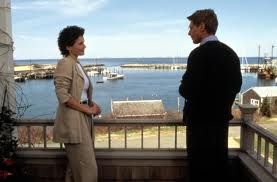
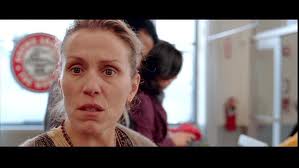

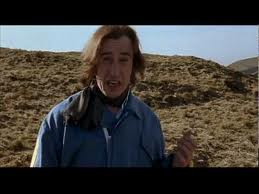


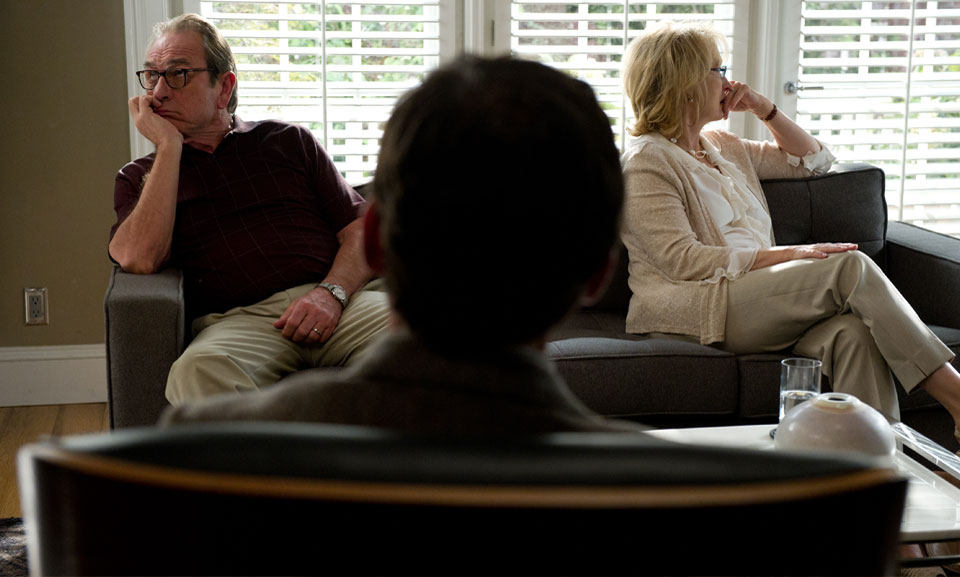


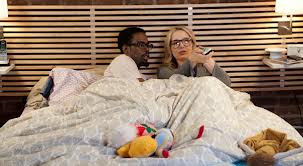


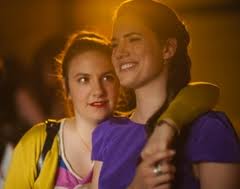


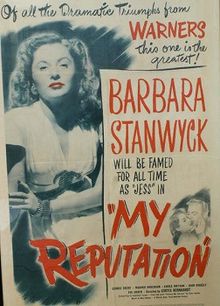








 CINE FEEL YEAH