Emma Straub’s debut novel Laura Lamont’s Life in Pictures charts the transformation of a rural Wisconsin girl, Elsa Emerson, into one of the starlets of Hollywood’s Golden Age. Using Jennifer Jones’s biography as a springboard, Straub writes of a woman who juggles multiple identities throughout her life: daughter, sister, wife, mother, and actress. In fact, the book is divided into twelve chapters whose titles encapsulate the roles she plays. Opening the novel in 1929, “Cherry,” at once suggesting the ripe potential of her later life’s work and the lost grandeur of Chekhov’s last play, details the special circumstances of her childhood spent behind the scenes and on the floorboards of her parents’ barn-house theater. Nine years pass between the suicide of Elsa’s older, beloved and beautiful sister Hildy and her escape from Door County with stranger-cum-costar-cum-husband Gordon Pitts. Within a few years after their arrival in Los Angeles, Gordon signs a contract to be a bit player at Gardner Brothers, and Elsa’s own acting ambitions take a backseat to her familial responsibilities. In the second chapter, “Laura Lamont,” studio executive (and Gordon’s boss) Irving Green flirts with Elsa at a wrap party and rechristens her “Laura Lamont,” telling her that, provided she loses thirty pounds once she gives birth to her (second) child, she is pretty enough to be a star. And so our heroine now sets her mind on becoming the star she always wanted to be.
Straub is a deft storyteller, and structuring her fictional biography according to the highlights of Laura Lamont’s life and career excises the fat of the more uneventful, prosaic moments of a character’s story. However, after reading all 304 pages of Laura Lamont’s Life in Pictures, the titular protagonist still remains somewhat of a mystery. Perhaps this is intentional. We read as Elsa/Laura struggles to define herself, mainly as her new glamorous identity fails to wipe the slate clean. She can’t face up to her mother, who resents Elsa for leaving Door County, seemingly forgetting who she is. Laura is haunted by past traumas, such as her sister’s suicide, and, years after she has divorced Gordon and married the studio’s number two, Irving Green, her first husband becomes a drunkard, a drug addict, a costly thorn in her side. The role that she chooses to most define her is that of mother. More pages are devoted to Laura’s dedication to and admiration of her three children: Clara and Florence, from her first marriage, and Irving Jr. This isn’t objectionable, of course, but as a film scholar and historian, I was more interested in how Straub represented Hollywood of the 1930s, 40s, and 50s.
Jennifer Jones (1919-2009), the real-life inspiration for Emma Straub’s Laura Lamont.
Just as it is unreasonable for a film critic to judge a motion picture against the film s/he would like to have seen, it is not fair of me to judge Laura Lamont’s Life in Pictures as lacking an in-depth exposé of Hollywood goings-on from the perspective of one star—or cog in the machine. Besides, as Straub told Jacki Lyden in 2012 on NPR’s All Things Considered, “I made sure to stay away actually from Jennifer Jones’ biography ’cause I didn’t want it to be, you know, a thinly veiled version of her. I really wanted my Laura Lamont to stand on her own feet.” However, just as I really enjoyed Farran Smith Nehme’s engagement with the archival preservation of forgotten silent films in her recent novel Missing Reels, the characterizations of Hollywood and its myriad players in Laura Lamont’s Life in Pictures really delighted me. For example, when Laura starts at Gardner Brothers, whose company name recalls that of the real-life Warner Bros. but whose physical location more accurately resembles that of Paramount, she begins cutting a rug in a string of comedies with her red-haired friend Ginger Hedges. Years later, after Ginger becomes a big star in comedy, rival studio Triumph Pictures poaches her, and she later goes on to head the studio while producing and starring on a successful television sitcom with her husband. It should come as no surprise that Lucille Ball inspired the character Ginger. Robert Walker, Jennifer Jones’s first husband, does not end up as ignobly as Gordon Pitts does. At least the real-life actor, who also died young, can claim an illustrious career with the likes of Bataan, Strangers on a Train, and My Son John in his filmography.
When the hardcover’s opening book-flap describes Irving Green as Laura’s “great love,” I recognized that the character must be a stand-in for David O. Selznick, Jennifer Jones’s second husband. Selznick produced such classics as King Kong, Gone With the Wind, Duel in the Sun, and The Portrait of Jennie, the last two of which starred his wife Jones (neé Phylis Lee Isley). Before striking out on his own, Selznick worked at MGM, Paramount, and RKO. While the novel does not present Irving as an independent producer like Selznick, it does show that his decision to put Laura in more serious roles, in romantic, historical epics, eventually nabs her an Academy Award for Best Actress. Jennifer Jones won her first and only Oscar right out of the gate, for her leading role in The Song of Bernadette. In crafting Laura Lamont’s backstory, Straub cleverly keeps the religious theme of Jones’s film when she writes that Laura won for her performance as a nun in Farewell, My Sister, a film whose script somewhat imitates her relationship with Hildy. Unfortunately, I found the description of Laura and Irving’s relationship lacking in intensity. Although married for years, before his untimely death from a prolonged heart-related illness, I never really understood the lovers’ mutual fascination. Irving is repeatedly described as short, slight, balding, and regrettably, Jewish, as if that is enough to characterize someone. Sure, power is an aphrodisiac, but outside of his unexamined devotion to Laura and her children, I fail to see how he is appealing. He isn’t given any thought-provoking dialogue or much to do at all, really. He mainly just sweeps her off her feet, seeing someone else in Elsa Emerson, a brunette rather than a blonde. Laura herself is a bit of a simpleton, especially when it comes to interacting with her growing children. And Laura’s relationship with her young black maid, Harriet, reads too much like one Joan Crawford or Vivien Leigh had with Butterfly McQueen or Hattie McDaniel on-screen. Since we glimpse Laura mostly in her private life, it is difficult for me to imagine the character as a glamorous starlet. She mainly just upholds the Grand Narrative of the Hollywood Dream Factory: she did as she was told, read her lines, and was happy if the bosses were happy.
Coming off the heels of her beloved father’s death, Irving’s death further pushes Laura into decline. Deep in debt, she abuses anti-anxiety medication, falls into an intractable despair, and eventually attempts suicide. She gradually makes a full recovery and adjusts to a new life out of the limelight. Chapter eleven, “The Shopgirl,” recalls silent film star Louise Brooks’s biography rather than Jennifer Jones’s: the former actress died in 1985, destitute and purportedly a salesgirl in a department store. Meanwhile, in 1975 and now a grandmother, Laura supports herself as a shop assistant for dressmaker-to-the-stars Edna (clearly inspired by famed Hollywood costume designer Edith Head, who was also the model for the scene-stealing Edna Mode in The Incredibles). The novel ends where it began: in the theater. In 1980, the newly rediscovered Laura Lamont makes her Broadway debut in The Royal Family, the same play that she performed with Gordon Pitts before they married and skedaddled to Los Angeles with dreams of stardom shining in their eyes. I can’t deny that the final scene is poignant. Her children reunite in New York to see Laura on opening night, but when I closed the book on her life, I couldn’t help thinking that I wanted more from it.
For months leading up to its March 2012 release, The Hunger Games (Gary Ross, 2012) was billed as the next franchise based on a series of young adult novels set to break box office records, and it delivered. I stayed clear of the theater when it came out because news reports on TV showed the books’ fans camping out days ahead of time, and I will do pretty much anything to avoid a crowd. When I finally learned the premise (children and teens from “districts” all over a future dystopian North American nation are ritually forced to fight each other to the death in an annual televised event), I quickly identified the parallels with the once-banned Battle Royale (Kinji Fukasaku, 2000). One Saturday, my dad came home from services at shul and related that his young rabbi used The Hunger Games and a crucial plot twist from the third act to make a point in his sermon (my dad told me what it was). The film effectively spoiled, I took my time seeking it out, which I only did because, as a film historian, I am interested in what people watch. Having now seen it, I can tell you that The Hunger Games was made with only its built-in audience of fanatical readers in mind: the teenagers and their parents as well as the child-free adults under 40 who never encountered a pop culture trend they didn’t like (see Fifty Shades of Grey for more proof). I can’t comment on Suzanne Collins’s trilogy, having never even read a single sentence from any of the novels, but isn’t it telling that as one of the screenwriters, the author allows co-writer-director Gary Ross to water down the disturbing conceit with a boring and self-conscious indictment of our popular culture that I’m not sure any of the rabid fans fully understands? As always, there be spoilers ahead.
Sometime in the distant future, an oppressive government in Panem institutes a sacrificial blood-letting of Olympic proportions: as penance for a past rebellion, one boy and one girl from each of the nation’s twelve districts is chosen from a lottery (called a “Reaping” and, per my dad, resembling the Nazis’ rounding up of European Jews) to train and compete in the eponymous competition. The film begins as the 74th Hunger Games get underway. Our heroine who’s handy with a bow and arrow, Katniss Everdeen (Jennifer Lawrence), lives with her good-for-nothing mother (Paula Malcolmson) and darling younger sister Primrose (Willow Shields) in the impoverished District 12. A mining and milling community with sanitation systems straight from the 19th century and simple, drab clothing that contrasts sharply with the out-there fashions of other Panem citizens, District 12 brings abject Appalachia to mind (these scenes were shot in North Carolina). At the Reaping, Primrose’s name is called in what amounts to an interminable, super-serious scene that ends in Katniss becoming the first-ever voluntary participant. Like the actress’s character in Winter’s Bone (Debra Granik, 2010), for which Lawrence received an Academy Award nomination for Best Actress, Katniss is a teenage survivor who lives and is willing to die for her sister. Yes, of course, the scene is appropriately dour, but it tries too hard, what with the cartoonish appearance and overly enthusiastic pronouncements of emcee Effie Trinket (Elizabeth Banks) and the audience’s failure to applaud for the Capitol-produced introductory propaganda video or the selection of Katniss and Peeta Mellark (Josh Hutcherson). And this is just the tip of the iceberg. Katniss and Peeta are whisked away to the Capitol for the Games, and that’s ostensibly where the action begins, only it actually stalls.
While screening the movie on DVD, I wrote in my notes (in all caps, mind) that The Hunger Games is “indulgent”: “It takes its time [introducing characters and situations] because the filmmakers know their built-in audience has memorized everything in the book and wants to savor these characters and scenes” as much as possible. Hence Haymitch Abernathy’s (Woody Harrelson) languorous introduction as the teens’ reluctant mentor (he’s a cynical drunk who thinks neither one has got what it takes to survive and win). So much of the scene that revolves around Haymitch, on the high-speed train ride from District 12 to the Capitol, does just that: it revolves around and barely includes him. Katniss and Peeta scrutinize his character and debate whether or not they should trust his guidance, occasionally allowing a somewhat flamboyant Harrelson to participate. To me, this is storytelling as clumsy and lazy as Ross’s shooting Katniss’s earlier hunt for deer meat is cliched (with a rough, jump cut-laden, shaky documentary style). In other words, Ross proves he is not an inspired director of action (remember, he previously directed the wholesome and straight-forward Pleasantville and Seabiscuit, from 1998 and 2003 respectively).
Effie, Haymitch, and Katniss look as bored as I was while watching their movie. Not much happens in the first hour or so. Image courtesy of http://www.collider.com.
The indulgence in establishing Haymitch carries over to other characters, only their purposes remain enigmatic for the uninitiated. For example, who exactly is Effie Trinket and what does she do, other than wear grotesque 1940s-inspired skirt suits? Introduced as a villain at the Reaping, she appears to be part of District 12’s trusted team. But there is no explanation or demonstration as to why or how she can make this transition. Moreover, Cinna (Lenny Kravitz) doesn’t have a clearly defined role, either. I assume that he’s merely a stylist, choosing for Katniss dresses that shoot fiery flames out of their skirts (so that she comes across as both dangerous and, well, hot). Apparently, Kravitz’s casting in this part angered many die-hard fans of the books, because he doesn’t physically conform to the Cinna of their imaginations. Meaning: they were disappointed that Cinna is played by a black man. Since Cinna is given so little to do, I don’t understand how anyone could get upset by that. If anything, the filmmakers should have cast someone who can act. Of course, one solution to this problem (that Cinna needn’t have even appeared in the film), however, is impossible: Cinna, in order to appease the fans, just has to be there.
Speaking of dresses that “light” up, let’s discuss the schizophrenic production and costume designs. As I previously mentioned, District 12 is so depressed as to be imprisoned in another century. When Effie, so far the only blatant anachronism in District 12, escorts Katniss and Peeta onto the bullet train, we ogle the 1930s interior design of the space, which coincidentally is one of the best sets. Side note: it is telling that they don’t fly to the Capitol, for the train is historically a potent symbol for modernity. Unsurprisingly, it literally transports them to another era. And what do we find at the Capitol upon arrival? As you peer through the poor visual effects, trying to make sense of the setting, you glimpse traces of Washington, DC (there’s a Mall with a reflecting pool) and vaguely neo-classical postmodern architecture. Honestly, it looks like a fascistic version of any and all representations of the mythic underwater civilization Atlantis (and maybe the Bahamian resort, too). The hordes of people gathered to watch live TV interviews are clearly dressed to go to a rave, decked out as they are with neon-colored clothes and hairstyles. There may have been glow sticks, I can’t be sure. One of the Games commentators/TV interviewers, Caesar Flickerman (Stanley Tucci), wears glittery suits and purple hair pulled up into a ponytail. Since everyone looks utterly ridiculous (and has an incredibly stupid name), it’s difficult to take the proceedings seriously, and the routinely oppressed’s struggle isn’t all that palpable. The filmmakers exaggerate both the built environment and the “bizarre” fashions of Panem’s citizens so as to link the inauthenticity of this world to our own celebrity-obsessed and reality TV-centric culture. From an intellectual standpoint, I get it. But as it is executed, it comes across as pained, heavy-handed, and too self-conscious. As if to say, Just look at how horrible these people are. You know, we’re not that much different… There’s nothing wrong with this message, but I’m afraid that because it is so over-the-top yet matter-of-fact, it produces a lot of noise and very little contemplation in the pandered-to viewer.
The Hunger Games being gladiatorial bloodsport, it makes sense that each district’s team rides in on the back of chariots here, in this fascistic square, their long procession resembling the parade of nations that is part of the Opening Ceremony at the Olympics. Image courtesy of http://www.mtv.com.
Despite the book being billed as a treatise on the horrific violence of war, which we send our innocent children to fight in the spirit of freedom (talk about a paradox), the film only spends the last hour or so of the 142-minute running time depicting the Games. (Collins is often reported as saying that the juxtaposition of TV channels showcasing young people alternately competing on a reality TV show or fighting in Iraq and Afghanistan inspired the story.) Instead, so much of it is devoted to the players’ Reaping, training, gaining of sponsorships (I still don’t understand how they work), and winning the audience’s favor. Again, Collins, Ross, and co. highlight how unreal (our) reality TV is through Haymitch’s packaging Katniss and Peeta as star-crossed lovers for the media, especially as we learn about it the same way that Katniss does: watching Peeta confess to Casear Flickerman that winning the Games would be a bittersweet victory. For surviving would mean that his crush would have to have died. For much of the film, they can barely tolerate each other. Katniss holds a grudge against Peeta because he once threw a loaf of bread into the mud as she sat starved nearby in the rain. He resents that she’s a more highly ranked player (scoring 11 out of ten points) and that everyone pays more attention to her. Despite their differences, they support each other during the Battle in the Woods, and in the end, they perform their roles as younger lovers for the pervasive cameras. It’s just, are they only keeping up appearances or do they fall for it, too? It’s an interesting idea, but the filmmakers expend no energy in developing it except in the second-to-last scene when they both enjoy a hero’s welcome (I’ll get to how that’s possible in a moment) and she finds her friend/boyfriend, Gale Hawthorne (Liam Hemsworth), out in the crowd. The expression on her face reads: “Oh shit, I forgot about him.” (And it’s easy to see why: this character consists of so little, he only watches the soap opera that is Katniss and Peeta’s romance unfold on TV and thus exists to make it harder for Katniss and Peeta to really become lovers.)
The movie’s PG-13 rating is really no indication that The Hunger Games tones down the violence implicit in its central conceit. Besides, similarly rated films with graphic displays of violence also get past the censors at the MPAA (language and sexuality are the real sticking points, and that’s a discussion for another time). I don’t seek out film reviews, but since his write-up was sent to my inbox as part of a daily roundup of entertainment news articles that I subscribe to, I read David Edelstein’s, originally published in New York. Horrified that the on-screen carnage of kids killing kids didn’t visibly “devastate” the hungry audience of which he was a part, Edelstein attacks director Gary Ross for framing the children’s inevitable deaths with “restraint” and “tastefulness” (as if that’s commendable!), which according to him, Ross has been praised for doing. I agree with Edelstein to an extent (the editing is fast and uncontemplative), but I still found the brutality of the participants profoundly unsettling: like, for instance, the way one girl shoots Katniss’s attacker in the back with a bow and arrow from far away, not out of solidarity but because killing him is merely a means to an end (killing Katniss).
More than this, The Hunger Games falls short of producing an effective commentary on war. The filmmakers fail to develop any of the Games participants other than Katniss and Peeta (with the lone exception of Rue, played by Amandla Stenberg, who comes to Katniss’s aid in the beginning before being snuffed out herself). And since we can’t even grieve for the fallen children-soldiers, you might ask, What is the point? Really, all we’re capable of, in Edelstein’s words, is this: “When a child dies, we breathe a sigh of relief that the good guys have one less adversary, but we rarely go, ‘Yes!‘” The greatest missed opportunity in this regard involves the character Cato (Alexander Ludwig), who scowls at everyone during training and basks in the glory he has inherited from previous champions who overwhelmingly hail from his District (1). Cato has been gearing up for the event seemingly all his life, and in the end, before he falls back onto the ground to be ravaged by demonic dog-like creatures, he hints to the spectator that he has a form of post-traumatic stress disorder as he indignantly whines, “Killing is all I know!” So just before he falls, we can reflect that he’s been robbed of a proper childhood and is subsequently doomed. The worst of it all is that this is the full extent of the filmmakers’ engagement with the subject of how being trained or programmed to kill has wrecked their psyches. Pitiful.
Katniss doesn’t bury Rue, her sister/daughter surrogate, but she gives her the only funeral any of the children can hope to receive. Image courtesy of http://www.mockingjay.net.
But of course they’re doomed. That’s the exact point of this exercise and the dramatic irony of the oft-spoken motto, “May the odds be ever in your favor.” Because beyond manipulating diegetic viewers’ emotions with stories about Katniss’s sacrificing herself to protect her sister or Peeta’s heretofore unconfessed love for Katniss, the producer of the Games, Seneca Crane (played by Wes Bentley), influences the actions of the participants as if he were a film director (he certainly carries himself like Michael Bay). When Katniss hides out in an unpopulated corner of the playing field, he burns it down so that she runs toward those who are out to get her. The dogs that eat up Cato spontaneously appear thanks to Seneca’s puppet-mastering; he wants to up the tension and kill off Katniss if he can. Most of all, he approves of an explicit rule-change after riots break out in the predominantly black District 2 following Rue’s (televised) death: two people can win the Games so long as they are on the same team. He later rescinds the offer once Katniss and Peeta are the only ones left standing. And here’s where my dad’s rabbi supposedly spoiled the plot: the so-called lovers vow to take their lives rather than follow the renewed rules of the old game. Fearing more reprisals, Seneca allows them to be dually victorious. The scenes which demonstrate how Man has overtaken Nature through computer programming and how Katniss and Peeta repeatedly challenge the rule of law at the Games are of a piece with the central message of The Hunger Games and probably constitute its finest expression: re-evaluate the truthfulness of “reality TV.”
One of the greatest unresolved mysteries of the film is the prize that the winner(s) receive(s). Obviously, living to see another day is rewarding in and of itself, but what do they gain otherwise? Fame? Fortune? At the victory ceremony held at the Capitol, the president of the totalitarian regime, Coriolanus Snow (Donald Sutherland), crowns Katniss, thereby complementing the beauty pageant-like interviews she endured earlier in the picture before the Fight to the Death commenced. Paradoxically, when she returns to District 12 triumphant, she doesn’t reunite with Primrose. (Instead, we see her look out onto Gale, confused.) As a melodrama studies scholar, I couldn’t believe that the filmmakers failed to include such a scene. If we can’t see Primrose embrace her virtuous older sister and perennial protector, then what is the point of her sacrifice anyway? Everyone, including Primrose, knows what is at stake.
This brings me to my final point. Much has been made about Katniss Everdeen as a feminist icon. Writing of the novels, Lauren Osborn of the online zine Vaginaclaims that, “Katniss—as a fiercely independent, loyal, and capable young woman—stands as a symbol of feminism in modern literature.” I guess she would if your only point of comparison is Bella Swan from the Twilight YA series. In her examination of this year’s female film characters (women and girls alike), Washington Post film critic Ann Hornaday praisesThe Hunger Games for being one of the satisfying “girl-powered fantasies” to come out recently (on the other hand, she’s disappointed that adult women are not represented as strong or compelling as their younger female counterparts). In my opinion, Katniss isn’t so much a feminist warrior as she is an amalgamation of different idealized femininities. She’s maternal, as she volunteers for the Games to spare her sister from a 100% certain death and mourns the younger Rue. (Later, Rue’s District 2 partner Thresh, played by Dayo Okeniyi, stops short of killing Katniss out of respect for her honoring Rue in death.) Despite her attitude toward the government and the Games, which she thinks makes her totally unlikable, Katniss wins over everyone because of her beauty. That flame-throwing dress works wonders. And if you think her skill with a bow and arrow makes her decidedly unfeminine, think again: she’s an archetypal Amazonian. Romance may not be a priority for Katniss, as Osborn argues, but she is nevertheless at the center of a love triangle, and neither suitor deserves her. Such is always the case.
I couldn’t find an adequate photo of Katniss in her flaming dress, so please pardon the text, though it does say it all, doesn’t it? Image courtesy of http://www.theapod.com.
I give the filmmakers credit for not belaboring how The Hunger Games continues into the sequel Catching Fire. (I swear, everyone is in a tizzy about who will direct it and who will play additional characters with unbelievably ridiculous names.) The scene of Katniss and Peeta’s heroes’ welcome is cut between Seneca’s forced suicide (punishment for having failed to keep the Games under control) and President Snow’s sorrowful glance down on the Capitol from a balcony on high. The film fades to black after he turns his back and steps into the building, subtly portending his downfall. I don’t know much about the other two novels, but I assume that Katniss will lead a revolution against Snow’s highly structured Reign of Terror. Perhaps future installments will be more action-packed and ultimately less boring. Perhaps there will be more to the characters’ social interactions besides a “will-they-or-won’t-they” storyline, preferably along the lines of race and class, which The Hunger Games sets up but barely engages. What I’m saying is, perhaps viewers who have not read the books will be given a reason to give a damn. But I’m not holding my breath.
A view of the Capitol Building and Pennsylvania Avenue from the Newseum. To the left, there’s the Canadian Embassy, and to the right, the East Wing of the National Gallery of Art. Photo by the author’s sister, or so she claims.
The time has come to close the book on Movie Travel Diary—for now. Selecting the last city to round out the week was somewhat difficult. I thought about Chicago, but I couldn’t think of a film that shows off the city that I know. Not even the cult classic Ferris Bueller’s Day Off (John Hughes, 1986), with its touristy locations, can evoke the place for me. Equally true of San Francisco. What could I have chosen? The Conversation (Francis Ford Coppola, 1974)? Nine Months (Chris Columbus, 1995)? Nah.
So I choose Washington, DC. The thing is, this happens to be the nearest city to where I grew up and where I currently live. Regrettably, I don’t go downtown as often as I would like, and when I do, I usually stick to visiting my favorite museums: the National Building Museum, National Gallery of Art, Smithsonian American Art Museum, and the National Portrait Gallery, all within striking distance of the National Mall. In other words, when I am in DC, I am a tourist. The streets aren’t as easily navigable for me as the ones in Manhattan. Washington is relatively small, but it’s impossible to see even just a few of the diverse neighborhoods throughout the city over the course of a couple of days. Hell, I have lived nearby almost my entire life, and there are still sections I have never been to. Disgraceful, I know, but in my defense, allow me to say that I live thirty minutes by car from the nearest Metro station that will bring me into the city, and not everything within the DC city limits is easily accessible by train.
But when it comes to movies, unfortunately—and I have always felt this way—the District of Columbia, as the capital of the free world, is severely under-represented. Most of the films that take place here are about politics in some way. You have big budget action adventures, like Independence Day (Roland Emmerich, 1996), where the end of the world is signaled by aliens blowing up the White House, and Live Free or Die Hard (Len Wiseman, 2007), which actually uses Baltimore to stand in for much the District. There are innumerable spy movies that are partially set in DC, but to my mind, they generally just feature aerial establishing shots of the CIA headquarters in Langley, Virginia (I’m thinking of the Bourne franchise in particular here). When it comes to films in other genres, notable titles include The American President (Rob Reiner, 1995), a romantic comedy in which Commander-in-Chief Michael Douglas dates environmental lobbyist Annette Bening, Jason Reitman’s satiric debut Thank You for Smoking (2005), about the tobacco industry’s spokesman on Capitol Hill and the trouble he regularly gets into, and Burn After Reading (Joel & Ethan Coen, 2008), a wacky comedy about supposed CIA secrets, stupid and lonely personal trainers, and a horny charlatan played by George Clooney.
I know what you’re thinking. What about Minority Report (Steven Spielberg, 2001)? That isn’t so much about politics, and it’s a sci-fi police detective thriller. Honestly, I just remember how the filmmakers use the Los Angeles Metro as a double for DC’s, which has a very distinctive design, seen below. Along Came a Spider (Lee Tamahori, 2001), the second adaptation of James Patterson’s Alex Cross book series after Kiss the Girls (Gary Fleder, 1997), hilariously deploys San Francisco’s rapid transit system and has Morgan Freeman running all over town without an eye focused on geographic verisimilitude. Come to think of it, of the major releases set in and around DC, only Thank You For Smoking dares to show the iconic 1970s-built DC Metro, in a blink-and-you’ll-miss-it cameo by the source novel’s author Christopher Buckley, who reads the newspaper while waiting on the station platform at Farragut North.
The Gallery Place – Chinatown Metro stop, just one of the 86 stations that make up Washington, DC’s Metro system. Image courtesy of http://www.transportationnation.org.
Whenever I lament the sorry state of picture-making in Washington (the generic variety is rather limited), I have to remember that one of the best romantic comedy-dramas takes place here: Broadcast News (James L. Brooks, 1987). Sure, it doesn’t show the city in a very evocative light, as most of the action takes place inside the production studio and editing rooms of the TV network’s DC bureau. But one of the ways Brooks’s screenplay aims to establish DC as a lived-in city is by making Holly Hunter’s character an obsessive know-it-all when it comes to the city’s street geography (I don’t remember it enough to grade for accuracy). Memorably, though, the narrative climax takes place at BWI, Baltimore Washington International Airport, which is probably the farthest of the region’s three airports from where Holly Hunter originally is in DC; it would make more sense for her to meet William Hurt at Reagan National or Dulles, both of which are in Virginia. Strangely enough, BWI, with its characteristic red-tiled columns, also appears in Home for the Holidays (Jodie Foster, 1995). In that film, Holly Hunter’s art restorer based in Chicago flies out of BWI to go home for Thanksgiving—in Baltimore! So, you see, we Washingtonians are used to seeing the city’s geography—as well as that of the surrounding area—warped in the movies. Granted, this makes it no different from any other place in the world, but when it is your city that is being misrepresented, fragmented and subordinated, it is natural to feel self-righteously possessive. Feeling offended is not recommended.
James L. Brooks’s most recent film, How Do You Know (2010), returns him to DC. I’m just not sure why, since there’s nothing intrinsically DC about its story. Is it because this is the only place where he could strike a deal with a Major League Baseball team, as Owen Wilson’s character is a pitcher? The only scene set at Nationals Park in Southeast is rendered, to my eyes, with some appallingly bad green screen effects. Unfortunately, this overlong, tedious, and criminally unfunny romantic comedy doesn’t make the most of its capital location, and according to the movie’s filming locations page on the Internet Movie Database, quite a bit of it was shot in Philadelphia.
Cinematography of national monuments and landmarks, such as the Capitol, Washington Monument, Lincoln Memorial, or any one of the Smithsonian museums, do not a “DC-set film” make. Sorry, Shawn Levy and Ben Stiller of Night at the Museum: Battle for the Smithsonian (2009) and Robert Zemeckis and Tom Hanks of Forrest Gump (1994) fame. There simply is more to DC than these structures. There are life-stories beyond those of the President and his Cabinet, Congresspeople and their staffers, CIA managers and their field operatives. Thankfully, there are independent films set in and around DC that promise a different side of the city. These include Paul Schrader’s The Walker (2007), about an escort to politicians’ and other power-brokers’ wives; Kasi Lemmons’s Talk to Me (2007), a biopic about the radio DJ/civil rights activist Petey Greene; Emily Abt’s Toe to Toe (2009), about the rivalry between two students—one poor and black, the other white and rich—at an elite prep school; and Nicholas Panagopulos’s Five Lines (2001), about strangers whose lives converge on the DC Metro (by far the smallest production of the bunch). With the exception of Talk to Me, I haven’t seen any of these motion pictures, so I can’t say whether or not they present a DC that I recognize. I should probably start a marathon of these movies, huh?
So, after going on about how films, when they do take place in DC, are almost always about politics in some shape or form, consistently bend city geography to their every whim, and otherwise stay focused on the movers and shakers of Capitol Hill, let me finish with a personal reflection. Growing up, I loved St. Elmo’s Fire (Joel Schumacher, 1985) and its oddly mixed group of friends all in love with one another. They are recent graduates of Georgetown University, but the filmmakers shot the one scene set on campus at my alma mater, the University of Maryland in College Park. In it, a wistful Rob Lowe returns to his old stomping ground to play football with current undergraduates. This example may get the closest to representing the DC I know—even if it’s emphatically not DC and I only once set foot on Frat Row. But this is, in a nutshell, DC in the movies: ever out of reach.
Well, that’s it: the last entry of Movie Travel Diary. But why don’t we talk about DC some more? Tell me about your movie-related experiences in the capital. Which film(s) shows off the Washington that you know from your own wanderings around the city?
The first photo I ever took in NYC, it’s of the Washington Square Arch in the park of the same name. The fence around it expresses how unwelcoming we found the city to be in May 2008. Just over one year later, I would start studying at New York University, also in Greenwich Village.
Alongside London and Paris, New York City is one of the most cinematic cities in the world. It is such a frequent backdrop for film-stories that you might be tricked into thinking that you know the place from these audiovisual documents alone. Directors such as Martin Scorsese, Woody Allen, and Spike Lee have, until recently, made their names producing movies set there, and in turn, they have vividly shown us what life in the Big Apple is or can be like. Perhaps owing to its density and diversity, New York City is a versatile setting for different kinds of films: police detective stories, romantic comedies, post-apocalyptic sci-fi actioners, period costumes dramas, family melodramas, coming-of-age character studies, and corporate thrillers, to name but a handful. Hell, NYC has even hosted a western: The Cowboy Way (Gregg Champion, 1994). So, you see, there is no one definitive handle on New York City.
That being said, it’s time to take stock of how the city I know from personal experience has been represented on-screen. Before moving there in August 2009 to attend graduate school at New York University, I had only been to New York twice: first in May 2008 (the week-long trip with my sister was a college graduation gift from my father) and later in July 2009 with my dad to find a place to live there. Coming of age, I was embarrassed that I had never been to “The Greatest City in the World,” or so says practically everyone in our society. Eventually, I embraced the irony (for I like to think of myself as an urban rather than suburban person) and learned to laugh at my “cultural handicap.” Although New York’s only 225 miles away from home and Los Angeles is over 3,000 miles west of it, I had been to the latter city first!
Honestly, the only scene on our 2008 trip that I remember being awed during was when the huddle of skyscrapers came into view as our bus slowly approached the Holland Tunnel. Oh, I was so excited to finally set foot in New York City! But for whatever reason, my sister and I were unimpressed with NYC. It probably had to do with the heat and humidity, the horrendous stench that follows you everywhere you go (the one thing I said, upon moving away from NYC, that I would never miss), the exorbitantly high cost of living, and the unfriendly residents. Wait! I take it back; I also don’t miss the appallingly bad customer service. Being un-enamored with NYC came as both a shock and a disappointment to us. My sister and I, fancying ourselves city people, thought we would fit right in. We weren’t going to let the fast-paced lifestyle deter us from making the most of our trip. And it didn’t; if anything, New Yorkers and other tourists don’t move fast enough for us (this observation really dawned on me once I started living, working, and going to school there). To top it all off, the sandwiches at Katz’s Delicatessen on the Lower East Side, where Meg Ryan and Billy Crystal memorably dine in When Harry Met Sally… (Rob Reiner, 1989), were anything but orgasmic. I don’t even have many photos of that 2008 trip, and I have absolutely zero from all the time that I lived in the city.
I didn’t have what she’s having: Meg Ryan and Billy Crystal dine at Katz’s in When Harry Met Sally…. Image courtesy of http://www.gothamist.com
The following isn’t so much about New York’s on-screen appearance in the film as it is about what the city symbolizes within the movie’s narrative. There is only one scene set in New York in Greg Mottola’s Adventureland (2009): Jesse Eisenberg appears on Kristen Stewart’s East Village doorstep, soaked from the pouring rain. Though his spot at Columbia’s journalism school is no longer guaranteed, he risks the financial security of living at home and leaps toward achieving his dreams of living in the city he’s long romanticized as a bastion of creative independence. It doesn’t hurt that she lives there, too. Anyway, I remember sitting in a movie theater in Burbank, CA, my sister nudging me every time NYU’s name was mentioned in the film. I was generally apprehensive about moving to New York, the cost of the master’s program the greatest deterrent. So the question became, do I have the balls to try to make it in the Big Apple, too? I grappled at answering this for a long time and eventually let my father and sister’s shared enthusiasm for the opportunity given to me influence my decision to try.
But what of the films that are mostly set in New York? Which ones speak to me and how I have lived my life there? Well, for starters, Woody Allen looms large in our house. Not only has his oeuvre informed me throughout the years of what to expect in certain pockets of the city (admittedly rather restricted pockets), it has also shaped who I am as a person. In a word: neurotic. Anyway, upon moving to the Upper East Side in August 2009, I recognized straightaway the cinematic universe of Woody Allen. Everything from the rich old biddies in their fur coats to the quiet, tree- and brownstone-lined streets. Living on the East River, about fifteen minutes from the 77th Street station, I got to know the wide, pedestrian-friendly sidewalks very well (downtown, there really aren’t such luxuries). When I first moved to the city, I hated my commute, but eventually I came to revel in it. It was one of the few times I genuinely savored my loneliness, and I would often reflect on how strange it was that I was living on Woody Allen’s Upper East Side, an old-timey blues score playing in my head. Throughout his filmography, there are many seemingly trivial scenes set on these sidewalks, the characters either entering or leaving ritzy doorman-appointed apartment buildings. But I think of Manhattan Murder Mystery (1993) whenever I specifically think of the sidewalks of the Upper East Side. An even weirder coincidence emerged between the movies and real-life when I found out that my roommate at the time worked at the school where Woody Allen’s children are enrolled. She had seen him on a few occasions, either picking them up from school or hosting a Q&A there, ostensibly for the benefit of the children but adults crowded the standing-room-only venue.
I only lived on the Upper East Side for about four and a half months, and I barely went out—apart from attending classes in Greenwich Village, grocery shopping at the Trader Joe’s in Union Square, and working and going to the movies in the area around Lexington and 86th Street. Then I moved to Prospect Heights in Brooklyn, where the rents were (somewhat) cheaper and the available space more generous. Regrettably, I barely explored Brooklyn during the roughly two years that I lived there (December 2009 to November 2011). Living on the 2/3 Seventh Avenue express line, however, I soon became very knowledgeable of the city’s west side, which, aside from the couple of times I wanted to show Lincoln Center to my visiting sister or dad, I largely ignored beforehand. In fact, I now spent so much time on the west side—whether working in Tribeca, walking to school from the subway stop in the West Village, or going to the movies on the Upper West Side—that I began telling people, “I eat and sleep in Brooklyn, but I live in Manhattan.” At the risk of sounding like the execrable women of Sex and the City (1998-2004), I loved Manhattan (it made sense to me, culturally and geographically) and thought Brooklyn was overrated.
As you already know, going to the movies is my favorite pastime. I frequented theaters all over Manhattan (if you need further proof of my preference for this borough over Brooklyn: the only theater I ever went to in Brooklyn was BAM Rose Cinemas). They include—but are by no means limited to—Cinema Village, aptly named for Greenwich Village and where the screens are no bigger than most bedroom walls; Village East Cinema, where I took advantage of their $7 student tickets every Tuesday (you get a free small popcorn, too); Film Forum in the West Village, where the programming is superb but the physical layout of the auditoriums are not for the vertically challenged like myself; Landmark Sunshine Cinema on the Bowery/Lower East Side, where I saw Almodóvar’s two latest features; and the IFC Center in the West Village, where I was a member for a period of time (the price of the Red Riding roadshow event convinced me to join). I even braved throngs and throngs of tourists in Times Square to go to the movies. But none of these great and not-so-great theaters was my favorite. That distinction belongs to the AMC Lincoln Square on Broadway at 68th Street, a stone’s throw away from Lincoln Center. I was hooked the first time I attended a show there; it was Fantastic Mr. Fox (Wes Anderson, 2009), and I saw it with my sister in the largest non-IMAX theater. We sat in the balcony. Yes! the balcony! Unlike most multiplexes, this outpost of the national chain doesn’t distinguish its auditoriums by number. It gives them names that recall the golden age of Egyptian- and neoclassical-themed movie palaces (like “Loews,” “Kings,” “Paradise” and “Olympia”), a motif that runs rampant on the entrances to individual screening rooms and on the mural-filled walls in the lobby.
In fact, these exact details helped me identify the AMC Lincoln Square as the theater where Meg Ryan and Greg Kinnear have a confrontation in You’ve Got Mail (Nora Ephron, 1998). That the filmmakers used this location isn’t so surprising since the Pride and Prejudice-tinged romantic comedy, a more technologically advanced (and now equally quaint) adaptation of Ernst Lubitsch’s Budapest-set The Shop Around the Corner (1940), is basically Ephron’s love letter to the Upper West Side neighborhood. Full disclosure: when my sister and I first came to NYC in May 2008, we made a pilgrimage here, specifically to Zabar’s, the specialty grocery store where the bookstore rivals Meg Ryan and Tom Hanks meet again—awkwardly and with terse words. (Note: If you do a Google images search for “Zabar’s” and “You’ve Got Mail,” you get tons of the movie’s fans standing outside the establishment.) Much later, after I began coming to the area regularly (to see a new film at least once a week), I couldn’t help but notice the irony in the nearby Barnes & Noble permanently closing its doors sometime last year or in late 2010. After all, Tom Hanks’s Fox Books is a thinly veiled stand-in for Barnes & Noble, and Meg Ryan’s children’s bookshop owner goes out of business after mounting an attention-grabbing smear campaign against Tom Hanks’s ruthless businessman. That is, of course, as they fall in love as anonymous online pen pals. It’s funny, but because of You’ve Got Mail, whenever I think about the Upper West Side, I always imagine it as it is during autumn, with colorful leaves strewn about, the scent of “bouquets of sharpened pencils” in the air. When I think about it, I remember that, though I was alone in New York, I wasn’t always lonely. I wrapped myself up in the city’s happening film culture, the one part of the city I truly miss the most.
The entrance to Zabar’s on the Upper West Side, where Tom Hanks and Meg Ryan trade passive-aggressive insults in You’ve Got Mail. Photo courtesy of essential-new-york-city-guide.com.
I’ve been all around Manhattan—up and down, east and west—in pursuit of entertaining film-viewing experiences, educational museum exhibitions, and cheap and delicious meals, but the Upper West Side, and to a lesser extent its eastern counterpart, emerges as the section of the city I most associate with my life in New York City. As I stated at the top of this article (and which should come across as a running theme throughout Movie Travel Diary), it is impossible to know a large city through film and travel alone, though this guy aims to traverse every street in the five boroughs and take portraits of the people he meets. Still, you can’t even rely on a combination of film and travel, for we’re limited by what filmmakers choose to put on screen, and I couldn’t visit every block on every street in NYC even if I wanted to. But maybe this is more so the case for some cities than it is for others. For example, while Paris, je t’aime (2006) may have captured so many cultural reaches of the titular city that I experienced myself, New York, I Love You (2009), the second entry in the franchise, barely presents a New York I recognize. It relies too much on stereotypes when establishing place, thereby rendering boundaries ill-defined, the built environment stolidly the same. Then again, I might just be unfairly comparing the films (due to their similar approach to framing a city) because I merely visited Paris as a tourist whereas I lived in New York for over two years. I lived in New York for over two years? You’ll have to pinch me, because I can barely believe it. In fact, this disbelief overcame me often, even as I lived there. It usually hit me while I was on the subway (I felt like I was always on the subway), listening to music and reading a book, in my own world. That reminds me: I love seeing how (in)accurate New York geography is represented in the movies. Off the top of my head, When in Rome (Mark Steven Johnson, 2010) is one of the most egregious in this respect, sending Kristen Bell running from work at the Guggenheim Museum to Columbus Circle, and Shame (Steve McQueen, 2011) has a continuity error that puts Michael Fassbender riding the 6 train through the same station twice in a row. Oops!
By way of conclusion, I’d like to offer another movie-related New York moment. I recently wrote a true memoir about the independent film-going habits that I fostered while living in New York, and I submitted the essay to a humor writing contest (which explains why I haven’t published it on CINE FEEL YEAH). I didn’t specifically mention this episode in the piece, but I can recall that the first film I saw in New York on my own was Der Baader Meinhof Komplex (Uli Edel, 2008) at City Cinemas 1, 2, 3 on Third Avenue between 59th and 60th. Other than in LA, where I relied on my sister to get places (particularly to art-house cinemas), I had never felt so fortunate to see a foreign film in the theater, for they always play about twenty miles away from my hometown. Unfortunately, this one wasn’t any good. But that’s not the point of this anecdote. This is: on my last day of work at a high traffic Starbucks in LA, one of my favorite customers gave me $10 to spend on a movie ticket. She said that when she moved to Paris, someone else had done the same thing for her. Touched that her gesture pays cinephilia forward, I rushed at the chance to use it on Der Baader Meinhof Komplex. Looking at my ticket stub now, I see that I had to shell out an extra $2.50 for the ticket. I hope to one day do the same for a cinephile about to embark on a similar life-changing journey.
Tomorrow: the last entry of Movie Travel Diary. But I’m not ready to leave NYC just yet; tell me about your movie-related experiences in the city. Which film(s) shows off the New York that you know from your own jaunts around the metropolis?
Is this what you see when you think of LA? A view of the ocean from Santa Monica, without submerging your feet in the sand. Photo by the author.
In Jim Jarmusch’s omnibus film Coffee and Cigarettes (2003), Steve Coogan, playing a version of himself (as he is wont to do), says that “Los Angeles is a nice place to visit; it’s an even nicer place to leave.” This sentiment pretty much sums up how I always imagined the city to be, too. Before my sister moved out there in 2005 to begin a PhD in urban history and planning at the University of Southern California, I never wanted to go there. The collage of images plastered in my mind featured stereotypical scenes I couldn’t see myself playing out: hard-bodies sunning themselves on the beach a la Baywatch, snobby Beverly Hills salesgirls turning away Hollywood Boulevard prostitutes from their designer fashion boutiques, and members of warring gangs killing each other and innocent bystanders in drive-by shootings—in John Singleton’s Boyz in the Hood (1991), Edward James Olmos’s American Me (1992), and more crucially, on TV news broadcasts. But overall, I thought Los Angeles was teeming with vapid and superficial people; they don’t call it La La Land for nothing. It’s where every aspiring film actor goes to realize his or her dream of becoming famous, and they still won’t admit it’s nowhere near coming true even as they’ve slung espresso drinks at Starbucks or waited tables for years.
Now my idea of the metropolis is (almost) completely changed. Believe it or not, not everyone in Los Angeles works in the film industry or even wants to. And people actually are born and raised in the city; they don’t just disembark from buses that originated in far-flung places. Aside from the year I lived in LA with my sister, I have been to LA on several occasions. The most recent was in May of this year. I have come to know the city as more than just a tourist would, even if I still can’t get my head around the linkages between freeways. You take the 101 to the 405 to the what? Oh, forget it. I leave all of that for my sister to parse, as she knows the freeways and “surface streets” like the back of her hand.
When I first came to LA in June 2005 with my dad and sister to help her find a place to live, we stayed in a budget hotel not far from MacArthur Park so that we could be near the USC campus and within striking distance of the other parts of the city we wanted to see. The area surrounding the park caters mostly to Spanish-speaking residents originally from Mexico and Central America, a reality you know is there but is hardly ever represented in the media. In fact, the movies present a Los Angeles that is overwhelmingly white, and growing up I relied on such pictures as Speed (Jan de Bont, 1994), Clueless (Amy Heckerling, 1995), and The Truth About Cats & Dogs (Michael Lehmann, 1996) as well as prime-time TV soap operas like Beverly Hills, 90210 (1990-2000) and Melrose Place (1992-1999) to understand citylife in LA. I’m happy to tell you there’s far more to it than this limited purview would have you witness. That being said, my family could think of nowhere else to go on our first day other than the ocean (pictured above). So we went to Santa Monica, even though none of us likes the beach.
My sister eventually settled at Sunset Junction, where Sunset and Santa Monica Boulevards converge in Silver Lake, a one-time street-car suburb (if you can believe it!) and now a happening neighborhood lined with cafes, shops, and gay nightclubs. It’s situated between Hollywood and downtown (if that means anything to you). Yes, hipsters are here, but most of them don’t live here. When she moved in, one of the ways she described her apartment’s location was by saying that the laundromat where Claire Danes meets Jason Schwartzman in Shopgirl (Anand Tucker, 2005) was just across the street on Sunset. That’s all well and good, but I’d never been to that part of the city before. In December of 2005, I visited Silver Lake for the first time, recognizing landmarks such as the laundromat (it’s no longer in business) and marveling at just how real the city became as a result of my sister and best friend now living here. I got rather acquainted with Silver Lake over the course of a few trips west, and suddenly, “my Los Angeles” popped up in movies everywhere. If you look closely, you will also see regular neighborhood businesses featured in The Last Word (Geoffrey Haley, 2008), though the eatery Town and Country is now the eatery Forage; I Love You, Man (John Hamburg, 2009), wherein Paul Rudd drives by a bio-diesel fueling station at Sunset Junction on his way to work (it’s moved since then); and Beginners (Mike Mills, 2010), when the newly out-of-the-closet Christopher Plummer cruises Akbar and hears house music for the first time. Cute.
The LaunderLand where Claire Danes and Jason Schwartzman meet-cute in Shopgirl. It no longer exists, so you can’t expect to find them there anymore. Photo by the author or her sister—I can’t recall exactly who.
Although Silver Lake is someplace very different from Laurel Canyon, I came to associate the bohemian atmosphere on display throughout Lisa Cholodenko’s Laurel Canyon (2002) with the laid-back attitude of Silver Lake. While living in England, I repeatedly watched the loose rock ‘n’ roll meets uptight intellectualism culture clash drama because at the time it reminded me of home (wherever my sister is). I savored the opening credits sequence set to Mercury Rev’s symphonic song “On a Summer Day” and featuring stunning aerial cinematography of the LA freeways (clearly their entanglements come to symbolize the painful and dysfunctional relationships between and among the film’s characters). Furthermore, whenever I apply a certain daily moisturizing body lotion with a very distinctive scent, I immediately think of the LA I remember from my late 2005 trip because that’s where I first required it. The vision I have, no matter how incongruous it is to my lived experience? Laurel Canyon‘s opening montage.
A few months after this trip, my sister moved to another Silver Lake apartment, one where you can see the Hollywood sign from the window. After graduating from college in May 2008 and with a dour outlook on job prospects, I joined my sister there and didn’t leave until July 2009. So far, it’s probably been one of the best years of my life. When we weren’t at work or school, we spent practically every waking moment together. We walked around the neighborhood as often as we could to gain exercise, and we started the tradition of waving and shouting, “Hi, Steve!” whenever we passed by the 4101 Bar on Santa Monica at Sunset Junction—whether on foot or by car—because that’s exactly where Steve Coogan gets knocked out in the little-seen comedy Lies & Alibis (Matt Checkowski & Kurt Mattila, 2006). We went to the movies religiously, alternating among a national multiplex’s outpost in Burbank, a regional chain’s art-house location in Pasadena, and even ArcLight Cinemas in Hollywood. We dined out at our favorite restaurants: Mako in Los Feliz (RIP), California Chicken Cafe in Hollywood, Spitz in Little Tokyo, and The Oinkster in Eagle Rock, to name but a few. What can I say? We got around!
We ventured to the west side less often, mainly just keeping to Century City’s shopping mall or the Hammer Museum in Westwood (near UCLA). You don’t typically see these places on-screen, but Ruby Sparks (Jonathan Dayton & Valerie Faris, 2012) caught my attention earlier this summer when I saw that Paul Dano’s reclusive author participates in a Q&A at the Hammer that’s hosted by his mentor, who’s played by none other than Steve Coogan. For someone who apparently doesn’t like LA, he sure can’t get enough of it, eh? Anyway, I also recognized Skylight Books on Vermont Avenue in Los Feliz as the bookstore where Dano gives a reading from his new book, which is all about his experience with a made-up girlfriend (and that incidentally forms the basis of the film, too). Additionally, Dano meets Alia Shawkat for a meal at Figaro Cafe on the same street. For some strange reason, this section of Vermont is perceived as so indistinctly LA that it doubles for New York in Made of Honor (Paul Weiland, 2008) and Seattle in Grey’s Anatomy (2005-present). I’ll never forget Sandra Oh either giving or receiving directions while standing across the street from the Figaro and the orientation being completely inaccurate. (It may supposed to be Seattle, but couldn’t they at least maintain Vermont’s north-south directional axis?)
No matter how long I lived in LA or how often I’ve visited, before the family’s May 2012 trip out there (to attend my sister’s graduation), I never managed to see the historic Bradbury Building located downtown. On our very last day in the city, I made sure that we made pilgrimage there and paid homage to Blade Runner (Ridley Scott, 1982), which you may recall is one of my favorite movies. The Bradbury, one of the oldest, continuously occupied buildings in downtown LA is where J.F. Sebastian (William Sanderson) squats in the movie’s future dystopic LA. From the photo below, you can easily see that it is far from being the squalid skyscraper on display in Blade Runner. More recently, it has appeared in (500) Days of Summer (Marc Webb, 2009) and The Artist (Michel Hazanavicius, 2011), both of which lend it a more romantic varnish. Hey, that’s how I’m going to remember it, too.
Although I have lived here, I have only begun scraping the surface. As my sister would be quick to point out, LA is so goddamn expansive and diverse, it’s impossible to know it inside and out, but that shouldn’t stop you from trying. Unlike with Dublin, London, Edinburgh, and Paris (to an extent), there isn’t even just one or two “LA movies” that best frame my LA experience. They’re all over the place. Speaking of which, I would really like to view Thom Andersen’s approximately three-hour-long documentary Los Angeles Plays Itself (2003) some time, preferably in the city. Wouldn’t that make the montage of movie scenes set in LA all the more hyper-real?
The majestic Bradbury Building in downtown Los Angeles. This is where Rick Deckard never saw natural light, only floating jumbotron screens. Photo by the author.
In roughly 24 hours (hopefully): another entry of Movie Travel Diary. But let’s discuss this city some more; tell me about your movie-related experiences in Los Angeles. Which film(s) shows off the LA that you know from your own wanderings around the metropolis?
View of the Eiffel Tower from Montmartre, near the Sacré-Cœur Basilica. Photo by the author.
The romanticization of Paris is so much a part of our popular culture that we hardly question it. We decorate our homes with mass produced Eiffel Tower table lamps, hang black-and-white commercial photo prints of the Arc de Triomphe on our walls, and build 3D models of the Cathedral of Notre Dame. People from all over the world make the pilgrimage to the Louvre and stand in line for hours just to get a glimpse of the Mona Lisa (they will probably try to snap a photo of it, too). Known as the City of Love, Paris must also host a dizzying number of newlyweds on their honeymoons. And in what other film setting could American audiences fall in love with Woody Allen’s cinema all over again or root for an animated rat who wants to be a top chef? The movies help perpetuate this romantic notion of Paris, and I am not immune to its evocative power, either.
To mount a comprehensive list of films set in the French capital is damn near impossible and way out of bounds for Movie Travel Diary. But I have to begin somewhere. When I was a kid, my cinema diet kept Forget Paris (Billy Crystal, 1995), French Kiss (Lawrence Kasdan, 1995), and Everyone Says I Love You (Woody Allen, 1996) in heavy rotation. Surely, they weren’t the first and only views of Paris that circulated in our house, but they certainly made an impression (see the comments section of “Tell Me That One About Kenny G Again” for more information). All three of these movies traffic in what I like to refer to as “Paris porn,” travelogue shots of Parisians going about their daily lives in the picture-perfect cityscape, sometimes with landmarks like the Eiffel Tower, Arc de Triomphe, or Notre Dame in the background. In both Forget Paris and Everyone Says I Love You, a couple walks along the Seine and talks about the film that made an indelible imprint on their imaginations: Vincente Minnelli’s An American in Paris (1951), a grand MGM musical shot—of course—on sound-stages in Culver City, CA. For Billy Crystal and Debra Winger in the former and Woody Allen and Goldie Hawn in the latter, the Gershwin-tuned musical represents a romantic ideal, and finding themselves on the Seine offers them the opportunity to, respectively, sing or dance out this fantasy of being “an American in Paris.” In French Kiss, Meg Ryan doesn’t let an intense fear of flying or a prejudice against the French keep her from jetting to Paris to win back her fiance. Things don’t go according to plan, to say the least, and though the history teacher is constantly under duress, she never gets to make a comforting glance at any of the Parisian monuments reflected on glass surfaces or apparent through train windows (mainly for the benefit of the swooning audience).
This is nothing to say of the French-language motion pictures that contributed to my fascination with Paris, everything from À bout de souffle (Jean-Luc Godard, 1960) and Subway (Luc Besson, 1985) to Les amants du Pont-Neuf (Leos Carax, 1991) and—dare I say it—Amélie (Jean-Pierre Jeunet, 2001). Not long before I visited Paris with my sister in December 2006 and January 2007 (after bashing around London), I saw François Truffaut’s semi-autobiographical debut Les 400 coups (1959) for the first time. Riding the Eurostar train to Paris’s Gare du Nord from London’s Waterloo station, I was uncomfortable. Someone in our London hostel room stepped on my eyeglasses and split them in two, right at the bridge, and I feared I wouldn’t be able to read signs for information while we were in France—a logistical problem since only I could read and speak the language. I tried to relax on the train, looking out the window and recalling the opening credits sequence of Truffaut’s film: the camera seemingly takes the vantage point of a child riding in a car, gazing up at the nearby Eiffel Tower, awed (the dreamy score underlines this). Dejection may set in as the sequence draws to a close, by now the Eiffel Tower way out of sight. But like Antoine Doinel, I was going to explore Paris and make it my own, kinda.
My sister and I did do touristy things in Paris, but we also tried to mimic the locals. First we got my eyes examined and outfitted with a new pair of frames at an optical shop on the Champs-Élysées. Talk about shopping for souvenirs. Every morning, we purchased fresh baked goods from the boulangerie, and I walked around with the baguette slung under my arm, to imitate Woody Allen in Everyone Says I Love You. We rode the Métro all around town, becoming so familiar with the different lines and stations we could recite their names along with the automated conductor’s calm female voice. “Châtelet. Châtelet.”
Being cinephiles, we paid homage to Henri Langlois and his efforts to build a film archive with a visit to the Cinémathèque Française. We also went to the movies—twice. First we saw the farce Le grand appartement (Pascal Thomas, 2006) at the MK2 cinema near the Bibliothèque François Mitterrand site. It didn’t matter that the film was in a language neither one of us was fluent in; film connoisseurship being so integral to French popular culture, I suggested we see a movie as the locals do. I recommended Le grand appartement because I knew it wouldn’t get a North American release. Besides, it has one of my favorite actors in it: Mathieu Amalric. Then, to ring in the New Year later in the week, we saw Darren Aronofsky’s The Fountain (2006) at an old movie palace. Thankfully, it wasn’t dubbed in French, and I got a kick out of comparing the French subtitle translations with the actual spoken dialogue.
As tourists, we hewed to closely to the beaten path: Notre Dame, the Louvre (no Mona Lisa, though), the Georges Pompidou Centre, the Musée d’Orsay. It was difficult deciding what time of day to climb the Eiffel Tower; eventually, we opted for seeing the city lit up at night, but rain kept us from attempting the elevator ride to the top. (Later, we saw Paris from on high at the Grande Arche de la Défense). We found the place where, in the quirky romance named for its shy heroine, Nino spots a disguised Amélie for the first time through a viewfinder stationed near the summit of Sacré-Cœur in Montmartre. We snapped photos of ourselves together in front of the Arc de Triomphe, managing to get most of our heads in the frame and thus doing one better than the lovers of Forget Paris, who have a passerby act as their portrait photographer. Stopping in at Shakespeare and Company, the famously cramped but cozy English-language bookstore across from the Île de la Cité and incidentally where Celine and Jesse reconnect in BeforeSunset (Richard Linklater, 2004), I purchased a French-language daily planner to keep as my 2007 journal. Naturally, the diary carries these cinematic connotations with it. We also made a daytrip to the Château de Versailles. Months later, when I saw Sofia Coppola’s clever biopic Marie Antoinette (2006), which was shot on-location, I had an incredible sense of déjà vu. I must have driven my friend nuts, leaning over and whispering in her ear stuff like “I’ve been there!” and “It really does look like that!”
Now, this last part might sound like a cliche. It wasn’t until almost a year after my journey to Paris that I saw the film that best encapsulates my experience of the city: the omnibus Paris, je t’aime (2006). Featuring five-minute-long shorts set in eighteen of the metropolis’s twenty arrondissements by directors such as Joel and Ethan Coen, Gurinder Chadha, Sylvain Chomet, and Tom Tykwer, Paris, je t’aime is Paris porn par excellence. By virtue of containing almost two dozen love stories, the film definitely presents a hyper-stylized and hyper-real version of the city, but it doesn’t whitewash racial and economic tensions completely.
Many of the Parisian landmarks I have already discussed make appearances in the film, particularly in the transitional montages between shorts, but there are at least two more that specifically echo what we saw on our tour of Paris. I recognized the Marais district straightaway in Gus Van Sant’s contribution, with the area’s characteristic clash of cultures. Set within the historic aristocratic neighborhood are the thriving Orthodox Jewish community and dozens if not hundreds of art galleries and art printing and framing businesses, one of which is where Van Sant’s scene takes place. Given France’s history during World War II, it was pretty powerful to see up-close on our own stroll through the Marais stores proffering goods in Judaica and signs scribbled in Yiddish. Moving on, Wes Craven’s snippet, shot in Père Lachaise Cemetery, also reminded me of the Paris I came away knowing. Like Emily Mortimer’s character, we wanted to find Oscar Wilde’s grave and elaborate tombstone—but not to kiss it! Unfortunately, we weren’t successful, and we settled for Jim Morrison’s instead (which was incredibly busy at the time, of course).
But more than these, Alexander Payne’s short, which memorably concludes the film, best sums up our tourist experience in Paris, and, I suspect, that of many other visitors to the city. For his segment set in the fourteenth arrondissement is about falling in love with Paris. The criminally underrated Margo Martindale plays a mail carrier who recently took a dream vacation to Paris, seule. Payne frames her story as an essay exercise in the character’s off-screen French language course, and as she reads from it in class—with confident fluency, a heavy accent, and a mixture of simple and complex grammatical structures—we see her adventure play out on-screen. I could easily relate to her experience, everything from expecting better food to asking passersby questions in French (only to get responses in English). The ending is like a Fellini film, where she admits to feeling “joy and sadness” at the same time, as she sits on a park bench and reflects on how she came to Paris alone but felt “alive” while there. It’s worth quoting her last lines in full, uttered as the camera outwardly turns from facing her and then pensively scans the park scene from her position: “That was the moment I fell in love with Paris. And I felt Paris fall in love with me.” It really does happen like this. If you just let the city envelope you in its arms. No wonder we romanticize Paris, at once real and imagined.
Coming up: another entry of Movie Travel Diary. But let’s keep busy; tell me about your movie-related experiences in Paris. Which film(s) best sums up the Paris you know from your own adventures?
Approaching Edinburgh Castle along High Street (aka the Royal Mile), near sundown, as captured by the author.
Edinburgh. Edinburgh. Edinburgh. Say that three times fast, pronouncing the Scottish capital’s name just as the natives do (nowhere near “burg” and slightly clipped away from the longer “burra”). If only the incantation were like the one in Beetlejuice (Tim Burton, 1988), except it would transport me. When my sister and I came to Edinburgh, after a few days in Glasgow and before making our way to London in December 2006, my expectations were as high as the Castle, which sits above the city as if it were a crown or the cherry atop a hot fudge sundae. In the city center, it’s virtually impossible to look up without seeing Edinburgh Castle. This undoubtedly leaves a rather picturesque impression on the mind, long after you have gone.
Running tangential to my rampant Anglophilia (and the equivalent for Ireland, whatever its name may be), is my even more ravenous hunger for all things Scottish. I cannot pinpoint exactly where and when it began. I’m sure members of my family would tell you that it started consuming me when I first rented on VHS the new, much buzzed-about indie hit Trainspotting (Danny Boyle, 1996) at the tender age of ten. (What can I say? I have two of the most permissible parents on the planet when it comes to thematic content in film.) However, I don’t think that is entirely true, for I must have already had an intense interest in Scotland to have even heard of such a film about a cadre of heroin addicts and to seek it out for screening. But truth be told, it lay the groundwork for my passionate exploration of Scotland, through movies, music, history, literature, politics, comedy, etc., which continues unabated to this day. Trainspotting represents for me one of my most formative experiences of cinephilia, and thus warrants its own future post. But suffice it to say that when I arrived in Edinburgh, I wanted to see how it matched up with the hundreds of Trainspotting viewings I had enjoyed already.
I wasn’t expecting much overlap in scenery, actually. Trainspotting had been shot mostly in Glasgow. I remember a Glaswegian telling me in an anonymous online chatroom (remember those? how quaint!) that the Taxi Driver-themed nightclub where Mark Renton (Ewan McGregor) meets Diane(Kelly Macdonald) is—or at least, was—located in his city. I’m not sure that the filmmakers even used Irvine Welsh’s inspired setting, Leith, when they shot the picture. And in retrospect, I regret not riding the bus out there, especially after having read much of the Trainspotting author’s oeuvre set in the (once-)depressed municipal port north of the city.
Not being big shoppers, my sister and I knew that we still had to see Princes Street, the main thoroughfare in Edinburgh, which divides New Town from the Old (and vice versa). In the opening scene of Trainspotting, Renton and his best bud Spud (Ewen Bremner) run down this avenue, cops in hot pursuit. Iggy Pop’s “Lust for Life” provides the propulsive score to the action. Eventually, Renton’s voice-over intones why people “choose life” and why he explicitly hasn’t. These audio and visual ingredients are iconic on their own, but when mixed together, they ensure the film’s cult status right out of the gate. Which is exactly why I had to make a pilgrimage to Princes Street (it’s not hard to do, the train station’s right there). This scene is practically the only one shot in Edinburgh; they couldn’t easily double Glasgow when introducing the city with this kind of iconic shorthand.
The view from Cockburn Street (if memory serves) of Princes Street. The Royal Scottish Academy and National Gallery of Scotland are in the foreground, with Waverley Train Station in the middle, and off in the distance is Calton Hill. Photo by the author.
There aren’t many films set—let alone shot—in Edinburgh, as film industries favor the more populous Glasgow for its urban Scottish stories (don’t get me started on Highland film settings). Shallow Grave (Danny Boyle, 1994) and One Day (Lone Scherfig, 2011) are notable exceptions, and they both capture Edinburgh as the beautiful, historic, lived-in city that I dreamily wandered around for days. But 16 Years of Alcohol (Richard Jobson, 2003) and Driving Lessons (Jeremy Brock, 2006) provide more specialized glimpses of the capital city that I recognize from personal experience.
The first, billed on a poster as “Trainspotting Meets A Clockwork Orange” (it’s like neither of those two), has a memorable scene set on Calton Hill, where the reformed skinhead protagonist (played by Kevin McKidd, of Trainspotting fame) seeks redemption. Standing on a hillside walkway, where I snapped the above picture, I remember feeling overjoyed at the sight of Calton Hill in the faraway distance, its unfinished early 19th century Parthenon and Nelson Monument (the tower that looks like an upside down telescope) presiding over the city. I recalled both landmark structures from my viewing of the little-seen 16 Years of Alcohol, which underscores their deeply symbolic position to quiet but melodramatic effect. The film also has many scenes set in closes, or steep streets that connect the Royal Mile to streets down below. Although I remember giddily exploring one or two of these dark passageways, I regret not taking a haunted tour of Edinburgh that used them as occasions to tell macabre stories about the city’s past.
Driving Lessons takes place mostly in England, but the wacky actress Julie Walters dupes her assistant Rupert Grint into chauffeuring her all the way to Edinburgh for a speaking engagement. Much of the Edinburgh action hews closely to the area around Princes Street, but the characters stop in at a pawn shop on the Royal Mile, not far from the chintzy souvenir shop where I purchased a Royal Standard of Scotland (you know, the golden flag with a red lion). I later found out it wasn’t the real thing (the lion on my flag didn’t have a blue tongue, probably because the unauthorized production and display of the royal family’s rampart is punishable by law). Whenever I see Driving Lessons, I’m reminded of this… fact. And until fairly recently, the flag’s inauthenticity always made me feel dejected whenever I looked up at it, hanging on the wall above my bed. So I finally replaced it with the Scottish national flag, the Saltire (or St. Andrew’s Cross), which my sister gifted me for my birthday a few weeks ago. Her message? “Let your Scottish freak flag fly!”
No film could prepare me for Edinburgh. When we first arrived, the air smelled delicious, of smoked hot dogs. Later, when my sister and I sampled different varieties of Scotch whisky at Edinburgh Castle, we realized the city’s aroma was the byproduct of numerous nearby distilleries. To this day, when I think of Edinburgh and inevitably yearn to return there (specifically to live), I can’t help but smell it. Even if the whisky burned my throat.
I woke up one morning in Edinburgh with a sore throat, but it wasn’t because of the whisky. I had stupidly gone to sleep with damp hair the night before. At the time, it spoiled my memory of the previous night, which came to me as an utter surprise. Not knowing how to spend the evening after dinner (my sister and I aren’t big on bars or nightclubs), I allowed her to drag me to see The Holiday (Nancy Meyers, 2006). As you might recall, she’s really into romantic comedies, and I am not. In any case, I rather enjoyed the film and its romantic sense of adventure. It made me wish I could meet a sensitive and sexy Scot while on my travels, just as Cameron Diaz’s unemotional-to-a-fault workaholic falls into bed with the mysterious cad-turned-superdad played by Jude Law. Oh well. Such romantic fantasies are just made for the screen (pun intended). After all, my real love affair was with Edinburgh, who made such a euphoric impact on all of my senses, including, most of all, my sense of self. This is going to sound really cheesy, but it’s true. Since I had romanticized the city for years, I hoped against hope that I would fall in love with the place and never want to leave. This dream did indeed come true, but I also had to make the painful realization that the days I spent in Edinburgh were not nearly sufficient enough for me to really get to know the city. Instead, Edinburgh is like a soul mate you meet all-too-briefly before you go your separate ways. No matter where I am or what I do, I can’t shake the memory of Edinburgh’s cheeky smile, traumatic and triumphant life experiences, and a self-confidence that set me at ease. I can’t wait for us to meet again.
Up next: another entry of Movie Travel Diary. But until then, tell me about your movie-related experiences in Edinburgh. Which film(s) best represents the Edinburgh you know from your own travels?
A view askew of Tower Bridge, from the southbank. Photo by the author.
It wasn’t until about a month after my mini-break weekend in Dublin, once my sister had flown in from Los Angeles to ride the rails all over Britain with me (we were on our winter holidays away from school), that I finally saw London. I’ve been an Anglophile for as long as I can remember. As such, I have always found the movies to be the perfect instrument to satisfy my intense interest in all things British. There are simply too many films set in London to name, but suffice it to say that before arriving in town (after a three-hour-long train ride from Newcastle in the Northeast), I had seen the city of my dreams represented in such classics as Alfie (Lewis Gilbert, 1966) and A Clockwork Orange (Stanley Kubrick, 1971), through to more contemporary fare, like Wonderland (Michael Winterbottom, 1999) and About a Boy (Chris & Paul Weitz, 2002). But none of these films captures the London that I experienced around Christmas in 2006.
Instead, we searched for the blue door of Hugh Grant’s travel book shop in the eponymous neighborhood of Notting Hill (Roger Michell, 1999), knowing full well the owners had repainted it to prevent passersby from peeking in. We strolled along the titular street of Brick Lane (Sarah Gavron, 2007) and wound up in a McDonald’s rather than a curry palace. We shopped for souvenirs from the open-air market stalls in Camden, which are on display in Mike Leigh’s comedy-drama Happy-Go-Lucky (2008), but the stench of pot and incense drew us away. Opting for the bus only once and using the tube to get everywhere, we did an awful lot of walking around London during our week or so in the city. And on December 25, when all of London—especially these public transportation networks—shut down, we were unable to leave our hostel to perform our yearly ritual: Chinese food and a movie.
You’ve seen this one before: the view from the Tate Modern across the Millennium Bridge. Image courtesy of http://www.wikipedia.org.
My sister and I explicitly chose not to do “touristy” things. (Don’t ask why, we were stupid and cheap and wanted to avoid crowds as much as possible.) We didn’t tour the Tower of London or see Big Ben up-close. We double-backed on hitching a ride aboard the London Eye (that’s really something I regret). No Westminster Abbey, Leicester Square, or Houses of Parliament for us, I’m afraid. We mainly kept to museums, like the British Museum and National Gallery—yes, both of which entice visitors with offers of free admission. The Tate Modern was on the top of our must-see list, and from there we strolled across the Thames on the not-so-new Millennium Bridge, toward St. Paul’s Cathedral. This part of London—Southwark, it’s called—is frequently represented in film: everything from Bridget Jones’s Diary (Sharon Maguire, 2001) to Salmon Fishing in the Yemen (Lasse Hallström, 2011) features its protagonist on this at one time eye-catching bridge, either making a resolution or having an existential epiphany. Well, nothing as lofty as that happened while I was on it.
Not too far from the Tate, on the south bank, is the reconstruction of William Shakespeare’s Globe Theatre, and even farther down, just east of Tower Bridge is the Design Museum, whose exhibitions focus on 20th and 21st century design across various industries. I remember never having heard of it before my sister suggested we go there, and it turned out to be one of the highlights of our trip. I can’t remember exactly what we saw, but after days of walking around London and feeling as if we weren’t “seeing” anything, I felt warm and fuzzy, a real sense of accomplishment. Stupidly, I thought we’d visited a place so far off the beaten path that it wasn’t on most international tourists’ radar. After all, it’s not as busy as the Victoria & Albert Museum.
I’ll never forget our approach to the Design Museum, trekking through a disorienting labyrinth of buildings that all looked the same and climbing a tiny incline right at the end, stepping lightly on the cobblestone street the whole time so as to avoid twisting our ankles. Aside from the Design Museum, which at the time was painted a bright white (I’d be willing to bet that it still is), all of the other buildings at Butler’s Wharf are brick warehouses with arched doorways and, according to Wikipedia, were once considered derelict. Gradually, over the past thirty years or so, the late 19th century shipping district has been home to luxury flats and a happening restaurants and arts corner. (Bridget Jones and her lascivious boss Daniel Cleaver dine here.) I should mention that we could hear the lapping of the river even if we couldn’t see it while walking along Shad Thames, the area’s main street.
Almost one and a half years later, I saw Run Fatboy Run (David Schwimmer, 2007) in the theater with my dad, and early on in the film I recognized one of its shooting locations straightaway: the Butler’s Wharf/Shad Thames warehouse district. “Pathetic excuse for a man” Dennis (the always charming Simon Pegg, who rewrote the script) has his ex-fiancee and mother of his child pick he and the boy up from the police station (he got caught buying scalped theater tickets), and she brings her new handsome, super-successful American boyfriend along with her. After putting Libby (Thandie Newton) and Jake (Matthew Fenton) in a cab, Dennis and his rival Whit (Hank Azaria) walk along Lafone Street, making awkward conversation and being generally passive-aggressive toward one another. Besides Bridget Jones’s Diary, I had never seen this part of London on-screen before (I didn’t even know what it was when I first saw that rom-com), and since “discovering” it on my way to the exemplary Design Museum, it has always felt like “my London.” Thus, despite being set in North London (but mainly shot in the East, according to The Worldwide Guide to Movie Locations), Run Fatboy Run memorably takes place in parts of the city that I most identify with.
As you may already know, Run Fatboy Run revolves around Dennis as he trains for the Nike River Run, a fictional stand-in for the London Marathon. He aims to prove to everyone—including Libby, Whit, Jake, his friend and coach (Dylan Moran), and the landlord to whom he owes a lot of back rent—but especially himself that he can commit to finishing something, after having ditched a pregnant Libby at the altar years ago (he has always loved her, though). Of course, there are many obstacles to achieving this goal; the greatest is having to hobble the long distance on a severely sprained ankle. It takes him all day and all night. Notably, the marathon route commences near the financial district in the City of London where Whit works, the Gherkin a stone’s throw away (that, we saw up-close), and finishes just outside St. Paul’s Cathedral. To get there—you guessed it—Dennis must cross the Millennium Bridge from the south side, his entourage of fans and a sports reporter cheering him on as they follow close behind. His journey reminds me of my own. Now, I cannot claim to have completed a marathon as Dennis has done in fourteen hours, but because my sister and I spent a long and tiring but wonderful day in Southwark walking from landmark to landmark, I can claim to have conquered them in my own way as a tourist. After all, the views were free.
Tomorrow: another entry of Movie Travel Diary. But while we’re waiting, tell me about your movie-related experiences in London. Which film(s) best encapsulates the London you know from your own travels?
Look closely: it’s the Ha’penny Bridge lit up at night. Photo by the author.
I spent my third year of college studying abroad at Lancaster University in Northwest England. From there, one of my earliest trips was to Dublin with two of my friends. We rode the ferry from Holyhead in North Wales to Ireland’s capital city. I have very fond memories of that weekend, such as my first (half-)pint of Guinness stout, the friendliness of the people, and the sight of the Ha’penny Bridge lit up at night. And although I didn’t see it until after I came home, months after it was released in U.S. theaters, the intimate musical romance Once (John Carney, 2006) reminded me of the place I have come to think of as “my Dublin.”
I had seen countless films set in Dublin before, everything from The Commitments (Alan Parker, 1991) and The General (John Boorman, 1998) to InterMission (John Crowley, 2003) and Rory O’Shea Was Here (Damien O’Donnell, 2004). But by virtue of being about a musician who busks on Grafton Street for pocket change from tourists, Once invariably represents a Dublin that I, as a tourist, came into contact with. Many of the scenes in the film take place on that pedestrian thoroughfare, Dublin’s high street or main shopping district. This was where, after nearly two months in the British Isles, I spotted the first Starbucks, an occasion so momentous—even though I didn’t drink the stuff—that I snapped a photo of it from the cobblestone street (the major coffeehouse chain over there is Costa Coffee).
Once was produced on a shoestring budget, and it has a very improvisational quality to it. From what I understand, it wasn’t so much scripted as it was outlined, and nowhere is this on-the-fly, gritty documentary feel more pronounced than in the scenes on Grafton Street, where the unnamed guitarist (played by The Frames’ bandleader, Glen Hansard) meets the young Eastern European pianist (Markéta Irglová), before they embark on their pseudo-romance and journey toward self-discovery while they collaborate on a few original songs. From what I can remember, director John Carney and his tiny crew shot the unprofessional actors unobtrusively, allowing real passersby to walk in front of the camera. This explains why some of the protagonists’ exchanges aren’t clearly audible. When I was on Grafton Street, I remember feeling claustrophobic, trapped among seeming multitudes of people and their bulky shopping bags, as everyone walked in different directions. The busyness of the area represented on-screen in Once reminded me of my brisk walk down the street. I didn’t know where I was headed, my friend chasing after me in the crowd, but eventually I wound up at the northwest entrance to a city park, St. Stephen’s Green. Similarly, in one scene, Hansard’s character runs after Irglová’s, too, and they take the exact same route as my friend and I had done. Strange how someone else’s art imitates your life. (I should note that Lance Daly’s black-and-white 2008 film-story about a pair of runaways from abusive homes, Kisses, is also partially set in this corner of the city, rendering it even more menacing, full of real terror for children.)
When I watched Once for the first time in late 2007, I recognized straightaway a particular landscape beyond Grafton Street. Since my sojourn in the city, I have associated Dublin with rows and rows of brick townhouses that have brightly colored front doors, alternating among blue, yellow, green, and red. The movie Once merely reinforced this picture of the city for me. Although we see such dwellings throughout the film, I still can’t shake the image of the woman standing outside one of these houses—or poking her head out of her second-story window, I can’t be sure—and gazing up at the sky because she knows her songwriting partner should be in the air, on his way to London. This scene speaks volumes to me, as I would love to return to Ireland someday and spend more time in the city.
But don’t fret; I did much more than feel stifled on Grafton Street and admire the lushly painted doors on houses. Like any well-informed tourist, I frequented Temple Bar, the trendy arts district lined with restaurants and galleries, visited the National Gallery of Ireland for an exhibit on native son Francis Bacon, and stopped by Dublin Castle (which was, to my surprise, a mishmash of architectural styles) and Trinity College. I regret I was too cheap to pay the admittance fee to see the Book of Kells up-close while at the university, especially since an inventive animated movie inspired by the illuminated manuscript, The Secret of Kells (Tomm Moore and Nora Twomey, 2009), would come out of nowhere years later and earn an Oscar nomination. When I stop to think about it, I realize that much of my Dublin jaunt has movie-related anecdotes.
For one thing, the weekend I was in Dublin was the weekend that Tom Cruise and Katie Holmes (remember TomKat?) were wed in Italy. I remember seeing photos of the actress’s demented smile, as she nuzzled her cheek into Tom’s at the altar, splashed across the front pages of the tabloids while walking from the hostel to downtown Dublin.
Furthermore, I can’t think of the film Little Children (Todd Field, 2006) without being reminded of Dublin, because that is where I saw it—with one of my companions, Denise. I’ll never forget the morning—November 18th, it was—that we were walking along O’Connell Street (the Champs-Élysées of Dublin), near the “Stiffy by the River Liffey,” and came across a multiplex that advertised that it was screening the American indie picture about two suburban stay-at-home parents having a hot summer fling. Talk about making playdates.
Later that night, after dinner and during the film, I couldn’t stop thinking about how odd this movie-going experience was at the time. Here I am in Dublin, with my German friend, and we’re watching an American indie movie set in a resolutely American milieu and ennui at a giant multiplex on O’Connell Street. I bet I’m the only American sitting in this theater, I said to myself, as if mentally detached enough from the goings-on in the auditorium and up on the screen that I could see myself sitting in the back row. For all I know, the Cineworld in Dublin may have been the closest theater to where I lived (in Lancaster, England!) that was playing the film. Ever since having this “out-of-body, out-of-mind” experience while watching a movie in another country, I have sought to replicate it everywhere I go.
Stay tuned for a similar episode in a future edition of Movie Travel Diary. But in the meantime, tell me about your movie-related experiences in Dublin. Which film(s) best exemplifies the Dublin you have visited?
Cinema is transportive. It takes you many places, real and imagined, and acquaints you with characters that are familiar and strange. Films, especially ones shot on-location rather than on a sound-stage, grant you glimpses of people’s everyday lives, their cultures and subcultures, their language, traditions, food, politics, religion, and aspirations—all through a complex storytelling apparatus beyond the camera and what’s in front of it (I’m referring to style choices as well as writing, framing, and editing scenes). In much the same way that reading throughout the centuries has ignited passions and spurred imaginations by providing escapes to faraway lands, movies, in little more than one hundred years, have brought worlds closer, too. As a film historian, I am interested in how place and identity are represented on-screen for audiences at home and abroad. How do these cinematic images inform what we know of others and, perhaps more crucially, of ourselves?
But as anyone will tell you, it is not enough to read books and watch movies to understand the world and your place in it. Travel, so the wisdom goes, is essential to producing a well-rounded individual, particularly someone who can emphasize with others. Although I have lived and traveled abroad and have even lived in this country’s two most populous cities, I don’t have as many stamps in my passport or frequent flyer miles to my name as I would like. And while I don’t have the money to bankroll more excursions in the near future, I can reflect on where I have been already.
So, without further ado, I’d like to present my Movie Travel Diary, a series of Jump Cuts to be published daily from August 26 through September 1, 2012 (if all goes according to plan). Each day, I will write about a film or group of films set in a city that I have spent some amount of time in (whether for a couple of days, a week or so, or even a year or two). Each film discussed presents the city in a way that I recognize from my own personal experience, since cities and films are mutable objects that are what they are because of what each of us brings to them (I’m not talking about toothbrushes and buckets of popcorn).
As always, I invite you to share your impressions of cities that you have visited, first through film and then in person. Once your feet were on the ground, how did the metropolises compare to the expectations you had going in, based your previous viewing of films set in those cities?

 Emma Straub’s debut novel Laura Lamont’s Life in Pictures charts the transformation of a rural Wisconsin girl, Elsa Emerson, into one of the starlets of Hollywood’s Golden Age. Using Jennifer Jones’s biography as a springboard, Straub writes of a woman who juggles multiple identities throughout her life: daughter, sister, wife, mother, and actress. In fact, the book is divided into twelve chapters whose titles encapsulate the roles she plays. Opening the novel in 1929, “Cherry,” at once suggesting the ripe potential of her later life’s work and the lost grandeur of Chekhov’s last play, details the special circumstances of her childhood spent behind the scenes and on the floorboards of her parents’ barn-house theater. Nine years pass between the suicide of Elsa’s older, beloved and beautiful sister Hildy and her escape from Door County with stranger-cum-costar-cum-husband Gordon Pitts. Within a few years after their arrival in Los Angeles, Gordon signs a contract to be a bit player at Gardner Brothers, and Elsa’s own acting ambitions take a backseat to her familial responsibilities. In the second chapter, “Laura Lamont,” studio executive (and Gordon’s boss) Irving Green flirts with Elsa at a wrap party and rechristens her “Laura Lamont,” telling her that, provided she loses thirty pounds once she gives birth to her (second) child, she is pretty enough to be a star. And so our heroine now sets her mind on becoming the star she always wanted to be.
 When the hardcover’s opening book-flap describes Irving Green as Laura’s “great love,” I recognized that the character must be a stand-in for David O. Selznick, Jennifer Jones’s second husband. Selznick produced such classics as King Kong, Gone With the Wind, Duel in the Sun, and The Portrait of Jennie, the last two of which starred his wife Jones (neé Phylis Lee Isley). Before striking out on his own, Selznick worked at MGM, Paramount, and RKO. While the novel does not present Irving as an independent producer like Selznick, it does show that his decision to put Laura in more serious roles, in romantic, historical epics, eventually nabs her an Academy Award for Best Actress. Jennifer Jones won her first and only Oscar right out of the gate, for her leading role in The Song of Bernadette. In crafting Laura Lamont’s backstory, Straub cleverly keeps the religious theme of Jones’s film when she writes that Laura won for her performance as a nun in Farewell, My Sister, a film whose script somewhat imitates her relationship with Hildy. Unfortunately, I found the description of Laura and Irving’s relationship lacking in intensity. Although married for years, before his untimely death from a prolonged heart-related illness, I never really understood the lovers’ mutual fascination. Irving is repeatedly described as short, slight, balding, and regrettably, Jewish, as if that is enough to characterize someone. Sure, power is an aphrodisiac, but outside of his unexamined devotion to Laura and her children, I fail to see how he is appealing. He isn’t given any thought-provoking dialogue or much to do at all, really. He mainly just sweeps her off her feet, seeing someone else in Elsa Emerson, a brunette rather than a blonde. Laura herself is a bit of a simpleton, especially when it comes to interacting with her growing children. And Laura’s relationship with her young black maid, Harriet, reads too much like one Joan Crawford or Vivien Leigh had with Butterfly McQueen or Hattie McDaniel on-screen. Since we glimpse Laura mostly in her private life, it is difficult for me to imagine the character as a glamorous starlet. She mainly just upholds the Grand Narrative of the Hollywood Dream Factory: she did as she was told, read her lines, and was happy if the bosses were happy.

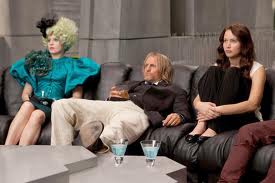


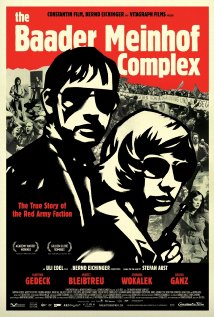

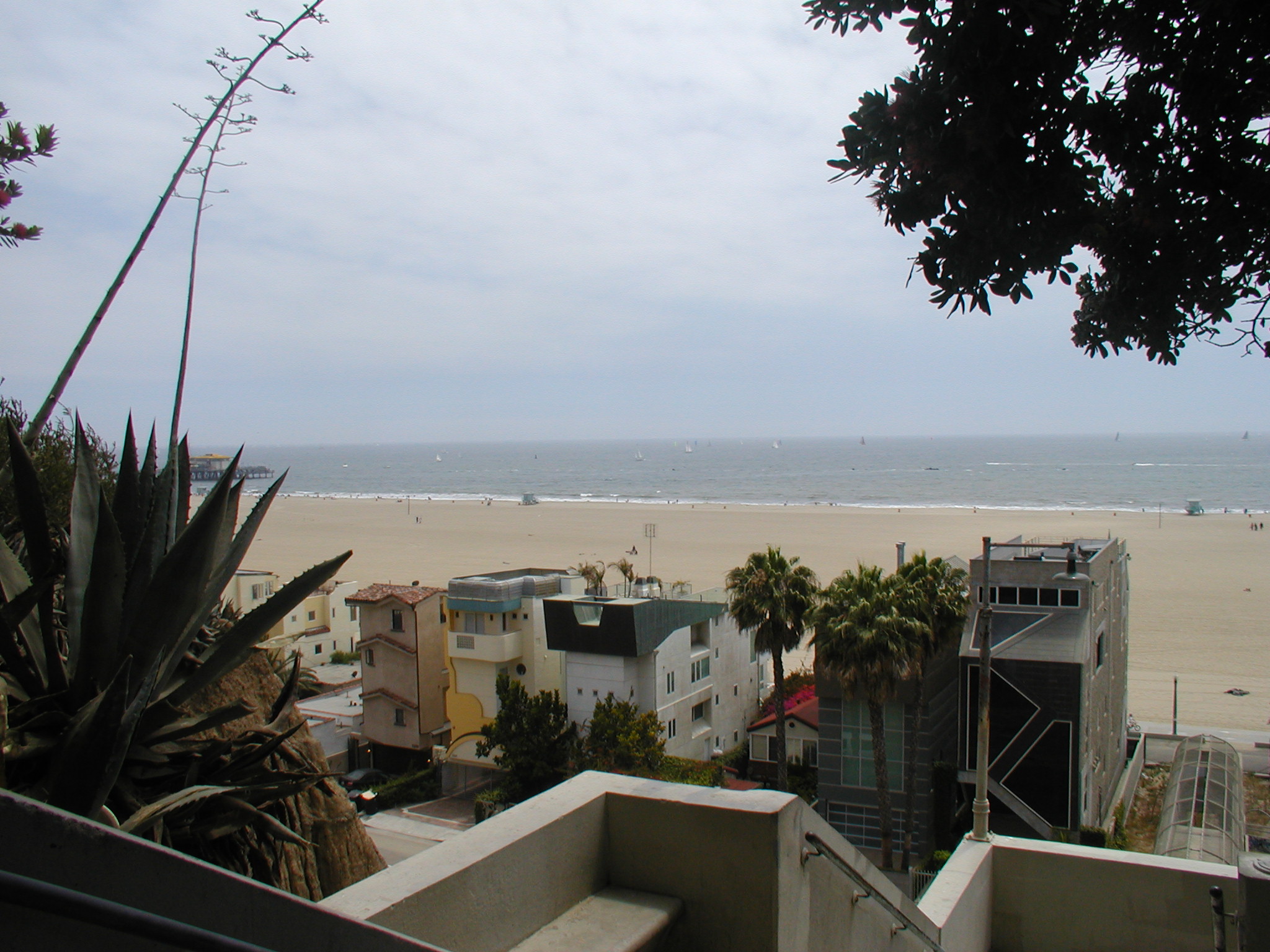

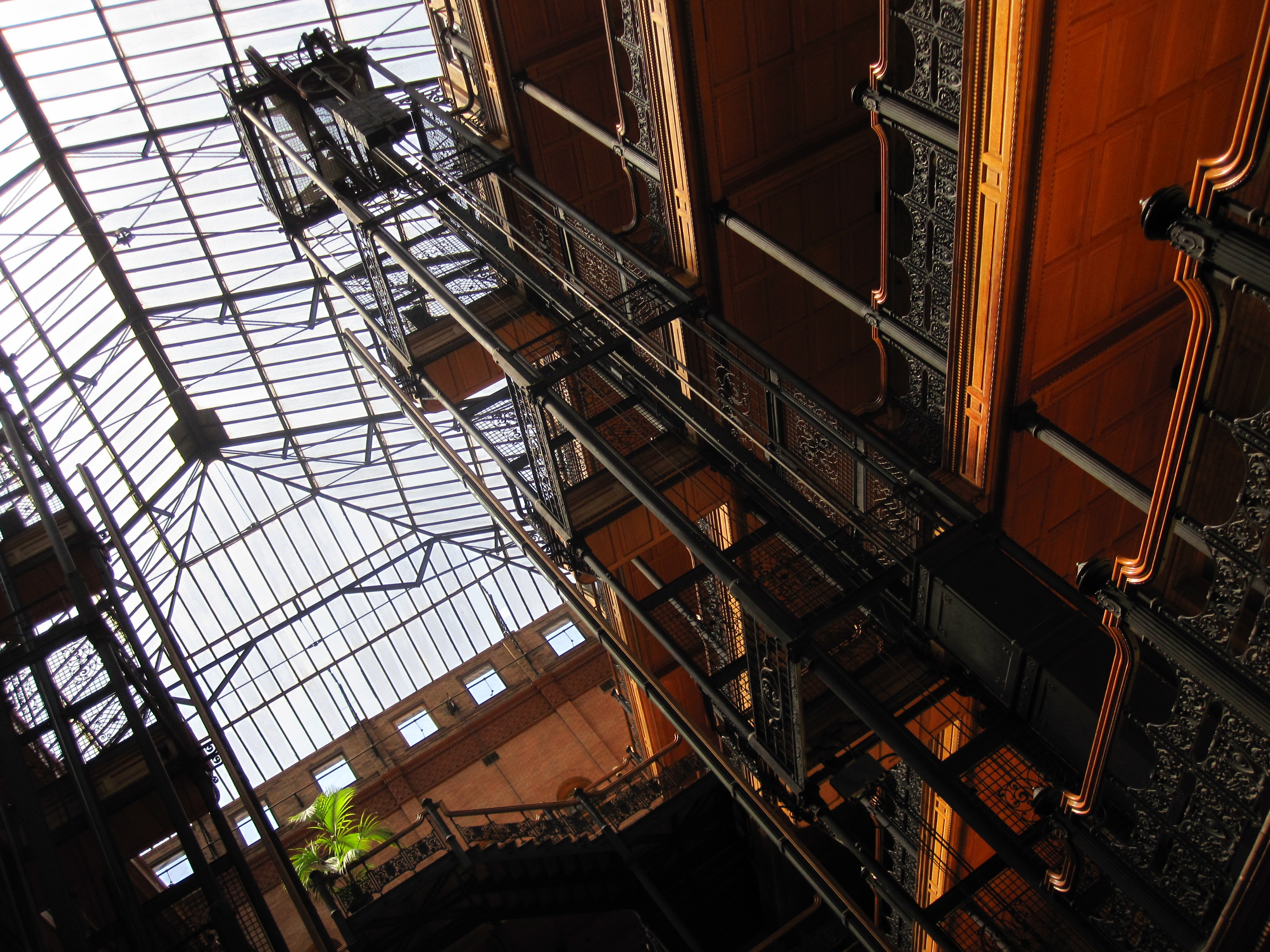


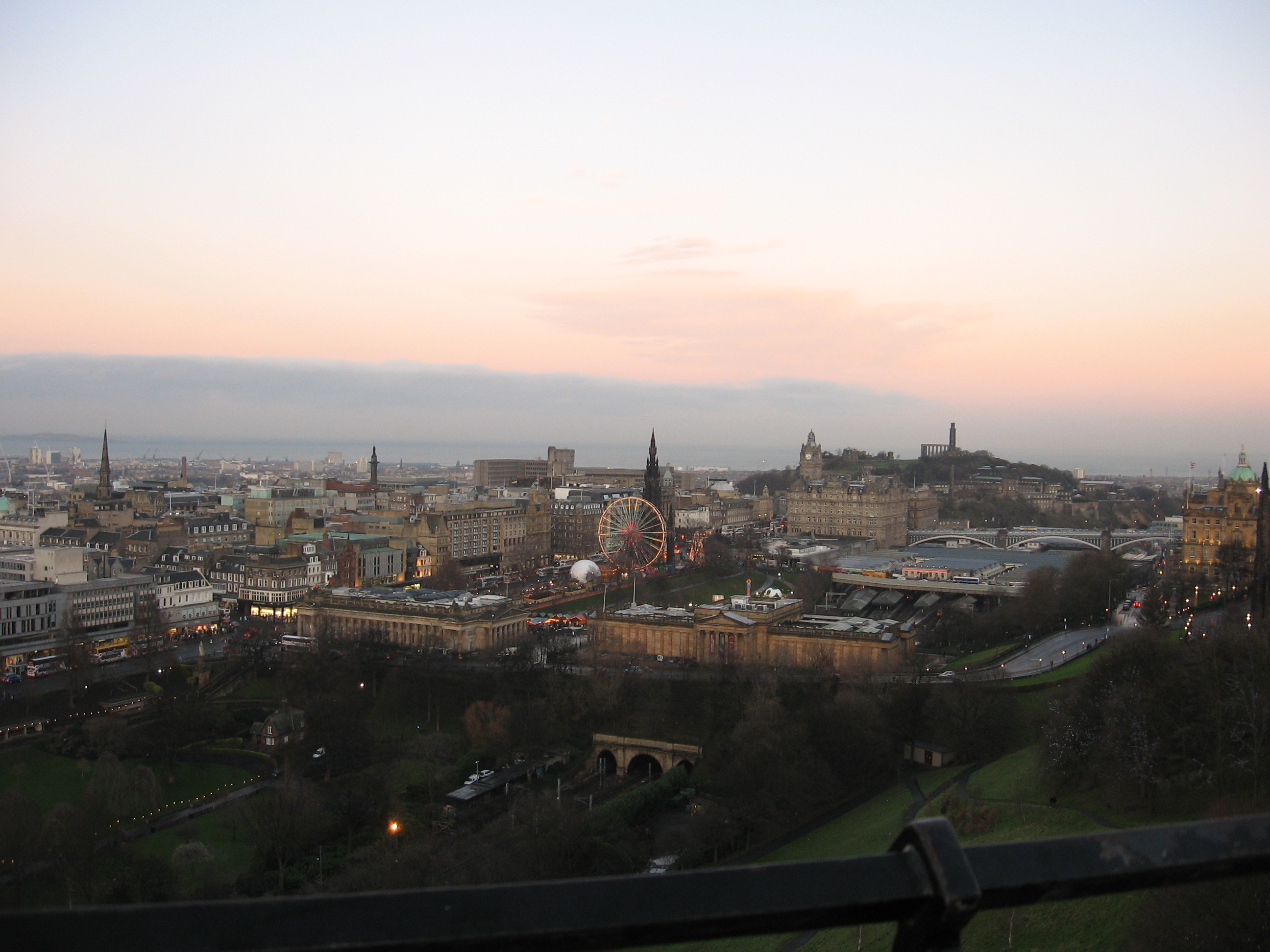





 CINE FEEL YEAH