Emma Straub’s debut novel Laura Lamont’s Life in Pictures charts the transformation of a rural Wisconsin girl, Elsa Emerson, into one of the starlets of Hollywood’s Golden Age. Using Jennifer Jones’s biography as a springboard, Straub writes of a woman who juggles multiple identities throughout her life: daughter, sister, wife, mother, and actress. In fact, the book is divided into twelve chapters whose titles encapsulate the roles she plays. Opening the novel in 1929, “Cherry,” at once suggesting the ripe potential of her later life’s work and the lost grandeur of Chekhov’s last play, details the special circumstances of her childhood spent behind the scenes and on the floorboards of her parents’ barn-house theater. Nine years pass between the suicide of Elsa’s older, beloved and beautiful sister Hildy and her escape from Door County with stranger-cum-costar-cum-husband Gordon Pitts. Within a few years after their arrival in Los Angeles, Gordon signs a contract to be a bit player at Gardner Brothers, and Elsa’s own acting ambitions take a backseat to her familial responsibilities. In the second chapter, “Laura Lamont,” studio executive (and Gordon’s boss) Irving Green flirts with Elsa at a wrap party and rechristens her “Laura Lamont,” telling her that, provided she loses thirty pounds once she gives birth to her (second) child, she is pretty enough to be a star. And so our heroine now sets her mind on becoming the star she always wanted to be.
Straub is a deft storyteller, and structuring her fictional biography according to the highlights of Laura Lamont’s life and career excises the fat of the more uneventful, prosaic moments of a character’s story. However, after reading all 304 pages of Laura Lamont’s Life in Pictures, the titular protagonist still remains somewhat of a mystery. Perhaps this is intentional. We read as Elsa/Laura struggles to define herself, mainly as her new glamorous identity fails to wipe the slate clean. She can’t face up to her mother, who resents Elsa for leaving Door County, seemingly forgetting who she is. Laura is haunted by past traumas, such as her sister’s suicide, and, years after she has divorced Gordon and married the studio’s number two, Irving Green, her first husband becomes a drunkard, a drug addict, a costly thorn in her side. The role that she chooses to most define her is that of mother. More pages are devoted to Laura’s dedication to and admiration of her three children: Clara and Florence, from her first marriage, and Irving Jr. This isn’t objectionable, of course, but as a film scholar and historian, I was more interested in how Straub represented Hollywood of the 1930s, 40s, and 50s.
Jennifer Jones (1919-2009), the real-life inspiration for Emma Straub’s Laura Lamont.
Just as it is unreasonable for a film critic to judge a motion picture against the film s/he would like to have seen, it is not fair of me to judge Laura Lamont’s Life in Pictures as lacking an in-depth exposé of Hollywood goings-on from the perspective of one star—or cog in the machine. Besides, as Straub told Jacki Lyden in 2012 on NPR’s All Things Considered, “I made sure to stay away actually from Jennifer Jones’ biography ’cause I didn’t want it to be, you know, a thinly veiled version of her. I really wanted my Laura Lamont to stand on her own feet.” However, just as I really enjoyed Farran Smith Nehme’s engagement with the archival preservation of forgotten silent films in her recent novel Missing Reels, the characterizations of Hollywood and its myriad players in Laura Lamont’s Life in Pictures really delighted me. For example, when Laura starts at Gardner Brothers, whose company name recalls that of the real-life Warner Bros. but whose physical location more accurately resembles that of Paramount, she begins cutting a rug in a string of comedies with her red-haired friend Ginger Hedges. Years later, after Ginger becomes a big star in comedy, rival studio Triumph Pictures poaches her, and she later goes on to head the studio while producing and starring on a successful television sitcom with her husband. It should come as no surprise that Lucille Ball inspired the character Ginger. Robert Walker, Jennifer Jones’s first husband, does not end up as ignobly as Gordon Pitts does. At least the real-life actor, who also died young, can claim an illustrious career with the likes of Bataan, Strangers on a Train, and My Son John in his filmography.
When the hardcover’s opening book-flap describes Irving Green as Laura’s “great love,” I recognized that the character must be a stand-in for David O. Selznick, Jennifer Jones’s second husband. Selznick produced such classics as King Kong, Gone With the Wind, Duel in the Sun, and The Portrait of Jennie, the last two of which starred his wife Jones (neé Phylis Lee Isley). Before striking out on his own, Selznick worked at MGM, Paramount, and RKO. While the novel does not present Irving as an independent producer like Selznick, it does show that his decision to put Laura in more serious roles, in romantic, historical epics, eventually nabs her an Academy Award for Best Actress. Jennifer Jones won her first and only Oscar right out of the gate, for her leading role in The Song of Bernadette. In crafting Laura Lamont’s backstory, Straub cleverly keeps the religious theme of Jones’s film when she writes that Laura won for her performance as a nun in Farewell, My Sister, a film whose script somewhat imitates her relationship with Hildy. Unfortunately, I found the description of Laura and Irving’s relationship lacking in intensity. Although married for years, before his untimely death from a prolonged heart-related illness, I never really understood the lovers’ mutual fascination. Irving is repeatedly described as short, slight, balding, and regrettably, Jewish, as if that is enough to characterize someone. Sure, power is an aphrodisiac, but outside of his unexamined devotion to Laura and her children, I fail to see how he is appealing. He isn’t given any thought-provoking dialogue or much to do at all, really. He mainly just sweeps her off her feet, seeing someone else in Elsa Emerson, a brunette rather than a blonde. Laura herself is a bit of a simpleton, especially when it comes to interacting with her growing children. And Laura’s relationship with her young black maid, Harriet, reads too much like one Joan Crawford or Vivien Leigh had with Butterfly McQueen or Hattie McDaniel on-screen. Since we glimpse Laura mostly in her private life, it is difficult for me to imagine the character as a glamorous starlet. She mainly just upholds the Grand Narrative of the Hollywood Dream Factory: she did as she was told, read her lines, and was happy if the bosses were happy.
Coming off the heels of her beloved father’s death, Irving’s death further pushes Laura into decline. Deep in debt, she abuses anti-anxiety medication, falls into an intractable despair, and eventually attempts suicide. She gradually makes a full recovery and adjusts to a new life out of the limelight. Chapter eleven, “The Shopgirl,” recalls silent film star Louise Brooks’s biography rather than Jennifer Jones’s: the former actress died in 1985, destitute and purportedly a salesgirl in a department store. Meanwhile, in 1975 and now a grandmother, Laura supports herself as a shop assistant for dressmaker-to-the-stars Edna (clearly inspired by famed Hollywood costume designer Edith Head, who was also the model for the scene-stealing Edna Mode in The Incredibles). The novel ends where it began: in the theater. In 1980, the newly rediscovered Laura Lamont makes her Broadway debut in The Royal Family, the same play that she performed with Gordon Pitts before they married and skedaddled to Los Angeles with dreams of stardom shining in their eyes. I can’t deny that the final scene is poignant. Her children reunite in New York to see Laura on opening night, but when I closed the book on her life, I couldn’t help thinking that I wanted more from it.
A few years ago, I published online an essay whose title encapsulated my frustration at the time with the apparent lack of compelling, universally humanistic film roles for women: “Can Female Film Characters Rise to Their Potential?” Inspired by a vision I had of a lone woman astronaut shuttling through space (Sally Ride had just died), I contemplated a future where women characters in film might “have interesting, fully realized inner lives that eschew all the narrative tropes that heretofore define women,” mainly being a wife and/or mother. The potential I see in women film characters, and women in general, is the narrative ability to illuminate the human condition for everyone.
On the eve of the 87th Academy Awards ceremony’s television broadcast, I habitually observe and reflect on the nominations. At this point, each of the four acting categories appears to offer no surprises when it will come time to announce the winners. Julianne Moore (Lead Actress, Still Alice), Patricia Arquette (Supporting Actress, Boyhood), Eddie Redmayne (Lead Actor, The Theory of Everything), and J.K. Simmons (Supporting Actor, Whiplash) have routinely won acting trophies for their respective film roles while competing on the awards circuit this season. With the outcome of these contests all but a certainty, I recognize that the most competitive category is that of Best Performance by an Actress in a Leading Role, and it collectively represents the fulfillment of my wish from over two years ago, with a few caveats. In other words, most performances in this category capture, for lack of a better turn of phrase, what it’s like to be human. If film is an art form that helps us make sense of our lives, we cannot take the woman’s experience for granted, as Academy voters have done. Of the five nominees for Best Performance by an Actor in a Leading Role, only one top-lines a film that is not nominated for Best Picture: Steve Carell in Foxcatcher. However, only one nominated female lead performance appears in a Best Picture contender: The Theory of Everything, as if to say that women-centered films are not prestigious (read: worthy) or capable of addressing everyone.
Rather than run through the list of nominees alphabetically, I want to discuss them in the chronological order that I first encountered them. Maybe it’s the simple passage of time or the workings of an unreliable memory, but every performance seemed to be better than the last one I saw. Fair warning: in my analysis, I give away many plot details of each film.
At the beginning of October, Gone Girl kicked off the season of awards-friendly motion pictures, and I remember thinking throughout my viewing of it that Rosamund Pike, the titular “girl,” deserves a nomination for her portrait of a bonafide psychopath. As Amy Dunne, the dissatisfied wife of Ben Affleck’s mysterious charmer Nick Dunne, Pike both fakes her own kidnapping (and possible murder) and then frames her husband for it. It isn’t until halfway through that the viewer discovers that Amy, the subject of a statewide search, is in fact alive and on the run. Having set as her mission the complete and humiliating obliteration of Nick’s character as well as his eventual imprisonment, Amy watches from afar (using the national media circus surrounding their small Missouri town) as the forged artifacts and clues that she doctored to point towards Nick’s guilt gradually fall into place. The most lethal part of her scheme (killing a man in supposed self-defense in order to fake her abduction) ultimately reunites husband and wife. In the media spotlight she has helped orchestrate and direct, Amy uses the public court of opinion to both absolve Nick of any crime that the American public previously found him guilty of committing and to imprison him in an emotionally, mentally, and physically abusive marriage.
A snapshot of Amy Dunne’s fake journal in Gone Girl. Image courtesy of Twentieth Century Fox.
While Gone Girl and Amy’s role in it do not exactly conform to fulfilling my desire to see women in films who are unattached, undefined by their relationships to men and/or children, the David Fincher-directed thriller, which author Gillian Flynn adapted from her bestselling novel of the same name, at least deconstructs the sanctity of the institution of marriage. Keeping Amy’s machinations hidden until halfway through the picture, her perspective only relayed through fake found journals, not only shifts perspectives on the couple’s lives (from Nick’s to Amy’s), it also produces one helluva denouement. Amy’s cold and clinical calculations upend our previous idea of her, whether as flirtatious (the memory of their meet-cute), sacrificial (a longtime cosmopolitan, she left New York for suburban Missouri when Nick’s mother became terminally ill), or even physically abused (her fake journal embellishes an altercation with Nick in order to vilify him). More than this, Amy presents a pathologically sociopathic and misandrous response to patriarchy, going to libelous and murderous extremes to pervert the idea of a traditional marriage. As the primary breadwinner upon their transplant to the Midwest, Amy strikes back at Nick for his philandering ways and emotional neglect so that when he finds himself trapped in this controlling and harmful marriage (to say, “loveless” would be an understatement), she is not defined by her relationship to him so much as he is defined by whatever she thinks or says about him. In this way, Gone Girl examines how relationships bind us and in this process, redefines the rules of attachment. The opening and closing scenes, wherein Nick strokes his wife’s hair and, through voiceover narration, muses about how we really don’t know what goes on in the mind of our chosen companion, index our struggles with loneliness and desire to be free.
A Best Picture contender, The Theory of Everything is ostensibly a handsome biopic of British theoretical physicist Stephen Hawking. Based upon Jane Wilde Hawking’s memoir of the thirty years she was married to him, Traveling to Infinity: My Life With Stephen Hawking, the film is mostly focalized through her experience. While Eddie Redmayne receives almost unanimous praise for his physical transformation as Stephen, who was diagnosed with motor neuron disease (ALS or Lou Gehrig’s disease) in 1963 at age 21 and around the same time that he met fellow Cambridge student Jane, it is actually Felicity Jones as the scientist’s first wife who does most of the emotional heavy lifting in the film. The Theory of Everything doesn’t propose a film story about a woman uncharacterized by her relationship to a man and their children. Just the opposite, but it is worth discussing very briefly, to correct notions that the film is about a famous man and the people in his life. In fact, given the film’s source material, it is easy to argue that the film is about a woman and the famous man in her life. This does not mean that The Theory of Everything is a so-called “woman’s film,” but it is a family drama centered from the woman’s perspective.
In his review of the film, New York film critic David Edelstein writes that, “as the film’s focus drifts to [Jane], I found myself resenting the character—not for wanting more from her life, but for yanking the narrative away from by far the more fascinating figure.” I agree that the first part of the film focuses primarily on Stephen’s experience, combining his academic coming-of-age (meeting advisors’ expectations—or not—and choosing a dissertation topic) with his struggle to adjust to a rapidly degenerative disease as well as a nascent romance with Jane. She may have walked into his life at a party, but I argue that as soon as Jane determines that he should be a part of her life, she wrestles the picture away from him, and that gesture does make her both fascinating and compelling. I still cannot shake the image of the couple’s pronounced declaration of togetherness (it’s been used in the film’s marketing campaign, to boot) wherein they hold hands and joyously spin around. Significantly, it is Jane who initiates their little ball of energy, pulling Stephen into her orbit. Young and in love, Jane doesn’t realize the kind of life she commits herself to when she refuses to forget Stephen. For he far out-lives his life expectancy of two years, and as time marches on she becomes increasingly frustrated with her life. Taking care of Stephen and raising their children are two full-time jobs, and her own academic ambitions take a backseat to her husband’s. We witness the effect that choosing Stephen has on her life, and a romantic dalliance with a widowed choirmaster offers her some release. Jonathan (Charlie Cox) assists Jane with raising the kids and caring for Stephen, who condones their sexual relationship. Unable to face up to the rumors that Jane’s third child is his, Jonathan makes himself scarce. After Stephen loses his ability to speak and acquires a computer that will serve as his voice box, Jane recognizes that she can no longer support Stephen the way that he needs and reunites with Jonathan. She is a fascinating character, because she is willing to change her life and seek the fulfillment of her desires.
Felicity Jones as Jane Wilde Hawking with husband Stephen (Eddie Redmayne) and baby. Image courtesy of Focus Features.
The Theory of Everything shines a light on one of the brightest minds of the twentieth and twenty-first centuries, but it also demonstrates that, to rephrase that old adage, “behind every great mind is a woman.” The title derives from Stephen’s quest to marry Einstein’s theory of general relativity with quantum mechanics, but it just as equally signifies that love is the answer to what binds people together for however long they can hold on. In this way, contextualizing Stephen Hawking’s life story and scientific and cultural contributions through his wife’s experience makes the case that they couldn’t have accomplished as much separately as they did together. If finding (self-)gratification is one of the tenets of the human condition, then Theory of Everything demonstrates how our desires are constantly in flux.
Months later, and with memories of Rosamund Pike and Felicity Jones sloshing around in my head, I finally saw Wild, the adaptation of Cheryl Strayed’s bestselling memoir. I fell so hard for this film, I don’t understand why it wasn’t nominated for its screenplay (by novelist Nick Hornby), cinematography (Yves Bélanger), and direction (Jean-Marc Vallée). Hell, I think Wild is easily one of the best films of the year and deserves one of those coveted spots not to exceed ten. Although I have never been a fan of Reese Witherspoon, I was in awe of the humanistic depth of her physical performance. It wasn’t so much a transformation—not like Eddie Redmayne’s or Charlize Theron’s for her Oscar-winning role in Monster where she turned out completely unrecognizable. Instead, Witherspoon perfectly embodies a woman who has been too hard on herself, on her spirit and on her body. When her young mother (Laura Dern in an achingly small but beautiful performance) dies of cancer, Cheryl grieves in an unexpected way, one that leads her astray from her husband (Thomas Sadoski) and into the arms of heroin addiction. With a painful divorce and an extramarital abortion behind her, Cheryl continues on her path to recovery under the most extreme of conditions: hiking 1100 miles of the Pacific Crest Trail alone. Along the way from the Mojave Desert to Portland, Oregon, she treks across a variety of terrain and climates (arid deserts, snow-capped mountains, Pacific Northwest rainforests) and encounters myriad threats, ranging from animal attacks and lost shoes to death by starvation/thirst and violent sexual assault.
Although Cheryl’s grief and infidelities may have instigated her pilgrimage, Wild isn’t about a woman defined by her relationship to her ex-husband Paul. The experience of losing him and herself in her grief even influences Cheryl to invent a new last name on the divorce papers: Strayed. In fact, Wild is a film about a woman’s self-programmed reinvention, or as the memoir’s subtitle states, she goes “From Lost to Found on the Pacific Crest Trail.” Cheryl takes ownership of the mistakes that she has made and grapples with how she took her mother for granted (but thankfully, like in this year’s indie rom-com extraordinaire Obvious Child, she unapologetically chooses an abortion when she stumbles into an unwanted pregnancy). By letting go of her social attachments for three months, during which time she calls on Paul and friends for support of the motivational and material kind, Cheryl learns to forgive and love herself again. For me, the most poignant aspect of the film is that Cheryl chooses her relationship with Bobbi as the one to define her, saying, “My mother was the love of my life.”
Cheryl (Reese Witherspoon, unpictured) remembers how much she wanted to be like her mother Bobbi (Laura Dern) with that irrepressible smile. Image courtesy of Fox Searchlight Pictures.
Moreover, Wild comes the closest of the Best Actress nominees so far in proposing a film about the human condition that just happens to be focalized through a woman’s experience. As I have already mentioned, the film is about self-programmed reinvention, love and regret, life and death. I imagine that we can all relate to a character who hurts the people who are closest, sometimes purposefully, sometimes without thinking at all. This doesn’t make the character a bad person, just someone who needs to learn to appreciate what life and love can offer. Crucially, it is too late for Cheryl to treat Bobbi as she deserved, but Cheryl’s arduous and
Cheryl (Reese Witherspoon) goes her own way. This obstacle course is the least of her problems. Image courtesy of Fox Searchlight Pictures.
somewhat ascetic pilgrimage brings this all into focus. Presenting a woman’s story as universally humanistic is feminist in its own right, but Wild also engages the philosophy in more pointed ways. For example, virtually everyone she meets on the trail is astonished at her abilities and takes umbrage at her insistence to hike the trail without a male companion. She even locks heads with a reporter from The Hobo News who cannot comprehend her voluntary choice to drop out of society for a while and thus identifies her as a lost soul, a “hobo” with no job, home, or family. But most surprising of all, a group of three young men on the trail adopt Cheryl as their personal hero, having read her poetic entries in guest-books, which quote feminist icons such as Emily Dickinson and Adrienne Rich. Believing feminism to be part and parcel of humanism, Wild makes clear, as bell hooks once wrote, “Feminism is for everybody.”
Just when I thought this year’s nominated lead performances by women couldn’t get any richer, I saw Marion Cotillard, de-glamorized, in Two Days, One Night. It is a much smaller film than the others, both in scale and, seemingly, in depth. Cotillard plays a working-class laborer who, given the weekend, must convince a majority of her co-workers to forgo their one thousand-euro bonuses so that she can keep her job. Whether or not the solar panel factory can legally put her continued employment to a vote by its employees is never questioned, but almost everyone she confronts points out that the boss’s ultimatum is unfair. Shot in their characteristic social realist/fly-on-the-wall style, the latest film by Belgian brothers Luc and Jean-Pierre Dardenne plays out like a thriller of a cruel joke: Will she get enough votes to keep her job? How many more times do we have to hear her plead with her co-workers to vote for her? Asking for anyone’s help is an ordeal in and of itself for Sandra, who, when the film begins, is on the brink of returning to work following a long absence (it gradually becomes clearer that she suffered a mental breakdown). A pathetic decision, choosing to speak with people in person whenever possible is costly in terms of time (she zigzags all over town in order to track them down at their homes, on the street, or in corner groceries or laundromats) and an emotionally draining exercise in futility. Thankfully, no two encounters are exactly the same, even if those unwilling to help her always have the same reason: they need the money, whether to pay their child’s tuition, build an addition to their house, or cover the electric bill for six months.
Sandra (Marion Cotillard) confronts a co-worker who cannot see beyond himself. Image courtesy of Sundance Selects.
What makes Two Days, One Night so quietly impressive is its premise: to what lengths will someone go to keep her job? How will she convince human being after human being, with wants and needs not completely unidentical to her own, to sacrifice material gain in order to come to her aid? How will she react when, based on the number of votes pledged in her favor so far, her future looks bleak? Providing Sandra with a psychiatric disorder heightens the stakes—and the Dardennes do go to some dark places—but otherwise Two Days, One Night could be about anyone. In fact, there isn’t much character development in terms of Sandra’s familial role so as to make the part gender-specific. In other words, she spends so little time with her two children that her identity as mother does not define her. Even Sandra’s greatest champion, her husband Manu (Fabrizio Rongione), frames her ordeal as one about recovering her lost pride. Her humanity, and her repeated attempts to coax the more humane choice out of her peers, defines Sandra. Of course the couple needs her income to get by, but their situation is no more dire than that of most of her co-workers. In this way, the film is about overcoming adversity and preserving your own self-worth, arguably the most humanistic ideal. Come Monday morning, Sandra is one vote shy of keeping her job. Touched by the generosity of some of her colleagues, she refuses the boss’s offer to rehire her at the end of the season, because it would mean that one of her pledges would lose his contract with the company. Initially stunning, her decision to incur further economic hardship isn’t just about worker solidarity but also personal integrity. The final scene of Sandra’s bad-news phone call to Manu represents a revolution of some sorts: walking away from the factory, smiling, Sandra is buoyant with every step, personally motivated by the support of Manu and her co-workers to find another job. If she can get through this past weekend, she can approach any new challenge with enough courage and integrity to overcome it.
Rounding out the five nominees for Best Actress, Julianne Moore presents a deeply moving and sensitive portrayal of a woman diagnosed with early onset Alzheimer’s disease in Still Alice, an adaptation of Lisa Genova’s novel of the same name. Admittedly, I am not Moore’s biggest fan (she’s usually too showy for my tastes), and the negative reviews of the film colored my perception of it going in. Jason Bailey of Flavorwire wrote that the film “plays like a dusted-off, mid-‘90s Movie of the Week.” However, not only was I pleasantly surprised by the quality of the film, I was also overcome by profound sadness and grief, unable to talk about what I had just seen without choking up. Who cares if Still Alice is emotionally manipulative? More than any of the other films nominated in this category, Still Alice examines what makes us who we are while confronting our own mortality.
A world-famous linguistics professor at Columbia University, Alice Howland is the first to recognize that “something is wrong with [her].” Sometimes she can’t find the right word, and at other times she gets disoriented on her aerobic runs around the neighborhood. Her husband, John (Alec Baldwin), writes off her worries as evidence that at 50, she’s simply getting older. Determined to find the root of her newfound problems (it feels like her brain is slipping farther and farther away from her), she sees a neurologist in secret and eventually receives the dreaded diagnosis. The effects of the disease would be difficult for anyone to cope with, but as her doctor explains, since Alice carries the familial gene for early onset Alzheimer’s and is extremely well-educated, she can expect to deteriorate more rapidly than if she didn’t have the gene and wasn’t so well-educated. She simply has much more to lose, and for a linguist whose life’s work has been the study of human communication systems, the thought of losing her ability to relate who she is with words is devastating. As it is for me, as it is for anyone.
As her mother’s primary caregiver, Lydia (Kristen Stewart) tries to comfort a sad and spacey Alice (Julianne Moore). Image courtesy of Sony Pictures Classics.
But Alice is intellectually resourceful, and she can better compensate for her incapacities. It takes a while for her to admit defeat and leave her tenured position (her meeting with the chair of her department is the most implausible scene in the whole picture, for it would never be up to her colleagues to dismiss her because she has a health issue). John and their three children try to look after Alice as best they can. Eventually, their youngest, the Los Angeles-set aspiring actress and free spirit Lydia (Kristen Stewart), agrees to move back to New York to serve as Alice’s primary caregiver when John accepts a position at the Mayo Clinic in Rochester, Minnesota. In the exploration of this mother-daughter relationship, Alice’s older children, the lawyer Anna (Kate Bosworth) and the medical student Tom (Hunter Parrish), suffer from a severe lack of character development. While Anna and Lydia sometimes butt heads as to what is best for their mother, Tom’s only real function is to accompany Alice to a talk she gives at the local chapter of the Alzheimer’s Association. Film critic Jason Bailey denigrated this speech as a “forced, false moment” by writer-director duo Richard Glatzer and Wash Westmoreland, thereby completely forgetting that the scene parallels an earlier keynote address she gave at a linguistics event where she spoke confidently on topics related to her main line of inquiry: why do humans talk and how to they learn to communicate? In the later scene, the transformation that Alice has undergone throughout the film is palpable. Anxious and insecure, she must use a highlighter as she speaks at the podium so that she does not lose her place in the speech. Frustrated with her inability to write a persuasive argument using medical and linguistic jargon, she takes Lydia’s advice and writes about how it feels to lose her mind. There isn’t a dry eye in the house. For, as it is made clear throughout the picture, we are who we are because we have made ourselves into whoever we want to be. For Alice, that has been an expert on language acquisition, an equal partner in a loving relationship with a man who confidently says she was the smartest person he’d ever met, and a dependable and accepting mother.
Still Alice also makes the case that we are who we are because of what we remember. As Alice grapples with her diagnosis, slipping farther and farther away from the people in her life, she returns to memories of her sister, whom she lost as a teenager. I initially dismissed the final scene of the film, failing to recognize that Alice’s imagining she and her sister on a beach is her defiant stance against the havoc that Alzheimer’s wreaks on her mind. She clings to this memory as if to remind herself of who she is. This shot immediately follows the scene in which Lydia reads from the play Angels in America and asks her mother if she knows what the speech is about. Alice smiles and struggles to say, “Love.” Again, in his review of Still Alice, which he labels “desperate” and unoriginal, Bailey fails to see how the film’s ending illuminates something fundamental about the human experience: our appreciation and understanding of art and how it reflects our perception of what the meaning of life is. The Flavorwire film critic finds Glatzer and Westmoreland’s “desperation… particularly rancid at the end” because, “in lieu of saying anything moving or profound, they simply shoplift the ending of Angels in America.” In presumably one of Alice’s last moments of clarity, she demonstrates for Lydia that she is still present, that she can understand Tony Kushner’s complex speech, and that she loves her daughter and her long-lost sister. It doesn’t matter that these “moving and profound” words, to correct Bailey’s statement, are not Alice’s or Lydia’s. Not everything we say or do is original; the purpose of art is to draw connections between experiences, and the meaning of life is to see how art shapes us.
Contrary to what Russell Crowe thinks about roles for older women in Hollywood, the reality is that quality parts for women at any age are terribly lacking. While most Oscar prognosticators, critics, and cinephiles like myself watch the Academy Awards tonight and lament the fatedness of Julianne Moore’s, Patricia Arquette’s, Eddie Redmayne’s, and J.K. Simmons’s prize-winning, I will remember that for the first time in a long while, it seems that every nominee in the Best Actress category was phenomenal. Rather than choose a winner, I wish we could simply celebrate these five actresses and many more, because they brought to life film characters whose experiences illuminated different facets of the human condition. I hope this trend in representing women with “interesting, fully realized inner lives” continues. And I don’t care if they are wives or mothers anymore. Restricting what kinds of parts women play in film and in society isn’t humane.
Aside from their immediate availability, I tend to rent movies from the public library that I would never pay to see otherwise. On Wednesday, I picked up Thor: The Dark World and Divergent. I barely paid attention to what I now jokingly call Thor 2: Even Longer Hair; it was loud, stupid, and too complicated to follow while reading the New York Times. Despite its silly and childish sense of humor, the film took itself way too seriously. The same could be said of Divergent, which is the first in a series (big surprise!) of adaptations of the popular YA novels penned by Veronica Roth. However, Divergent pleasantly defied my low expectations. Once I got past the ridiculous premise, that in the undistinguished future, society is divided into five different factions in order to keep the peace, I got sucked into its dystopian world. Apparently a war some time in the past devastated the entire planet. We have no idea what in particular precipitated near total annihilation the world over; all we see is a dilapidated Chicago surrounded by an electrified fence stories high.
Given its generic provenance and overlapping themes about violence and children, Divergent is most often compared to that other YA juggernaut The Hunger Games. Years ago, I didn’t take too kindly to the first in that film series, writing that its unsubtle satire of our obsessive fascination with celebrity, competition, and violence could only really please the film’s built-in fanbase: enthusiastic readers of the novels. But catching Divergent–for free–was already on my subconscious agenda because I had just read an article by NYT film critics A.O. Scott and Manohla Dargis about the changing representations of young women and girls in cinema, a survey view of contemporary trends that compliments Washington Post film critic Ann Hornaday’s recent pieceabout “badass” female characters in film today. Hornaday doesn’t mention Divergent, but Scott writes that protagonist Tris Prior is like Katniss Everdeen, her sister in arms, “a fighter against corrupt authority.” Since I am most interested in representations of women and femininity in all kinds of films, I knew that it would probably be worth my while to check out Divergent.
I have no idea what it is like as a novel; I have no desire to read the books, but I must admit that Divergent, as directed by Neil Burger and adapted by Evan Daugherty (Snow White and the Huntsman) and Vanessa Taylor (Game of Thrones), makes for quite a thrilling movie, a modern action flick with a feminist bent. It combines the trappings of a poignant coming-of-age story with those of a sophisticated political thriller. At least more sophisticated than it had any right to be.
View of Divergent‘s derelict Chicago cityscape. Image courtesy of Summit Entertainment.
Shailene Woodley stars as Beatrice Prior, a teen born into the selfless faction of society. The film begins on the eve of her aptitude test, which should either decide if she is indeed Abnegation material or if she would better fit in with the scholars of Erudite, the honest folks of Candor, the hippies of Amity, or the daredevils of Dauntless. It drives me crazy that Roth didn’t use parallelism when naming her fictitious factions, opting for nouns (Abnegation, Candor, Amity) and adjectives (Erudite, Dauntless). Rather conveniently, on the day that both she and her brother Caleb (Ansel Elgort) choose their future careers, if you will, Beatrice has the option of choosing any faction to belong to. The scene, played out in a symposium-like setting with leadership from all factions present and parents sitting in the audience with the kids they may or may not lose to a whole new family, certainly dramatizes the closest real-life equivalent: choosing your college (major). Much to their parents’ surprise, Caleb elects to be Erudite, Beatrice Dauntless. But you knew that was coming from the way she watched the Dauntless teens arrive at the Choosing Ceremony, a look on her face that said, “I wish I could jump out of a speeding train and run all the way to the door!”
This is where Beatrice’s journey really begins. Choosing a faction other than the one she was born into means that she can never go home, and if she shouldn’t make the cut at Dauntless, the leaders will throw her out onto the street, where she will remain homeless, factionless, pitiful, and despised. On her first day of college, if you will, Beatrice changes her name to Tris (it sounds more futuristic, sportier), makes friends with Christina of Candor (Zoe Kravitz), and surprises everyone, especially herself, when she volunteers to jump off a building before the other “initiates.” “Initiates” is just another word for “pledges,” for the first hour or so mainly concerns the brutal training (hazing?) that the new recruits must undergo in order to join the co-ed fraternity. It goes without saying that Tris rises from the lowest performing to the top of the class, helped in so small part by her boot camp instructor named Four, a taciturn but sensitive Mr. Pamuk (Theo James). Thankfully, the filmmakers milk the sexual tension between them for most of the film; we’re never certain until the third act that Tris, and by extension, we, can trust him with her secret: the results of her aptitude test were inconclusive. In other words, Tris shows qualities from the Erudite, selfless, and Dauntless. Yes, don’t we all feel better knowing that the young woman we’re rooting for isn’t defined by just one trait? Isn’t that the whole reason the author invented this world?
Tris takes the leap to self-discovery. Image courtesy of Summit Entertainment.
Regardless, Divergent works as a film because its visuals are quite striking, beginning with the aptitude test. Injected with a serum that will induce hallucinations (only the first of its kind, you soon find out), Beatrice imagines herself in a hall of mirrors, the confrontation with her fractured identity very much actualized in her mind–and for the film audience. She stares down a fierce dog (Dauntless) until she tricks her mind into thinking it is only a docile puppy (Erudite) and tries to protect a little girl from the angry canine (Abnegation). The hallucinations seamlessly meld together in the edit, thereby heightening their lucid dream-like quality but at the same time lending her fears real power. The same goes for the second part of Tris’s initiation, after hand-to-hand combat and weapons training: the psychological torture/endurance test in which Four injects her with a serum that makes her hallucinate all of her fears and how she might use methods inherent to Dauntless members to overcome said phobias. In these fevered dreams, her world turns upside down, inside out. The escape from one nightmare just leads to the next before she wakes herself up. Four, conveniently equipped with technology that allows him to see what she was visualizing in her brain, quickly determines that, for instance, her method for escaping from the glass cube filling up with water (just tapping on the glass) isn’t something that would ever occur to a Dauntless MacGyver. It’s also what makes her better than someone who is merely Dauntless.
Furthermore, the production design is impressive and visually stunning. Tris’s descent into the Dauntless world is played out on an Expressionist stage. The exaggerated scale of buildings is like something out of a criminal underworld picture, or perhaps one about a motorcycle rebel gang. Or The Lost Boys (black leather and other stretchy, breathable fabrics dominate the Dauntless wardrobe). There is also a fair amount of shadowplay. The Dauntless’s environs contrast with those of the Erudite, whose architecture looks like its been designed by Buckminster Fuller, thereby undermining their claims to being factual or at least transparent in their research. Although the people in Abnegation live in concrete houses, their simple yet modern design recalls contemporary pre-fab homes or affordable housing blocks of the 1960s. In other words, modest and indistinguishable. Isn’t it remarkable, though, that Millennium Park doesn’t make an appearance in Divergent (but a Navy Pier-in-ruin does)?
View of Abnegation Village from the street. Image courtesy of Summit Entertainment.
Divergent probably wouldn’t work so well if it weren’t for Woodley’s strong, sympathetic performance. She is convincing as a rebellious teen who, once she leaves her family and faction, has nothing but her own strength and wits to rely on. Although her parents support Caleb and Beatrice in their potentially life-changing decisions, vowing to love them regardless of which faction they choose, Beatrice’s desire to break free from the world of Abnegation is a quiet rebellion against her parents. As the film’s political conspiracy gradually comes to light, Tris is the only one brave and capable enough to defy the New World Order that Kate Winslet’s character, Jeanine, represents. As the leader of the Erudite, Jeanine undermines the Abnegation-led government (of which Beatrice’s parents are a part), stirring up rumors that the selfless leaders are hypocrites who beat their children. Jeanine interprets this hypocrisy as a flaw in Human Nature, which also explains her genocidal plan to turn the Dauntless into a mindless army (again, with the help of some serum injected into the neck!) that will obey her orders to kill everyone in Abnegation. She isn’t a fan of Divergents, either, since they cannot be easily controlled. In this way, Tris’s rebellious spirit is presented as an aberration of Human Nature (believe me, the way Jeanine talks about it, it deserves capitalization). Her coming-of-age story doesn’t just converge with the unraveling of widespread corruption in faction leadership; exposing Jeanine and putting a stop to her coup d’etat almost becomes her coming of age’s reason for being.
Fish eye view from inside the shady Erudite Headquarters. Image courtesy of Summit Entertainment.
Almost. Remember, she’s still in “college,” and Divergent checks off a number of campus-living cliches: the “initiates'”original delight when learning dorms are co-ed and their subsequent squeamishness when they find out they’ll have absolutely no privacy, her aforementioned crush on an upperclassman/mentor who shows her the ropes (Four), and her impulsive decision to get a tattoo. At least the imprint of three black birds ascending from her collarbone isn’t a tramp stamp, but isn’t it a little too close to the revolutionary symbol central to The Hunger Games?
Divergent is, in my opinion, extremely violent, what with the brutal but narrative-driven fight scenes, attempted rape and/or murder of Tris by jealous male “pledges,” and the fact that her mother and father are killed within minutes of the other while trying to protect their children. It is also conspicuously bloodless thanks to its PG-13 rating. Most importantly, its scariest moments are presented as thrilling out-of-body experiences for Tris. In addition to the serum-induced hallucinations, she literally jumps into her journey towards self-discovery; if her leaping off a speeding L train onto the roof of a building doesn’t convince, her jump from the roof into the derelict building below sure does. However, I was completely bowled over and scared out of my rational mind when she zip-lined from a skyscraper on one side of Chicago to the Dauntless HQ down below, clear on the other side of town. This scene presents a very romantic conceptualization of her burgeoning identity not only as a Dauntless individual but also as an autonomous subject in general. Even if Tris is one “kick ass” heroine that film critics wish there were more of on screen these days, I can’t relate to her desire for what amounts to a militaristic life. But I do long for physical and emotional transcendence, like the one she experiences in the air. For her soaring through the sky shows her–and us, by extension–what she is capable of achieving and how that makes her feel. It’s my favorite scene in the film; it’s a bold statement about girlhood. And, dare I say, a superheroic one?
By way of conclusion, let’s discuss Tris’s sexual awakening. You knew it was coming. She’s in “college,” after all. Her first sexual experience arguably takes place when, in an effort to protect and train Tris, Four invites her into his own fearscape (it’s no match for her). The injection of the hallucination-causing serum acts as an exchange of fluids, and I immediately thought of the virtual sex scene in Demolition Man (Marco Brambilla, 1993) when Four and Tris plugged themselves into the computer, interacting (I mean, touching) through scenes visualized in their minds. Interestingly, and undoubtedly owing to the predominantly female audience, it is Four’s body that is put on display, revealed as a landscape that Tris discovers with her eyes and fingertips. She asks to see the expansive tattoo all over his back. The moment he takes off his shirt is meant to make audiences swoon, but it also uncovers that Four is Divergent, too. For his tattoo design incorporates the symbols for all five factions.
Four’s body on display. Tris sees what makes him Divergent. Image courtesy of Summit Entertainment.
Although taken seriously as a suppression of her sexual desires, Tris’s decision to forgo her first real sexual encounter occurs so quickly that I originally misinterpreted it as one in which she does indeed have sex with Four off-screen. Her choice not to have sex (yet) is presented as no big deal, because she has no anxiety over Four’s feelings towards her. Curiously, though, at her final exam in which she must maneuver her own fearscape like a true Dauntless member, she envisions a betrayal of trust on Four’s part. That is, she quashes his attempt to rape her by kicking him in the groin. I was stunned to see date rape represented in this PG-13 action flick, but I love its context of female empowerment. The worst part of Divergent, vis-a-vis Tris’s self-actualization, is when, in the final scene as she and her friends escape the city on the L train, she says that she doesn’t know who she is anymore. Understandable, given that she has no faction and no family, but it’s a shame that it’s her (male) love interest who reassures her that she is someone because he knows who she is. Two steps forward, three steps back for strong young women in film.
For years, whenever someone mentioned Star Wars, I recited the following response: “I used to love the original trilogy as a kid. It was something that I shared with my younger brother and my mother. The three of us bought advance tickets to see The Phantom Menace in 1999, but by that time, I think I’d already forgotten the earlier trio of films.” As you can see, I deployed this not-exactly-called-for viewing history as a diversion. It’s not that I was embarrassed–well, on second thought, maybe it was: I had forgotten virtually everything about these massive films, and the only memory that lingered was the knowledge that I was a fan.
Obviously, I wasn’t a diehard fan. But they must have meant something to me if, sixteen years after Return of the Jedi, I insisted we buy advance tickets to the first prequel, which has since been reviled for, among many other things, introducing the jabbering CGI monstrosity Jar Jar Binks. I’ll leave it to those who live and die by The Force to complain about how Lucas ruined the original trilogy with the retroactive Episodes I through III. I can’t even tell you the other prequels’ names without pushing a few keystrokes over at IMDb.
Instead, I want to talk about my recent–and still ongoing–rediscovery of Episodes IV through VI. It had been nearly two decades since I’d seen them. I decided to rent them from my local public library because I was fed up with not understanding all of the allusions to the film series that regularly float around in pop culture. Whether it’s Jamiroquai singing for us to “Use the Force” or why Adam’s toy replica of the Millennium Falcon on the ABC sitcom The Goldbergs is the boy’s most prized possession, I’ve always wondered, “What makes Star Wars so great?”
Well, I’m afraid I cannot figure it out, because the most earth-shattering observation that I have made is that these films simply are not very good. While I could criticize the special visual effects, I understand that in their day they were ground-breaking. But I doubt they are the reason why millions of people worldwide worship these films.
I will attack the acting, though. It’s atrocious, and funnily enough, Mark Hamill isn’t the worst. His all-American, aw-shucks performance fits his character’s arc well: as Luke Skywalker, he goes from living on the desolate Tatooine planet, his uncle stifling him with mundane responsibilities, before he realizes his destiny is fated elsewhere. Namely, saving the galaxy from Darth Vader’s destructive vision. Princess Leia and Han Solo, two (im)probable lovers portrayed by Carrie Fisher and Harrison Ford, respectively, have the worst exchanges that are meant to pass for sexual tension. The best part was when Leia called Han Solo a “nerf herder” in The Empire Strikes Back, thereby reigniting my memory of a power-pop band that my sister and I used to listen to in the 90s. I had no idea Nerf Herder went on to lend Buffy the Vampire Slayer its theme song. I am so not a geek.
Overall, Episodes IV and V (I have yet to watch The Return of the Jedi) appear to be one drawn-out B-movie. It’s not just the special effects and acting. It’s also the set and costume designs. When inflation is taken into account, I wonder what Star Wars‘s budget of $11 million would be today, because it looks cheap. The writing is bad, and the imperial generals and admirals have some of the worst line-delivery, which the out-of-sync (and THX-mastered) audio makes even more distracting. As for the costumes: does anyone really buy Chewbacca? It’s clearly a really tall man in an itchy diarrhea-brown yeti costume. Speaking of ensembles, in one scene, Princess Leia is dressed in an all-white ski suit, the next, a drapey, polyester nightie. Don’t tell me that George Lucas and his collaborators weren’t channeling Ed Wood and Roger Vadim when they created this mythology. And I swear that everyone pronounces Leia’s name as “Leah” in Star Wars and later as “Laya” in The Empire Strikes Back. A similar transformation occurs to Han Solo’s moniker; the long A in “Han” is further accentuated.
Some people say that Star Wars is a western set in space. On what evidence? Because the good guys wear white, the bad guys black? That’s not even true; the imperial stormtroopers almost look like carbon copies of Darth Vader, but they wear white plastic armor. It’s quite a stretch to say that the Rebel forces represent villagers or homesteaders, and Darth Vader the outlaw who comes to town to disrupt their peaceful way of life.
Star Wars is a lot of things, but it is not a western. It’s primarily a paternal melodrama, because the main conflict exists between Luke, the so-called “New Hope” of Episode IV’s subtitle, and the father whose identity had always been a mystery to him. And seriously, how could Darth Vader’s confession toward the end of The Empire Strikes Back have shocked audiences in 1980, even if they don’t know that “Vater” means “father” in German? Luke’s uncle and Ben Kenobi (Alec Guinness, the only interesting actor in this whole enterprise) had dropped clues that Luke’s father joined the dark (aka darth?) side. The second installment sets up how the epic battle that we’re slowly building towards will be one over Luke’s soul. Good thing the Force is strong with him!
That brings me to my next point: Yoda. Yoda is a Jedi master who has trained Jedi knights for over 800 years. A lime green puppet voiced by Frank Oz, he might be the most offensive thing about Star Wars. Given the design of his countenance and his speech pattern (his grammar goes object-subject-verb), he is most obviously modeled on a stereotypical wise old Asian man and would later be reincarnated as Mr. Miyagi. Yoda presents the best personification of The Force, some pseudo-religion about how everything is connected and therefore anything can be moved. This is where all of the references to “Jedi mind tricks” in Kevin Smith movies come from. And this is how Lucas and co. chose to distinguish their vision of the future in space from that which appeared on TV screens in Star Trek. I’d rather be beamed somewhere distant than have a muscle spasm in my shoulder trying to move a spaceship.
Unfortunately, it’s impossible to watch Star Wars without thinking of everything that has come after it. You could say that I revisited these films because I wanted to see the parallels between the biggest movie of the year, Guardians of the Galaxy, and Star Wars. Although drawn from a lesser series of Marvel comic books than The Hulk or Iron Man were, Guardians has a lot in common with Star Wars. Peter Quill’s outlaw name, Star Lord, sounds like it was ripped from the earlier films’ iconography. Like Luke, he doesn’t know who his father is, but as we understand from the set-up for the shoo-in sequel, we’re going to find out how learning his father’s identity will have significant repercussions for the whole galaxy. Like Han Solo, Peter’s a loner, a rogue and a charmer. His beat-up, lived-in ship resembles the ramshackleness of the Millennium Falcon, and the mutual attraction between Peter and the green warrior princess Gamora is as sure a thing as Han Solo and Princess Leia finally giving in to their shared desires. The main villain of Guardians, Ronan, may be dispatched by the film’s end, but he’s kind of like Darth Vader: he defies the supreme ruler, Thanos, in an attempt to control the galaxy, destroying whole planets with the press of a button, much like Vader. But Guardians of the Galaxy, by no means my favorite film, is far more appealing, visually interesting, and more succinctly told. We don’t need a sequel or two or three, but we’ll get them anyway, because that’s Hollywood’s business model.
Speaking of superhero movies, isn’t that what Star Wars really is? For reasons that I have already described, Luke Skywalker is the quintessential superhero, for he has elements of Superman (daddy issues) and Spider-Man (his harnessing the Force is akin to Peter Parker’s web-slinging). You could even say his piloting proficiency mimics the technological prowess of Batman, whom some consider a superhero and others do not. I may one day be able to understand the appeal of these stories, but I will never be able to connect to them emotionally. They’re just fairytales for boys.
For months leading up to its March 2012 release, The Hunger Games (Gary Ross, 2012) was billed as the next franchise based on a series of young adult novels set to break box office records, and it delivered. I stayed clear of the theater when it came out because news reports on TV showed the books’ fans camping out days ahead of time, and I will do pretty much anything to avoid a crowd. When I finally learned the premise (children and teens from “districts” all over a future dystopian North American nation are ritually forced to fight each other to the death in an annual televised event), I quickly identified the parallels with the once-banned Battle Royale (Kinji Fukasaku, 2000). One Saturday, my dad came home from services at shul and related that his young rabbi used The Hunger Games and a crucial plot twist from the third act to make a point in his sermon (my dad told me what it was). The film effectively spoiled, I took my time seeking it out, which I only did because, as a film historian, I am interested in what people watch. Having now seen it, I can tell you that The Hunger Games was made with only its built-in audience of fanatical readers in mind: the teenagers and their parents as well as the child-free adults under 40 who never encountered a pop culture trend they didn’t like (see Fifty Shades of Grey for more proof). I can’t comment on Suzanne Collins’s trilogy, having never even read a single sentence from any of the novels, but isn’t it telling that as one of the screenwriters, the author allows co-writer-director Gary Ross to water down the disturbing conceit with a boring and self-conscious indictment of our popular culture that I’m not sure any of the rabid fans fully understands? As always, there be spoilers ahead.
Sometime in the distant future, an oppressive government in Panem institutes a sacrificial blood-letting of Olympic proportions: as penance for a past rebellion, one boy and one girl from each of the nation’s twelve districts is chosen from a lottery (called a “Reaping” and, per my dad, resembling the Nazis’ rounding up of European Jews) to train and compete in the eponymous competition. The film begins as the 74th Hunger Games get underway. Our heroine who’s handy with a bow and arrow, Katniss Everdeen (Jennifer Lawrence), lives with her good-for-nothing mother (Paula Malcolmson) and darling younger sister Primrose (Willow Shields) in the impoverished District 12. A mining and milling community with sanitation systems straight from the 19th century and simple, drab clothing that contrasts sharply with the out-there fashions of other Panem citizens, District 12 brings abject Appalachia to mind (these scenes were shot in North Carolina). At the Reaping, Primrose’s name is called in what amounts to an interminable, super-serious scene that ends in Katniss becoming the first-ever voluntary participant. Like the actress’s character in Winter’s Bone (Debra Granik, 2010), for which Lawrence received an Academy Award nomination for Best Actress, Katniss is a teenage survivor who lives and is willing to die for her sister. Yes, of course, the scene is appropriately dour, but it tries too hard, what with the cartoonish appearance and overly enthusiastic pronouncements of emcee Effie Trinket (Elizabeth Banks) and the audience’s failure to applaud for the Capitol-produced introductory propaganda video or the selection of Katniss and Peeta Mellark (Josh Hutcherson). And this is just the tip of the iceberg. Katniss and Peeta are whisked away to the Capitol for the Games, and that’s ostensibly where the action begins, only it actually stalls.
While screening the movie on DVD, I wrote in my notes (in all caps, mind) that The Hunger Games is “indulgent”: “It takes its time [introducing characters and situations] because the filmmakers know their built-in audience has memorized everything in the book and wants to savor these characters and scenes” as much as possible. Hence Haymitch Abernathy’s (Woody Harrelson) languorous introduction as the teens’ reluctant mentor (he’s a cynical drunk who thinks neither one has got what it takes to survive and win). So much of the scene that revolves around Haymitch, on the high-speed train ride from District 12 to the Capitol, does just that: it revolves around and barely includes him. Katniss and Peeta scrutinize his character and debate whether or not they should trust his guidance, occasionally allowing a somewhat flamboyant Harrelson to participate. To me, this is storytelling as clumsy and lazy as Ross’s shooting Katniss’s earlier hunt for deer meat is cliched (with a rough, jump cut-laden, shaky documentary style). In other words, Ross proves he is not an inspired director of action (remember, he previously directed the wholesome and straight-forward Pleasantville and Seabiscuit, from 1998 and 2003 respectively).
Effie, Haymitch, and Katniss look as bored as I was while watching their movie. Not much happens in the first hour or so. Image courtesy of http://www.collider.com.
The indulgence in establishing Haymitch carries over to other characters, only their purposes remain enigmatic for the uninitiated. For example, who exactly is Effie Trinket and what does she do, other than wear grotesque 1940s-inspired skirt suits? Introduced as a villain at the Reaping, she appears to be part of District 12’s trusted team. But there is no explanation or demonstration as to why or how she can make this transition. Moreover, Cinna (Lenny Kravitz) doesn’t have a clearly defined role, either. I assume that he’s merely a stylist, choosing for Katniss dresses that shoot fiery flames out of their skirts (so that she comes across as both dangerous and, well, hot). Apparently, Kravitz’s casting in this part angered many die-hard fans of the books, because he doesn’t physically conform to the Cinna of their imaginations. Meaning: they were disappointed that Cinna is played by a black man. Since Cinna is given so little to do, I don’t understand how anyone could get upset by that. If anything, the filmmakers should have cast someone who can act. Of course, one solution to this problem (that Cinna needn’t have even appeared in the film), however, is impossible: Cinna, in order to appease the fans, just has to be there.
Speaking of dresses that “light” up, let’s discuss the schizophrenic production and costume designs. As I previously mentioned, District 12 is so depressed as to be imprisoned in another century. When Effie, so far the only blatant anachronism in District 12, escorts Katniss and Peeta onto the bullet train, we ogle the 1930s interior design of the space, which coincidentally is one of the best sets. Side note: it is telling that they don’t fly to the Capitol, for the train is historically a potent symbol for modernity. Unsurprisingly, it literally transports them to another era. And what do we find at the Capitol upon arrival? As you peer through the poor visual effects, trying to make sense of the setting, you glimpse traces of Washington, DC (there’s a Mall with a reflecting pool) and vaguely neo-classical postmodern architecture. Honestly, it looks like a fascistic version of any and all representations of the mythic underwater civilization Atlantis (and maybe the Bahamian resort, too). The hordes of people gathered to watch live TV interviews are clearly dressed to go to a rave, decked out as they are with neon-colored clothes and hairstyles. There may have been glow sticks, I can’t be sure. One of the Games commentators/TV interviewers, Caesar Flickerman (Stanley Tucci), wears glittery suits and purple hair pulled up into a ponytail. Since everyone looks utterly ridiculous (and has an incredibly stupid name), it’s difficult to take the proceedings seriously, and the routinely oppressed’s struggle isn’t all that palpable. The filmmakers exaggerate both the built environment and the “bizarre” fashions of Panem’s citizens so as to link the inauthenticity of this world to our own celebrity-obsessed and reality TV-centric culture. From an intellectual standpoint, I get it. But as it is executed, it comes across as pained, heavy-handed, and too self-conscious. As if to say, Just look at how horrible these people are. You know, we’re not that much different… There’s nothing wrong with this message, but I’m afraid that because it is so over-the-top yet matter-of-fact, it produces a lot of noise and very little contemplation in the pandered-to viewer.
The Hunger Games being gladiatorial bloodsport, it makes sense that each district’s team rides in on the back of chariots here, in this fascistic square, their long procession resembling the parade of nations that is part of the Opening Ceremony at the Olympics. Image courtesy of http://www.mtv.com.
Despite the book being billed as a treatise on the horrific violence of war, which we send our innocent children to fight in the spirit of freedom (talk about a paradox), the film only spends the last hour or so of the 142-minute running time depicting the Games. (Collins is often reported as saying that the juxtaposition of TV channels showcasing young people alternately competing on a reality TV show or fighting in Iraq and Afghanistan inspired the story.) Instead, so much of it is devoted to the players’ Reaping, training, gaining of sponsorships (I still don’t understand how they work), and winning the audience’s favor. Again, Collins, Ross, and co. highlight how unreal (our) reality TV is through Haymitch’s packaging Katniss and Peeta as star-crossed lovers for the media, especially as we learn about it the same way that Katniss does: watching Peeta confess to Casear Flickerman that winning the Games would be a bittersweet victory. For surviving would mean that his crush would have to have died. For much of the film, they can barely tolerate each other. Katniss holds a grudge against Peeta because he once threw a loaf of bread into the mud as she sat starved nearby in the rain. He resents that she’s a more highly ranked player (scoring 11 out of ten points) and that everyone pays more attention to her. Despite their differences, they support each other during the Battle in the Woods, and in the end, they perform their roles as younger lovers for the pervasive cameras. It’s just, are they only keeping up appearances or do they fall for it, too? It’s an interesting idea, but the filmmakers expend no energy in developing it except in the second-to-last scene when they both enjoy a hero’s welcome (I’ll get to how that’s possible in a moment) and she finds her friend/boyfriend, Gale Hawthorne (Liam Hemsworth), out in the crowd. The expression on her face reads: “Oh shit, I forgot about him.” (And it’s easy to see why: this character consists of so little, he only watches the soap opera that is Katniss and Peeta’s romance unfold on TV and thus exists to make it harder for Katniss and Peeta to really become lovers.)
The movie’s PG-13 rating is really no indication that The Hunger Games tones down the violence implicit in its central conceit. Besides, similarly rated films with graphic displays of violence also get past the censors at the MPAA (language and sexuality are the real sticking points, and that’s a discussion for another time). I don’t seek out film reviews, but since his write-up was sent to my inbox as part of a daily roundup of entertainment news articles that I subscribe to, I read David Edelstein’s, originally published in New York. Horrified that the on-screen carnage of kids killing kids didn’t visibly “devastate” the hungry audience of which he was a part, Edelstein attacks director Gary Ross for framing the children’s inevitable deaths with “restraint” and “tastefulness” (as if that’s commendable!), which according to him, Ross has been praised for doing. I agree with Edelstein to an extent (the editing is fast and uncontemplative), but I still found the brutality of the participants profoundly unsettling: like, for instance, the way one girl shoots Katniss’s attacker in the back with a bow and arrow from far away, not out of solidarity but because killing him is merely a means to an end (killing Katniss).
More than this, The Hunger Games falls short of producing an effective commentary on war. The filmmakers fail to develop any of the Games participants other than Katniss and Peeta (with the lone exception of Rue, played by Amandla Stenberg, who comes to Katniss’s aid in the beginning before being snuffed out herself). And since we can’t even grieve for the fallen children-soldiers, you might ask, What is the point? Really, all we’re capable of, in Edelstein’s words, is this: “When a child dies, we breathe a sigh of relief that the good guys have one less adversary, but we rarely go, ‘Yes!‘” The greatest missed opportunity in this regard involves the character Cato (Alexander Ludwig), who scowls at everyone during training and basks in the glory he has inherited from previous champions who overwhelmingly hail from his District (1). Cato has been gearing up for the event seemingly all his life, and in the end, before he falls back onto the ground to be ravaged by demonic dog-like creatures, he hints to the spectator that he has a form of post-traumatic stress disorder as he indignantly whines, “Killing is all I know!” So just before he falls, we can reflect that he’s been robbed of a proper childhood and is subsequently doomed. The worst of it all is that this is the full extent of the filmmakers’ engagement with the subject of how being trained or programmed to kill has wrecked their psyches. Pitiful.
Katniss doesn’t bury Rue, her sister/daughter surrogate, but she gives her the only funeral any of the children can hope to receive. Image courtesy of http://www.mockingjay.net.
But of course they’re doomed. That’s the exact point of this exercise and the dramatic irony of the oft-spoken motto, “May the odds be ever in your favor.” Because beyond manipulating diegetic viewers’ emotions with stories about Katniss’s sacrificing herself to protect her sister or Peeta’s heretofore unconfessed love for Katniss, the producer of the Games, Seneca Crane (played by Wes Bentley), influences the actions of the participants as if he were a film director (he certainly carries himself like Michael Bay). When Katniss hides out in an unpopulated corner of the playing field, he burns it down so that she runs toward those who are out to get her. The dogs that eat up Cato spontaneously appear thanks to Seneca’s puppet-mastering; he wants to up the tension and kill off Katniss if he can. Most of all, he approves of an explicit rule-change after riots break out in the predominantly black District 2 following Rue’s (televised) death: two people can win the Games so long as they are on the same team. He later rescinds the offer once Katniss and Peeta are the only ones left standing. And here’s where my dad’s rabbi supposedly spoiled the plot: the so-called lovers vow to take their lives rather than follow the renewed rules of the old game. Fearing more reprisals, Seneca allows them to be dually victorious. The scenes which demonstrate how Man has overtaken Nature through computer programming and how Katniss and Peeta repeatedly challenge the rule of law at the Games are of a piece with the central message of The Hunger Games and probably constitute its finest expression: re-evaluate the truthfulness of “reality TV.”
One of the greatest unresolved mysteries of the film is the prize that the winner(s) receive(s). Obviously, living to see another day is rewarding in and of itself, but what do they gain otherwise? Fame? Fortune? At the victory ceremony held at the Capitol, the president of the totalitarian regime, Coriolanus Snow (Donald Sutherland), crowns Katniss, thereby complementing the beauty pageant-like interviews she endured earlier in the picture before the Fight to the Death commenced. Paradoxically, when she returns to District 12 triumphant, she doesn’t reunite with Primrose. (Instead, we see her look out onto Gale, confused.) As a melodrama studies scholar, I couldn’t believe that the filmmakers failed to include such a scene. If we can’t see Primrose embrace her virtuous older sister and perennial protector, then what is the point of her sacrifice anyway? Everyone, including Primrose, knows what is at stake.
This brings me to my final point. Much has been made about Katniss Everdeen as a feminist icon. Writing of the novels, Lauren Osborn of the online zine Vaginaclaims that, “Katniss—as a fiercely independent, loyal, and capable young woman—stands as a symbol of feminism in modern literature.” I guess she would if your only point of comparison is Bella Swan from the Twilight YA series. In her examination of this year’s female film characters (women and girls alike), Washington Post film critic Ann Hornaday praisesThe Hunger Games for being one of the satisfying “girl-powered fantasies” to come out recently (on the other hand, she’s disappointed that adult women are not represented as strong or compelling as their younger female counterparts). In my opinion, Katniss isn’t so much a feminist warrior as she is an amalgamation of different idealized femininities. She’s maternal, as she volunteers for the Games to spare her sister from a 100% certain death and mourns the younger Rue. (Later, Rue’s District 2 partner Thresh, played by Dayo Okeniyi, stops short of killing Katniss out of respect for her honoring Rue in death.) Despite her attitude toward the government and the Games, which she thinks makes her totally unlikable, Katniss wins over everyone because of her beauty. That flame-throwing dress works wonders. And if you think her skill with a bow and arrow makes her decidedly unfeminine, think again: she’s an archetypal Amazonian. Romance may not be a priority for Katniss, as Osborn argues, but she is nevertheless at the center of a love triangle, and neither suitor deserves her. Such is always the case.
I couldn’t find an adequate photo of Katniss in her flaming dress, so please pardon the text, though it does say it all, doesn’t it? Image courtesy of http://www.theapod.com.
I give the filmmakers credit for not belaboring how The Hunger Games continues into the sequel Catching Fire. (I swear, everyone is in a tizzy about who will direct it and who will play additional characters with unbelievably ridiculous names.) The scene of Katniss and Peeta’s heroes’ welcome is cut between Seneca’s forced suicide (punishment for having failed to keep the Games under control) and President Snow’s sorrowful glance down on the Capitol from a balcony on high. The film fades to black after he turns his back and steps into the building, subtly portending his downfall. I don’t know much about the other two novels, but I assume that Katniss will lead a revolution against Snow’s highly structured Reign of Terror. Perhaps future installments will be more action-packed and ultimately less boring. Perhaps there will be more to the characters’ social interactions besides a “will-they-or-won’t-they” storyline, preferably along the lines of race and class, which The Hunger Games sets up but barely engages. What I’m saying is, perhaps viewers who have not read the books will be given a reason to give a damn. But I’m not holding my breath.
CINE FEEL YEAH is all about the cinema, this much is true. But sometimes it is necessary to cast a glance at moving images more broadly defined. Case in point: director Marc Munden’s BBC Two miniseries adaptation of Michel Faber’s 2002 novel of the same name, The Crimson Petal and the White (2011), is so filled to the brim with less than reputable but intriguing characters, compelling melodrama, and enough symbolism to captivate any humanities major that I just couldn’t ignore it. Besides, the dramatic miniseries neatly fits the bill of one of my favorite subgenres, which centers around (usually historical) women rebelling against the dictated norms of her contemporary society. I caught the four-hour-long program when it aired on American premium cable television earlier this month, divided into two parts rather than its original four, and I cannot verify otherwise if the American telecast differs at all from the British standard. Either way, it is long and slow in some parts, but never so dull as to discourage continued viewing. It is also one of the more cinematic miniseries I have seen, featuring a more modern and eclectic score and a number of dizzying edits that are not the bread and butter of literary adaptations for TV. Before I forget: I have to warn you that I’m going to spoil pretty much everything.
The enviously prolific Romola Garai stars as the infamous teenage prostitute Sugar, but as she warns you in her voiceover narration, she is “far from sweet.” The story takes off in 1874, as she plies her trade at Madam Castaway’s (Gillian Anderson, looking a lot like a redheaded Gina McKee to me), a brothel tucked deep inside the dodgy end of London, where poverty, hunger, and disease persist. After hearing raves about Sugar from his friends who only wish they could have her, the feckless William Rackham (Chris O’Dowd), both the heir to a soap-manufacturing company and an aspiring novelist, seeks out her company. Their unproductive encounter, shall we say (drunk, he passes out and wets the bed before they can even begin), sets everything in motion: from that point on, he is hopelessly drawn to her, eventually buying her exclusivity, then moving her to her own apartment and finally into his family home. Right, I must mention that William is married to Agnes (Amanda Hale), who is psychologically disturbed after enduring years of sexual abuse and trauma. Don’t jump to conclusions too quickly there; I will discuss this subject in due course. There is a robust cast of supporting characters, including William’s pious brother Henry (Mark Gatiss), the reformer of prostitutes and tuberculosis sufferer Mrs. Fox (Shirley Henderson), and Mrs. Fox’s brother and Agnes’s physician, Dr. Curlew (Richard E. Grant).
But The Crimson Petal and the White belongs to Garai and, to a lesser extent, O’Dowd. I have watched the English actress seemingly grow up on-screen, and I haven’t always been a fan. Though I love I Capture the Castle (Tim Fywell, 2003), I freely admit that Garai’s central performance is sometimes unpolished, but she has consistently gotten better in everything she has done, from Angel (François Ozon, 2007) to The Hour (2011-present). I don’t wish to be so gushy, but she really excels as Sugar, particularly in presenting her as a confident and pragmatic woman who starts out with ambiguous intentions but eventually earns our sympathy completely by miniseries’ end. It’s a bravura performance. As for O’Dowd, it is strange to see him in a non-comedic role, and in a costume drama to boot! I almost always find him a likable (OK, adorable) countenance, but because his character develops negatively, he gradually becomes less and less attractive. William is pompous, sexist, vulnerable, and brutish.
I haven’t read the book (all of its 800+ pages), so I cannot comment on it, but The Crimson Petal and the White reminded me of certain classic works of English literature and their own screen adaptations, including Jane Eyre by Charlotte Brontë, Tess of the d’Urbervilles by Thomas Hardy, and pretty much anything by Charles Dickens, for it is a coming-of-age story about upward mobility (albeit centered on a woman who doesn’t achieve it). The comparison to Jane Eyre is obvious enough: our heroine enters a household to work as a governess for the child of her lover; who cares if she’s a prostitute and knows the mad wife already exists? William is no Rochester. He’s more like Alec from Tess, as he throws out the woman he seduces and impregnates. Through displays of moral courage and indescribable suffering, Sugar, like Tess, is redeemed. And let us not forget that the title comes from Alfred, Lord Tennyson’s poem “Now Sleeps the Crimson Petal,” which at one point Sugar reads aloud to her charge. I am no expert on poetry, but I think its stanzas speak to the dualism of Sugar’s and Anges’s lives.
The miniseries, and presumably Faber’s tome, is undoubtedly feminist, as it deconstructs how prostitution manifests in many different forms. And I don’t just mean as a comparative analysis of the various hierarchical venues that Sugar inhabits (i.e. the brothel and seedy taverns, the kept apartment, and finally the family home where she works as a governess and serves as William’s mistress and secretary). The Crimson Petal and the White, as adapted by Lucinda Coxon, makes clear that marriage is also a kind of prostitution, and this point is explicitly made through the juxtaposition of Sugar’s and Agnes’s individual experiences.
Whereas Sugar is sexually mature, having been pushed into prostitution at age 13 by her own mother (that’s right, Mrs. Castaway herself! but don’t worry, I haven’t spoiled anything you don’t learn within the first 80 minutes) and gained years of experience in giving men exactly what they desire, Agnes is sexually immature. She is locked in a young, almost prepubescent state, signified by her blonde ringlets, constant nightie-wearing, and, most importantly, fevered anorexia, which curtails her regular menstruation. On top of it all, becoming a mother eight years prior profoundly scarred Agnes’s psyche, so much so that she cannot accept that she ever gave birth in the first place. Thus her postpartum depression is so severe and permanent that William ensures that Agnes never sees their daughter, Sophie (Isla Watt), whom he keeps in another part of the house. Dr. Curlew visits Agnes weekly, using physical examinations as a pretense for violating her body. Ascribing a poor and poorer prognosis surely keeps up appearances, but it is also accurate. Agnes must get worse before she can ever get better.
Long before William set Sugar up her in own flat, she shadowed the man she did not yet trust, to his work and his home. (How ironic it is that he should own a soap-making factory, given his indiscretions.) One day, when Agnes looks out the window and finds Sugar on the street, staring back at her, Agnes becomes convinced that the stranger is her guardian angel come to rescue her (the small feathered wings stitched onto Sugar’s leather jacket help lend this impression). Once William confides in his mistress that his wife is having such delusions (obviously unaware that Sugar is Agnes’s “angel”), Sugar begins to interact with Agnes, either from a distance or on the condition that Agnes not look at her face. Things come to a head when William employs Sugar as Sophie’s governess and the women come face-to-face, usually when Agnes is in distress.
A shut-in from society, Agnes looks out her window and looks for her guardian angel, whom she doesn’t know is actually her husband’s mistress. Image courtesy of http://www.isserleylovesbooks.tumblr.com.
Out of pity (not jealousy), Sugar comes to Agnes’s aid and plots Agnes’s flight in the middle of the night. By this time, William has turned inattentive and cruel, and so I view Sugar’s planning Agnes’s disappearing act as one made out of female solidarity. Perhaps Sugar once wanted to replace Agnes, to bear William the son and heir he always wanted, but it’s clear that William’s raping Agnes one evening, to Sugar’s horror, encourages her to break Agnes out of the prison that is her marriage, which has traumatized her for over eight years and caused her to lose her mind. Thankfully, Agnes flees just in time, before William and Dr. Curlew have her committed. While letting a mentally disturbed woman loose unto the world may be inadvisable, Sugar’s determination to help is unambiguously romantic, possibly even an expression of her own desire to escape. Later, through a case of mistaken identity, William is led to believe he is a widower, and only Sugar knows that the river-ravaged corpse that washed ashore can’t possibly be Agnes because she cut her hair short before departing without a trace. The miniseries ends with no update on Agnes’s whereabouts, again lending a romantic air to Sugar’s emotional and intellectual attachment to Agnes and her gender struggle.
There is never any doubt that Agnes is a pathetic character and therefore deserving of our sympathy. On the other hand, before Sugar fulfills her promise as a guardian angel, she presents a more complex portrait. Having taught herself to read and write, Sugar keeps what she calls a “Hate Book,” which is either a tell-all memoir or a semi-autobiographical novel—it’s hard to say. She fills it with fantasies of exacting revenge on the men who have taken her innocence, and even as she gets to know William she conjures scenes in which she slits his throat or stabs his chest. Although it is clear that these are just her imaginings, the spectator might begin to wonder just what she is capable of. It is only after he takes Sugar away from Mrs. Castaway’s and encourages her to counsel him on business affairs that she begins to see her new client differently (he grants her more space and power than any other has ever done). That Sugar’s livelihood, particularly once William buys exclusive rights to her body, allows her time to write in the “Hate Book” is in stark contrast to William’s fledgling literary career. At Sugar’s urging, he throws himself into his job at the soap factory, choosing to express his masculine identity not through words but through accumulating wealth. More crucially, the “Hate Book” represents an escape, and it is telling that Sugar gives up writing in it as she becomes ever more entrenched in William’s family life, especially as Sophie’s governess. This leads me to the final point of comparison between Sugar and Agnes: it hinges on motherhood.
As I have already described, Agnes is literally unfit to be a mother. Her fragile emotional and mental state won’t allow it, and in her absence, Sophie has been reared by a strict disciplinarian nurse named Miss Cleave (Wendy Nottingham). When Sugar moves into the house and assumes her duties as governess, her predecessor warns that Sophie is a horrible, manipulative child. Nothing could be further from the truth. Within a minute, Sugar understands that she will look after Sophie differently; it’s clear the outgoing woman never gave Sophie a chance and shares William’s view that it is pointless to educate girls (then what does that make you, Miss Cleave, eh?!). In short, Sugar and Sophie form a tight bond, Sugar acting as both the mother Sophie never had as well as the mother she wishes she herself had. In case Sugar’s empathy towards Agnes doesn’t fully redeem her character, her devotion to Sophie does. When they profess their love for each other, it is the only time either one has ever heard those words spoken to her. But then their love is thrown asunder. Late in the miniseries, William casts Sugar out of his home and his life when he learns from Dr. Curlew that she is with child. Desperate, she takes Sophie with her. And that is how it ends.
I am not crazy about Sugar’s kidnapping Sophie. I feel this way not only because she has committed a crime, but because this conclusion reaffirms that (even a fallen or, in Sugar’s words, “pushed”) woman’s role is as mother. Perhaps this is too harsh, given the emotional and psychological torment that biological motherhood bestowed upon Agnes, which was aggravated by the men’s sexual mistreatment of her. After all, she abandons her child forever when she makes way in the night, so being a mom isn’t for everyone. Moreover, I sure am glad that The Crimson Petal and the White doesn’t end tragically, with Sugar dead, say, and by William’s hand no less. In fact, I rather like the actual terms through which Sugar and Sophie’s escape takes place. Sugar tells Sophie to pack for an “exploration,” thereby echoing an earlier scene in which the budding cartographer Sophie asks if she can grow up to be an explorer. “I don’t see why not,” Sugar, ever the retroactive feminist, tells her. Sophie, who at age eight understands she is a second class citizen by virtue of her sex, assumes then that she will only be able to explore places that men do not or will not go to. How can I argue with this kind of language? While technically Sophie won’t be as materially well off as if she were still at home, there is no denying that she will be better loved and raised by Sugar. It is also noteworthy that in the final scene, as they wait for a train to take them far away, Sugar begins to write again, this time on a new pad of paper (the wind blew away pages from the “Hate Book” in their escape and they wind up in William’s befuddled possession).
I didn’t have much use for the subplot involving a tentative romance between Henry Rackham, William’s older brother, and Mrs. Fox of the Rescue Society. It does, however, serve to show that men are so easily crippled or undone by their (repressed) sexual passions. (Henry cannot reconcile his lust for an ailing Mrs. Fox with his desire to become a clergyman and so dies in a fire while fantasizing about her.) Women, on the other hand, are stronger and more resourceful, as evidenced by Mrs. Fox unexpectedly making a full recovery from consumption. As Dr. Curlew’s sister, she also points out how members of the same family can be advocates of diametrically opposed causes: he devotes his time to molesting his female patients while she selflessly labors to rehabilitate women and girls away from their previous lives of sexual exploitation. If only she knew of her brother’s misdeeds.
The Crimson Petal and the White isn’t only graphic in terms of representations of sexuality, it doesn’t pull punches when it comes to bodily functions either. That is, it doesn’t shrink from showing us what bathing, going to the bathroom, and miscarrying might have been like for women in the late nineteenth century. In fact, the scenes in which Sugar, having lost all hope in a future of wedded, familial bliss with William, fails to induce an abortion, first by administering chemicals and next by flinging herself down the stairs, are particularly harrowing. Later, when she hemorrhages at William’s soap factory in front of Sophie, it is a truly gut-wrenching sight. But there still is a sense of relief. And this is all of a piece with the filmmakers’ commitment to impressionistic realism. I know this might sound like a contradiction in terms, but I use “impressionistic” to clarify that the brutal realities of Sugar’s and William’s Londons are filtered through her unique perspective, steeped in abjection and ambition. Also, there is something refreshing about Sugar’s scars, undoubtedly the result of abuse at the hands of her former clients, always being on display, along with patches of irritated skin and her chronically chapped lips. It reminds us that living is hard, and this is especially the case for the sexually exploited.
I love movies about women who defy societal expectations, who refuse to conform to the gender role they’re supposed to play without question, and who fight for their own political and financial autonomy. I’ve noticed that an inordinate number of my personal favorites in this subgenre is set in the past and therefore retroactively feminist, including Dangerous Beauty (Marshall Herskovitz, 1998) and Shakespeare in Love (John Madden, 1998). And so I went into Boaz Yakin’s A Price Above Rubies, also from 1998, with pretty high hopes that it would emotionally and intellectually satisfy me just as well. I had wanted to see this film for years, long believing it wasn’t available on DVD (until I recently discovered this isn’t the case), and when I randomly caught on cable a pivotal scene in which the heroine pushes back against her devout husband and a religious leader, I knew two things: first, I must DVR this picture when it airs again, and that if this scene is anything to go by, the rest of A Price Above Rubies has got to be awesome.
The truth is, I wish this were actually the case. The sophomore effort from Yakin, who made a critical splash with his ghetto-based crime debut, Fresh (1994), and has since moved on to write and/or direct action movies such as this year’s Safe (yes, really), A Price Above Rubiesis rough around the edges, strange and slightly confusing. More crucially, however, though Renée Zellweger as Sonia is easy to root for, it’s her situation that is poorly developed. Spoilers to follow.
Sonia Horowitz, the daughter of a prominent ultra-Orthodox Jewish jeweler does her parents proud, having married a rising scholar at the Yeshiva named Mendel (Glenn Fitzgerald). When we meet her as an adult, she gives birth to a son, whom Mendel insists they name after the rebbe (the leader of their Hasidic community) rather than her deceased brother Yossi. Following the infant’s emotionally traumatic bris (for Sonia, that is), the young family moves into a Hasidic community in Brooklyn to be nearer Mendel’s extended family and the Yeshiva. Stifled by postpartum depression, Mendel’s obsessive study and inattention to her needs, and a crisis of faith that makes her blood boil, Sonia struggles in her role as stay-at-home mom. Then, one day, Mendel’s sinful older brother, Sender (Christopher Eccleston), invites her to run his jewelry shop nearby. The promise of being able to travel, to buy pieces from jewelers all over Manhattan while exercising her exacting eye for evaluating gemstones, is just the kind of liberation she desires. As such, her business dealings bring her into contact with people outside the incredibly insular community, and one liaison in particular wreaks havoc upon her marriage and familial relationships.
From the get-go, the film comes across as amateurish, like a made-for-TV movie, complete with a hokey, melodramatic score. Alarmingly, the first ten minutes or so also traffic in many Jewish stereotypes, which thankfully recede as the narrative marches on. In the prologue scene set when Sonia is a little girl, she listens to her beloved Yossi (Shelton Dane) tell a bedtime story that takes place in—you guessed it—the shtetl. In another early scene, which incidentally introduces the Hasidic community and establishes Sonia’s uneasiness with her religion and culture, she resents having to stand by and watch her son’s ceremonial circumcision from afar. Furthermore, the characters’ identities are laid on thick through their unambiguous and broad New York Jewish accents. We can’t fault the filmmakers for shooting in English, for it is more accessible and infinitely more commercial than Yiddish (which is the language most ultra-Orthodox Jews speak), but the actors do sound ridiculous.
But why is A Price Above Rubies so strange? It’s sexually confused, for one thing, leading me to believe that Yakin can’t empathize with Sonia’s sexual frustration. Sex with Mendel is passionless because he doesn’t want to offend god with any impure thoughts or actions. Then, a little later on, as Sonia suffers from a particularly severe panic attack, she kisses Mendel’s pushy sister Rachel (Julianna Margulies) as she tries to soothe her. In this moment, you might think Sonia is unfulfilled because she is a lesbian. Not so, and it remains a mystery as to why she hit on her sister-in-law.
Moreover, there are elements of magical realism that don’t quite fit. Following their uncomfortable and perplexing sexual encounter, Rachel takes Sonia to meet with Rebbe Moshe (John Randolph), to whom she relates that she’s convinced the intense burning sensations she’s felt all her life indicate her body contains no soul. Later, it’s revealed that her passionate confession caused the rebbe not only to amorously seek out his long-suffering wife but to also die in the midst of their love-making. For igniting this fire in her husband, the rebbe’s widow (Kim Hunter) is eternally grateful to Sonia. I know what you’re thinking, and that’s not all! Sonia hallucinates throughout the film, imagining Yossi is at her side while she eats a non-kosher lunch in a Chinatown park and when Mendel eventually kicks her out of the house for her supposed indiscretion (more on that in a moment). She converses with Yossi as well as with a beggar woman (Kathleen Chalfant) who impossibly follows her all around the city. It’s unclear if she only appears to Sonia, but notwithstanding one interaction with another woman, I believe the beggar lady is supposed to be a figment of Sonia’s imagination. But this isn’t the only instance of narrative confusion. In fact, there’s a lot more.
For instance, Sonia’s motivations are sometimes unclear. She doesn’t so much as embark on a love affair with her brother-in-law/employer, Sender, as she allows him to take advantage of her sexually. It’s clear in their early scene at the family seder that they have a powerful connection (his touch sends her into a tizzy) because they’re both more cynical than their devout family members. And so it’s awesome that Sender rescues her from the doldrums of her everyday existence with a business proposition. But it’s genuinely disturbing that Sender essentially rapes her before he leaves and she allows this behavior to continue long after the fact. At first, I hesitated to call it rape, but as we should all know by now, “rape is rape.” It may appear as if she consents to his sexual aggression willingly (and maybe she does because she wants to feel something that her husband doesn’t provide), but I think it’s more an expression of her subservient position which has been culturally ingrained in her and other ultra-Orthodox women she knows. Anyway, I kept wondering why Sonia, who we’re supposed to believe is strong-willed and desirous, would consent to such an arrangement. Does she honestly believe that it—their affair and the sex itself—will get better? When she finally comes to her senses and realizes, after she’s been ostracized, that she will never be free so long as he demands favors from her for protection, I couldn’t help thinking, This is all too little too late.
But just why is she ostracized, you ask? Well, already alienated by Sonia’s lack of faith in their religious leaders (she says at marriage counseling officiated by a rabbi that he has no right to tell her what she should think or do), Mendel asks Sender to trail her, and so he vindictively spreads the rumor throughout the Hasidic community that Sonia is having an affair with a Puerto Rican in the Bronx. Obviously, this is not the case. Ramon (Allen Payne) is merely a sculptor and jewelry designer whose pieces are among the most beautiful she’s ever seen, especially an intricately carved 22-karat gold band with an open setting for a gemstone. She spends a lot of time in his basement workshop after she commissions and sells his work (which he labels a mere “hobby”). To make a long story short, everyone—starting with her husband—excommunicates Sonia overnight: Mendel changes the locks on the door, and Rachel refuses to hand over her son and warns Sonia that her own mother has disowned her. Sender welcomes her to a Lower East Side apartment where he can keep tabs on her (this is when she finally refuses his form of “freedom”), so she winds up squatting for a few hours with the beggar woman before the vision of Yossi leads her to Ramon’s, where she falls into his arms and into his bed. But even this illicit tryst produces few fireworks. In fact, when Ramon, who was skeptical of Sonia just the other day, confesses that she is his elusive muse and leans in to kiss her, I couldn’t believe it. (I thought Ramon was gay, anyway!)
More problematic, however, is Yakin’s rushing this conclusion. Why is he so hellbent on establishing Sonia’s abject position literally overnight—only for Mendel to undo it the next morning? A Price Above Rubies ends on a more optimistic note because he invites her to visit their son often, even as she figures out her next steps (she’s not staying with Ramon, that much is clearly stated and in its utterance, supposedly breaks Ramon’s heart). This softened resolution leaves the wrong impression: it says that the shunning was only painful for one night and gives false hope that the community will be more accommodating than we’ve been previously led to believe.
The title refers to a biblical quote that Sender recites atop Sonia, post-coitus. The gist is that women of fortitude, who, of course, obey their husbands, are worth more than precious jewels. Through her rebellion, to achieve a sort of personal virtue and integrity that is at odds with ultra-Orthodox Judaism, Sonia pays “a price above rubies” for her freedom, which indexes not only humiliation and excommunication but also the forced abandonment of her child (she never cries over this, mind you). During their reconciliation, Mendel gifts her a ruby, her birthstone, which during the end credits fits neatly into Ramon’s band in extreme closeup. Neat, right?
Although A Price Above Rubies boasts some strong performances, particularly from Renée Zellweger, I had a difficult time understanding just what I am meant to get out of the film. As I stated before, Sonia is a very sympathetic character, but her journey is poorly conceived and realized. I wish she had been led on another path, because it’s too convenient for her to find a fledgling romance with Ramon—and wholly unnecessary. While the script delves into ultra-Orthodox Jewish life, the magical realist element keeps it at a distance, and Sonia’s childhood trauma (the loss of her brother) should have been explored more, for after all it precipitates her crisis of faith and identity. Too bad the feminist struggle I was looking for was just so damn fleeting.
The ending of Before Sunset (Richard Linklater, 2004) presents a litmus test, a method for separating the romantics from the skeptics in the audience. Being a logical person, however, I have always thought Jesse’s satisfied smile as he answers, “I know” to Celine’s playful admonishment, “Honey, you’re gonna miss that plane” meant their remaining together—perhaps even in Paris—was a sure thing.
Before Sunset is one of those rare “franchise” films in that it’s actually better than the originator of the series, Before Sunrise (Linklater, 1995). The later film, edited so that Jesse and Celine’s chance reunion over the course of one afternoon unravels in approximate real-time, is wistful in tone and very adult in theme. By virtue of their having a history (and our being privy to it), it’s much more intimate than Sunrise. And who could resist the opportunity to see the idealistic twentysomethings (who, as strangers, once shared a formative romantic night together in Vienna) all grown-up and cynical, processing that rendezvous and how it has shaped their lives since. That’s why, combined with the supposed ambiguity of Before Sunset‘s conclusion, we fans have hoped that director Richard Linklater and stars Ethan Hawke and Julie Delpy would bring these vivid characters back to the big screen again.
Aside from wanting to fulfill their own creative energies and desires to shoot another picture about Jesse and Celine, I would imagine that the creators also want to please the fans who can’t let the characters go. Like many others, I have followed the possibility of a third film coming to fruition, reading everything from an online interview over here to a newspaper profile over there. Recently, everyone involved has kept the details of the (pre)production close to the vest, only ever going so far as to say something to the effect of “we’re working on it, we’re working on the script.” Well, good news, friends: they’ve done us even better by finishing the shoot just yesterday! Mike Fleming of Deadline New York reports that Before Midnight wrapped production in Greece Tuesday night (I guess Hawke’s title suggestion, Before We Go Crazy, didn’t make the cut). Fleming quotes a written statement from the co-writers, which offers nothing in terms of the story or plot of the new film. In other words, it’s still unclear if Jesse and Celine have stayed together since Paris or are reconciling yet again. Hell, they may have even dated and split up in the interim. We have to wait a little bit longer to find out.
But what a coup, huh? How marvelous that everyone managed to fool us all into thinking that the film hadn’t even gone into production yet. Here’s to a swift post-production and not-too-distant release date!
Approaching Edinburgh Castle along High Street (aka the Royal Mile), near sundown, as captured by the author.
Edinburgh. Edinburgh. Edinburgh. Say that three times fast, pronouncing the Scottish capital’s name just as the natives do (nowhere near “burg” and slightly clipped away from the longer “burra”). If only the incantation were like the one in Beetlejuice (Tim Burton, 1988), except it would transport me. When my sister and I came to Edinburgh, after a few days in Glasgow and before making our way to London in December 2006, my expectations were as high as the Castle, which sits above the city as if it were a crown or the cherry atop a hot fudge sundae. In the city center, it’s virtually impossible to look up without seeing Edinburgh Castle. This undoubtedly leaves a rather picturesque impression on the mind, long after you have gone.
Running tangential to my rampant Anglophilia (and the equivalent for Ireland, whatever its name may be), is my even more ravenous hunger for all things Scottish. I cannot pinpoint exactly where and when it began. I’m sure members of my family would tell you that it started consuming me when I first rented on VHS the new, much buzzed-about indie hit Trainspotting (Danny Boyle, 1996) at the tender age of ten. (What can I say? I have two of the most permissible parents on the planet when it comes to thematic content in film.) However, I don’t think that is entirely true, for I must have already had an intense interest in Scotland to have even heard of such a film about a cadre of heroin addicts and to seek it out for screening. But truth be told, it lay the groundwork for my passionate exploration of Scotland, through movies, music, history, literature, politics, comedy, etc., which continues unabated to this day. Trainspotting represents for me one of my most formative experiences of cinephilia, and thus warrants its own future post. But suffice it to say that when I arrived in Edinburgh, I wanted to see how it matched up with the hundreds of Trainspotting viewings I had enjoyed already.
I wasn’t expecting much overlap in scenery, actually. Trainspotting had been shot mostly in Glasgow. I remember a Glaswegian telling me in an anonymous online chatroom (remember those? how quaint!) that the Taxi Driver-themed nightclub where Mark Renton (Ewan McGregor) meets Diane(Kelly Macdonald) is—or at least, was—located in his city. I’m not sure that the filmmakers even used Irvine Welsh’s inspired setting, Leith, when they shot the picture. And in retrospect, I regret not riding the bus out there, especially after having read much of the Trainspotting author’s oeuvre set in the (once-)depressed municipal port north of the city.
Not being big shoppers, my sister and I knew that we still had to see Princes Street, the main thoroughfare in Edinburgh, which divides New Town from the Old (and vice versa). In the opening scene of Trainspotting, Renton and his best bud Spud (Ewen Bremner) run down this avenue, cops in hot pursuit. Iggy Pop’s “Lust for Life” provides the propulsive score to the action. Eventually, Renton’s voice-over intones why people “choose life” and why he explicitly hasn’t. These audio and visual ingredients are iconic on their own, but when mixed together, they ensure the film’s cult status right out of the gate. Which is exactly why I had to make a pilgrimage to Princes Street (it’s not hard to do, the train station’s right there). This scene is practically the only one shot in Edinburgh; they couldn’t easily double Glasgow when introducing the city with this kind of iconic shorthand.
The view from Cockburn Street (if memory serves) of Princes Street. The Royal Scottish Academy and National Gallery of Scotland are in the foreground, with Waverley Train Station in the middle, and off in the distance is Calton Hill. Photo by the author.
There aren’t many films set—let alone shot—in Edinburgh, as film industries favor the more populous Glasgow for its urban Scottish stories (don’t get me started on Highland film settings). Shallow Grave (Danny Boyle, 1994) and One Day (Lone Scherfig, 2011) are notable exceptions, and they both capture Edinburgh as the beautiful, historic, lived-in city that I dreamily wandered around for days. But 16 Years of Alcohol (Richard Jobson, 2003) and Driving Lessons (Jeremy Brock, 2006) provide more specialized glimpses of the capital city that I recognize from personal experience.
The first, billed on a poster as “Trainspotting Meets A Clockwork Orange” (it’s like neither of those two), has a memorable scene set on Calton Hill, where the reformed skinhead protagonist (played by Kevin McKidd, of Trainspotting fame) seeks redemption. Standing on a hillside walkway, where I snapped the above picture, I remember feeling overjoyed at the sight of Calton Hill in the faraway distance, its unfinished early 19th century Parthenon and Nelson Monument (the tower that looks like an upside down telescope) presiding over the city. I recalled both landmark structures from my viewing of the little-seen 16 Years of Alcohol, which underscores their deeply symbolic position to quiet but melodramatic effect. The film also has many scenes set in closes, or steep streets that connect the Royal Mile to streets down below. Although I remember giddily exploring one or two of these dark passageways, I regret not taking a haunted tour of Edinburgh that used them as occasions to tell macabre stories about the city’s past.
Driving Lessons takes place mostly in England, but the wacky actress Julie Walters dupes her assistant Rupert Grint into chauffeuring her all the way to Edinburgh for a speaking engagement. Much of the Edinburgh action hews closely to the area around Princes Street, but the characters stop in at a pawn shop on the Royal Mile, not far from the chintzy souvenir shop where I purchased a Royal Standard of Scotland (you know, the golden flag with a red lion). I later found out it wasn’t the real thing (the lion on my flag didn’t have a blue tongue, probably because the unauthorized production and display of the royal family’s rampart is punishable by law). Whenever I see Driving Lessons, I’m reminded of this… fact. And until fairly recently, the flag’s inauthenticity always made me feel dejected whenever I looked up at it, hanging on the wall above my bed. So I finally replaced it with the Scottish national flag, the Saltire (or St. Andrew’s Cross), which my sister gifted me for my birthday a few weeks ago. Her message? “Let your Scottish freak flag fly!”
No film could prepare me for Edinburgh. When we first arrived, the air smelled delicious, of smoked hot dogs. Later, when my sister and I sampled different varieties of Scotch whisky at Edinburgh Castle, we realized the city’s aroma was the byproduct of numerous nearby distilleries. To this day, when I think of Edinburgh and inevitably yearn to return there (specifically to live), I can’t help but smell it. Even if the whisky burned my throat.
I woke up one morning in Edinburgh with a sore throat, but it wasn’t because of the whisky. I had stupidly gone to sleep with damp hair the night before. At the time, it spoiled my memory of the previous night, which came to me as an utter surprise. Not knowing how to spend the evening after dinner (my sister and I aren’t big on bars or nightclubs), I allowed her to drag me to see The Holiday (Nancy Meyers, 2006). As you might recall, she’s really into romantic comedies, and I am not. In any case, I rather enjoyed the film and its romantic sense of adventure. It made me wish I could meet a sensitive and sexy Scot while on my travels, just as Cameron Diaz’s unemotional-to-a-fault workaholic falls into bed with the mysterious cad-turned-superdad played by Jude Law. Oh well. Such romantic fantasies are just made for the screen (pun intended). After all, my real love affair was with Edinburgh, who made such a euphoric impact on all of my senses, including, most of all, my sense of self. This is going to sound really cheesy, but it’s true. Since I had romanticized the city for years, I hoped against hope that I would fall in love with the place and never want to leave. This dream did indeed come true, but I also had to make the painful realization that the days I spent in Edinburgh were not nearly sufficient enough for me to really get to know the city. Instead, Edinburgh is like a soul mate you meet all-too-briefly before you go your separate ways. No matter where I am or what I do, I can’t shake the memory of Edinburgh’s cheeky smile, traumatic and triumphant life experiences, and a self-confidence that set me at ease. I can’t wait for us to meet again.
Up next: another entry of Movie Travel Diary. But until then, tell me about your movie-related experiences in Edinburgh. Which film(s) best represents the Edinburgh you know from your own travels?
Two “subversive” re-hashings of the fairytale Snow White and the Seven Dwarfs premiered in theaters this year, Mirror Mirror (Tarsem Singh Dhandwar) in late March and Snow White and the Huntsman (Rupert Sanders) in early June, the studios’ schedules leaving barely two months between their releases. In the battle for my interest, the latter prevailed. At the time, I found its darker vision more intriguing, the welcome prospect of meeting an active—even kick-ass—heroine more certain, despite dull-as-wood Kristen Stewart’s playing the part. Mirror Mirror, on the other hand, appeared to be a campy, self-conscious comedy that tries-too-hard. Having now seen it on DVD, I can say that looks aren’t deceiving in this case.
At first glance, it’s easy to identify the colorful, other-worldly mise-en-scène of Mirror Mirror as exactly what we have come to expect from “visionary director” Tarsem (as he is usually credited), whose earlier works include The Cell (2000), The Fall (2006), and the extremely loose adaptation of the Theseus-starring Greek myth Immortals (2011). On closer inspection, however, Tarsem’s characteristic style-over-substance M.O. impresses the observation that Mirror Mirror looks as if Tim Burton had made it as a sort of companion piece to the 2010 revisionist megahit Alice in Wonderland, as both films attempt to give their young heroines more feminist agency while on their journeys toward adult womanhood. There’s just one caveat: the new Snow White adaptation, unlike any Tim Burton film, doesn’t take itself seriously. It is a pastiche of styles and attitudes, mixing a prologue featuring porcelain-like puppets with an epilogue that consists of a Bollywood musical dance number. It’s overwhelmingly cynical but hopelessly romantic at the same time. Crucially, too, the film’s less-than-spectacular special effects are no match for its opulent, golden production and costume design (the latter of which comprises legendary designer Eiko Ishioka’s last on-screen effort).
Mirror Mirror turns the all-too-familiar fairytale upside down—especially its story structure. Unfortunately, though, it doesn’t subvert the form and instead reaffirms the romantic ideal, even after doing so much to tear it down. If I haven’t already spoiled it for you, I’m definitely going to do so now.
Julia Roberts, as The Queen and evil stepmother of Snow White (a likeable if thickly browed Lily Collins), narrates the tale from her perspective, asserting that it is her story. Most likely responsible for the King’s presumed death when Snow was a little girl, the beauty-obsessed Queen tyrannically reigns over the kingdom in his absence, for more than a decade by the time the film story begins. Cash-strapped and insecure, she keeps a now teenaged Snow White locked up in her room, demands exorbitant taxes from the destitute commoners to pay for gala events and chemical peels, and desires a new rich husband to ensure her lavish spending habits continue unabated. On her eighteenth birthday, Snow White finally leaves the castle to see what the Queen’s rule has subjected her people to, and en route to town, she encounters the arrogant but handsome Prince Alcott of Valencia (Armie Hammer) and his valet Renbock (Robert Emms). Strung upside down on the branch of a tree in the frosty forest, the men are so ashamed to be the victims of a mugging by a band of dwarfs on stilts that Alcott insists they are commoners. Sparks fly after she cuts them free, and they go their separate ways.
Snow White and Prince Alcott meet again later that night—this time as themselves—at the ball that the Queen throws in his honor, an over-the-top attempt to woo him since he comes from a country with lucrative industry and trade. Jealous of the attention he bestows upon her stepdaughter, the Queen demands that her “executive bootlicker” Brighton (Nathan Lane) abandon the girl in the woods so that the mythic but very real beast gobbles her up. Brighton goes so far as to bring Snow White to the forest, but he sets her free. She eventually happens upon the hideout of the seven dwarf bandits and convinces them to let her stay. Her heretofore untainted moral compass directs her to make-over their image by returning to the commoners, in the dwarfs’ name, the Queen’s tax collection that they stole, thereby elevating the social rejects’ status in the eyes of the people. That’s one mission accomplished. By turning the bandits into Robin Hoods, Snow White invites them to transform her into a member of their gang, a partner in arms against the indignities of the Queen. A Karate Kid-like training montage ensues as the leader Butcher (Martin Klebba) intones maxims on thieving. Yep, this sure isn’t your Disney-bred Snow White. But this is just one trope that Mirror Mirror turns on its head; most of them hinge on Snow White’s relationships with the Queen and Prince Alcott.
According to Tarsem, the Queen isn’t “evil; she’s just insecure.” I beg to differ (for reasons already enumerated), but there is something to be said for her vanity. One of the most amusing scenes revolves around her intensive beauty regimen before the gala. All kinds of disgusting “creams,” including animal dung, and insects that burrow in her bellybutton are applied. The Queen, reclining with her eyes covered, admonishes her attendants for taking pleasure in her revolting appearance. It’s unclear, given her quips and the servants’ smiling-to-frowning faces, whether the Queen delivers or receives the brunt of the joke about the ugliness of beauty’s upkeep. After all, she still comes out looking like Julia Roberts, whose casting is definitely meant to be a meta-commentary on the Hollywood edict that proclaims women of a certain age (or women who are not as desirable as they were when they were younger) utterly useless. In Snow White and the Huntsman, thirty-seven-year-old Charlize Theron plays the equivalent role, but rather than exploit her beauty for money (to buy things), Theron’s vampiric Ravenna uses it to usurp power and make everyone suffer under her rule because she has been abused by kings the world over. This constitutes a hyperbolic but provocative feminist assertion, that a woman subverts the culture’s idealization of femininity through an aggressive, albeit aberrant (or murderous), sexuality. Mirror Mirror‘s representation of power is cartoonish by comparison. So Tarsem may want to believe that the Queen’s vanity isn’t her motivation and that it doesn’t make her evil, but he forgets that insecurity and vanity are two sides of the same coin and together they make the Queen commit copious crimes.
If looks could kill, it’d be a much shorter movie. The unambiguously evil despot Ravenna in Snow White and the Huntsman. Image courtesy of http://www.ew.com.
And this is what makes troublesome Prince Alcott’s motivation in visiting the kingdom: to explore the prospect of marriage to the much older Queen. He hasn’t come to seek Snow White’s hand; in fact, before they meet at the ball, equally ridiculous dressed as a swan (Snow White) or rabbit (Prince Alcott), the prince seems to have no idea that she has ever existed. This is probably because the Queen has kept her beautiful stepdaughter under lock and key, but that doesn’t answer the question why Prince Alcott would ever be moved to pursue the Queen. Hasn’t he ever heard stories of the horrible treatment she inflicts on her people? Doesn’t he know that she’s bleeding money and wouldn’t have much to offer his country by way of wealth or prestige? Does he just not care about her character because she’s supposed to be the fairest of them all (of course, due to a little magic)? This isn’t the first time Prince Charming has ever come across as superficial, but Tarsem and screenwriters Marc Klein and Jason Keller are dead-set on deconstructing the character as an avatar of masculinity and an expression of women’s wish fulfillment. To his credit, the actor Armie Hammer is pretty game.
For starters, Prince Alcott’s shirtlessness at various points throughout the film offers more than just a little comic relief. His arrogance so inextricably linked to his body, whenever he is half-naked he feels vulnerable and emasculated (hence why he won’t admit that dwarfs overpowered him and stole his clothes). The scene of his meeting the Queen, who’s distracted by his nudity, reminded me of the scene in Brave (Mark Andrews, Brenda Chapman & Steve Purcell, 2012) wherein the queen and princess look at each other from afar while sizing up the grotesquely muscular would-be suitor standing before their thrones. Similarly, it’s clear from Prince Alcott’s introduction as a beautiful man whose body is on display for each of the warring women (as well as for the audience) that Mirror Mirror aims to turn the fairytale upside down by sexually objectifying the prince. But that’s not the only way the filmmakers degrade the character.
As I previously mentioned, Prince Alcott arrives at the Queen’s ball (which itself made me wonder whether the filmmakers were confusing Snow White with Cinderella) outfitted with over-sized bunny ears. The Playboy/Playgirl aesthetic wasn’t lost on me, but his costume serves more to humiliate and endear him to Snow White, who is portentously dressed as a swan (although never an ugly duckling, she’s bound to come into her own as a confident woman). As if this didn’t sufficiently make Prince Alcott feel like a giant ass, the filmmakers’ story calls for further debasement. Midway through the film, the Queen seeks a magic love potion from her twisted psyche, which only manifests in the mirror where she sees a version of herself that as calm, wise, and, notably, unwrinkled. Predictably, things go awry, and Prince Alcott, by now in love with the Snow White who lives with the dwarf robbers, becomes hopelessly enamored of the Queen in the same way that a dog is loyal to his master. For a good fifteen minutes or so, the six-foot-five Hammer gets to act like a tiny lap dog, complete with heavy panting, tongue wagging, and non-diegetic yapping and whimpering sounds. At first annoyed by the mix-up in her plan, the Queen accepts this brand of fealty, memorably shooing him away, out of the castle, with a game of fetch.
The Puppy Love Potion cleverly demonstrates how easily Prince Charming is manipulated according to the Queen’s and Snow White’s individual needs and desires. The Queen just needs him to be present for their wedding, but when news first gets out that Prince Alcott has agreed to marry the Queen, Snow White kidnaps him. Notably, rather than use this language (or even “take hostage”), everyone, including both women, says that “Prince Alcott has been stolen,” thereby suggesting his objectified status as both moneybags and lover. And this is where one of the most perplexing instances takes place in the film’s rewriting of the Brothers Grimm fairytale.
Poor Prince Alcott. Napoleon has at him, but only Snow White has the antidote to the Queen’s Puppy Love Potion.
To break the spell, Snow White and the dwarfs try all manner of things: knocking him on the head, slapping his cheek, tickling his sides, whatever will inflict pain. Mainly, it’s just an excuse for the angry woodsmen to exact revenge on the pompous prince who has constantly belittled them. Eventually, Snow White deduces that a kiss will return him to her. OK. We get it, this Snow White is active and not passive, a sexual being rather than a rape victim (a fairytale situation made even more complex in novelist Julia Leigh’s debut feature from 2011, Sleeping Beauty). Upon hearing that this puckering up will constitute her first kiss, one of the dwarfs, Napoleon (Jordan Prentice), splashes powder on her face, reddens her lips with strawberries (didn’t the fruit make an appearance somewhere in the 1937 animated Disney feature?), and ties up her long black locks. It’s unclear whom this gesture is meant to arouse, because Prince Alcott for all intents and purposes is still a dog tied up in a chair. In fact, this scene is incredibly cringe-inducing because Snow White essentially violates the man, despite his emphatic protestations. So instead of Snow White requiring an unsolicited sexual overture to bring her back to consciousness, in Mirror Mirror she is the sexual predator who gets to act out this fairytale wish on the unconscious man of her dreams. And voilà! It works! This isn’t exactly what I had in mind for subverting the kissyface portion of the fairytale.
Honestly, the filmmakers lay thick throughout the picture how hopelessly smitten with Snow White one of the dwarfs is that I wish their romantic union could have had more of a shot. Sure, all seven of them come to love and respect her. But Half Pint (Mark Povinelli) in particular desires a romantic future with her, about which his family of friends wishes he would stop dreaming. Very tellingly, he’s heartbroken that Snow White chooses Prince Alcott over him, and at the dinner table when they all learn that the prince is to marry the Queen, some of the dwarfs wonder aloud how she could love such a jerk. Recalling Prince Alcott and Snow White’s sword-fighting duel, Chuckles (Ronald Lee Clark) says, “But he tried to kill her yesterday” simply because she’s in cahoots with the woodsmen who are the bane of his existence. Napoleon’s reply? “Exactly.” In this way, accepting Prince Alcott’s violent behavior from the day before as indicative of their belonging together makes for a extreme case of gendered playground role playing. Apparently, this is no different than a boy, who likes a girl, pushing her down in the sandbox because expressing interest and concern in girls isn’t manly behavior he wants to replicate in front of everyone. I know that the dwarfs act as a unit and therefore not a single one of them could ever make a play for Snow White’s affection. But imagine a story in which this romantic entanglement does take place. The comedy and/or drama could emerge from the friction between Snow White and the others. They might feel threatened by her presence; she might Yoko the band. And maybe she would have difficulty adjusting to his rustic way of life. Oh, to dream of the movies not yet made.
Snow White and her merry band of misfits. Would-be paramour Half Pint’s to the right of her face, in the red cap. Image courtesy of http://www.teaser-trailer.com.
The dwarfs build a charming collective. Racially diverse, with different interests and opinions, they complicate past representations of the group. They may have strange or slightly offensive names (Butcher? Half Pint? Chuckles? Wolf? Grimm? Grub?), but at least they are portrayed by dwarf actors. The dwarfs of Snow White and the Huntsman, you may recall, were played by such British heavyweights as Bob Hoskins, Ian McShane, Ray Winstone, and others, whose heads were digitally super-imposed on those of dwarf actors. But enough about that; it’s puzzling why in the end the dwarfs throw all of their weight behind Prince Alcott. Touted as his personal army, they never actually fight beside him. Especially since Snow White locks Prince Alcott and her friends inside their hillside hut because, as she says, she wants to rewrite the fairytale ending by not relying on Prince Charming to rescue her from the evil forces of her stepmother. Hilariously, Prince Alcott pleads that she not change the story structure; it’s been “focus-grouped” to death and thus satisfies audiences. If only Snow White had remained so ardently independent through to the end of the picture.
After their “special” kiss, the vengeful Queen arrives in the forest hell-bent on killing them all. She sicks the beast on them, and later, once he has our heroine within his grasp, Snow White understands how the Queen can control him. She uses her father’s dagger to cut off the beast’s half-moon necklace, the exact same style that the Queen wears about her neck. In the slow resolution of this scene, I assumed that the Queen would reveal herself to be the beast, as if all the magic at her disposal has only ever gone toward presenting her in Julia Roberts’s pretty form. Nope. Nothing so cool. Instead, the beast is Snow White’s father, who morphs back into his human self (Sean Bean). He goes on to officiate Snow White and Prince Alcott’s wedding in the next scene. Rather than going on to rule benevolently and independently, as the triumphant Kristen Stewart does in Snow White and the Huntsman, in one fell swoop, Snow White’s relationships with the men in her life are redefined yet again. At once, she is an adult, married woman who has proven herself a brave and capable ruler, as well as a subordinate daughter. When I told my sister how much of a letdown I found this ending to be, she chastised me for wishing the King had stayed dead. “Wouldn’t you rather have your dad than be queen?” she asked. Well, yes, I would, but I wanted Snow White to remain free and powerful!
Finally, the last Snow White and the Seven Dwarfs trope that Mirror Mirror unravels concerns Snow White’s vanquishing of the Queen. The villainess attends the wedding ceremony as a peasant hag and gifts Snow White a poisoned apple. Her voice and cryptic diction give her away, and before Snow White takes a bite, she cuts a slice and offers it to the hag, telling her, “It’s important to know when you’ve been beaten.” That’s the exact phrase the Queen used to silence her stepdaughter early in the film. In this way, Snow White gives the Queen a taste of her own medicine, which this time proves lethal. So ding dong, the witch is dead! As if that wasn’t going to happen. Then the Queen, as narrator of the film-story (from beyond the grave?), concedes that it has been Snow White’s tale all along. Again, tell me something I don’t know.

 Emma Straub’s debut novel Laura Lamont’s Life in Pictures charts the transformation of a rural Wisconsin girl, Elsa Emerson, into one of the starlets of Hollywood’s Golden Age. Using Jennifer Jones’s biography as a springboard, Straub writes of a woman who juggles multiple identities throughout her life: daughter, sister, wife, mother, and actress. In fact, the book is divided into twelve chapters whose titles encapsulate the roles she plays. Opening the novel in 1929, “Cherry,” at once suggesting the ripe potential of her later life’s work and the lost grandeur of Chekhov’s last play, details the special circumstances of her childhood spent behind the scenes and on the floorboards of her parents’ barn-house theater. Nine years pass between the suicide of Elsa’s older, beloved and beautiful sister Hildy and her escape from Door County with stranger-cum-costar-cum-husband Gordon Pitts. Within a few years after their arrival in Los Angeles, Gordon signs a contract to be a bit player at Gardner Brothers, and Elsa’s own acting ambitions take a backseat to her familial responsibilities. In the second chapter, “Laura Lamont,” studio executive (and Gordon’s boss) Irving Green flirts with Elsa at a wrap party and rechristens her “Laura Lamont,” telling her that, provided she loses thirty pounds once she gives birth to her (second) child, she is pretty enough to be a star. And so our heroine now sets her mind on becoming the star she always wanted to be.
 When the hardcover’s opening book-flap describes Irving Green as Laura’s “great love,” I recognized that the character must be a stand-in for David O. Selznick, Jennifer Jones’s second husband. Selznick produced such classics as King Kong, Gone With the Wind, Duel in the Sun, and The Portrait of Jennie, the last two of which starred his wife Jones (neé Phylis Lee Isley). Before striking out on his own, Selznick worked at MGM, Paramount, and RKO. While the novel does not present Irving as an independent producer like Selznick, it does show that his decision to put Laura in more serious roles, in romantic, historical epics, eventually nabs her an Academy Award for Best Actress. Jennifer Jones won her first and only Oscar right out of the gate, for her leading role in The Song of Bernadette. In crafting Laura Lamont’s backstory, Straub cleverly keeps the religious theme of Jones’s film when she writes that Laura won for her performance as a nun in Farewell, My Sister, a film whose script somewhat imitates her relationship with Hildy. Unfortunately, I found the description of Laura and Irving’s relationship lacking in intensity. Although married for years, before his untimely death from a prolonged heart-related illness, I never really understood the lovers’ mutual fascination. Irving is repeatedly described as short, slight, balding, and regrettably, Jewish, as if that is enough to characterize someone. Sure, power is an aphrodisiac, but outside of his unexamined devotion to Laura and her children, I fail to see how he is appealing. He isn’t given any thought-provoking dialogue or much to do at all, really. He mainly just sweeps her off her feet, seeing someone else in Elsa Emerson, a brunette rather than a blonde. Laura herself is a bit of a simpleton, especially when it comes to interacting with her growing children. And Laura’s relationship with her young black maid, Harriet, reads too much like one Joan Crawford or Vivien Leigh had with Butterfly McQueen or Hattie McDaniel on-screen. Since we glimpse Laura mostly in her private life, it is difficult for me to imagine the character as a glamorous starlet. She mainly just upholds the Grand Narrative of the Hollywood Dream Factory: she did as she was told, read her lines, and was happy if the bosses were happy.







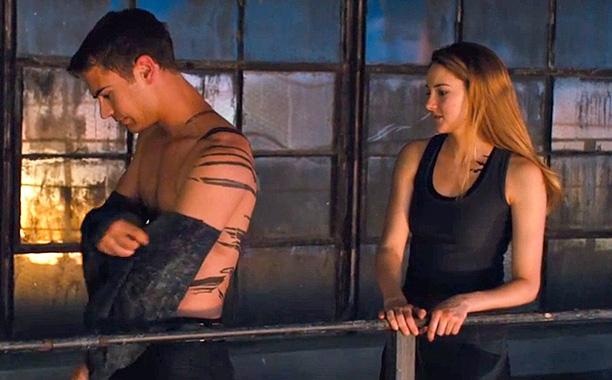


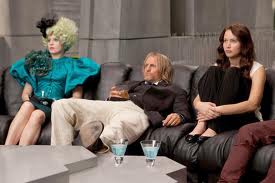







 CINE FEEL YEAH