Hector and the Search for Happiness (2014) came and went late last summer in limited release, but I don’t recall it ever coming to a theater near me. Which is just as well, because it is horrible. Ostensibly a comedy, the biggest laugh that the film story elicits occurs when a French woman struggles to pronounce the word “happiness.” The titular character, though embodied by Simon Pegg (one of my favorites), and all those who surround him are so criminally underdeveloped that it is difficult to care much about anyone in the film except in a more theoretical way that the filmmakers don’t support. What’s worse, the representation of the bored British psychiatrist’s journey around the world to find out what makes people happy paints multiple far-flung cultures in broad, caricatured brushstrokes. There is virtually no cultural specificity in any of the places that he visits, and when director and co-writer Peter Chelsom and crew attempt to add critical dissections of serious impediments to people’s general health and well-being in these places, these issues are wiped under the rug, never to be disturbed again. In case you are new to Hector and the Search for Happiness, be warned that I am going to spoil it now. And while you’re at it, take a peek at the film’s trailer to see how much potential the filmmakers wasted.
I have not read the original source novel by French psychiatrist François Lelord, but apparently its raison d’être is to educate a general readership about the psychology of happiness and to offer tips on finding it in everyday life. This explains why, after almost every interaction with someone throughout his international adventure, Hector jots down in his journal maxims such as “Happiness is knowing you’re alive” and “Happiness is not always knowing the full story.” These words are scrawled across the screen in order to keep a running tally of all the lessons learned, as if the film is a PowerPoint lecture. Hector also fills the pages of his notebook, which sexy and domineering girlfriend Clara (Rosamund Pike) gifted him upon his departure, with cutesy doodles of what his childish imagination encounters abroad. The main lesson he must learn is that losing Clara, even though she smothers him with a routine (always the same breakfast; she clips his toenails and packs his bag), would make him really unhappy. That’s right: he goes on this purportedly life-changing adventure only to realize that he likes his life just as it is. Although the couple’s Skype conversations widen the chasm between them more and more throughout, as the film drags on, there is never any doubt as to the fate of their relationship.
And this is why Hector’s first stop in “China” is so perplexing. He never gives any reason as to why he starts there (and isn’t it the tiny kingdom of Bhutan that is regularly cited as the happiest place on earth?) or what he is going to do once he arrives. But Hector doesn’t need a plan when he has filthy rich businessman Stellan Skarsgård to act as his guide in an unnamed Shanghai. It truly boggles the mind as to why Skarsgård’s Edward, so annoyed by Hector on the plane ride over from London, would take the ridiculous man under his wing and show him a good time. For, unbeknownst to Hector, Edward has secured the services of a prostitute named Ying Li (Ming Zhao) to keep Hector company in the nightclub and beyond. Although Clara gave Hector permission to fool around while on his trip, he winds up falling asleep before Ying Li can even get into the bed. At lunch the next day, believing he’s falling in love, Hector discovers the truth when her pimp whisks her away. Hector tries to do the honorable thing and stand up to him, but, despite calling her john “nice,” Ying Li hits Hector on the head and rides away. She doesn’t want his help. So in one fell swoop, Hector goes from ruminating that perhaps happiness is being in love with two women at the same time to realizing that he’s happier not knowing Ying Li’s full story. I never expected the film to engage the topics of prostitution and sexual tourism in Shanghai, but since the filmmakers did, I find it morally reprehensible that Hector, a psychiatrist, would find it so easy to disengage. It’s not as if Ying Li was happy to see her pimp, to return to her life as a sexually exploited woman. She seemed confused as to how she felt about Hector, as if wondering whether or not he could provide an escape. I wouldn’t have wanted to see a film about a white male tourist “saving” a Chinese prostitute. Nevertheless, I didn’t like how the experience of falling for a woman, no matter her profession, had exactly no consequences on Hector’s outlook other than admitting he rather just be ignorant of the circumstances of her life.
Hector (Simon Pegg) and Ying Li (Ming Zhao) get up close and personal. Image courtesy of Relativity Media.
But it only gets worse. From Shanghai, Hector treks through the Himalayas to a remote Buddhist monastery. No one mentions the place by name, but it is easy to assume that he has entered Tibet, to seek the advice of Togo Igawa’s Old Monk (the filmmakers couldn’t even give him a name), who mainly just speaks in rhetorical loop-de-loops to help Hector arrive at the lesson that always avoiding things that make you unhappy is no surefire way to attain long-lasting happiness. He spends all of five minutes there, without ever contemplating how the Chinese government’s suppression of Tibetan statehood might affect the happiness of the people living and working there.
Then he moves on to “Africa.” I found this section the most offensive, beginning with the filmmakers’ failure to name a more specific region or country. Perhaps they left the place intentionally unidentified so as to not incur the wrath of people and governments of a particular place or area. But this lack of cultural specificity effectually purports that Hector’s “Africa” stands in for a whole continent, dominated by warlords foreign-born and native alike, backward villagers who travel with their chickens on prop planes, and “Western” organizations that provide humanitarian aid. In fact, Hector spends two weeks helping his medical school friend Michael (Barry Atsma) at the clinic he runs with his African boyfriend. Embarrassingly, it takes him a full two weeks to recognize that Michael and Marcel (Anthony Oseyemi) are romantically involved, coming to the delightful conclusion that “Happiness is when you are loved for who you are.” Unfortunately, just as Michael’s work is merely the conduit through which Hector can explore “Africa,” the former’s sexual relationship with Marcel exists purely as a way for Hector to learn this widely shared belief. Hector doesn’t seem to care about the challenges that the mixed-race, homosexual couple—his friends—must face in this setting. And nor do the filmmakers.
You wouldn’t know it from this photo, but Michael (Barry Atsma), Hector (Pegg), and Marcel (Anthony Oseyemi) are cruising in a war-torn “Africa.” Image courtesy of Relativity Media.
Hector continuously acts the fool, and he even comes to the aid of a local warlord named Diego Baresco (Jean Reno). Despite warnings from Michael and Marcel about warlords in the area, Hector proves his goodness to Baresco, who suspects him of working for an international peace-keeping outfit that swoops in only to leave before seeing their work through. Hector reviews the prescriptions that Baresco’s beloved wife takes and makes revisions to her regime, thereby instilling some peace of mind in Baresco. They get drunk together, and on his ride back to the clinic, Hector fails to recognize that his taxi cab has been hijacked by two armed rebels, because all black men look the same to him. He’s soon taken hostage, destined to rot in a cell with one rat as his friend. It’s unclear as to how long he is held captive, and of course we have no idea what the rebels seek to accomplish with their violent acts. We’re just supposed to accept this, because isn’t that what happens in Africa? According to this film, white European and American tourists go missing all the time and are swept into guerrilla warfare. Hector uses Baresco’s pen to negotiate his release, for his captors fear retribution from Hector’s powerful “friend.” They abandon Hector on a country road, and “Happiness is knowing you’re alive” is emblazoned on the screen. Yes, absolutely, but did we need such an extreme scenario to demonstrate this? Especially since nothing becomes of it? Hector doesn’t suffer any post-traumatic stress, and we never witness Michael’s or Marcel’s worry over Hector’s abduction. Before moving on to Los Angeles to meet his former med school flame Agnes (Toni Collette), Hector experiences the gloriousness of sweet potato stew, which a baby-swaddling woman on the prop plane promised to prepare for him once they landed safely in “Africa.” It’s supposed to be physically and emotionally fulfilling, but we viewers never see it. The filmmakers can’t even commit to showing us a traditional “African” dish.
Having survived being held hostage by an indistinguishable “African” rebel group, Hector celebrates by cooking sweet potato stew with local women. Image courtesy of Relativity Media.
In Los Angeles, Hector takes part in Professor Coreman’s (Christopher Plummer) neuroscience study to map emotions such as happiness, sadness, and fear across different parts of the brain. After breaking up with Clara over the phone because his traveling to Los Angeles has finally signaled for the couple that Hector still longs for Agnes, Hector exhibits all three emotions in the scanner, lighting up Coreman’s screen with a rainbow of colors that the professor has assigned to each emotional state. Is this the payoff we’re supposed to receive from Hector and the Search for Happiness? What makes Hector special is his ability to feel happiness, sadness, and fear at the same time when recalling a wide range of events in his life? Having been rebuffed by Agnes, a happily married psychologist with a third child on the way, Hector determines that he must get back to London to be with Clara. As I said before, they live happily ever after. He’s more emotionally available and compassionate towards his patients, and Clara finally realizes that, yes, she wants to have a baby with Hector.
What and whom they always wanted. Clara (Rosamund Pike) and Hector finally tie the knot. Image courtesy of Relativity Media and MovieStillsDB.com.
The one bright spot in this mess is the chemistry between Simon Pegg and Rosamund Pike. Although their relationship isn’t exactly desirable (she takes great pride in clipping his toe nails!), they have an appealing, silly rapport in scenes where they interact in person. In fact, most of their exchanges occur over video conferencing calls. Notably, Hector and the Search for Happiness may be implying that staying connected through this kind of technology is no substitute for human contact (when Hector tries to tell her that he’d been kidnapped, she fails to register the gravity of the situation). Even phone conversations do not go well between them. There is simply a lack of communication between the lovers, and isn’t that a definite sign of their incompatibility? Clara cannot make up her mind regarding Hector’s up and leaving her for an indeterminate period of time. Hector needs to leave the person he loves in order to realize that happiness lies in a life made with her. This is not an earth-shattering revelation, especially since we watch him come to this conclusion under the most ridiculous of circumstances. As I said before, I am a huge fan of Pegg’s, and it was disappointing to see him attached to such bone-headed and culturally insensitive material. I wonder what attracted him to it in the first place: Hector’s childhood love of The Adventures of Tin Tin, maybe? Then again, shooting a film about happiness around the world does sound really exciting. If only the film wasn’t so concerned with checking off the lessons in the original source novel and instead let the characters interact with each other in more plausible, organic ways.
Emma Straub’s debut novel Laura Lamont’s Life in Pictures charts the transformation of a rural Wisconsin girl, Elsa Emerson, into one of the starlets of Hollywood’s Golden Age. Using Jennifer Jones’s biography as a springboard, Straub writes of a woman who juggles multiple identities throughout her life: daughter, sister, wife, mother, and actress. In fact, the book is divided into twelve chapters whose titles encapsulate the roles she plays. Opening the novel in 1929, “Cherry,” at once suggesting the ripe potential of her later life’s work and the lost grandeur of Chekhov’s last play, details the special circumstances of her childhood spent behind the scenes and on the floorboards of her parents’ barn-house theater. Nine years pass between the suicide of Elsa’s older, beloved and beautiful sister Hildy and her escape from Door County with stranger-cum-costar-cum-husband Gordon Pitts. Within a few years after their arrival in Los Angeles, Gordon signs a contract to be a bit player at Gardner Brothers, and Elsa’s own acting ambitions take a backseat to her familial responsibilities. In the second chapter, “Laura Lamont,” studio executive (and Gordon’s boss) Irving Green flirts with Elsa at a wrap party and rechristens her “Laura Lamont,” telling her that, provided she loses thirty pounds once she gives birth to her (second) child, she is pretty enough to be a star. And so our heroine now sets her mind on becoming the star she always wanted to be.
Straub is a deft storyteller, and structuring her fictional biography according to the highlights of Laura Lamont’s life and career excises the fat of the more uneventful, prosaic moments of a character’s story. However, after reading all 304 pages of Laura Lamont’s Life in Pictures, the titular protagonist still remains somewhat of a mystery. Perhaps this is intentional. We read as Elsa/Laura struggles to define herself, mainly as her new glamorous identity fails to wipe the slate clean. She can’t face up to her mother, who resents Elsa for leaving Door County, seemingly forgetting who she is. Laura is haunted by past traumas, such as her sister’s suicide, and, years after she has divorced Gordon and married the studio’s number two, Irving Green, her first husband becomes a drunkard, a drug addict, a costly thorn in her side. The role that she chooses to most define her is that of mother. More pages are devoted to Laura’s dedication to and admiration of her three children: Clara and Florence, from her first marriage, and Irving Jr. This isn’t objectionable, of course, but as a film scholar and historian, I was more interested in how Straub represented Hollywood of the 1930s, 40s, and 50s.
Jennifer Jones (1919-2009), the real-life inspiration for Emma Straub’s Laura Lamont.
Just as it is unreasonable for a film critic to judge a motion picture against the film s/he would like to have seen, it is not fair of me to judge Laura Lamont’s Life in Pictures as lacking an in-depth exposé of Hollywood goings-on from the perspective of one star—or cog in the machine. Besides, as Straub told Jacki Lyden in 2012 on NPR’s All Things Considered, “I made sure to stay away actually from Jennifer Jones’ biography ’cause I didn’t want it to be, you know, a thinly veiled version of her. I really wanted my Laura Lamont to stand on her own feet.” However, just as I really enjoyed Farran Smith Nehme’s engagement with the archival preservation of forgotten silent films in her recent novel Missing Reels, the characterizations of Hollywood and its myriad players in Laura Lamont’s Life in Pictures really delighted me. For example, when Laura starts at Gardner Brothers, whose company name recalls that of the real-life Warner Bros. but whose physical location more accurately resembles that of Paramount, she begins cutting a rug in a string of comedies with her red-haired friend Ginger Hedges. Years later, after Ginger becomes a big star in comedy, rival studio Triumph Pictures poaches her, and she later goes on to head the studio while producing and starring on a successful television sitcom with her husband. It should come as no surprise that Lucille Ball inspired the character Ginger. Robert Walker, Jennifer Jones’s first husband, does not end up as ignobly as Gordon Pitts does. At least the real-life actor, who also died young, can claim an illustrious career with the likes of Bataan, Strangers on a Train, and My Son John in his filmography.
When the hardcover’s opening book-flap describes Irving Green as Laura’s “great love,” I recognized that the character must be a stand-in for David O. Selznick, Jennifer Jones’s second husband. Selznick produced such classics as King Kong, Gone With the Wind, Duel in the Sun, and The Portrait of Jennie, the last two of which starred his wife Jones (neé Phylis Lee Isley). Before striking out on his own, Selznick worked at MGM, Paramount, and RKO. While the novel does not present Irving as an independent producer like Selznick, it does show that his decision to put Laura in more serious roles, in romantic, historical epics, eventually nabs her an Academy Award for Best Actress. Jennifer Jones won her first and only Oscar right out of the gate, for her leading role in The Song of Bernadette. In crafting Laura Lamont’s backstory, Straub cleverly keeps the religious theme of Jones’s film when she writes that Laura won for her performance as a nun in Farewell, My Sister, a film whose script somewhat imitates her relationship with Hildy. Unfortunately, I found the description of Laura and Irving’s relationship lacking in intensity. Although married for years, before his untimely death from a prolonged heart-related illness, I never really understood the lovers’ mutual fascination. Irving is repeatedly described as short, slight, balding, and regrettably, Jewish, as if that is enough to characterize someone. Sure, power is an aphrodisiac, but outside of his unexamined devotion to Laura and her children, I fail to see how he is appealing. He isn’t given any thought-provoking dialogue or much to do at all, really. He mainly just sweeps her off her feet, seeing someone else in Elsa Emerson, a brunette rather than a blonde. Laura herself is a bit of a simpleton, especially when it comes to interacting with her growing children. And Laura’s relationship with her young black maid, Harriet, reads too much like one Joan Crawford or Vivien Leigh had with Butterfly McQueen or Hattie McDaniel on-screen. Since we glimpse Laura mostly in her private life, it is difficult for me to imagine the character as a glamorous starlet. She mainly just upholds the Grand Narrative of the Hollywood Dream Factory: she did as she was told, read her lines, and was happy if the bosses were happy.
Coming off the heels of her beloved father’s death, Irving’s death further pushes Laura into decline. Deep in debt, she abuses anti-anxiety medication, falls into an intractable despair, and eventually attempts suicide. She gradually makes a full recovery and adjusts to a new life out of the limelight. Chapter eleven, “The Shopgirl,” recalls silent film star Louise Brooks’s biography rather than Jennifer Jones’s: the former actress died in 1985, destitute and purportedly a salesgirl in a department store. Meanwhile, in 1975 and now a grandmother, Laura supports herself as a shop assistant for dressmaker-to-the-stars Edna (clearly inspired by famed Hollywood costume designer Edith Head, who was also the model for the scene-stealing Edna Mode in The Incredibles). The novel ends where it began: in the theater. In 1980, the newly rediscovered Laura Lamont makes her Broadway debut in The Royal Family, the same play that she performed with Gordon Pitts before they married and skedaddled to Los Angeles with dreams of stardom shining in their eyes. I can’t deny that the final scene is poignant. Her children reunite in New York to see Laura on opening night, but when I closed the book on her life, I couldn’t help thinking that I wanted more from it.
A few years ago, I published online an essay whose title encapsulated my frustration at the time with the apparent lack of compelling, universally humanistic film roles for women: “Can Female Film Characters Rise to Their Potential?” Inspired by a vision I had of a lone woman astronaut shuttling through space (Sally Ride had just died), I contemplated a future where women characters in film might “have interesting, fully realized inner lives that eschew all the narrative tropes that heretofore define women,” mainly being a wife and/or mother. The potential I see in women film characters, and women in general, is the narrative ability to illuminate the human condition for everyone.
On the eve of the 87th Academy Awards ceremony’s television broadcast, I habitually observe and reflect on the nominations. At this point, each of the four acting categories appears to offer no surprises when it will come time to announce the winners. Julianne Moore (Lead Actress, Still Alice), Patricia Arquette (Supporting Actress, Boyhood), Eddie Redmayne (Lead Actor, The Theory of Everything), and J.K. Simmons (Supporting Actor, Whiplash) have routinely won acting trophies for their respective film roles while competing on the awards circuit this season. With the outcome of these contests all but a certainty, I recognize that the most competitive category is that of Best Performance by an Actress in a Leading Role, and it collectively represents the fulfillment of my wish from over two years ago, with a few caveats. In other words, most performances in this category capture, for lack of a better turn of phrase, what it’s like to be human. If film is an art form that helps us make sense of our lives, we cannot take the woman’s experience for granted, as Academy voters have done. Of the five nominees for Best Performance by an Actor in a Leading Role, only one top-lines a film that is not nominated for Best Picture: Steve Carell in Foxcatcher. However, only one nominated female lead performance appears in a Best Picture contender: The Theory of Everything, as if to say that women-centered films are not prestigious (read: worthy) or capable of addressing everyone.
Rather than run through the list of nominees alphabetically, I want to discuss them in the chronological order that I first encountered them. Maybe it’s the simple passage of time or the workings of an unreliable memory, but every performance seemed to be better than the last one I saw. Fair warning: in my analysis, I give away many plot details of each film.
At the beginning of October, Gone Girl kicked off the season of awards-friendly motion pictures, and I remember thinking throughout my viewing of it that Rosamund Pike, the titular “girl,” deserves a nomination for her portrait of a bonafide psychopath. As Amy Dunne, the dissatisfied wife of Ben Affleck’s mysterious charmer Nick Dunne, Pike both fakes her own kidnapping (and possible murder) and then frames her husband for it. It isn’t until halfway through that the viewer discovers that Amy, the subject of a statewide search, is in fact alive and on the run. Having set as her mission the complete and humiliating obliteration of Nick’s character as well as his eventual imprisonment, Amy watches from afar (using the national media circus surrounding their small Missouri town) as the forged artifacts and clues that she doctored to point towards Nick’s guilt gradually fall into place. The most lethal part of her scheme (killing a man in supposed self-defense in order to fake her abduction) ultimately reunites husband and wife. In the media spotlight she has helped orchestrate and direct, Amy uses the public court of opinion to both absolve Nick of any crime that the American public previously found him guilty of committing and to imprison him in an emotionally, mentally, and physically abusive marriage.
A snapshot of Amy Dunne’s fake journal in Gone Girl. Image courtesy of Twentieth Century Fox.
While Gone Girl and Amy’s role in it do not exactly conform to fulfilling my desire to see women in films who are unattached, undefined by their relationships to men and/or children, the David Fincher-directed thriller, which author Gillian Flynn adapted from her bestselling novel of the same name, at least deconstructs the sanctity of the institution of marriage. Keeping Amy’s machinations hidden until halfway through the picture, her perspective only relayed through fake found journals, not only shifts perspectives on the couple’s lives (from Nick’s to Amy’s), it also produces one helluva denouement. Amy’s cold and clinical calculations upend our previous idea of her, whether as flirtatious (the memory of their meet-cute), sacrificial (a longtime cosmopolitan, she left New York for suburban Missouri when Nick’s mother became terminally ill), or even physically abused (her fake journal embellishes an altercation with Nick in order to vilify him). More than this, Amy presents a pathologically sociopathic and misandrous response to patriarchy, going to libelous and murderous extremes to pervert the idea of a traditional marriage. As the primary breadwinner upon their transplant to the Midwest, Amy strikes back at Nick for his philandering ways and emotional neglect so that when he finds himself trapped in this controlling and harmful marriage (to say, “loveless” would be an understatement), she is not defined by her relationship to him so much as he is defined by whatever she thinks or says about him. In this way, Gone Girl examines how relationships bind us and in this process, redefines the rules of attachment. The opening and closing scenes, wherein Nick strokes his wife’s hair and, through voiceover narration, muses about how we really don’t know what goes on in the mind of our chosen companion, index our struggles with loneliness and desire to be free.
A Best Picture contender, The Theory of Everything is ostensibly a handsome biopic of British theoretical physicist Stephen Hawking. Based upon Jane Wilde Hawking’s memoir of the thirty years she was married to him, Traveling to Infinity: My Life With Stephen Hawking, the film is mostly focalized through her experience. While Eddie Redmayne receives almost unanimous praise for his physical transformation as Stephen, who was diagnosed with motor neuron disease (ALS or Lou Gehrig’s disease) in 1963 at age 21 and around the same time that he met fellow Cambridge student Jane, it is actually Felicity Jones as the scientist’s first wife who does most of the emotional heavy lifting in the film. The Theory of Everything doesn’t propose a film story about a woman uncharacterized by her relationship to a man and their children. Just the opposite, but it is worth discussing very briefly, to correct notions that the film is about a famous man and the people in his life. In fact, given the film’s source material, it is easy to argue that the film is about a woman and the famous man in her life. This does not mean that The Theory of Everything is a so-called “woman’s film,” but it is a family drama centered from the woman’s perspective.
In his review of the film, New York film critic David Edelstein writes that, “as the film’s focus drifts to [Jane], I found myself resenting the character—not for wanting more from her life, but for yanking the narrative away from by far the more fascinating figure.” I agree that the first part of the film focuses primarily on Stephen’s experience, combining his academic coming-of-age (meeting advisors’ expectations—or not—and choosing a dissertation topic) with his struggle to adjust to a rapidly degenerative disease as well as a nascent romance with Jane. She may have walked into his life at a party, but I argue that as soon as Jane determines that he should be a part of her life, she wrestles the picture away from him, and that gesture does make her both fascinating and compelling. I still cannot shake the image of the couple’s pronounced declaration of togetherness (it’s been used in the film’s marketing campaign, to boot) wherein they hold hands and joyously spin around. Significantly, it is Jane who initiates their little ball of energy, pulling Stephen into her orbit. Young and in love, Jane doesn’t realize the kind of life she commits herself to when she refuses to forget Stephen. For he far out-lives his life expectancy of two years, and as time marches on she becomes increasingly frustrated with her life. Taking care of Stephen and raising their children are two full-time jobs, and her own academic ambitions take a backseat to her husband’s. We witness the effect that choosing Stephen has on her life, and a romantic dalliance with a widowed choirmaster offers her some release. Jonathan (Charlie Cox) assists Jane with raising the kids and caring for Stephen, who condones their sexual relationship. Unable to face up to the rumors that Jane’s third child is his, Jonathan makes himself scarce. After Stephen loses his ability to speak and acquires a computer that will serve as his voice box, Jane recognizes that she can no longer support Stephen the way that he needs and reunites with Jonathan. She is a fascinating character, because she is willing to change her life and seek the fulfillment of her desires.
Felicity Jones as Jane Wilde Hawking with husband Stephen (Eddie Redmayne) and baby. Image courtesy of Focus Features.
The Theory of Everything shines a light on one of the brightest minds of the twentieth and twenty-first centuries, but it also demonstrates that, to rephrase that old adage, “behind every great mind is a woman.” The title derives from Stephen’s quest to marry Einstein’s theory of general relativity with quantum mechanics, but it just as equally signifies that love is the answer to what binds people together for however long they can hold on. In this way, contextualizing Stephen Hawking’s life story and scientific and cultural contributions through his wife’s experience makes the case that they couldn’t have accomplished as much separately as they did together. If finding (self-)gratification is one of the tenets of the human condition, then Theory of Everything demonstrates how our desires are constantly in flux.
Months later, and with memories of Rosamund Pike and Felicity Jones sloshing around in my head, I finally saw Wild, the adaptation of Cheryl Strayed’s bestselling memoir. I fell so hard for this film, I don’t understand why it wasn’t nominated for its screenplay (by novelist Nick Hornby), cinematography (Yves Bélanger), and direction (Jean-Marc Vallée). Hell, I think Wild is easily one of the best films of the year and deserves one of those coveted spots not to exceed ten. Although I have never been a fan of Reese Witherspoon, I was in awe of the humanistic depth of her physical performance. It wasn’t so much a transformation—not like Eddie Redmayne’s or Charlize Theron’s for her Oscar-winning role in Monster where she turned out completely unrecognizable. Instead, Witherspoon perfectly embodies a woman who has been too hard on herself, on her spirit and on her body. When her young mother (Laura Dern in an achingly small but beautiful performance) dies of cancer, Cheryl grieves in an unexpected way, one that leads her astray from her husband (Thomas Sadoski) and into the arms of heroin addiction. With a painful divorce and an extramarital abortion behind her, Cheryl continues on her path to recovery under the most extreme of conditions: hiking 1100 miles of the Pacific Crest Trail alone. Along the way from the Mojave Desert to Portland, Oregon, she treks across a variety of terrain and climates (arid deserts, snow-capped mountains, Pacific Northwest rainforests) and encounters myriad threats, ranging from animal attacks and lost shoes to death by starvation/thirst and violent sexual assault.
Although Cheryl’s grief and infidelities may have instigated her pilgrimage, Wild isn’t about a woman defined by her relationship to her ex-husband Paul. The experience of losing him and herself in her grief even influences Cheryl to invent a new last name on the divorce papers: Strayed. In fact, Wild is a film about a woman’s self-programmed reinvention, or as the memoir’s subtitle states, she goes “From Lost to Found on the Pacific Crest Trail.” Cheryl takes ownership of the mistakes that she has made and grapples with how she took her mother for granted (but thankfully, like in this year’s indie rom-com extraordinaire Obvious Child, she unapologetically chooses an abortion when she stumbles into an unwanted pregnancy). By letting go of her social attachments for three months, during which time she calls on Paul and friends for support of the motivational and material kind, Cheryl learns to forgive and love herself again. For me, the most poignant aspect of the film is that Cheryl chooses her relationship with Bobbi as the one to define her, saying, “My mother was the love of my life.”
Cheryl (Reese Witherspoon, unpictured) remembers how much she wanted to be like her mother Bobbi (Laura Dern) with that irrepressible smile. Image courtesy of Fox Searchlight Pictures.
Moreover, Wild comes the closest of the Best Actress nominees so far in proposing a film about the human condition that just happens to be focalized through a woman’s experience. As I have already mentioned, the film is about self-programmed reinvention, love and regret, life and death. I imagine that we can all relate to a character who hurts the people who are closest, sometimes purposefully, sometimes without thinking at all. This doesn’t make the character a bad person, just someone who needs to learn to appreciate what life and love can offer. Crucially, it is too late for Cheryl to treat Bobbi as she deserved, but Cheryl’s arduous and
Cheryl (Reese Witherspoon) goes her own way. This obstacle course is the least of her problems. Image courtesy of Fox Searchlight Pictures.
somewhat ascetic pilgrimage brings this all into focus. Presenting a woman’s story as universally humanistic is feminist in its own right, but Wild also engages the philosophy in more pointed ways. For example, virtually everyone she meets on the trail is astonished at her abilities and takes umbrage at her insistence to hike the trail without a male companion. She even locks heads with a reporter from The Hobo News who cannot comprehend her voluntary choice to drop out of society for a while and thus identifies her as a lost soul, a “hobo” with no job, home, or family. But most surprising of all, a group of three young men on the trail adopt Cheryl as their personal hero, having read her poetic entries in guest-books, which quote feminist icons such as Emily Dickinson and Adrienne Rich. Believing feminism to be part and parcel of humanism, Wild makes clear, as bell hooks once wrote, “Feminism is for everybody.”
Just when I thought this year’s nominated lead performances by women couldn’t get any richer, I saw Marion Cotillard, de-glamorized, in Two Days, One Night. It is a much smaller film than the others, both in scale and, seemingly, in depth. Cotillard plays a working-class laborer who, given the weekend, must convince a majority of her co-workers to forgo their one thousand-euro bonuses so that she can keep her job. Whether or not the solar panel factory can legally put her continued employment to a vote by its employees is never questioned, but almost everyone she confronts points out that the boss’s ultimatum is unfair. Shot in their characteristic social realist/fly-on-the-wall style, the latest film by Belgian brothers Luc and Jean-Pierre Dardenne plays out like a thriller of a cruel joke: Will she get enough votes to keep her job? How many more times do we have to hear her plead with her co-workers to vote for her? Asking for anyone’s help is an ordeal in and of itself for Sandra, who, when the film begins, is on the brink of returning to work following a long absence (it gradually becomes clearer that she suffered a mental breakdown). A pathetic decision, choosing to speak with people in person whenever possible is costly in terms of time (she zigzags all over town in order to track them down at their homes, on the street, or in corner groceries or laundromats) and an emotionally draining exercise in futility. Thankfully, no two encounters are exactly the same, even if those unwilling to help her always have the same reason: they need the money, whether to pay their child’s tuition, build an addition to their house, or cover the electric bill for six months.
Sandra (Marion Cotillard) confronts a co-worker who cannot see beyond himself. Image courtesy of Sundance Selects.
What makes Two Days, One Night so quietly impressive is its premise: to what lengths will someone go to keep her job? How will she convince human being after human being, with wants and needs not completely unidentical to her own, to sacrifice material gain in order to come to her aid? How will she react when, based on the number of votes pledged in her favor so far, her future looks bleak? Providing Sandra with a psychiatric disorder heightens the stakes—and the Dardennes do go to some dark places—but otherwise Two Days, One Night could be about anyone. In fact, there isn’t much character development in terms of Sandra’s familial role so as to make the part gender-specific. In other words, she spends so little time with her two children that her identity as mother does not define her. Even Sandra’s greatest champion, her husband Manu (Fabrizio Rongione), frames her ordeal as one about recovering her lost pride. Her humanity, and her repeated attempts to coax the more humane choice out of her peers, defines Sandra. Of course the couple needs her income to get by, but their situation is no more dire than that of most of her co-workers. In this way, the film is about overcoming adversity and preserving your own self-worth, arguably the most humanistic ideal. Come Monday morning, Sandra is one vote shy of keeping her job. Touched by the generosity of some of her colleagues, she refuses the boss’s offer to rehire her at the end of the season, because it would mean that one of her pledges would lose his contract with the company. Initially stunning, her decision to incur further economic hardship isn’t just about worker solidarity but also personal integrity. The final scene of Sandra’s bad-news phone call to Manu represents a revolution of some sorts: walking away from the factory, smiling, Sandra is buoyant with every step, personally motivated by the support of Manu and her co-workers to find another job. If she can get through this past weekend, she can approach any new challenge with enough courage and integrity to overcome it.
Rounding out the five nominees for Best Actress, Julianne Moore presents a deeply moving and sensitive portrayal of a woman diagnosed with early onset Alzheimer’s disease in Still Alice, an adaptation of Lisa Genova’s novel of the same name. Admittedly, I am not Moore’s biggest fan (she’s usually too showy for my tastes), and the negative reviews of the film colored my perception of it going in. Jason Bailey of Flavorwire wrote that the film “plays like a dusted-off, mid-‘90s Movie of the Week.” However, not only was I pleasantly surprised by the quality of the film, I was also overcome by profound sadness and grief, unable to talk about what I had just seen without choking up. Who cares if Still Alice is emotionally manipulative? More than any of the other films nominated in this category, Still Alice examines what makes us who we are while confronting our own mortality.
A world-famous linguistics professor at Columbia University, Alice Howland is the first to recognize that “something is wrong with [her].” Sometimes she can’t find the right word, and at other times she gets disoriented on her aerobic runs around the neighborhood. Her husband, John (Alec Baldwin), writes off her worries as evidence that at 50, she’s simply getting older. Determined to find the root of her newfound problems (it feels like her brain is slipping farther and farther away from her), she sees a neurologist in secret and eventually receives the dreaded diagnosis. The effects of the disease would be difficult for anyone to cope with, but as her doctor explains, since Alice carries the familial gene for early onset Alzheimer’s and is extremely well-educated, she can expect to deteriorate more rapidly than if she didn’t have the gene and wasn’t so well-educated. She simply has much more to lose, and for a linguist whose life’s work has been the study of human communication systems, the thought of losing her ability to relate who she is with words is devastating. As it is for me, as it is for anyone.
As her mother’s primary caregiver, Lydia (Kristen Stewart) tries to comfort a sad and spacey Alice (Julianne Moore). Image courtesy of Sony Pictures Classics.
But Alice is intellectually resourceful, and she can better compensate for her incapacities. It takes a while for her to admit defeat and leave her tenured position (her meeting with the chair of her department is the most implausible scene in the whole picture, for it would never be up to her colleagues to dismiss her because she has a health issue). John and their three children try to look after Alice as best they can. Eventually, their youngest, the Los Angeles-set aspiring actress and free spirit Lydia (Kristen Stewart), agrees to move back to New York to serve as Alice’s primary caregiver when John accepts a position at the Mayo Clinic in Rochester, Minnesota. In the exploration of this mother-daughter relationship, Alice’s older children, the lawyer Anna (Kate Bosworth) and the medical student Tom (Hunter Parrish), suffer from a severe lack of character development. While Anna and Lydia sometimes butt heads as to what is best for their mother, Tom’s only real function is to accompany Alice to a talk she gives at the local chapter of the Alzheimer’s Association. Film critic Jason Bailey denigrated this speech as a “forced, false moment” by writer-director duo Richard Glatzer and Wash Westmoreland, thereby completely forgetting that the scene parallels an earlier keynote address she gave at a linguistics event where she spoke confidently on topics related to her main line of inquiry: why do humans talk and how to they learn to communicate? In the later scene, the transformation that Alice has undergone throughout the film is palpable. Anxious and insecure, she must use a highlighter as she speaks at the podium so that she does not lose her place in the speech. Frustrated with her inability to write a persuasive argument using medical and linguistic jargon, she takes Lydia’s advice and writes about how it feels to lose her mind. There isn’t a dry eye in the house. For, as it is made clear throughout the picture, we are who we are because we have made ourselves into whoever we want to be. For Alice, that has been an expert on language acquisition, an equal partner in a loving relationship with a man who confidently says she was the smartest person he’d ever met, and a dependable and accepting mother.
Still Alice also makes the case that we are who we are because of what we remember. As Alice grapples with her diagnosis, slipping farther and farther away from the people in her life, she returns to memories of her sister, whom she lost as a teenager. I initially dismissed the final scene of the film, failing to recognize that Alice’s imagining she and her sister on a beach is her defiant stance against the havoc that Alzheimer’s wreaks on her mind. She clings to this memory as if to remind herself of who she is. This shot immediately follows the scene in which Lydia reads from the play Angels in America and asks her mother if she knows what the speech is about. Alice smiles and struggles to say, “Love.” Again, in his review of Still Alice, which he labels “desperate” and unoriginal, Bailey fails to see how the film’s ending illuminates something fundamental about the human experience: our appreciation and understanding of art and how it reflects our perception of what the meaning of life is. The Flavorwire film critic finds Glatzer and Westmoreland’s “desperation… particularly rancid at the end” because, “in lieu of saying anything moving or profound, they simply shoplift the ending of Angels in America.” In presumably one of Alice’s last moments of clarity, she demonstrates for Lydia that she is still present, that she can understand Tony Kushner’s complex speech, and that she loves her daughter and her long-lost sister. It doesn’t matter that these “moving and profound” words, to correct Bailey’s statement, are not Alice’s or Lydia’s. Not everything we say or do is original; the purpose of art is to draw connections between experiences, and the meaning of life is to see how art shapes us.
Contrary to what Russell Crowe thinks about roles for older women in Hollywood, the reality is that quality parts for women at any age are terribly lacking. While most Oscar prognosticators, critics, and cinephiles like myself watch the Academy Awards tonight and lament the fatedness of Julianne Moore’s, Patricia Arquette’s, Eddie Redmayne’s, and J.K. Simmons’s prize-winning, I will remember that for the first time in a long while, it seems that every nominee in the Best Actress category was phenomenal. Rather than choose a winner, I wish we could simply celebrate these five actresses and many more, because they brought to life film characters whose experiences illuminated different facets of the human condition. I hope this trend in representing women with “interesting, fully realized inner lives” continues. And I don’t care if they are wives or mothers anymore. Restricting what kinds of parts women play in film and in society isn’t humane.
Tonight ushers in the premiere of CBS’s Elementary, the newest rehashing of the Sherlock Holmes story, set in a contemporary New York. It looks as if, in some circles at least, its promising buzz has turned into less-than-enthusiastic reviews. But I am going to watch anyway, for Jonny Lee Miller plays the iconic character. You see, with him returning to the American tube, this means that you can see four of the six members of the principal cast of Trainspotting (Danny Boyle, 1996) on TV every week. You might recall that besides being one of my very favorite films, Trainspotting represents a watershed moment in the history of my cinephilia.
In addition to Miller’s (Sick Boy) starring role on Elementary, three other Trainspotters keep busy as parts of big TV casts. Robert “Bobby” Carlyle (Begbie) is on the audience favorite Once Upon a Time (2011-present), playing a certain Mr. Gold, a creep whose storybook world double is Rumpelstiltskin. I only ever watched the pilot that aired last year. I watched, of course, because he is in it, but sadly it was not my cup of tea. Since 2008 (or the fifth season), Kevin McKidd (Tommy) has appeared on the same network, ABC, as Dr. Owen Hunt, Iraq War veteran/PTSD sufferer/Dr. Christina Yang husband-turned-adulterer in the commercial juggernaut that is Grey’s Anatomy (2005-present), which is entering its ninth—and hopefully last—season tonight. Finally, we have Kelly Macdonald (Diane). If there is a leading lady on HBO’s Boardwalk Empire (2010-present), then it would have to be her: she plays Margaret Shroeder, an Irish immigrant in 1920 Atlantic City who falls under the spell of the county treasurer/bootlegging gangster Enoch “Nucky” Thompson. The third season started a little more than two weeks ago with them, having gotten married to protect his investments, on the outs.
The star of Trainspotting—and the only bonafide “movie star” of the bunch—Ewan McGregor (Renton), was going to be part of an ensemble for HBO: indie auteur Noah Baumbach developed, co-wrote, and directed the pilot adaptation of The Corrections with author Jonathan Franzen’s full participation. Then in May, the cable channel pulled the plug on the production, for whatever reason. I was really looking forward to this, not because I know anything about The Corrections (which for the record, I do not), but because I knew it meant five, yes, FIVE! cast members of Trainspotting were going to be on American TV regularly. Interesting to see how their wildly different career trajectories brought them to the same medium, “across the pond” as it were, but on programs that couldn’t be any less similar.
The only cast member never to have secured a regular role on an American TV show is Ewen Bremner (Spud). What hypothetical or existing show can you imagine him having a part on? Although I gave up on it within the first five episodes of its most recent third season, I think I could imagine Ewen on FX’s Justified (2010-present). If you think the waifish Jeremy Davies can play the heir to an Appalachian drug empire with the most nervous energy, I wouldn’t put it past Mr. Bremner to do him one or two better. If he were cast—and I know this is nothing but a pipe dream—then maybe I’d tune into the show again. Even with Timothy Olyphant’s central performance, I couldn’t get interested in Justified, particularly because its Southern California filming locations betrayed its Kentucky setting to such an extent that I didn’t buy any of it. But I digress.
By way of conclusion, I think it’s worth noting the fun coincidence that the Oxford English Dictionary‘s “Word of the Day” is “trainspotter.” Not only do I subscribe to this mailing list, I collect the words I like the sound and/or meaning(s) of. Allow me to educate: according to the trusty ol’ OED, the word, a noun and originally and chiefly British, refers to 1) “A person (often a boy) whose hobby is observing trains and recording railway locomotive numbers, sometimes with other details” and 2) “In extended use (freq. depreciative): a person who enthusiastically or obsessively studies the minutiae of any subject; a collector of trivial information.” That’s me!
Though the OED gives “trainspotterish” as a related word, it stops short of giving the further association and definition of “trainspotting,” which refers to a heroin addict’s practice of finding a fresh vein into which he or she can inject the drug. (The markings on their arms resemble train tracks.) Yes, this means that the title of the book and movie Trainspotting represents a utilitarian concept, and in much the same way that we say we “geek out” whenever we get really excited about something in pop culture, thereby taking ownership of the image which may make us seem uncool or esoteric to others, I like to call myself a “trainspotter.” I don’t watch trains (but I do whenever I have the chance), and I’m not a heroin addict, but I am a trainspotter—especially when it comes to Trainspotting.
CINE FEEL YEAH is all about the cinema, this much is true. But sometimes it is necessary to cast a glance at moving images more broadly defined. Case in point: director Marc Munden’s BBC Two miniseries adaptation of Michel Faber’s 2002 novel of the same name, The Crimson Petal and the White (2011), is so filled to the brim with less than reputable but intriguing characters, compelling melodrama, and enough symbolism to captivate any humanities major that I just couldn’t ignore it. Besides, the dramatic miniseries neatly fits the bill of one of my favorite subgenres, which centers around (usually historical) women rebelling against the dictated norms of her contemporary society. I caught the four-hour-long program when it aired on American premium cable television earlier this month, divided into two parts rather than its original four, and I cannot verify otherwise if the American telecast differs at all from the British standard. Either way, it is long and slow in some parts, but never so dull as to discourage continued viewing. It is also one of the more cinematic miniseries I have seen, featuring a more modern and eclectic score and a number of dizzying edits that are not the bread and butter of literary adaptations for TV. Before I forget: I have to warn you that I’m going to spoil pretty much everything.
The enviously prolific Romola Garai stars as the infamous teenage prostitute Sugar, but as she warns you in her voiceover narration, she is “far from sweet.” The story takes off in 1874, as she plies her trade at Madam Castaway’s (Gillian Anderson, looking a lot like a redheaded Gina McKee to me), a brothel tucked deep inside the dodgy end of London, where poverty, hunger, and disease persist. After hearing raves about Sugar from his friends who only wish they could have her, the feckless William Rackham (Chris O’Dowd), both the heir to a soap-manufacturing company and an aspiring novelist, seeks out her company. Their unproductive encounter, shall we say (drunk, he passes out and wets the bed before they can even begin), sets everything in motion: from that point on, he is hopelessly drawn to her, eventually buying her exclusivity, then moving her to her own apartment and finally into his family home. Right, I must mention that William is married to Agnes (Amanda Hale), who is psychologically disturbed after enduring years of sexual abuse and trauma. Don’t jump to conclusions too quickly there; I will discuss this subject in due course. There is a robust cast of supporting characters, including William’s pious brother Henry (Mark Gatiss), the reformer of prostitutes and tuberculosis sufferer Mrs. Fox (Shirley Henderson), and Mrs. Fox’s brother and Agnes’s physician, Dr. Curlew (Richard E. Grant).
But The Crimson Petal and the White belongs to Garai and, to a lesser extent, O’Dowd. I have watched the English actress seemingly grow up on-screen, and I haven’t always been a fan. Though I love I Capture the Castle (Tim Fywell, 2003), I freely admit that Garai’s central performance is sometimes unpolished, but she has consistently gotten better in everything she has done, from Angel (François Ozon, 2007) to The Hour (2011-present). I don’t wish to be so gushy, but she really excels as Sugar, particularly in presenting her as a confident and pragmatic woman who starts out with ambiguous intentions but eventually earns our sympathy completely by miniseries’ end. It’s a bravura performance. As for O’Dowd, it is strange to see him in a non-comedic role, and in a costume drama to boot! I almost always find him a likable (OK, adorable) countenance, but because his character develops negatively, he gradually becomes less and less attractive. William is pompous, sexist, vulnerable, and brutish.
I haven’t read the book (all of its 800+ pages), so I cannot comment on it, but The Crimson Petal and the White reminded me of certain classic works of English literature and their own screen adaptations, including Jane Eyre by Charlotte Brontë, Tess of the d’Urbervilles by Thomas Hardy, and pretty much anything by Charles Dickens, for it is a coming-of-age story about upward mobility (albeit centered on a woman who doesn’t achieve it). The comparison to Jane Eyre is obvious enough: our heroine enters a household to work as a governess for the child of her lover; who cares if she’s a prostitute and knows the mad wife already exists? William is no Rochester. He’s more like Alec from Tess, as he throws out the woman he seduces and impregnates. Through displays of moral courage and indescribable suffering, Sugar, like Tess, is redeemed. And let us not forget that the title comes from Alfred, Lord Tennyson’s poem “Now Sleeps the Crimson Petal,” which at one point Sugar reads aloud to her charge. I am no expert on poetry, but I think its stanzas speak to the dualism of Sugar’s and Anges’s lives.
The miniseries, and presumably Faber’s tome, is undoubtedly feminist, as it deconstructs how prostitution manifests in many different forms. And I don’t just mean as a comparative analysis of the various hierarchical venues that Sugar inhabits (i.e. the brothel and seedy taverns, the kept apartment, and finally the family home where she works as a governess and serves as William’s mistress and secretary). The Crimson Petal and the White, as adapted by Lucinda Coxon, makes clear that marriage is also a kind of prostitution, and this point is explicitly made through the juxtaposition of Sugar’s and Agnes’s individual experiences.
Whereas Sugar is sexually mature, having been pushed into prostitution at age 13 by her own mother (that’s right, Mrs. Castaway herself! but don’t worry, I haven’t spoiled anything you don’t learn within the first 80 minutes) and gained years of experience in giving men exactly what they desire, Agnes is sexually immature. She is locked in a young, almost prepubescent state, signified by her blonde ringlets, constant nightie-wearing, and, most importantly, fevered anorexia, which curtails her regular menstruation. On top of it all, becoming a mother eight years prior profoundly scarred Agnes’s psyche, so much so that she cannot accept that she ever gave birth in the first place. Thus her postpartum depression is so severe and permanent that William ensures that Agnes never sees their daughter, Sophie (Isla Watt), whom he keeps in another part of the house. Dr. Curlew visits Agnes weekly, using physical examinations as a pretense for violating her body. Ascribing a poor and poorer prognosis surely keeps up appearances, but it is also accurate. Agnes must get worse before she can ever get better.
Long before William set Sugar up her in own flat, she shadowed the man she did not yet trust, to his work and his home. (How ironic it is that he should own a soap-making factory, given his indiscretions.) One day, when Agnes looks out the window and finds Sugar on the street, staring back at her, Agnes becomes convinced that the stranger is her guardian angel come to rescue her (the small feathered wings stitched onto Sugar’s leather jacket help lend this impression). Once William confides in his mistress that his wife is having such delusions (obviously unaware that Sugar is Agnes’s “angel”), Sugar begins to interact with Agnes, either from a distance or on the condition that Agnes not look at her face. Things come to a head when William employs Sugar as Sophie’s governess and the women come face-to-face, usually when Agnes is in distress.
A shut-in from society, Agnes looks out her window and looks for her guardian angel, whom she doesn’t know is actually her husband’s mistress. Image courtesy of http://www.isserleylovesbooks.tumblr.com.
Out of pity (not jealousy), Sugar comes to Agnes’s aid and plots Agnes’s flight in the middle of the night. By this time, William has turned inattentive and cruel, and so I view Sugar’s planning Agnes’s disappearing act as one made out of female solidarity. Perhaps Sugar once wanted to replace Agnes, to bear William the son and heir he always wanted, but it’s clear that William’s raping Agnes one evening, to Sugar’s horror, encourages her to break Agnes out of the prison that is her marriage, which has traumatized her for over eight years and caused her to lose her mind. Thankfully, Agnes flees just in time, before William and Dr. Curlew have her committed. While letting a mentally disturbed woman loose unto the world may be inadvisable, Sugar’s determination to help is unambiguously romantic, possibly even an expression of her own desire to escape. Later, through a case of mistaken identity, William is led to believe he is a widower, and only Sugar knows that the river-ravaged corpse that washed ashore can’t possibly be Agnes because she cut her hair short before departing without a trace. The miniseries ends with no update on Agnes’s whereabouts, again lending a romantic air to Sugar’s emotional and intellectual attachment to Agnes and her gender struggle.
There is never any doubt that Agnes is a pathetic character and therefore deserving of our sympathy. On the other hand, before Sugar fulfills her promise as a guardian angel, she presents a more complex portrait. Having taught herself to read and write, Sugar keeps what she calls a “Hate Book,” which is either a tell-all memoir or a semi-autobiographical novel—it’s hard to say. She fills it with fantasies of exacting revenge on the men who have taken her innocence, and even as she gets to know William she conjures scenes in which she slits his throat or stabs his chest. Although it is clear that these are just her imaginings, the spectator might begin to wonder just what she is capable of. It is only after he takes Sugar away from Mrs. Castaway’s and encourages her to counsel him on business affairs that she begins to see her new client differently (he grants her more space and power than any other has ever done). That Sugar’s livelihood, particularly once William buys exclusive rights to her body, allows her time to write in the “Hate Book” is in stark contrast to William’s fledgling literary career. At Sugar’s urging, he throws himself into his job at the soap factory, choosing to express his masculine identity not through words but through accumulating wealth. More crucially, the “Hate Book” represents an escape, and it is telling that Sugar gives up writing in it as she becomes ever more entrenched in William’s family life, especially as Sophie’s governess. This leads me to the final point of comparison between Sugar and Agnes: it hinges on motherhood.
As I have already described, Agnes is literally unfit to be a mother. Her fragile emotional and mental state won’t allow it, and in her absence, Sophie has been reared by a strict disciplinarian nurse named Miss Cleave (Wendy Nottingham). When Sugar moves into the house and assumes her duties as governess, her predecessor warns that Sophie is a horrible, manipulative child. Nothing could be further from the truth. Within a minute, Sugar understands that she will look after Sophie differently; it’s clear the outgoing woman never gave Sophie a chance and shares William’s view that it is pointless to educate girls (then what does that make you, Miss Cleave, eh?!). In short, Sugar and Sophie form a tight bond, Sugar acting as both the mother Sophie never had as well as the mother she wishes she herself had. In case Sugar’s empathy towards Agnes doesn’t fully redeem her character, her devotion to Sophie does. When they profess their love for each other, it is the only time either one has ever heard those words spoken to her. But then their love is thrown asunder. Late in the miniseries, William casts Sugar out of his home and his life when he learns from Dr. Curlew that she is with child. Desperate, she takes Sophie with her. And that is how it ends.
I am not crazy about Sugar’s kidnapping Sophie. I feel this way not only because she has committed a crime, but because this conclusion reaffirms that (even a fallen or, in Sugar’s words, “pushed”) woman’s role is as mother. Perhaps this is too harsh, given the emotional and psychological torment that biological motherhood bestowed upon Agnes, which was aggravated by the men’s sexual mistreatment of her. After all, she abandons her child forever when she makes way in the night, so being a mom isn’t for everyone. Moreover, I sure am glad that The Crimson Petal and the White doesn’t end tragically, with Sugar dead, say, and by William’s hand no less. In fact, I rather like the actual terms through which Sugar and Sophie’s escape takes place. Sugar tells Sophie to pack for an “exploration,” thereby echoing an earlier scene in which the budding cartographer Sophie asks if she can grow up to be an explorer. “I don’t see why not,” Sugar, ever the retroactive feminist, tells her. Sophie, who at age eight understands she is a second class citizen by virtue of her sex, assumes then that she will only be able to explore places that men do not or will not go to. How can I argue with this kind of language? While technically Sophie won’t be as materially well off as if she were still at home, there is no denying that she will be better loved and raised by Sugar. It is also noteworthy that in the final scene, as they wait for a train to take them far away, Sugar begins to write again, this time on a new pad of paper (the wind blew away pages from the “Hate Book” in their escape and they wind up in William’s befuddled possession).
I didn’t have much use for the subplot involving a tentative romance between Henry Rackham, William’s older brother, and Mrs. Fox of the Rescue Society. It does, however, serve to show that men are so easily crippled or undone by their (repressed) sexual passions. (Henry cannot reconcile his lust for an ailing Mrs. Fox with his desire to become a clergyman and so dies in a fire while fantasizing about her.) Women, on the other hand, are stronger and more resourceful, as evidenced by Mrs. Fox unexpectedly making a full recovery from consumption. As Dr. Curlew’s sister, she also points out how members of the same family can be advocates of diametrically opposed causes: he devotes his time to molesting his female patients while she selflessly labors to rehabilitate women and girls away from their previous lives of sexual exploitation. If only she knew of her brother’s misdeeds.
The Crimson Petal and the White isn’t only graphic in terms of representations of sexuality, it doesn’t pull punches when it comes to bodily functions either. That is, it doesn’t shrink from showing us what bathing, going to the bathroom, and miscarrying might have been like for women in the late nineteenth century. In fact, the scenes in which Sugar, having lost all hope in a future of wedded, familial bliss with William, fails to induce an abortion, first by administering chemicals and next by flinging herself down the stairs, are particularly harrowing. Later, when she hemorrhages at William’s soap factory in front of Sophie, it is a truly gut-wrenching sight. But there still is a sense of relief. And this is all of a piece with the filmmakers’ commitment to impressionistic realism. I know this might sound like a contradiction in terms, but I use “impressionistic” to clarify that the brutal realities of Sugar’s and William’s Londons are filtered through her unique perspective, steeped in abjection and ambition. Also, there is something refreshing about Sugar’s scars, undoubtedly the result of abuse at the hands of her former clients, always being on display, along with patches of irritated skin and her chronically chapped lips. It reminds us that living is hard, and this is especially the case for the sexually exploited.
A view of the Capitol Building and Pennsylvania Avenue from the Newseum. To the left, there’s the Canadian Embassy, and to the right, the East Wing of the National Gallery of Art. Photo by the author’s sister, or so she claims.
The time has come to close the book on Movie Travel Diary—for now. Selecting the last city to round out the week was somewhat difficult. I thought about Chicago, but I couldn’t think of a film that shows off the city that I know. Not even the cult classic Ferris Bueller’s Day Off (John Hughes, 1986), with its touristy locations, can evoke the place for me. Equally true of San Francisco. What could I have chosen? The Conversation (Francis Ford Coppola, 1974)? Nine Months (Chris Columbus, 1995)? Nah.
So I choose Washington, DC. The thing is, this happens to be the nearest city to where I grew up and where I currently live. Regrettably, I don’t go downtown as often as I would like, and when I do, I usually stick to visiting my favorite museums: the National Building Museum, National Gallery of Art, Smithsonian American Art Museum, and the National Portrait Gallery, all within striking distance of the National Mall. In other words, when I am in DC, I am a tourist. The streets aren’t as easily navigable for me as the ones in Manhattan. Washington is relatively small, but it’s impossible to see even just a few of the diverse neighborhoods throughout the city over the course of a couple of days. Hell, I have lived nearby almost my entire life, and there are still sections I have never been to. Disgraceful, I know, but in my defense, allow me to say that I live thirty minutes by car from the nearest Metro station that will bring me into the city, and not everything within the DC city limits is easily accessible by train.
But when it comes to movies, unfortunately—and I have always felt this way—the District of Columbia, as the capital of the free world, is severely under-represented. Most of the films that take place here are about politics in some way. You have big budget action adventures, like Independence Day (Roland Emmerich, 1996), where the end of the world is signaled by aliens blowing up the White House, and Live Free or Die Hard (Len Wiseman, 2007), which actually uses Baltimore to stand in for much the District. There are innumerable spy movies that are partially set in DC, but to my mind, they generally just feature aerial establishing shots of the CIA headquarters in Langley, Virginia (I’m thinking of the Bourne franchise in particular here). When it comes to films in other genres, notable titles include The American President (Rob Reiner, 1995), a romantic comedy in which Commander-in-Chief Michael Douglas dates environmental lobbyist Annette Bening, Jason Reitman’s satiric debut Thank You for Smoking (2005), about the tobacco industry’s spokesman on Capitol Hill and the trouble he regularly gets into, and Burn After Reading (Joel & Ethan Coen, 2008), a wacky comedy about supposed CIA secrets, stupid and lonely personal trainers, and a horny charlatan played by George Clooney.
I know what you’re thinking. What about Minority Report (Steven Spielberg, 2001)? That isn’t so much about politics, and it’s a sci-fi police detective thriller. Honestly, I just remember how the filmmakers use the Los Angeles Metro as a double for DC’s, which has a very distinctive design, seen below. Along Came a Spider (Lee Tamahori, 2001), the second adaptation of James Patterson’s Alex Cross book series after Kiss the Girls (Gary Fleder, 1997), hilariously deploys San Francisco’s rapid transit system and has Morgan Freeman running all over town without an eye focused on geographic verisimilitude. Come to think of it, of the major releases set in and around DC, only Thank You For Smoking dares to show the iconic 1970s-built DC Metro, in a blink-and-you’ll-miss-it cameo by the source novel’s author Christopher Buckley, who reads the newspaper while waiting on the station platform at Farragut North.
The Gallery Place – Chinatown Metro stop, just one of the 86 stations that make up Washington, DC’s Metro system. Image courtesy of http://www.transportationnation.org.
Whenever I lament the sorry state of picture-making in Washington (the generic variety is rather limited), I have to remember that one of the best romantic comedy-dramas takes place here: Broadcast News (James L. Brooks, 1987). Sure, it doesn’t show the city in a very evocative light, as most of the action takes place inside the production studio and editing rooms of the TV network’s DC bureau. But one of the ways Brooks’s screenplay aims to establish DC as a lived-in city is by making Holly Hunter’s character an obsessive know-it-all when it comes to the city’s street geography (I don’t remember it enough to grade for accuracy). Memorably, though, the narrative climax takes place at BWI, Baltimore Washington International Airport, which is probably the farthest of the region’s three airports from where Holly Hunter originally is in DC; it would make more sense for her to meet William Hurt at Reagan National or Dulles, both of which are in Virginia. Strangely enough, BWI, with its characteristic red-tiled columns, also appears in Home for the Holidays (Jodie Foster, 1995). In that film, Holly Hunter’s art restorer based in Chicago flies out of BWI to go home for Thanksgiving—in Baltimore! So, you see, we Washingtonians are used to seeing the city’s geography—as well as that of the surrounding area—warped in the movies. Granted, this makes it no different from any other place in the world, but when it is your city that is being misrepresented, fragmented and subordinated, it is natural to feel self-righteously possessive. Feeling offended is not recommended.
James L. Brooks’s most recent film, How Do You Know (2010), returns him to DC. I’m just not sure why, since there’s nothing intrinsically DC about its story. Is it because this is the only place where he could strike a deal with a Major League Baseball team, as Owen Wilson’s character is a pitcher? The only scene set at Nationals Park in Southeast is rendered, to my eyes, with some appallingly bad green screen effects. Unfortunately, this overlong, tedious, and criminally unfunny romantic comedy doesn’t make the most of its capital location, and according to the movie’s filming locations page on the Internet Movie Database, quite a bit of it was shot in Philadelphia.
Cinematography of national monuments and landmarks, such as the Capitol, Washington Monument, Lincoln Memorial, or any one of the Smithsonian museums, do not a “DC-set film” make. Sorry, Shawn Levy and Ben Stiller of Night at the Museum: Battle for the Smithsonian (2009) and Robert Zemeckis and Tom Hanks of Forrest Gump (1994) fame. There simply is more to DC than these structures. There are life-stories beyond those of the President and his Cabinet, Congresspeople and their staffers, CIA managers and their field operatives. Thankfully, there are independent films set in and around DC that promise a different side of the city. These include Paul Schrader’s The Walker (2007), about an escort to politicians’ and other power-brokers’ wives; Kasi Lemmons’s Talk to Me (2007), a biopic about the radio DJ/civil rights activist Petey Greene; Emily Abt’s Toe to Toe (2009), about the rivalry between two students—one poor and black, the other white and rich—at an elite prep school; and Nicholas Panagopulos’s Five Lines (2001), about strangers whose lives converge on the DC Metro (by far the smallest production of the bunch). With the exception of Talk to Me, I haven’t seen any of these motion pictures, so I can’t say whether or not they present a DC that I recognize. I should probably start a marathon of these movies, huh?
So, after going on about how films, when they do take place in DC, are almost always about politics in some shape or form, consistently bend city geography to their every whim, and otherwise stay focused on the movers and shakers of Capitol Hill, let me finish with a personal reflection. Growing up, I loved St. Elmo’s Fire (Joel Schumacher, 1985) and its oddly mixed group of friends all in love with one another. They are recent graduates of Georgetown University, but the filmmakers shot the one scene set on campus at my alma mater, the University of Maryland in College Park. In it, a wistful Rob Lowe returns to his old stomping ground to play football with current undergraduates. This example may get the closest to representing the DC I know—even if it’s emphatically not DC and I only once set foot on Frat Row. But this is, in a nutshell, DC in the movies: ever out of reach.
Well, that’s it: the last entry of Movie Travel Diary. But why don’t we talk about DC some more? Tell me about your movie-related experiences in the capital. Which film(s) shows off the Washington that you know from your own wanderings around the city?
If, like me, you enjoyed the fact that only two songs were nominated in the Best Original Song category at this year’s Oscars (because you thought that it meant the organizers finally realized that this particular race is irrelevant), well then, I have some sad news for you. Per Vulture, the Academy of Motion Picture Arts and Sciences has changed its bylaws again and dictated that the category is going to be even more competitive starting next year, with at least five nominees. I can’t even name one original song featured in a film this year, let alone five!
Vulture’s Kyle Buchanan points out that we don’t yet know if live performances of the five nominated songs will be incorporated into the telecast. Let’s hope not. They bloat the running time as it is (which is just one reason why the competition should be put out to pasture). They’re usually ballads, too, and I am predisposed to dislike ballads. The one time that the Oscars perhaps should have had live performances, they didn’t. Since there were only two this year, you have to ask, “Whose idea was it to not allow Jason Segel and Peter Linz (as Walter) perform the Bret McKenzie-composed ‘Man or Muppet’ from The Muppets (James Bobin, 2011)?” You might also ask, “And why wasn’t the infinitely superior ‘Life is a Happy Song’ also nominated?” But I digress. I may not have seen Rio (Carlos Saldanha, 2011), but I admit I was kind of looking forward to seeing and hearing the catchy, bombastic samba dance number “Real in Rio.” It certainly would have livened things up a bit.
In any case, this is some really disheartening news. Stop torturing us, AMPAS, and just let Best Original Song die. I doubt many would even miss it.
But what do you think? Should the Academy continue to hand out this award? And how do you feel about the inclusion of live performances of the nominated songs during the TV broadcast?
The first photo I ever took in NYC, it’s of the Washington Square Arch in the park of the same name. The fence around it expresses how unwelcoming we found the city to be in May 2008. Just over one year later, I would start studying at New York University, also in Greenwich Village.
Alongside London and Paris, New York City is one of the most cinematic cities in the world. It is such a frequent backdrop for film-stories that you might be tricked into thinking that you know the place from these audiovisual documents alone. Directors such as Martin Scorsese, Woody Allen, and Spike Lee have, until recently, made their names producing movies set there, and in turn, they have vividly shown us what life in the Big Apple is or can be like. Perhaps owing to its density and diversity, New York City is a versatile setting for different kinds of films: police detective stories, romantic comedies, post-apocalyptic sci-fi actioners, period costumes dramas, family melodramas, coming-of-age character studies, and corporate thrillers, to name but a handful. Hell, NYC has even hosted a western: The Cowboy Way (Gregg Champion, 1994). So, you see, there is no one definitive handle on New York City.
That being said, it’s time to take stock of how the city I know from personal experience has been represented on-screen. Before moving there in August 2009 to attend graduate school at New York University, I had only been to New York twice: first in May 2008 (the week-long trip with my sister was a college graduation gift from my father) and later in July 2009 with my dad to find a place to live there. Coming of age, I was embarrassed that I had never been to “The Greatest City in the World,” or so says practically everyone in our society. Eventually, I embraced the irony (for I like to think of myself as an urban rather than suburban person) and learned to laugh at my “cultural handicap.” Although New York’s only 225 miles away from home and Los Angeles is over 3,000 miles west of it, I had been to the latter city first!
Honestly, the only scene on our 2008 trip that I remember being awed during was when the huddle of skyscrapers came into view as our bus slowly approached the Holland Tunnel. Oh, I was so excited to finally set foot in New York City! But for whatever reason, my sister and I were unimpressed with NYC. It probably had to do with the heat and humidity, the horrendous stench that follows you everywhere you go (the one thing I said, upon moving away from NYC, that I would never miss), the exorbitantly high cost of living, and the unfriendly residents. Wait! I take it back; I also don’t miss the appallingly bad customer service. Being un-enamored with NYC came as both a shock and a disappointment to us. My sister and I, fancying ourselves city people, thought we would fit right in. We weren’t going to let the fast-paced lifestyle deter us from making the most of our trip. And it didn’t; if anything, New Yorkers and other tourists don’t move fast enough for us (this observation really dawned on me once I started living, working, and going to school there). To top it all off, the sandwiches at Katz’s Delicatessen on the Lower East Side, where Meg Ryan and Billy Crystal memorably dine in When Harry Met Sally… (Rob Reiner, 1989), were anything but orgasmic. I don’t even have many photos of that 2008 trip, and I have absolutely zero from all the time that I lived in the city.
I didn’t have what she’s having: Meg Ryan and Billy Crystal dine at Katz’s in When Harry Met Sally…. Image courtesy of http://www.gothamist.com
The following isn’t so much about New York’s on-screen appearance in the film as it is about what the city symbolizes within the movie’s narrative. There is only one scene set in New York in Greg Mottola’s Adventureland (2009): Jesse Eisenberg appears on Kristen Stewart’s East Village doorstep, soaked from the pouring rain. Though his spot at Columbia’s journalism school is no longer guaranteed, he risks the financial security of living at home and leaps toward achieving his dreams of living in the city he’s long romanticized as a bastion of creative independence. It doesn’t hurt that she lives there, too. Anyway, I remember sitting in a movie theater in Burbank, CA, my sister nudging me every time NYU’s name was mentioned in the film. I was generally apprehensive about moving to New York, the cost of the master’s program the greatest deterrent. So the question became, do I have the balls to try to make it in the Big Apple, too? I grappled at answering this for a long time and eventually let my father and sister’s shared enthusiasm for the opportunity given to me influence my decision to try.
But what of the films that are mostly set in New York? Which ones speak to me and how I have lived my life there? Well, for starters, Woody Allen looms large in our house. Not only has his oeuvre informed me throughout the years of what to expect in certain pockets of the city (admittedly rather restricted pockets), it has also shaped who I am as a person. In a word: neurotic. Anyway, upon moving to the Upper East Side in August 2009, I recognized straightaway the cinematic universe of Woody Allen. Everything from the rich old biddies in their fur coats to the quiet, tree- and brownstone-lined streets. Living on the East River, about fifteen minutes from the 77th Street station, I got to know the wide, pedestrian-friendly sidewalks very well (downtown, there really aren’t such luxuries). When I first moved to the city, I hated my commute, but eventually I came to revel in it. It was one of the few times I genuinely savored my loneliness, and I would often reflect on how strange it was that I was living on Woody Allen’s Upper East Side, an old-timey blues score playing in my head. Throughout his filmography, there are many seemingly trivial scenes set on these sidewalks, the characters either entering or leaving ritzy doorman-appointed apartment buildings. But I think of Manhattan Murder Mystery (1993) whenever I specifically think of the sidewalks of the Upper East Side. An even weirder coincidence emerged between the movies and real-life when I found out that my roommate at the time worked at the school where Woody Allen’s children are enrolled. She had seen him on a few occasions, either picking them up from school or hosting a Q&A there, ostensibly for the benefit of the children but adults crowded the standing-room-only venue.
I only lived on the Upper East Side for about four and a half months, and I barely went out—apart from attending classes in Greenwich Village, grocery shopping at the Trader Joe’s in Union Square, and working and going to the movies in the area around Lexington and 86th Street. Then I moved to Prospect Heights in Brooklyn, where the rents were (somewhat) cheaper and the available space more generous. Regrettably, I barely explored Brooklyn during the roughly two years that I lived there (December 2009 to November 2011). Living on the 2/3 Seventh Avenue express line, however, I soon became very knowledgeable of the city’s west side, which, aside from the couple of times I wanted to show Lincoln Center to my visiting sister or dad, I largely ignored beforehand. In fact, I now spent so much time on the west side—whether working in Tribeca, walking to school from the subway stop in the West Village, or going to the movies on the Upper West Side—that I began telling people, “I eat and sleep in Brooklyn, but I live in Manhattan.” At the risk of sounding like the execrable women of Sex and the City (1998-2004), I loved Manhattan (it made sense to me, culturally and geographically) and thought Brooklyn was overrated.
As you already know, going to the movies is my favorite pastime. I frequented theaters all over Manhattan (if you need further proof of my preference for this borough over Brooklyn: the only theater I ever went to in Brooklyn was BAM Rose Cinemas). They include—but are by no means limited to—Cinema Village, aptly named for Greenwich Village and where the screens are no bigger than most bedroom walls; Village East Cinema, where I took advantage of their $7 student tickets every Tuesday (you get a free small popcorn, too); Film Forum in the West Village, where the programming is superb but the physical layout of the auditoriums are not for the vertically challenged like myself; Landmark Sunshine Cinema on the Bowery/Lower East Side, where I saw Almodóvar’s two latest features; and the IFC Center in the West Village, where I was a member for a period of time (the price of the Red Riding roadshow event convinced me to join). I even braved throngs and throngs of tourists in Times Square to go to the movies. But none of these great and not-so-great theaters was my favorite. That distinction belongs to the AMC Lincoln Square on Broadway at 68th Street, a stone’s throw away from Lincoln Center. I was hooked the first time I attended a show there; it was Fantastic Mr. Fox (Wes Anderson, 2009), and I saw it with my sister in the largest non-IMAX theater. We sat in the balcony. Yes! the balcony! Unlike most multiplexes, this outpost of the national chain doesn’t distinguish its auditoriums by number. It gives them names that recall the golden age of Egyptian- and neoclassical-themed movie palaces (like “Loews,” “Kings,” “Paradise” and “Olympia”), a motif that runs rampant on the entrances to individual screening rooms and on the mural-filled walls in the lobby.
In fact, these exact details helped me identify the AMC Lincoln Square as the theater where Meg Ryan and Greg Kinnear have a confrontation in You’ve Got Mail (Nora Ephron, 1998). That the filmmakers used this location isn’t so surprising since the Pride and Prejudice-tinged romantic comedy, a more technologically advanced (and now equally quaint) adaptation of Ernst Lubitsch’s Budapest-set The Shop Around the Corner (1940), is basically Ephron’s love letter to the Upper West Side neighborhood. Full disclosure: when my sister and I first came to NYC in May 2008, we made a pilgrimage here, specifically to Zabar’s, the specialty grocery store where the bookstore rivals Meg Ryan and Tom Hanks meet again—awkwardly and with terse words. (Note: If you do a Google images search for “Zabar’s” and “You’ve Got Mail,” you get tons of the movie’s fans standing outside the establishment.) Much later, after I began coming to the area regularly (to see a new film at least once a week), I couldn’t help but notice the irony in the nearby Barnes & Noble permanently closing its doors sometime last year or in late 2010. After all, Tom Hanks’s Fox Books is a thinly veiled stand-in for Barnes & Noble, and Meg Ryan’s children’s bookshop owner goes out of business after mounting an attention-grabbing smear campaign against Tom Hanks’s ruthless businessman. That is, of course, as they fall in love as anonymous online pen pals. It’s funny, but because of You’ve Got Mail, whenever I think about the Upper West Side, I always imagine it as it is during autumn, with colorful leaves strewn about, the scent of “bouquets of sharpened pencils” in the air. When I think about it, I remember that, though I was alone in New York, I wasn’t always lonely. I wrapped myself up in the city’s happening film culture, the one part of the city I truly miss the most.
The entrance to Zabar’s on the Upper West Side, where Tom Hanks and Meg Ryan trade passive-aggressive insults in You’ve Got Mail. Photo courtesy of essential-new-york-city-guide.com.
I’ve been all around Manhattan—up and down, east and west—in pursuit of entertaining film-viewing experiences, educational museum exhibitions, and cheap and delicious meals, but the Upper West Side, and to a lesser extent its eastern counterpart, emerges as the section of the city I most associate with my life in New York City. As I stated at the top of this article (and which should come across as a running theme throughout Movie Travel Diary), it is impossible to know a large city through film and travel alone, though this guy aims to traverse every street in the five boroughs and take portraits of the people he meets. Still, you can’t even rely on a combination of film and travel, for we’re limited by what filmmakers choose to put on screen, and I couldn’t visit every block on every street in NYC even if I wanted to. But maybe this is more so the case for some cities than it is for others. For example, while Paris, je t’aime (2006) may have captured so many cultural reaches of the titular city that I experienced myself, New York, I Love You (2009), the second entry in the franchise, barely presents a New York I recognize. It relies too much on stereotypes when establishing place, thereby rendering boundaries ill-defined, the built environment stolidly the same. Then again, I might just be unfairly comparing the films (due to their similar approach to framing a city) because I merely visited Paris as a tourist whereas I lived in New York for over two years. I lived in New York for over two years? You’ll have to pinch me, because I can barely believe it. In fact, this disbelief overcame me often, even as I lived there. It usually hit me while I was on the subway (I felt like I was always on the subway), listening to music and reading a book, in my own world. That reminds me: I love seeing how (in)accurate New York geography is represented in the movies. Off the top of my head, When in Rome (Mark Steven Johnson, 2010) is one of the most egregious in this respect, sending Kristen Bell running from work at the Guggenheim Museum to Columbus Circle, and Shame (Steve McQueen, 2011) has a continuity error that puts Michael Fassbender riding the 6 train through the same station twice in a row. Oops!
By way of conclusion, I’d like to offer another movie-related New York moment. I recently wrote a true memoir about the independent film-going habits that I fostered while living in New York, and I submitted the essay to a humor writing contest (which explains why I haven’t published it on CINE FEEL YEAH). I didn’t specifically mention this episode in the piece, but I can recall that the first film I saw in New York on my own was Der Baader Meinhof Komplex (Uli Edel, 2008) at City Cinemas 1, 2, 3 on Third Avenue between 59th and 60th. Other than in LA, where I relied on my sister to get places (particularly to art-house cinemas), I had never felt so fortunate to see a foreign film in the theater, for they always play about twenty miles away from my hometown. Unfortunately, this one wasn’t any good. But that’s not the point of this anecdote. This is: on my last day of work at a high traffic Starbucks in LA, one of my favorite customers gave me $10 to spend on a movie ticket. She said that when she moved to Paris, someone else had done the same thing for her. Touched that her gesture pays cinephilia forward, I rushed at the chance to use it on Der Baader Meinhof Komplex. Looking at my ticket stub now, I see that I had to shell out an extra $2.50 for the ticket. I hope to one day do the same for a cinephile about to embark on a similar life-changing journey.
Tomorrow: the last entry of Movie Travel Diary. But I’m not ready to leave NYC just yet; tell me about your movie-related experiences in the city. Which film(s) shows off the New York that you know from your own jaunts around the metropolis?
Is this what you see when you think of LA? A view of the ocean from Santa Monica, without submerging your feet in the sand. Photo by the author.
In Jim Jarmusch’s omnibus film Coffee and Cigarettes (2003), Steve Coogan, playing a version of himself (as he is wont to do), says that “Los Angeles is a nice place to visit; it’s an even nicer place to leave.” This sentiment pretty much sums up how I always imagined the city to be, too. Before my sister moved out there in 2005 to begin a PhD in urban history and planning at the University of Southern California, I never wanted to go there. The collage of images plastered in my mind featured stereotypical scenes I couldn’t see myself playing out: hard-bodies sunning themselves on the beach a la Baywatch, snobby Beverly Hills salesgirls turning away Hollywood Boulevard prostitutes from their designer fashion boutiques, and members of warring gangs killing each other and innocent bystanders in drive-by shootings—in John Singleton’s Boyz in the Hood (1991), Edward James Olmos’s American Me (1992), and more crucially, on TV news broadcasts. But overall, I thought Los Angeles was teeming with vapid and superficial people; they don’t call it La La Land for nothing. It’s where every aspiring film actor goes to realize his or her dream of becoming famous, and they still won’t admit it’s nowhere near coming true even as they’ve slung espresso drinks at Starbucks or waited tables for years.
Now my idea of the metropolis is (almost) completely changed. Believe it or not, not everyone in Los Angeles works in the film industry or even wants to. And people actually are born and raised in the city; they don’t just disembark from buses that originated in far-flung places. Aside from the year I lived in LA with my sister, I have been to LA on several occasions. The most recent was in May of this year. I have come to know the city as more than just a tourist would, even if I still can’t get my head around the linkages between freeways. You take the 101 to the 405 to the what? Oh, forget it. I leave all of that for my sister to parse, as she knows the freeways and “surface streets” like the back of her hand.
When I first came to LA in June 2005 with my dad and sister to help her find a place to live, we stayed in a budget hotel not far from MacArthur Park so that we could be near the USC campus and within striking distance of the other parts of the city we wanted to see. The area surrounding the park caters mostly to Spanish-speaking residents originally from Mexico and Central America, a reality you know is there but is hardly ever represented in the media. In fact, the movies present a Los Angeles that is overwhelmingly white, and growing up I relied on such pictures as Speed (Jan de Bont, 1994), Clueless (Amy Heckerling, 1995), and The Truth About Cats & Dogs (Michael Lehmann, 1996) as well as prime-time TV soap operas like Beverly Hills, 90210 (1990-2000) and Melrose Place (1992-1999) to understand citylife in LA. I’m happy to tell you there’s far more to it than this limited purview would have you witness. That being said, my family could think of nowhere else to go on our first day other than the ocean (pictured above). So we went to Santa Monica, even though none of us likes the beach.
My sister eventually settled at Sunset Junction, where Sunset and Santa Monica Boulevards converge in Silver Lake, a one-time street-car suburb (if you can believe it!) and now a happening neighborhood lined with cafes, shops, and gay nightclubs. It’s situated between Hollywood and downtown (if that means anything to you). Yes, hipsters are here, but most of them don’t live here. When she moved in, one of the ways she described her apartment’s location was by saying that the laundromat where Claire Danes meets Jason Schwartzman in Shopgirl (Anand Tucker, 2005) was just across the street on Sunset. That’s all well and good, but I’d never been to that part of the city before. In December of 2005, I visited Silver Lake for the first time, recognizing landmarks such as the laundromat (it’s no longer in business) and marveling at just how real the city became as a result of my sister and best friend now living here. I got rather acquainted with Silver Lake over the course of a few trips west, and suddenly, “my Los Angeles” popped up in movies everywhere. If you look closely, you will also see regular neighborhood businesses featured in The Last Word (Geoffrey Haley, 2008), though the eatery Town and Country is now the eatery Forage; I Love You, Man (John Hamburg, 2009), wherein Paul Rudd drives by a bio-diesel fueling station at Sunset Junction on his way to work (it’s moved since then); and Beginners (Mike Mills, 2010), when the newly out-of-the-closet Christopher Plummer cruises Akbar and hears house music for the first time. Cute.
The LaunderLand where Claire Danes and Jason Schwartzman meet-cute in Shopgirl. It no longer exists, so you can’t expect to find them there anymore. Photo by the author or her sister—I can’t recall exactly who.
Although Silver Lake is someplace very different from Laurel Canyon, I came to associate the bohemian atmosphere on display throughout Lisa Cholodenko’s Laurel Canyon (2002) with the laid-back attitude of Silver Lake. While living in England, I repeatedly watched the loose rock ‘n’ roll meets uptight intellectualism culture clash drama because at the time it reminded me of home (wherever my sister is). I savored the opening credits sequence set to Mercury Rev’s symphonic song “On a Summer Day” and featuring stunning aerial cinematography of the LA freeways (clearly their entanglements come to symbolize the painful and dysfunctional relationships between and among the film’s characters). Furthermore, whenever I apply a certain daily moisturizing body lotion with a very distinctive scent, I immediately think of the LA I remember from my late 2005 trip because that’s where I first required it. The vision I have, no matter how incongruous it is to my lived experience? Laurel Canyon‘s opening montage.
A few months after this trip, my sister moved to another Silver Lake apartment, one where you can see the Hollywood sign from the window. After graduating from college in May 2008 and with a dour outlook on job prospects, I joined my sister there and didn’t leave until July 2009. So far, it’s probably been one of the best years of my life. When we weren’t at work or school, we spent practically every waking moment together. We walked around the neighborhood as often as we could to gain exercise, and we started the tradition of waving and shouting, “Hi, Steve!” whenever we passed by the 4101 Bar on Santa Monica at Sunset Junction—whether on foot or by car—because that’s exactly where Steve Coogan gets knocked out in the little-seen comedy Lies & Alibis (Matt Checkowski & Kurt Mattila, 2006). We went to the movies religiously, alternating among a national multiplex’s outpost in Burbank, a regional chain’s art-house location in Pasadena, and even ArcLight Cinemas in Hollywood. We dined out at our favorite restaurants: Mako in Los Feliz (RIP), California Chicken Cafe in Hollywood, Spitz in Little Tokyo, and The Oinkster in Eagle Rock, to name but a few. What can I say? We got around!
We ventured to the west side less often, mainly just keeping to Century City’s shopping mall or the Hammer Museum in Westwood (near UCLA). You don’t typically see these places on-screen, but Ruby Sparks (Jonathan Dayton & Valerie Faris, 2012) caught my attention earlier this summer when I saw that Paul Dano’s reclusive author participates in a Q&A at the Hammer that’s hosted by his mentor, who’s played by none other than Steve Coogan. For someone who apparently doesn’t like LA, he sure can’t get enough of it, eh? Anyway, I also recognized Skylight Books on Vermont Avenue in Los Feliz as the bookstore where Dano gives a reading from his new book, which is all about his experience with a made-up girlfriend (and that incidentally forms the basis of the film, too). Additionally, Dano meets Alia Shawkat for a meal at Figaro Cafe on the same street. For some strange reason, this section of Vermont is perceived as so indistinctly LA that it doubles for New York in Made of Honor (Paul Weiland, 2008) and Seattle in Grey’s Anatomy (2005-present). I’ll never forget Sandra Oh either giving or receiving directions while standing across the street from the Figaro and the orientation being completely inaccurate. (It may supposed to be Seattle, but couldn’t they at least maintain Vermont’s north-south directional axis?)
No matter how long I lived in LA or how often I’ve visited, before the family’s May 2012 trip out there (to attend my sister’s graduation), I never managed to see the historic Bradbury Building located downtown. On our very last day in the city, I made sure that we made pilgrimage there and paid homage to Blade Runner (Ridley Scott, 1982), which you may recall is one of my favorite movies. The Bradbury, one of the oldest, continuously occupied buildings in downtown LA is where J.F. Sebastian (William Sanderson) squats in the movie’s future dystopic LA. From the photo below, you can easily see that it is far from being the squalid skyscraper on display in Blade Runner. More recently, it has appeared in (500) Days of Summer (Marc Webb, 2009) and The Artist (Michel Hazanavicius, 2011), both of which lend it a more romantic varnish. Hey, that’s how I’m going to remember it, too.
Although I have lived here, I have only begun scraping the surface. As my sister would be quick to point out, LA is so goddamn expansive and diverse, it’s impossible to know it inside and out, but that shouldn’t stop you from trying. Unlike with Dublin, London, Edinburgh, and Paris (to an extent), there isn’t even just one or two “LA movies” that best frame my LA experience. They’re all over the place. Speaking of which, I would really like to view Thom Andersen’s approximately three-hour-long documentary Los Angeles Plays Itself (2003) some time, preferably in the city. Wouldn’t that make the montage of movie scenes set in LA all the more hyper-real?
The majestic Bradbury Building in downtown Los Angeles. This is where Rick Deckard never saw natural light, only floating jumbotron screens. Photo by the author.
In roughly 24 hours (hopefully): another entry of Movie Travel Diary. But let’s discuss this city some more; tell me about your movie-related experiences in Los Angeles. Which film(s) shows off the LA that you know from your own wanderings around the metropolis?
View of the Eiffel Tower from Montmartre, near the Sacré-Cœur Basilica. Photo by the author.
The romanticization of Paris is so much a part of our popular culture that we hardly question it. We decorate our homes with mass produced Eiffel Tower table lamps, hang black-and-white commercial photo prints of the Arc de Triomphe on our walls, and build 3D models of the Cathedral of Notre Dame. People from all over the world make the pilgrimage to the Louvre and stand in line for hours just to get a glimpse of the Mona Lisa (they will probably try to snap a photo of it, too). Known as the City of Love, Paris must also host a dizzying number of newlyweds on their honeymoons. And in what other film setting could American audiences fall in love with Woody Allen’s cinema all over again or root for an animated rat who wants to be a top chef? The movies help perpetuate this romantic notion of Paris, and I am not immune to its evocative power, either.
To mount a comprehensive list of films set in the French capital is damn near impossible and way out of bounds for Movie Travel Diary. But I have to begin somewhere. When I was a kid, my cinema diet kept Forget Paris (Billy Crystal, 1995), French Kiss (Lawrence Kasdan, 1995), and Everyone Says I Love You (Woody Allen, 1996) in heavy rotation. Surely, they weren’t the first and only views of Paris that circulated in our house, but they certainly made an impression (see the comments section of “Tell Me That One About Kenny G Again” for more information). All three of these movies traffic in what I like to refer to as “Paris porn,” travelogue shots of Parisians going about their daily lives in the picture-perfect cityscape, sometimes with landmarks like the Eiffel Tower, Arc de Triomphe, or Notre Dame in the background. In both Forget Paris and Everyone Says I Love You, a couple walks along the Seine and talks about the film that made an indelible imprint on their imaginations: Vincente Minnelli’s An American in Paris (1951), a grand MGM musical shot—of course—on sound-stages in Culver City, CA. For Billy Crystal and Debra Winger in the former and Woody Allen and Goldie Hawn in the latter, the Gershwin-tuned musical represents a romantic ideal, and finding themselves on the Seine offers them the opportunity to, respectively, sing or dance out this fantasy of being “an American in Paris.” In French Kiss, Meg Ryan doesn’t let an intense fear of flying or a prejudice against the French keep her from jetting to Paris to win back her fiance. Things don’t go according to plan, to say the least, and though the history teacher is constantly under duress, she never gets to make a comforting glance at any of the Parisian monuments reflected on glass surfaces or apparent through train windows (mainly for the benefit of the swooning audience).
This is nothing to say of the French-language motion pictures that contributed to my fascination with Paris, everything from À bout de souffle (Jean-Luc Godard, 1960) and Subway (Luc Besson, 1985) to Les amants du Pont-Neuf (Leos Carax, 1991) and—dare I say it—Amélie (Jean-Pierre Jeunet, 2001). Not long before I visited Paris with my sister in December 2006 and January 2007 (after bashing around London), I saw François Truffaut’s semi-autobiographical debut Les 400 coups (1959) for the first time. Riding the Eurostar train to Paris’s Gare du Nord from London’s Waterloo station, I was uncomfortable. Someone in our London hostel room stepped on my eyeglasses and split them in two, right at the bridge, and I feared I wouldn’t be able to read signs for information while we were in France—a logistical problem since only I could read and speak the language. I tried to relax on the train, looking out the window and recalling the opening credits sequence of Truffaut’s film: the camera seemingly takes the vantage point of a child riding in a car, gazing up at the nearby Eiffel Tower, awed (the dreamy score underlines this). Dejection may set in as the sequence draws to a close, by now the Eiffel Tower way out of sight. But like Antoine Doinel, I was going to explore Paris and make it my own, kinda.
My sister and I did do touristy things in Paris, but we also tried to mimic the locals. First we got my eyes examined and outfitted with a new pair of frames at an optical shop on the Champs-Élysées. Talk about shopping for souvenirs. Every morning, we purchased fresh baked goods from the boulangerie, and I walked around with the baguette slung under my arm, to imitate Woody Allen in Everyone Says I Love You. We rode the Métro all around town, becoming so familiar with the different lines and stations we could recite their names along with the automated conductor’s calm female voice. “Châtelet. Châtelet.”
Being cinephiles, we paid homage to Henri Langlois and his efforts to build a film archive with a visit to the Cinémathèque Française. We also went to the movies—twice. First we saw the farce Le grand appartement (Pascal Thomas, 2006) at the MK2 cinema near the Bibliothèque François Mitterrand site. It didn’t matter that the film was in a language neither one of us was fluent in; film connoisseurship being so integral to French popular culture, I suggested we see a movie as the locals do. I recommended Le grand appartement because I knew it wouldn’t get a North American release. Besides, it has one of my favorite actors in it: Mathieu Amalric. Then, to ring in the New Year later in the week, we saw Darren Aronofsky’s The Fountain (2006) at an old movie palace. Thankfully, it wasn’t dubbed in French, and I got a kick out of comparing the French subtitle translations with the actual spoken dialogue.
As tourists, we hewed to closely to the beaten path: Notre Dame, the Louvre (no Mona Lisa, though), the Georges Pompidou Centre, the Musée d’Orsay. It was difficult deciding what time of day to climb the Eiffel Tower; eventually, we opted for seeing the city lit up at night, but rain kept us from attempting the elevator ride to the top. (Later, we saw Paris from on high at the Grande Arche de la Défense). We found the place where, in the quirky romance named for its shy heroine, Nino spots a disguised Amélie for the first time through a viewfinder stationed near the summit of Sacré-Cœur in Montmartre. We snapped photos of ourselves together in front of the Arc de Triomphe, managing to get most of our heads in the frame and thus doing one better than the lovers of Forget Paris, who have a passerby act as their portrait photographer. Stopping in at Shakespeare and Company, the famously cramped but cozy English-language bookstore across from the Île de la Cité and incidentally where Celine and Jesse reconnect in BeforeSunset (Richard Linklater, 2004), I purchased a French-language daily planner to keep as my 2007 journal. Naturally, the diary carries these cinematic connotations with it. We also made a daytrip to the Château de Versailles. Months later, when I saw Sofia Coppola’s clever biopic Marie Antoinette (2006), which was shot on-location, I had an incredible sense of déjà vu. I must have driven my friend nuts, leaning over and whispering in her ear stuff like “I’ve been there!” and “It really does look like that!”
Now, this last part might sound like a cliche. It wasn’t until almost a year after my journey to Paris that I saw the film that best encapsulates my experience of the city: the omnibus Paris, je t’aime (2006). Featuring five-minute-long shorts set in eighteen of the metropolis’s twenty arrondissements by directors such as Joel and Ethan Coen, Gurinder Chadha, Sylvain Chomet, and Tom Tykwer, Paris, je t’aime is Paris porn par excellence. By virtue of containing almost two dozen love stories, the film definitely presents a hyper-stylized and hyper-real version of the city, but it doesn’t whitewash racial and economic tensions completely.
Many of the Parisian landmarks I have already discussed make appearances in the film, particularly in the transitional montages between shorts, but there are at least two more that specifically echo what we saw on our tour of Paris. I recognized the Marais district straightaway in Gus Van Sant’s contribution, with the area’s characteristic clash of cultures. Set within the historic aristocratic neighborhood are the thriving Orthodox Jewish community and dozens if not hundreds of art galleries and art printing and framing businesses, one of which is where Van Sant’s scene takes place. Given France’s history during World War II, it was pretty powerful to see up-close on our own stroll through the Marais stores proffering goods in Judaica and signs scribbled in Yiddish. Moving on, Wes Craven’s snippet, shot in Père Lachaise Cemetery, also reminded me of the Paris I came away knowing. Like Emily Mortimer’s character, we wanted to find Oscar Wilde’s grave and elaborate tombstone—but not to kiss it! Unfortunately, we weren’t successful, and we settled for Jim Morrison’s instead (which was incredibly busy at the time, of course).
But more than these, Alexander Payne’s short, which memorably concludes the film, best sums up our tourist experience in Paris, and, I suspect, that of many other visitors to the city. For his segment set in the fourteenth arrondissement is about falling in love with Paris. The criminally underrated Margo Martindale plays a mail carrier who recently took a dream vacation to Paris, seule. Payne frames her story as an essay exercise in the character’s off-screen French language course, and as she reads from it in class—with confident fluency, a heavy accent, and a mixture of simple and complex grammatical structures—we see her adventure play out on-screen. I could easily relate to her experience, everything from expecting better food to asking passersby questions in French (only to get responses in English). The ending is like a Fellini film, where she admits to feeling “joy and sadness” at the same time, as she sits on a park bench and reflects on how she came to Paris alone but felt “alive” while there. It’s worth quoting her last lines in full, uttered as the camera outwardly turns from facing her and then pensively scans the park scene from her position: “That was the moment I fell in love with Paris. And I felt Paris fall in love with me.” It really does happen like this. If you just let the city envelope you in its arms. No wonder we romanticize Paris, at once real and imagined.
Coming up: another entry of Movie Travel Diary. But let’s keep busy; tell me about your movie-related experiences in Paris. Which film(s) best sums up the Paris you know from your own adventures?

 Hector and the Search for Happiness (2014) came and went late last summer in limited release, but I don’t recall it ever coming to a theater near me. Which is just as well, because it is horrible. Ostensibly a comedy, the biggest laugh that the film story elicits occurs when a French woman struggles to pronounce the word “happiness.” The titular character, though embodied by Simon Pegg (one of my favorites), and all those who surround him are so criminally underdeveloped that it is difficult to care much about anyone in the film except in a more theoretical way that the filmmakers don’t support. What’s worse, the representation of the bored British psychiatrist’s journey around the world to find out what makes people happy paints multiple far-flung cultures in broad, caricatured brushstrokes. There is virtually no cultural specificity in any of the places that he visits, and when director and co-writer Peter Chelsom and crew attempt to add critical dissections of serious impediments to people’s general health and well-being in these places, these issues are wiped under the rug, never to be disturbed again. In case you are new to Hector and the Search for Happiness, be warned that I am going to spoil it now. And while you’re at it, take a peek at the film’s trailer to see how much potential the filmmakers wasted.








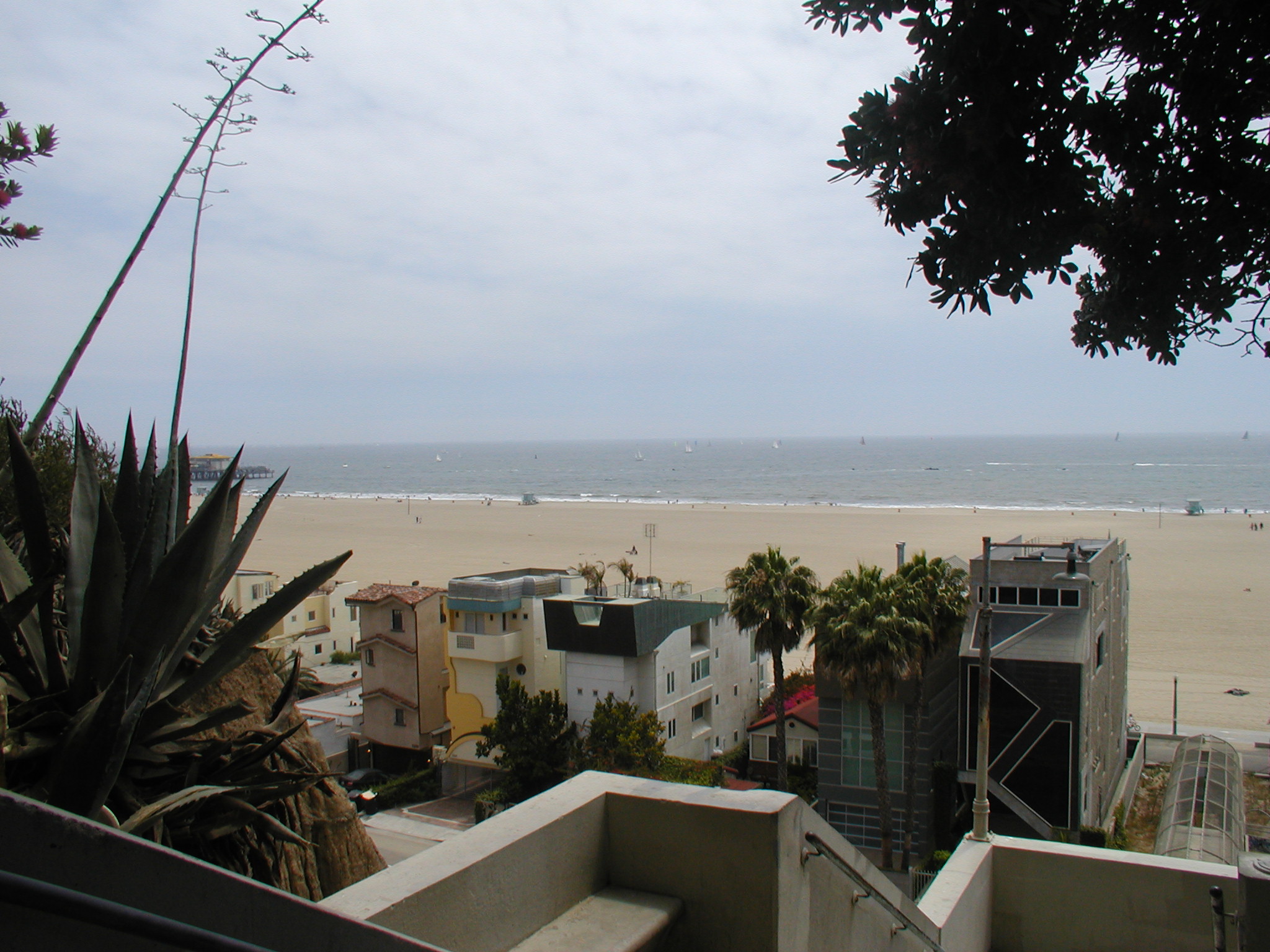




 CINE FEEL YEAH