Movie Travel Diary: Edinburgh

Approaching Edinburgh Castle along High Street (aka the Royal Mile), near sundown, as captured by the author.

Edinburgh. Edinburgh. Edinburgh. Say that three times fast, pronouncing the Scottish capital’s name just as the natives do (nowhere near “burg” and slightly clipped away from the longer “burra”). If only the incantation were like the one in Beetlejuice (Tim Burton, 1988), except it would transport me. When my sister and I came to Edinburgh, after a few days in Glasgow and before making our way to London in December 2006, my expectations were as high as the Castle, which sits above the city as if it were a crown or the cherry atop a hot fudge sundae. In the city center, it’s virtually impossible to look up without seeing Edinburgh Castle. This undoubtedly leaves a rather picturesque impression on the mind, long after you have gone.

Running tangential to my rampant Anglophilia (and the equivalent for Ireland, whatever its name may be), is my even more ravenous hunger for all things Scottish. I cannot pinpoint exactly where and when it began. I’m sure members of my family would tell you that it started consuming me when I first rented on VHS the new, much buzzed-about indie hit Trainspotting (Danny Boyle, 1996) at the tender age of ten. (What can I say? I have two of the most permissible parents on the planet when it comes to thematic content in film.) However, I don’t think that is entirely true, for I must have already had an intense interest in Scotland to have even heard of such a film about a cadre of heroin addicts and to seek it out for screening. But truth be told, it lay the groundwork for my passionate exploration of Scotland, through movies, music, history, literature, politics, comedy, etc., which continues unabated to this day. Trainspotting represents for me one of my most formative experiences of cinephilia, and thus warrants its own future post. But suffice it to say that when I arrived in Edinburgh, I wanted to see how it matched up with the hundreds of Trainspotting viewings I had enjoyed already.

I wasn’t expecting much overlap in scenery, actually. Trainspotting had been shot mostly in Glasgow. I remember a Glaswegian telling me in an anonymous online chatroom (remember those? how quaint!) that the Taxi Driver-themed nightclub where Mark Renton (Ewan McGregor) meets Diane (Kelly Macdonald) is—or at least, was—located in his city. I’m not sure that the filmmakers even used Irvine Welsh’s inspired setting, Leith, when they shot the picture. And in retrospect, I regret not riding the bus out there, especially after having read much of the Trainspotting author’s oeuvre set in the (once-)depressed municipal port north of the city.

Not being big shoppers, my sister and I knew that we still had to see Princes Street, the main thoroughfare in Edinburgh, which divides New Town from the Old (and vice versa). In the opening scene of Trainspotting, Renton and his best bud Spud (Ewen Bremner) run down this avenue, cops in hot pursuit. Iggy Pop’s “Lust for Life” provides the propulsive score to the action. Eventually, Renton’s voice-over intones why people “choose life” and why he explicitly hasn’t. These audio and visual ingredients are iconic on their own, but when mixed together, they ensure the film’s cult status right out of the gate. Which is exactly why I had to make a pilgrimage to Princes Street (it’s not hard to do, the train station’s right there). This scene is practically the only one shot in Edinburgh; they couldn’t easily double Glasgow when introducing the city with this kind of iconic shorthand.
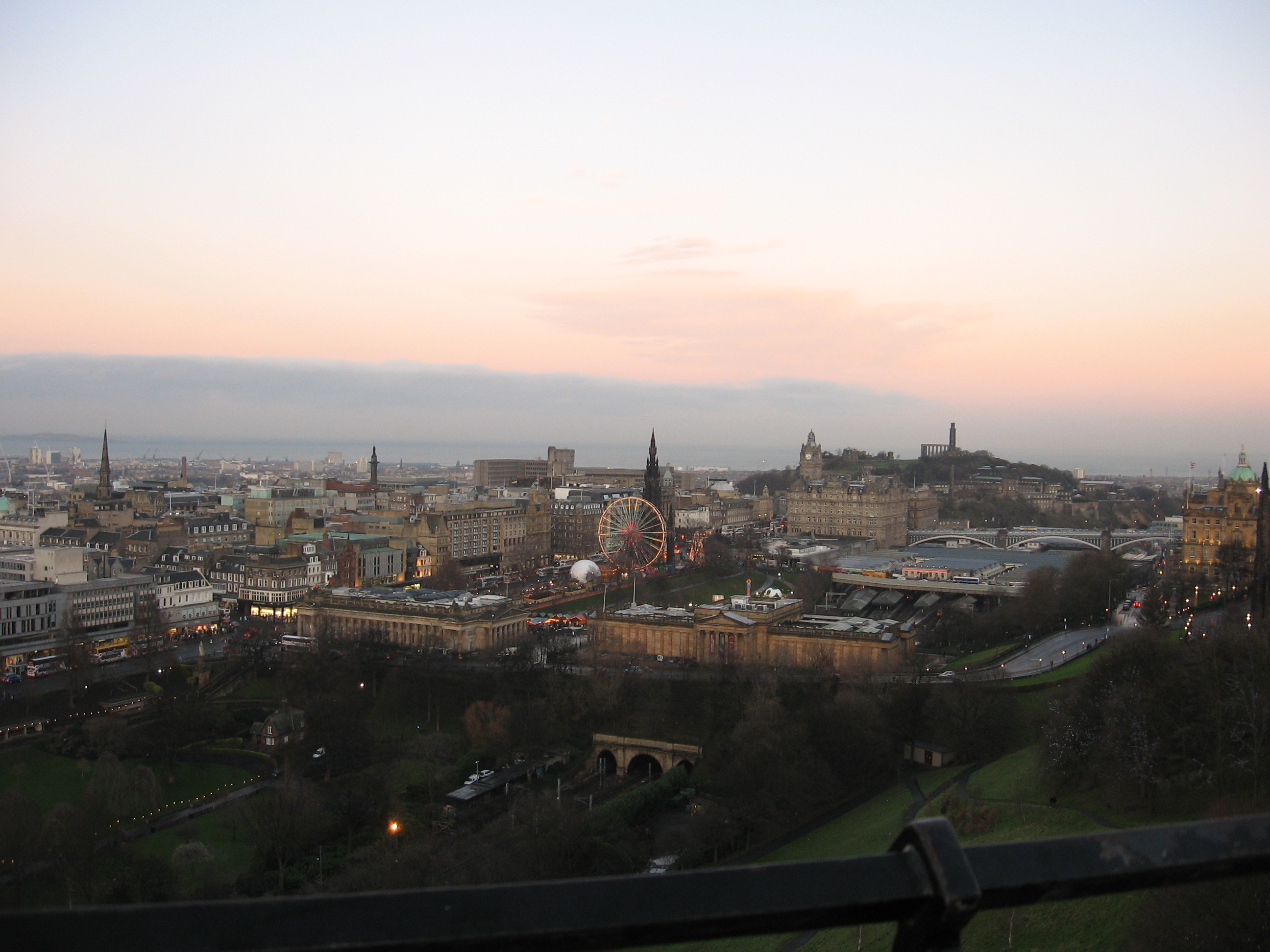
The view from Cockburn Street (if memory serves) of Princes Street. The Royal Scottish Academy and National Gallery of Scotland are in the foreground, with Waverley Train Station in the middle, and off in the distance is Calton Hill. Photo by the author.

There aren’t many films set—let alone shot—in Edinburgh, as film industries favor the more populous Glasgow for its urban Scottish stories (don’t get me started on Highland film settings). Shallow Grave (Danny Boyle, 1994) and One Day (Lone Scherfig, 2011) are notable exceptions, and they both capture Edinburgh as the beautiful, historic, lived-in city that I dreamily wandered around for days. But 16 Years of Alcohol (Richard Jobson, 2003) and Driving Lessons (Jeremy Brock, 2006) provide more specialized glimpses of the capital city that I recognize from personal experience.

The first, billed on a poster as “Trainspotting Meets A Clockwork Orange” (it’s like neither of those two), has a memorable scene set on Calton Hill, where the reformed skinhead protagonist (played by Kevin McKidd, of Trainspotting fame) seeks redemption. Standing on a hillside walkway, where I snapped the above picture, I remember feeling overjoyed at the sight of Calton Hill in the faraway distance, its unfinished early 19th century Parthenon and Nelson Monument (the tower that looks like an upside down telescope) presiding over the city. I recalled both landmark structures from my viewing of the little-seen 16 Years of Alcohol, which underscores their deeply symbolic position to quiet but melodramatic effect. The film also has many scenes set in closes, or steep streets that connect the Royal Mile to streets down below. Although I remember giddily exploring one or two of these dark passageways, I regret not taking a haunted tour of Edinburgh that used them as occasions to tell macabre stories about the city’s past.

Driving Lessons takes place mostly in England, but the wacky actress Julie Walters dupes her assistant Rupert Grint into chauffeuring her all the way to Edinburgh for a speaking engagement. Much of the Edinburgh action hews closely to the area around Princes Street, but the characters stop in at a pawn shop on the Royal Mile, not far from the chintzy souvenir shop where I purchased a Royal Standard of Scotland (you know, the golden flag with a red lion). I later found out it wasn’t the real thing (the lion on my flag didn’t have a blue tongue, probably because the unauthorized production and display of the royal family’s rampart is punishable by law). Whenever I see Driving Lessons, I’m reminded of this… fact. And until fairly recently, the flag’s inauthenticity always made me feel dejected whenever I looked up at it, hanging on the wall above my bed. So I finally replaced it with the Scottish national flag, the Saltire (or St. Andrew’s Cross), which my sister gifted me for my birthday a few weeks ago. Her message? “Let your Scottish freak flag fly!”

No film could prepare me for Edinburgh. When we first arrived, the air smelled delicious, of smoked hot dogs. Later, when my sister and I sampled different varieties of Scotch whisky at Edinburgh Castle, we realized the city’s aroma was the byproduct of numerous nearby distilleries. To this day, when I think of Edinburgh and inevitably yearn to return there (specifically to live), I can’t help but smell it. Even if the whisky burned my throat.
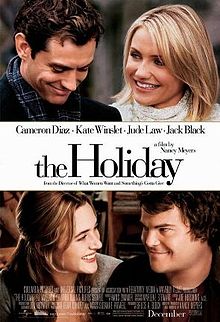
I woke up one morning in Edinburgh with a sore throat, but it wasn’t because of the whisky. I had stupidly gone to sleep with damp hair the night before. At the time, it spoiled my memory of the previous night, which came to me as an utter surprise. Not knowing how to spend the evening after dinner (my sister and I aren’t big on bars or nightclubs), I allowed her to drag me to see The Holiday (Nancy Meyers, 2006). As you might recall, she’s really into romantic comedies, and I am not. In any case, I rather enjoyed the film and its romantic sense of adventure. It made me wish I could meet a sensitive and sexy Scot while on my travels, just as Cameron Diaz’s unemotional-to-a-fault workaholic falls into bed with the mysterious cad-turned-superdad played by Jude Law. Oh well. Such romantic fantasies are just made for the screen (pun intended). After all, my real love affair was with Edinburgh, who made such a euphoric impact on all of my senses, including, most of all, my sense of self. This is going to sound really cheesy, but it’s true. Since I had romanticized the city for years, I hoped against hope that I would fall in love with the place and never want to leave. This dream did indeed come true, but I also had to make the painful realization that the days I spent in Edinburgh were not nearly sufficient enough for me to really get to know the city. Instead, Edinburgh is like a soul mate you meet all-too-briefly before you go your separate ways. No matter where I am or what I do, I can’t shake the memory of Edinburgh’s cheeky smile, traumatic and triumphant life experiences, and a self-confidence that set me at ease. I can’t wait for us to meet again.

Up next: another entry of Movie Travel Diary. But until then, tell me about your movie-related experiences in Edinburgh. Which film(s) best represents the Edinburgh you know from your own travels?

Movie Travel Diary: London

A view askew of Tower Bridge, from the southbank. Photo by the author.

It wasn’t until about a month after my mini-break weekend in Dublin, once my sister had flown in from Los Angeles to ride the rails all over Britain with me (we were on our winter holidays away from school), that I finally saw London. I’ve been an Anglophile for as long as I can remember. As such, I have always found the movies to be the perfect instrument to satisfy my intense interest in all things British. There are simply too many films set in London to name, but suffice it to say that before arriving in town (after a three-hour-long train ride from Newcastle in the Northeast), I had seen the city of my dreams represented in such classics as Alfie (Lewis Gilbert, 1966) and A Clockwork Orange (Stanley Kubrick, 1971), through to more contemporary fare, like Wonderland (Michael Winterbottom, 1999) and About a Boy (Chris & Paul Weitz, 2002). But none of these films captures the London that I experienced around Christmas in 2006.

Instead, we searched for the blue door of Hugh Grant’s travel book shop in the eponymous neighborhood of Notting Hill (Roger Michell, 1999), knowing full well the owners had repainted it to prevent passersby from peeking in. We strolled along the titular street of Brick Lane (Sarah Gavron, 2007) and wound up in a McDonald’s rather than a curry palace. We shopped for souvenirs from the open-air market stalls in Camden, which are on display in Mike Leigh’s comedy-drama Happy-Go-Lucky (2008), but the stench of pot and incense drew us away. Opting for the bus only once and using the tube to get everywhere, we did an awful lot of walking around London during our week or so in the city. And on December 25, when all of London—especially these public transportation networks—shut down, we were unable to leave our hostel to perform our yearly ritual: Chinese food and a movie.

You’ve seen this one before: the view from the Tate Modern across the Millennium Bridge. Image courtesy of http://www.wikipedia.org.

My sister and I explicitly chose not to do “touristy” things. (Don’t ask why, we were stupid and cheap and wanted to avoid crowds as much as possible.) We didn’t tour the Tower of London or see Big Ben up-close. We double-backed on hitching a ride aboard the London Eye (that’s really something I regret). No Westminster Abbey, Leicester Square, or Houses of Parliament for us, I’m afraid. We mainly kept to museums, like the British Museum and National Gallery—yes, both of which entice visitors with offers of free admission. The Tate Modern was on the top of our must-see list, and from there we strolled across the Thames on the not-so-new Millennium Bridge, toward St. Paul’s Cathedral. This part of London—Southwark, it’s called—is frequently represented in film: everything from Bridget Jones’s Diary (Sharon Maguire, 2001) to Salmon Fishing in the Yemen (Lasse Hallström, 2011) features its protagonist on this at one time eye-catching bridge, either making a resolution or having an existential epiphany. Well, nothing as lofty as that happened while I was on it.

Not too far from the Tate, on the south bank, is the reconstruction of William Shakespeare’s Globe Theatre, and even farther down, just east of Tower Bridge is the Design Museum, whose exhibitions focus on 20th and 21st century design across various industries. I remember never having heard of it before my sister suggested we go there, and it turned out to be one of the highlights of our trip. I can’t remember exactly what we saw, but after days of walking around London and feeling as if we weren’t “seeing” anything, I felt warm and fuzzy, a real sense of accomplishment. Stupidly, I thought we’d visited a place so far off the beaten path that it wasn’t on most international tourists’ radar. After all, it’s not as busy as the Victoria & Albert Museum.

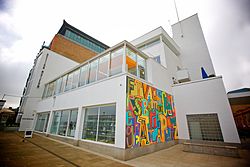
The Design Museum in 2010. Image courtesy of http://www.wikipedia.org.

I’ll never forget our approach to the Design Museum, trekking through a disorienting labyrinth of buildings that all looked the same and climbing a tiny incline right at the end, stepping lightly on the cobblestone street the whole time so as to avoid twisting our ankles. Aside from the Design Museum, which at the time was painted a bright white (I’d be willing to bet that it still is), all of the other buildings at Butler’s Wharf are brick warehouses with arched doorways and, according to Wikipedia, were once considered derelict. Gradually, over the past thirty years or so, the late 19th century shipping district has been home to luxury flats and a happening restaurants and arts corner. (Bridget Jones and her lascivious boss Daniel Cleaver dine here.) I should mention that we could hear the lapping of the river even if we couldn’t see it while walking along Shad Thames, the area’s main street.

Almost one and a half years later, I saw Run Fatboy Run (David Schwimmer, 2007) in the theater with my dad, and early on in the film I recognized one of its shooting locations straightaway: the Butler’s Wharf/Shad Thames warehouse district. “Pathetic excuse for a man” Dennis (the always charming Simon Pegg, who rewrote the script) has his ex-fiancee and mother of his child pick he and the boy up from the police station (he got caught buying scalped theater tickets), and she brings her new handsome, super-successful American boyfriend along with her. After putting Libby (Thandie Newton) and Jake (Matthew Fenton) in a cab, Dennis and his rival Whit (Hank Azaria) walk along Lafone Street, making awkward conversation and being generally passive-aggressive toward one another. Besides Bridget Jones’s Diary, I had never seen this part of London on-screen before (I didn’t even know what it was when I first saw that rom-com), and since “discovering” it on my way to the exemplary Design Museum, it has always felt like “my London.” Thus, despite being set in North London (but mainly shot in the East, according to The Worldwide Guide to Movie Locations), Run Fatboy Run memorably takes place in parts of the city that I most identify with.

As you may already know, Run Fatboy Run revolves around Dennis as he trains for the Nike River Run, a fictional stand-in for the London Marathon. He aims to prove to everyone—including Libby, Whit, Jake, his friend and coach (Dylan Moran), and the landlord to whom he owes a lot of back rent—but especially himself that he can commit to finishing something, after having ditched a pregnant Libby at the altar years ago (he has always loved her, though). Of course, there are many obstacles to achieving this goal; the greatest is having to hobble the long distance on a severely sprained ankle. It takes him all day and all night. Notably, the marathon route commences near the financial district in the City of London where Whit works, the Gherkin a stone’s throw away (that, we saw up-close), and finishes just outside St. Paul’s Cathedral. To get there—you guessed it—Dennis must cross the Millennium Bridge from the south side, his entourage of fans and a sports reporter cheering him on as they follow close behind. His journey reminds me of my own. Now, I cannot claim to have completed a marathon as Dennis has done in fourteen hours, but because my sister and I spent a long and tiring but wonderful day in Southwark walking from landmark to landmark, I can claim to have conquered them in my own way as a tourist. After all, the views were free.

Tomorrow: another entry of Movie Travel Diary. But while we’re waiting, tell me about your movie-related experiences in London. Which film(s) best encapsulates the London you know from your own travels?

Movie Travel Diary: Dublin

Look closely: it's the Ha'penny Bridge lit up at night. Photo by the author.
Look closely: it’s the Ha’penny Bridge lit up at night. Photo by the author.

I spent my third year of college studying abroad at Lancaster University in Northwest England. From there, one of my earliest trips was to Dublin with two of my friends. We rode the ferry from Holyhead in North Wales to Ireland’s capital city. I have very fond memories of that weekend, such as my first (half-)pint of Guinness stout, the friendliness of the people, and the sight of the Ha’penny Bridge lit up at night. And although I didn’t see it until after I came home, months after it was released in U.S. theaters, the intimate musical romance Once (John Carney, 2006) reminded me of the place I have come to think of as “my Dublin.”

I had seen countless films set in Dublin before, everything from The Commitments (Alan Parker, 1991) and The General (John Boorman, 1998) to InterMission (John Crowley, 2003) and Rory O’Shea Was Here (Damien O’Donnell, 2004). But by virtue of being about a musician who busks on Grafton Street for pocket change from tourists, Once invariably represents a Dublin that I, as a tourist, came into contact with. Many of the scenes in the film take place on that pedestrian thoroughfare, Dublin’s high street or main shopping district. This was where, after nearly two months in the British Isles, I spotted the first Starbucks, an occasion so momentous—even though I didn’t drink the stuff—that I snapped a photo of it from the cobblestone street (the major coffeehouse chain over there is Costa Coffee).

Once was produced on a shoestring budget, and it has a very improvisational quality to it. From what I understand, it wasn’t so much scripted as it was outlined, and nowhere is this on-the-fly, gritty documentary feel more pronounced than in the scenes on Grafton Street, where the unnamed guitarist (played by The Frames’ bandleader, Glen Hansard) meets the young Eastern European pianist (Markéta Irglová), before they embark on their pseudo-romance and journey toward self-discovery while they collaborate on a few original songs. From what I can remember, director John Carney and his tiny crew shot the unprofessional actors unobtrusively, allowing real passersby to walk in front of the camera. This explains why some of the protagonists’ exchanges aren’t clearly audible. When I was on Grafton Street, I remember feeling claustrophobic, trapped among seeming multitudes of people and their bulky shopping bags, as everyone walked in different directions. The busyness of the area represented on-screen in Once reminded me of my brisk walk down the street. I didn’t know where I was headed, my friend chasing after me in the crowd, but eventually I wound up at the northwest entrance to a city park, St. Stephen’s Green. Similarly, in one scene, Hansard’s character runs after Irglová’s, too, and they take the exact same route as my friend and I had done. Strange how someone else’s art imitates your life. (I should note that Lance Daly’s black-and-white 2008 film-story about a pair of runaways from abusive homes, Kisses, is also partially set in this corner of the city, rendering it even more menacing, full of real terror for children.)

When I watched Once for the first time in late 2007, I recognized straightaway a particular landscape beyond Grafton Street. Since my sojourn in the city, I have associated Dublin with rows and rows of brick townhouses that have brightly colored front doors, alternating among blue, yellow, green, and red. The movie Once merely reinforced this picture of the city for me. Although we see such dwellings throughout the film, I still can’t shake the image of the woman standing outside one of these houses—or poking her head out of her second-story window, I can’t be sure—and gazing up at the sky because she knows her songwriting partner should be in the air, on his way to London. This scene speaks volumes to me, as I would love to return to Ireland someday and spend more time in the city.

But don’t fret; I did much more than feel stifled on Grafton Street and admire the lushly painted doors on houses. Like any well-informed tourist, I frequented Temple Bar, the trendy arts district lined with restaurants and galleries, visited the National Gallery of Ireland for an exhibit on native son Francis Bacon, and stopped by Dublin Castle (which was, to my surprise, a mishmash of architectural styles) and Trinity College. I regret I was too cheap to pay the admittance fee to see the Book of Kells up-close while at the university, especially since an inventive animated movie inspired by the illuminated manuscript, The Secret of Kells (Tomm Moore and Nora Twomey, 2009), would come out of nowhere years later and earn an Oscar nomination. When I stop to think about it, I realize that much of my Dublin jaunt has movie-related anecdotes.

For one thing, the weekend I was in Dublin was the weekend that Tom Cruise and Katie Holmes (remember TomKat?) were wed in Italy. I remember seeing photos of the actress’s demented smile, as she nuzzled her cheek into Tom’s at the altar, splashed across the front pages of the tabloids while walking from the hostel to downtown Dublin.

Furthermore, I can’t think of the film Little Children (Todd Field, 2006) without being reminded of Dublin, because that is where I saw it—with one of my companions, Denise. I’ll never forget the morning—November 18th, it was—that we were walking along O’Connell Street (the Champs-Élysées of Dublin), near the “Stiffy by the River Liffey,” and came across a multiplex that advertised that it was screening the American indie picture about two suburban stay-at-home parents having a hot summer fling. Talk about making playdates.

Later that night, after dinner and during the film, I couldn’t stop thinking about how odd this movie-going experience was at the time. Here I am in Dublin, with my German friend, and we’re watching an American indie movie set in a resolutely American milieu and ennui at a giant multiplex on O’Connell Street. I bet I’m the only American sitting in this theater, I said to myself, as if mentally detached enough from the goings-on in the auditorium and up on the screen that I could see myself sitting in the back row. For all I know, the Cineworld in Dublin may have been the closest theater to where I lived (in Lancaster, England!) that was playing the film. Ever since having this “out-of-body, out-of-mind” experience while watching a movie in another country, I have sought to replicate it everywhere I go.

Stay tuned for a similar episode in a future edition of Movie Travel Diary. But in the meantime, tell me about your movie-related experiences in Dublin. Which film(s) best exemplifies the Dublin you have visited?

Jump Cut Series: Movie Travel Diary

Cinema is transportive. It takes you many places, real and imagined, and acquaints you with characters that are familiar and strange. Films, especially ones shot on-location rather than on a sound-stage, grant you glimpses of people’s everyday lives, their cultures and subcultures, their language, traditions, food, politics, religion, and aspirations—all through a complex storytelling apparatus beyond the camera and what’s in front of it (I’m referring to style choices as well as writing, framing, and editing scenes). In much the same way that reading throughout the centuries has ignited passions and spurred imaginations by providing escapes to faraway lands, movies, in little more than one hundred years, have brought worlds closer, too. As a film historian, I am interested in how place and identity are represented on-screen for audiences at home and abroad. How do these cinematic images inform what we know of others and, perhaps more crucially, of ourselves?

But as anyone will tell you, it is not enough to read books and watch movies to understand the world and your place in it. Travel, so the wisdom goes, is essential to producing a well-rounded individual, particularly someone who can emphasize with others. Although I have lived and traveled abroad and have even lived in this country’s two most populous cities, I don’t have as many stamps in my passport or frequent flyer miles to my name as I would like. And while I don’t have the money to bankroll more excursions in the near future, I can reflect on where I have been already.

So, without further ado, I’d like to present my Movie Travel Diary, a series of Jump Cuts to be published daily from August 26 through September 1, 2012 (if all goes according to plan). Each day, I will write about a film or group of films set in a city that I have spent some amount of time in (whether for a couple of days, a week or so, or even a year or two). Each film discussed presents the city in a way that I recognize from my own personal experience, since cities and films are mutable objects that are what they are because of what each of us brings to them (I’m not talking about toothbrushes and buckets of popcorn).

As always, I invite you to share your impressions of cities that you have visited, first through film and then in person. Once your feet were on the ground, how did the metropolises compare to the expectations you had going in, based your previous viewing of films set in those cities?

Movie Travel Diary entries:

Sunday, August 26th: Dublin

Monday, August 27th: London

Tuesday, August 28th: Edinburgh

Thursday, August 30th: Paris

Thursday, August 30th: Los Angeles

Friday, August 31st: New York City

Saturday, September 1st: Washington, DC

Jump Cut: “Tell Me That One About Kenny G Again”

Some films—good and bad—stick with you long after you’ve seen them, for a variety of reasons. There’s an intricately choreographed five-minute-long tracking shot re-enacting the British evacuation of Dunkirk. The guffaw-inducing sight of a soft mannequin, a stand-in for a bad guy, being dragged along the subway tracks. John Williams’s two-note theme for the mostly unseen underwater villain. But cinema being an audiovisual storytelling medium, it is often what is said that grabs your attention and refuses to let go.

I love collecting movie quotes, but in preparation for this article, I actually had difficulty listing my favorite lines. Watching as many films as I do, dialogue from movies I love and feel disinterest toward inevitably and unconsciously wind up in my idiolect. My movie-mad sister is my best friend, and we often communicate in Movie Talk. But even now, I’m struggling to come up with an example of something that we say to each other—with and without hints of irony. Just as it is for practically all cinephiles, I guess films are just so ingrained in our brains, so tightly knit into the fabric of our everyday lives, that the origins of some movie references we make regularly go unexamined. Let’s attempt to change that.

Then again, there are also memorable movie quotes that don’t fit easily into everyone’s daily conversations. Most of the entries on the following list of my favorite movie lines fall into this category. I should also note that this inventory is by no means comprehensive; I may continually add to it as they come to me. I invite you to tell me your favorites, too, in the comments section below.

——————–

Let’s start with the line that inspired me to post on this topic: in Sydney Pollack’s 1995 remake of the classic romance Sabrina, a charming Julia Ormond stars as the titular daughter of a chauffeur who has loved the younger, commitment-phobic Larrabee brother David (played by Greg Kinnear) all of her life. During the opening credits, which unravel as she narrates her lovelorn situation (he doesn’t know that she exists, that she watches him routinely woo rich women from her perch in the tree outside her apartment above the garage on his family’s estate), Sabrina heavily breathes, with the slightest hesitation, “David… did a GAP ad.” I love the combination of her sincerity and the ridiculousness of her words. It’s as if—at what age? 30?—she is a teenybopper.

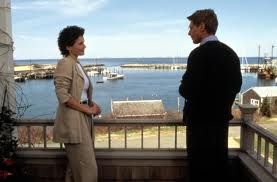
To be fair to poor Sabrina, she also makes an astute, perhaps even eloquent, observation later on in the film, after she’s returned from Paris elegant and confident. David’s older, uptight brother Linus (Harrison Ford) whisks her away to Martha’s Vineyard. He pretends to want to sell his house there so as to keep her away from a now-smitten David (but who’s now engaged to the daughter of a tech tycoon Linus is doing business with), so the conniving businessman invites her to take photos of his property. An amateur photographer, Sabrina reflects on her lonely, voyeuristic existence growing up, all while snapping views from the Linus’s house: “Every time I look through a camera, I’m surprised. It’s like finding yourself in the middle of a story… I think I’ve been taking pictures all my life, long before I ever had a camera.” Doesn’t that make up for her simple, pathetic idolization of a smug, rich jerk? Besides, opening up to Linus (and influencing his heart to melt in the process) is just the beginning of her journey to discover of who she really wants.

Sabrina and Linus enjoy the view of the harbor—and then of each other. Image courtesy of http://www.cineplex.com.

——————–

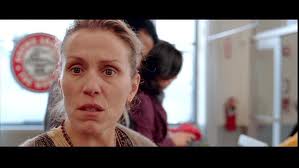
Friends with Money (Nicole Holofcener, 2006) is about a group of four middle-aged women in Los Angeles, three of whom are either extremely wealthy or very well-off. Yeah, yeah, it may be best remembered because Jennifer Aniston plays against type as the fourth friend who has no money—and some questionable taste in men—but the real star of the show is Frances McDormand, who plays a successful clothing designer with anger management issues. In my favorite scene, she waits in line at Old Navy and flips out when a couple jumps in front of her as she walks toward the cash register. During the confrontation, in which neither the cashier nor the manager sympathizes with her passed-over situation, she points her finger in the butting pair’s faces, accusing them of ignoring her and shouting, “Yes, those two people! With their stupid fucking faces!” Why do I love this line? First of all, I should note that I’m biased: McDormand is one of my favorite actresses. I always find her entertaining. But because she lowers her voice as she spits out this line, it sounds as if she’s a monster saying, “stupidfuckingfaces!” Brilliant.

Be warned: if you butt in front of her while she’s waiting in line, Frances McDormand’s gonna come after you! Image courtesy of http://www.hotflick.net.

——————–

If you’ve even just skimmed through the About the Site page on CINE FEEL YEAH, you might have noticed that one of my favorite comfort films (yes, like the food) is The Truth About Cats & Dogs (Michael Lehmann, 1996). A woman-centered adaptation of Cyrano de Bergerac, it stars Janeane Garofalo and Uma Thurman as neighbors who start spending a lot of time together after insecure veterinarian radio host Garofalo tells an amorous listener that she looks like the “dumb blonde” Thurman when he asks her out on a date. It’s a long story as to how he’s given this impression when he first meets them both at the radio station. More importantly, there are many choice lines in the film, but my absolute favorite is a quick exchange between the two women. Garofalo is sobbing in the department store where she let a cosmetics saleswoman make over her face. Pissed off that society dictates women make themselves attractive to men through cosmetic enhancement, she says, “If I was a guy, I think women would like, line up to go out with me. I’m smart. I have a good sense of humor. I make a great living.” Without missing a beat, Thurman nods, “I’d fuck you.” Garofalo responds, “Thank you, honey. I know you would.” This dialogue effortlessly gets at the root of female friendships. They don’t know each other well at this point, but they support one another in the face of seemingly absurd adversity—especially from the small voices deep within.

Opposites attract: Janeane Garofalo and Uma Thurman are best friends and know just how to comfort one another. Image courtesy of http://www.iluvcinema.com.

——————–

The last two quotes I have for you right now are actually part of my everyday speech. Not only that, they are also the only two lines spoken by men to make the list. The first (or second-to-last, depending on how you look at it), comes courtesy of David Deblinger’s character in the sweet but acerbic and little-seen rom-com/satire of the fashion industry Intern (Michael Lange, 2000). Dominique Swain plays the eponymous gofer at a fashion magazine. During her tenure, she falls for the dreamy deputy art director, rolls her eyes at the shallowness of the industry’s top decision-makers, and even uncovers an editor’s selling insider information to a rival glossy rag. The intern befriends Deblinger’s flamboyant, straight-talking accessories editor, who, in the end, confronts another frustrated co-worker with the immortal line, “What’s with the angry?” Despite his sentence’s despicable lack of grammatical cohesion, I love to repeat it—ironically. You never know, if you use it to ask someone about what is making him or her upset, you might just put a smile on that person’s face.

I apologize: I couldn’t find a photo of Deblinger in Intern during my Google Image search. In its place, I’ll offer that I’m 99.99% certain I saw the actor riding the subway in Brooklyn once while on my way home (I think it was the No. 2 train). He was talking with his female companion, so I didn’t dare interrupt their chat to say anything. And definitely not to ask, “What’s with the angry?”

——————–

24 Hour Party People (Michael Winterbottom, 2002) is my all-time favorite film, and it is so highly quotable. I know it like the back of my hand, which is why I am usually disappointed in others’ estimations of its quotiness (can I coin that right now?). For example, I’d waited years to meet someone who had ever even heard of it. (Generally, whenever someone asks me for the name of my fave film, I have to repeat the title at least twice.) And when I finally did, while studying abroad in Northwest England, he quoted the movie back to me. How exciting, right?! Well, he chose the least creative line (“There’s a barbed wire fence! There’s a barbed wire fence!”). Well, to each his own, right?

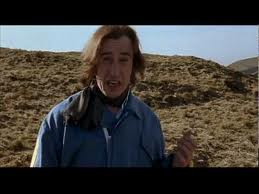
Anyway, my favorite utterance comes early in the film, too. Steve Coogan, as real-life TV personality and Factory Records co-founder Tony Wilson, directly addresses the camera following his exhilarating hang gliding experience in the Pennines (director Winterbottom uses mostly real footage of Wilson himself performing the stunt). In doing so, Coogan/Wilson steps outside of the film while remaining fixed in the frame: “You’re gonna be seeing a lot more of that sort of thing in the film. All of that actually did happen. Obviously, it’s symbolic. It works on both levels. I don’t want to tell you too much, don’t want to spoil the film. But I’ll just say, ‘Icarus.’ OK? If you know what I mean, great. If you don’t, doesn’t matter. But you should probably read more.” Obviously, this is a pretty long, context-specific quote (he’s referring to the fame and fortune he and others attached to Manchester’s music scene cyclically gain and lose, by the way), so I don’t use the whole thing. I abridge it (“You should probably read more”) and try to imitate his flippant, condescending tone. Again, I never earnestly deploy the line, and I mainly just say it to my sister, who gets it, about someone else. After all, the movie’s all about irony.

Who is it? Steve Coogan or Tony Wilson tells you what to expect—without spoiling anything.

Jump Cut: Doppelgängers

Having seen so many movies, made note of your favorite directors, and developed crushes on certain actors and actresses, do you ever watch a movie convinced that one of the performers on-screen is—contrary to the credits you’ve just read—another actor entirely? You’re not alone. What follows is a completely subjective list of acting doppelgängers, people who, to my eyes, bear more than a passing resemblance to one of their cohorts. I call some sets “twins,” and it’s been a bit of a struggle finding photos that can accurately show you how I could ever mistake them for each other. Admittedly, though, I’m so familiar with some of these performers that it’s impossible for me to confuse them with anyone else. Most of the pairs below represent struggles I had in my childhood identifying who’s who. Please feel free to sound out in the comments section below the pairs who regularly confuse you, too. (For the record, I extracted these photos from Google Images after conducting basic searches.)

Let’s start things off with a pair of actresses whose heydays were in the 1980s. Honestly, I couldn’t have asked for better photos to bring out the physical similarities between Kathleen Turner (left) and Kelly McGillis, as she hangs on Top Gun (Tony Scott, 1986) co-star Tom Cruise. They’re both sporting off-the-shoulder tops, accentuating their wavy hair. Both stars were sex symbols in their day. Turner made her big-screen debut as a femme fatale in Body Heat (Lawrence Kasdan, 1981) and later embodied the curvaceous cartoon Jessica Rabbit with just her husky voice in Who Framed Roger Rabbit? (Robert Zemeckis, 1988). Besides Top Gun, McGillis was in Witness (Peter Weir, 1985), as Harrison Ford’s Amish love interest, and in The Accused (Jonathan Kapaln, 1988), as the attorney for Jodie Foster’s brutal rape victim, a decidedly less sexy role. I should note that I only think they look alike when they were younger, as today the women couldn’t look any more different. Presently, we don’t see either actress much, particularly McGillis since she came out of the closet in 2009. Turner, who suffers from rheumatoid arthritis, has been busy walking the floorboards, notably starring in a theatrical production of Who’s Afraid of Virginia Woolf? in 2005.

Next we have the British actor Ben Miller—not to be confused with Ben Miles of Coupling fame—and his lookalike the Welsh comic Rob Brydon (right). I first spotted Miller in Johnny English (Peter Howitt, 2003) as Rowan Atkinson’s sidekick Bough, and since he’s made a name for himself playing super-serious corporate or governmental honchos, including James Lester on the silly BBC sci-fi series Primeval (2007-2011). Rob Brydon, on the other hand, I’m much more familiar with. He starred in the 2000-2003 series Marion & Geoff as a taxi driver who records confessional monologues while stalking outside the residence his ex-wife, Marion, shares with the man she left him for, Geoff, of course. You might know Brydon as “Himself” in the Michael Winterbottom classics Tristram Shandy: A Cock and Bull Story (2005) and The Trip (2010), opposite Steve Coogan, who also plays a version of himself in those movies. It may not be easy to tell from these thumbnail photos (the only way I could publish images of all the doppelgängers), but Miller and Brydon look so much alike that when you search Google Images for pictures of either one, “Ben Miller Rob Brydon” is a suggested search term. Hell, even I needed to look multiple times to identify who’s who in this image that I found online with the actors already juxtaposed:

Ben Miller (left) and Rob Brydon, or so I believe.

Speaking of Steve Coogan, I think he looks a lot like Jack Davenport (right), from the Pirates of the Caribbean blockbusters. He played Commodore Norrington who so wanted Keira Knightley’s Elizabeth Swan but lost out to Orlando Bloom and Johnny Depp’s swashbucklers. He’s currently on the NBC backstage musical soap opera Smash (2011-present), which I’ve never seen. As a fan of Steve Coogan’s work, including I’m Alan Partridge (1997, 2002) and Saxondale (2006-2007) to name but a few, I should make it clear that I don’t actually mistake these actors for each other. Searching for comparable photos was tricky, as Coogan typically has long, wavy hair these days, and Davenport has short and spiky hair. There’s something about the way they play pompous or clueless that makes me sense a closeness. At right, Davenport appears in character as the immature Steve from the British comedy series Coupling (2000-2004), and Coogan, at left, is the arrogant TV presenter Tony Wilson in Winterbottom’s 24 Hour Party People (2002), which is my favorite film.

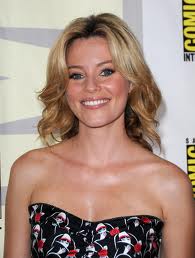
My sister is going to shake her head when she reads this: I continually mistake two actresses who are on the rise, Rachel McAdams (left) and Elizabeth Banks. My sister thinks I’m crazy, but hear me out. It has to do with their toothy grins, broad jawlines, and wide foreheads. It doesn’t help any that they regularly appear as blondes (I believe they’re both natural brunettes) and balance their filmographies with pretty much equal helpings of comedy and drama these days. In other words, when I watch a film that stars either one of them, I imagine that the other may have also been on the casting director’s list of actresses for the same role. For example, despite writer-director Woody Allen’s more pointed search for actors to fill parts in his almost yearly produced movies, I can see Elizabeth Banks as Inez, Owen Wilson’s shrill and obnoxious fiancee in Midnight in Paris (2011), a role that McAdams played. Similarly, isn’t it possible to see McAdams in Man on a Ledge (Asger Leth, 2012) or People Like Us (Alex Kurtzman, 2012) instead of Banks? Or is my sister right; am I crazy?

Let’s move Down Under and take a look at Noah Taylor (left) and Ben Mendelsohn. These Aussie actors are hardly ever up for the same parts nowadays, their physiognomies seemingly worlds apart. Mendelsohn makes for a much more imposing presence now, having played baddies in the superb 2010 Australian crime family drama Animal Kingdom (David Michôd) and the straight-to-DVD Nicolas Cage-Nicole Kidman starrer Trespass (Joel Shumacher, 2011), whereas Taylor looks like he’s withering away nowadays, as evidenced in Tim Burton’s Charlie and the Chocolate Factory (2005) and Richard Ayoade’s fun directorial debut Submarine (2010), movies in which he played each of the teen protagonists’ withdrawn dad. When I was younger, I used to mistake them for each other all the time (it’s in their mouths and speech!), but now they probably couldn’t be any more different. By the way, to add to the confusion, they have both appeared in the same films, including The Year My Voice Broke (John Duigan, 1987) and The New World (Terrence Malick, 2005).

In much the same way that time has made Noah Taylor and Ben Mendelsohn look less and less alike, so too has it placed the doppelgängers Henry Thomas and Jeremy Davies on opposite ends of the spectrum. I guess what I’m trying to say is that today, the skinny child-star Thomas (left) has put on weight, particularly in his face, while Davies seems only to have gotten thinner and thinner. But look at them in these old photos; don’t they at least look like brothers? At least grant me that Thomas looks more like Davies than he does Brad Pitt or Aidan Quinn, who both played his older siblings in the classic melodrama Legends of the Fall (Edward Zwick, 1994). We haven’t seen much of Thomas lately, but Davies plays the sniveling snake Dickie Bennett on FX’s Justified (2010-present), a show whose just-aired third season I tried several times to watch but just couldn’t get into. I think these guys resemble each other because they have the same face shapes and they have been in films where they weren’t, shall we say, the manliest of men. See how soft-spoken Thomas is in I Capture the Castle (Tim Fywell, 2003) and Davies is in CQ (Roman Coppola, 2001).

The next pairing arrives courtesy of my dad, who hit the nail on the head when he said that the English actresses Gabrielle Anwar (left) and Emily Blunt look an awful lot alike. It’s impossible to mistake them, really, as there are more than thirteen years between them, but the similarities in their features are striking. It all hinges on their mouths, though Anwar may have a greater overbite than Blunt (sorry, there’s no nicer way of putting it!). If you do a Google image search for each woman, you will see how they both prefer to pout when posing on the red carpet, and neither likes to give big, toothy smiles (yes, these stills are something of a rarity on Google). Anwar had a bigger film career in the 1990s, appearing in such hits as Scent of a Woman (Martin Brest, 1992) and The Three Musketeers (Stephen Herek, 1993), which was beloved in my childhood. She has since re-found fame on the USA TV series Burn Notice (2007-present). Blunt, on the other hand, has been on the ascendant since her breakout role in The Devil Wears Prada (David Frankel, 2006).

A few nights ago, I caught, again, Dutch writer-director Marleen Gorris’s Oscar-winning Antonia, better known in English as Antonia’s Line (1995). Watching Jan Decleir, the famous Dutch actor (left), I couldn’t believe how much he looks like the beloved English actor Jim Carter, probably best known as Mr. Carson, the butler of Downton Abbey (2010-present), ITV and PBS’s pop culture phenomenon about the fading British aristocracy at the beginning of the 20th century. But oh, how do I love Jim Carter! He’s in everything: Shakespeare in Love (John Madden, 1998); Cranford (2007, 2009), which is one of my favorite British miniseries; and Bright Young Things (Stephen Fry, 2003), where he makes a hilarious cameo. I haven’t seen even the smallest percentage of Decleir’s many credits, but I remember him especially from Character (Mike van Diem, 1997), which also took home the Academy Award for Best Foreign Language Film (for the Netherlands). The actors are roughly the same age (Decleir is two years older); isn’t their resemblance uncanny?!

So far, all of these acting doppelgängers have been contemporaries. They have all lived in the same era (our current time). But now I want to offer a different kind of comparison. Turner Classic Movies has featured Englishman Leslie Howard in marathons of his movies every Tuesday night this month. Although his credits span from the 1910s up to 1942 (his last movie was the Howard-directed R.J. Mitchell biopic The First of the Few aka Spitfire, which premiered in the U.S. less than two weeks after he died, his plane shot down by Germans), I see a lot of the actor Michael Fassbender in him. Catching the hilarious comedy Stand-In (Tay Garnett, 1937) on TCM, I was struck by how Howard’s uptight New York-based banker, out of his element as the head of a struggling movie studio in Hollywood, reminded me of Fassbender’s suave British Lieutenant Archie Hicox in Inglourious Basterds (Quentin Tarantino, 2009). They’re very different characters, but the way they carry themselves seemed very similar to me. And the more I studied Howard, who I might add, is probably most recognizable as Ashley in Gone with the Wind (Victor Fleming, et. al, 1939), the more I could discern Fassbender’s affinities to him: they both have very long, narrow visages with tall foreheads; extra slim, long, and narrow torsos; and when Fassbender plays posh Englishmen (or androids), as in Basterds or Prometheus (Ridley Scott, 2012), he sounds a lot like Howard, who also directed and starred in Pygmalion (1938) as the condescending Professor Henry Higgins. My DVR is virtually full of Howard movies; I’m as drawn to him as I am to the magnetic Fassbender.

Since I’m in an historical mood, I thought I would point out that I have actually confused the younger versions of Karen Allen (left) and Brooke Adams. Allen is probably most known for playing Marion Ravenwood in Raiders of the Lost Ark (Steven Spielberg, 1981), a role she later reprised in Indiana Jones and the Kingdom of the Crystal Skull (Spielberg, 2008), and Jeff Bridges’s alarmed wife in Starman (John Carpenter, 1984). Adams is two years older and has more credits from the 1970s, including her starring role in Terrence Malick’s debut Days of Heaven (1978). I could never remember that it was Adams in Heaven and not Allen, Allen in Starman and not Adams. Both actresses have widely spaced eyes, wide faces with high cheekbones, and dimples in their chins. Not to mention, they both have pretty low voices. They don’t look so alike these days, and they haven’t been productive in recent years.

This last pair of celebrity lookalikes aren’t actors. Well, one is: Robert Carlyle (left), the prolific Scottish thesp best known for his stunning turn as Begbie in Trainspotting (Danny Boyle, 1996), which is incidentally one of my favorite films of all time. His doppelgänger? Hockey great Wayne Gretzky! From 1979 to 1999, he played with one of the four following teams: the Edmonton Oilers, LA Kings, St. Louis Blues, and NY Rangers. If you cannot see the resemblance, I don’t know what to say. But a little back-story is in order. I really should credit my dad with this comparison because he refers to Carlyle, jokingly, as “Wayne Gretzky.” He learned of Carlyle when the actor starred in the 1997 British sleeper hit The Full Monty (Peter Cattaneo), where he wore his hair blond, thereby more closely resembling a young Gretzky. So whenever he catches a glimpse of him today, usually on my TV screen, he’ll ask, “Who’s in this? Oh, Wayne Gretzky!” even though Carlyle, to my knowledge, hasn’t been blond since. You can currently check him out on ABC’s Once Upon a Time (2011-present), where he looks like the ghost of his former self. Whereas Carlyle has turned hauntingly thin, Gretzky, who’s less than four months older, has filled out more in middle age.

Jump Cut: A Circuitous Route to Find the Best Picture

Image courtesy of Oscars.org

My father and I take 6-mile-long walks around the neighborhood several times a week. We’re out and about with the family dog Samson, a German Shepherd/Welsh Corgi hybrid (so cute, but he’s the star of his own story), for around 120 minutes at a time. That’s a lot of time to contemplate what’s for dinner, life in the universe(s), and cinema history.

Today, we did something we’ve never done before: we played a version of the once-popular party game Six Degrees of Kevin Bacon. I argued that it’s not worthwhile using Bacon anymore because really anyone is just as possible–if not more relevant. To support this idea, I boasted about how I amused several friends at the dining hall one night back in college with my skills in connecting Ewan McGregor to anyone and vice versa. Convinced, Dad indulged me with many challenges, some of which were easy (Marilyn Monroe and Elizabeth Taylor) and others which were not (Jill Clayburgh and Bette Davis). Once we’d had enough, I suggested we connect all of the films nominated for Best Picture at this Sunday’s Academy Awards. Admittedly, just remembering which movies were on the shortlist was difficult, especially since we didn’t have any pen or paper to jot the names down. Hell, choosing where to start wasn’t easy either, but I opted for the one with the smallest cast. My swirling thinking eventually gave Dad a headache, and just when I didn’t think I would solve the maze before we got home (I must have started about 25 to 30 minutes before the end of our walk), I made a breakthrough.

I had noticed that there are multiple actors who appear in at least two Best Picture nominees (I’m looking at you, Viola Davis, Jessica Chastain, and Brad Pitt), but in my pursuit of the trivial, I realized John Goodman and Tom Hiddleston of all people can make the same claim, too. Because of these circumstances, you might think that the map I’ve “drawn” below is rather easy. And it is. If anything, we might now ask ourselves what it means to have supposedly the best films of year littered with faces that pop up across the board. I should also state that I used rules of the game that allow play across performers and therefore prohibit connections through off-screen relationships or filmmaking roles other than acting (which means I couldn’t use Woody Allen’s directing Emily Mortimer in Match Point [2005] to connect Midnight in Paris to Hugo). And I sought to never repeat a name (hence the exclusion of Ocean’s Eleven [Steven Soderbergh, 2001] in the process of connecting Moneyball to The Descendants). Having said all this, I would be interested to hear suggestions for connecting Midnight in Paris and Hugo more economically than I have done.

Since I’m no graphic artist, I apologize that I couldn’t draw a flowchart that would make this more fun to read. But here goes:

BEGIN:
1.) The Artist (Michel Hazanavicius, 2011) with John Goodman, who’s in
2.) Extremely Loud & Incredibly Close (Stephen Daldry, 2011) with Viola Davis, who’s in
3.) The Help (Tate Taylor, 2011) with Jessica Chastain, who’s in
4.) The Tree of Life (Terrence Malick, 2011) with Brad Pitt, who’s in
5.) Moneyball (Bennett Miller, 2011) with Philip Seymour Hoffman, who’s in
The Ides of March (George Clooney, 2011) with George Clooney, who’s in
6.) The Descendants (Alexander Payne, 2011) with Matthew Lillard, who’s in
Hackers (Iain Softley, 1995) with Jonny Lee Miller, who’s in
Trainspotting (Danny Boyle, 1996) with Peter Mullan, who’s in
7.) War Horse (Steven Spielberg, 2011) with Tom Hiddleston, who’s in
8.) Midnight in Paris (Woody Allen, 2011) with Lea Seydoux, who’s in
Robin Hood (Ridley Scott, 2010) with Mark Strong, who’s in
Kick-Ass (Matthew Vaughn, 2010) with Chloe Grace Moretz, who’s in
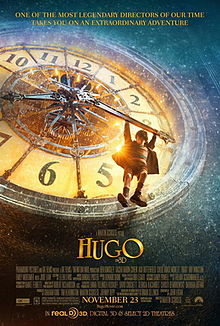
9.) Hugo (Martin Scorsese, 2011)
END.

If that’s not too much, you can then connect Hugo back to The Artist in the following way:
… Moretz, who’s in
9.) Hugo with Ben Kingsley, who’s in  
Sneakers (Phil Alden Robinson, 1992) with Robert Redford, who’s in
All the President’s Men (Alan J. Pakula, 1976) with Dustin Hoffman, who’s in
Rain Man (Barry Levinson, 1988) with Valeria Golino, who’s in
Cash (Eric Besnard, 2008) with Jean Dujardin, who’s in
1.) The Artist

For the record, I created this map without clicking through Internet Movie Database, although I must admit that I checked it once: to look at the names on the cast list of Hugo in order to find my way back to The Artist.

Addendum: Over a video chat with my sister, we were able to piece together a shortcut from Hugo to The Artist. While brainstorming an approach from the opposite direction, I thought of Missi Pyle and pictured her in Charlie and the Chocolate Factory, which my sister alerted me also features Christopher Lee, who’s in Hugo.

…. Moretz, who’s in
9.) Hugo with Christopher Lee, who’s in
Charlie and the Chocolate Factory (Tim Burton, 2005) with Missi Pyle, who’s in
The Artist

Jump Cut: Without a Shot in Hell

Having delivered my version of a yearly review of cinema in a not-so-timely fashion (I can link to it, for I own the copyrighted material), it’s now time to address the impending announcement of nominations for the 84th Annual Academy Awards. In years past, I offered predictions of the likely nominees in eight major categories and selected whom I “objectively” and personally favored to win. Unfortunately, for those of us who hate the idea of such awards but still watch the Oscars anyway (because of tradition and to be abreast of what’s happening in international film culture), the races in the major categories this season are so predictable. Even if Martin Scorsese scored an upset win for Best Director at the Golden Globes for Hugo (2011), we still know it’s between Alexander Payne’s The Descendants (2011) and Michel Hazanavicius’s The Artist (2011) when it comes to Best Picture. Moreover, Christopher Plummer and Octavia Spencer have emerged as the ones to beat in the Best Supporting Actor and Actress competitions for their performances in, respectively, Beginners (Mike Mills, 2011) and The Help (Tate Taylor, 2011). This sounds so boring you may as well not tune in, right?

So instead of predicting who will get nominated and who among those nominees will probably take home the gong, I’ve decided to do something different this year: below, I (attempt to) make cases for dark horses in various categories, some of which even I am surprised I have an opinion about. It’s my way of both commending film artists and craftspeople and ripping the Academy a new one. Of course, I’ll have egg on my face if any of the following are actually nominated in the attendant categories. Let’s get to it!

Best Original Score: Last year, Trent Reznor and Atticus Ross’s win for The Social Network (David Fincher, 2010) apparently signaled the Academy’s acceptance of electronic scores. Although the Nine Inch Nails duo are likely to be nominated again this year for Fincher’s newest effort, The Girl with the Dragon Tattoo (2011), I would rather see a spot open up for the heart-pumping and energized score that the Chemical Brothers supplied for Hanna (Joe Wright, 2011). A creepy fairytale-like theme recurs throughout, at times picked up by the menacing assassin Isaacs (played by the great Tom Hollander), who gleefully whistles the tune so as to taunt our fierce heroine (Saoirse Ronan) and us, the audience. Moreover, Wright, perhaps owing to his background in staging ecstatic rave parties, marries the Brothers’ dizzying electronic score to the seizure-inducing sequence in which Hanna breaks out of a US military-owned facility, finding her way along the labyrinthine concrete underworld of air shafts and secret passageways. We’re with her in this frantic moment, mostly thanks to the pulse-pounding beats, which push her out of there and throughout the globe-trotting film.

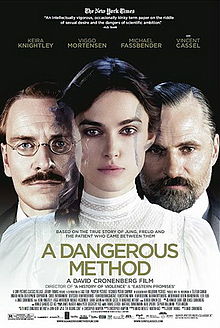
Best Actress in a Supporting Role: Despite the esteem of all three lead performers in David Cronenberg’s newest exploration of our taboo sexual desires, it’s not difficult to single out Keira Knightley in A Dangerous Method (2011). Funnily enough, it has nothing to do with those much-talked about tricks she can pull off with her jaw. As a young, intelligent woman labeled a hysteric in Dr. Carl Jung’s (Michael Fassbender) care at the turn of the twentieth century in Zurich, Knightley kinda goes ugly, and we know how much Academy voters love “ugly” performances (see Charlize Theron in Patty Jenkins’s Monster [2003], Nicole Kidman in Stephen Daldry’s The Hours [2002], and even Halle Berry in Marc Forster’s Monster’s Ball [2001]). But that’s not why she deserves this notice. For me, Knightley made the film, for without her no-holds-barred performance, how could we have been interested in the dry philosophical and academic debates about sexuality and morality between Jung and his mentor Sigmund Freud (embodied by an always interesting Viggo Mortensen)? Knightley imbues her Russian Jewish expat Sabina Spielrein, the crux of the men’s conversations and eventual falling out, with a voracious appetite for provocative ideas and erotic pleasures; it’s no wonder the young and confused doctor, Jung, falls so dangerously for her. It’s a pleasure to watch all three actors–but especially Knightley–engage the heady material of early psychoanalysis with such passion and conviction no matter how much what they say sounds like bullshit today.

Best Actor in a Supporting Role: Jason Reitman’s Young Adult (2011) is a rather bitter pill to swallow, especially for Academy voters, I suspect. It’s not a particularly edgy film, but it is an edgy film to be pushed so flagrantly for Oscar (as it’s been reported that Reitman pushed back the releases of the trailer and the film itself so that it wouldn’t peak too early in the Oscar race, just as his Up in the Air had apparently done in 2009). But enough about Reitman. And rather than choose Andy Serkis for the dark horse in this category as others have probably done (his motion-capture performance as Caesar in Rise of the Planet of the Apes [Rupert Wyatt, 2011] is actually a leading role and the subject of an article yet to come), I choose Patton Oswalt. As Matt Freehauf, Oswalt is heartbreaking, even if his visible disability, his mangled leg due to being the victim of a homophobic hate crime in high school, doubles as Mavis Gary’s (Charlize Theron) invisible disfigurement and ultimately unites these two outcasts from opposite ends of the social spectrum in high school. (That’s a nice way of saying she’s a self-centered, emotionally damaged bitch to his embittered and vulnerable geek.) And it’s just that vulnerability and bitterness that Oswalt imbues in his character that makes him stand out.

Best Actress in a Leading Role: Is Bridesmaids (Paul Feig, 2011) an ensemble or not? This has long been debated, with those who say so quoting the plurality of the title as well as the incisive portrait of competition among two of the eponymous wedding party members. But then there are still others who decry the emphasis placed on Annie’s (Kristen Wiig) miserable lot in life, citing that same pluralism of the title as misleading. Even so, during this awards season, only Melissa McCarthy of the ensemble has picked up any Oscar buzz, for her portrayal of the singular lady Megan, even going so far as to ride the ecstatic raves wave all the way to winning an Emmy for her titular turn on the critically derided Mike and Molly sitcom. No matter how crowd-pleasing McCarthy is as the confident, uncouth, and cuddly Megan, it’s still Kristen Wiig’s show. The Academy in the past has bestowed this accolade on women in comedic roles, but Wiig’s performance walks a fine line between comedy and tragedy. As Annie, a single thirtysomething who feels threatened that she’s losing her best friend since childhood, Lillian (Maya Rudolph), not only to a new husband but also to a new best friend (Rose Byrne, as Helen), Wiig makes us root for her even as we laugh at her. Wiig and her screenwriting partner Annie Mumolo may paint an incredibly pathetic portrait of the sometimes hard-to-love Annie, but I imagine that as we continue to discuss Bridesmaids, the representation of the film’s 30s-set womanhood might soon dominate the conversation. The self-consciousness, desperation, and low self-esteem of Bridesmaids‘ leading lady is so finely drawn and played that to ignore Wiig’s tour-de-force performance is to miss out on one of the film’s greatest wonders. If I still haven’t convinced you to take a closer look at Wiig, recall the wordless scene in which she bakes a single, lavishly embellished cupcake, contemplates it, and then devours it.

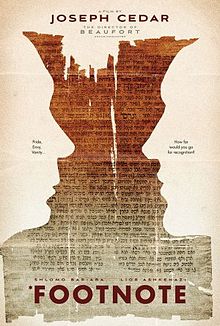
Best Original Screenplay: I’m not going to complain when Woody Allen is the top contender in this category, for I thoroughly enjoyed his Midnight in Paris (2011) and its sharp and funny script. Still, I can take comfort from the fact that, in an alternate universe, Joseph Cedar is nominated and wins for his original screenplay for Footnote (2011), repeating his Cannes 2011 victory. Although it hasn’t been released in theaters yet, I saw this Israeli film at the New York Film Festival. It’s a mixture of genres: melodrama, comedy, thriller. It’s about the professional and personal rivalries between two Talmudic scholars–father Eliezer (Shlomo Bar-Aba) and son Uriel (Lior Ashkenazi). Footnote delivered on film critic and now assistant NYFF programmer Scott Foundas’s promise to us in the audience: it is the most thrilling picture about the dry, academic world of Talmudic scholarship. It’s fast, wordy, smart, and funny. To say any more might ruin the somewhat surprising aural and visual pleasures afforded to the spectator of this great film, which is appropriately universal in theme and scope but myopic in subject matter.

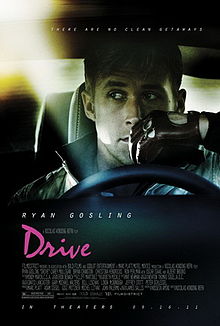
Best Director: It’s a shame that the only major notice that Drive (Nicholas Winding Refn, 2011) is likely to receive is for Albert Brooks’s deservedly praised portrayal of a heavy, Bernie Rose, in the Best Actor in a Supporting Role competition. Especially since we know that he will lose (to the very fine Christopher Plummer from Beginners). I would like to see Refn, like Footnote‘s writer-director Cedar, repeat his Cannes 2011 glory–not only by being nominated for Best Director but also by winning the award. Drive may have divided critics and audiences, but its deconstruction of the action film and the genre’s dualism between violence and humanity, winningly set to the alluring hues and sounds reminiscent of similar works from the 1980s, was so assuredly choreographed. Drive is a bold statement and one of the most cinephilic offerings of the year in a year teeming with them (see Hugo, The Artist, and Steven Spielberg’s War Horse [2011] as examples).

Best Actor in a Leading Role & Best Picture: At this moment, I don’t have any ideas for dark horses in the Best Actor in a Leading Role or Best Picture races. It’s between George Clooney (in The Descendants) and Jean Dujardin (in The Artist) in the former category, and if the Golden Globes are anything to go by, the films they represent will also duke it out in the Best Picture competition. The juggernaut that is The Help won’t win Best Picture and can only realistically expect Octavia Spencer to take home the trophy for Best Actress in a Supporting Role. In any case, I have no real beef with the likely contenders for Best Actor. Clooney and Dujardin are probably going to be joined by Brad Pitt from Moneyball (Bennett Miller, 2011), Leonardo DiCaprio from J. Edgar (Clint Eastwood, 2011), and Michael Fassbenderfrom Shame (Steve McQueen, 2011), who all delivered Oscar-worthy turns. It doesn’t matter to me who wins (although I would rather see Pitt win than Dujardin), but it would be cool to see the dark horse among these five, Fassbender, lead the pack for his near wordless performance as a sex addict in an all-around intriguing and challenging film.

Predicting the nominees–and therefore the dark horses–of the expanded Best Picture category is a bit more difficult. All I will say is that it would be cool to see Drive added to the list, even though I don’t think it was the best picture of the year. In fact, I couldn’t identify one.

Now, I’m going to hope against hope that these actors, writers, directors, and composers wake up on Tuesday to hear their names announced as nominees. I doubt any will be chosen, but I’ll tune in anyway to watch the Oscar telecast, sick of the whole thing and dutifully filling out the ballot as each winner is proclaimed.