Long Take: John Carter, Stuck on Mars & in the Past

Viewed June 15 & 16, 2012

Unless you live on Jupiter, you already know that Walt Disney Studios’s $200+ million gamble on animator Andrew Stanton’s first live-action feature, John Carter (2012), proved disastrous. That’s putting it mildly. The filmmakers infamously bet that an aging “built-in” fan-base for author Edgar Rice Burroughs’s rollicking sci-fi adventures set on the Red Planet, having first been published approximately one hundred years ago, would flock to the theater, bring their children and in some cases their grandchildren, and opt for tickets to see the picture in 3D. Since Vulture’s Claude Brodesser-Akner has already done all the research and spoken to the right folks, I’m not going to recount how the studio’s marketing decisions “doomed” the film right out of the gate. John Carter may be destined to be remembered for costing studio chairman Rich Ross his job, but I like to think of it as an ultra-expensive exercise in needless film-making. In other words, Disney will probably think twice before handing its keys over, again, to a fanboy director who’s adapting an obscure source. Here’s another friendly warning: even if you have never seen the film, I am going to spoil it down below.

Based on the initial novel in the series, A Princess of Mars, the heavily CGI’d spectacle chronicles the Martian adventures of John Carter (Taylor Kitsch), a Confederate cavalryman-turned-aspiring treasure hunter. Through a chance encounter with a “thern,” he comes into the possession of a medallion that accidentally transports him to Mars, which the natives refer to as “Barsoom.” He’s arrived at the worst possible time (or is it the best?) because the warrior class of Barsoomians from Zodanga (headed by Dominic West as Sab Than) mean to rage war against all others on the planet, especially the peaceful science-enthused city of Helium. It’s obvious that the disaffected Civil War veteran has embarked on a journey that will make it impossible for him to stay neutral. In the end, he manages to unite the Helium kingdom with the green, giant, and clan-like Tharks (who had initially imprisoned him) against Sab Than. Oh, and he marries the Helium princess Dejah Thoris (Lynn Collins), too.

Co-writer/director Andrew Stanton mentions on the behind-the-scenes documentary included on the DVD that the hardest part about adapting the story was condensing into a two-hour-long film a narrative that had previously unspoiled over the course of several novels. This is a fundamental mistake, because the greatest challenge is presenting John Carter of Mars, as it was initially known, as fresh, original. That same documentary captures the observations of writers, scientists, and other filmmakers, as they talk about how Burroughs’s novels are foundational texts within the sci-fi fantasy genre, having influenced the likes of Ray Bradbury, Carl Sagan, and perhaps most noticeably George Lucas. I am no Star Wars fan (I was as a kid), and I have never read a Superman comic or seen any of the property’s cinematic iterations, but I have consumed enough popular American culture to know that John Carter the film is wholly unoriginal. It has really shitty visual effects, too.

From the outset, it hit me that John Carter is a blend of multiple genres, the sci-fi fantasy and the western being the most prominent. Aside from the scrummages across the desert-like surface of Barsoom, John also faces dust-ups with Apaches and the Union Army before his defection to the fourth planet from the sun; the latter had unsuccessfully attempted to enlist him, given his excellent skills as a cavalryman. There is also a fair amount of romance, what with his partnership with the runaway Dejah Thoris, a sword-wielding scientist. It was most striking to see the costumes of the Red People of Barsoom (those of Zodanga and Helium alike), because the actors look as if they just walked off a sword-and-sandal picture, or in the very least Starz’s Spartacus sex and death series. Finally, John Carter morphs into a war movie for the last act, when John convinces the Tharks to join him on his counterattack mission to Helium, which is about to be invaded Trojan-style. What’s worse is that John gives a rousing speech to potential Thark recruits covered in blue goo, the innards of a beast he had just slaughtered, thereby intentionally resembling Mel Gibson’s anachronistic William Wallace from Braveheart (Gibson, 1995). Talk about a beast that just won’t die.

Despite these stylistic references, John Carter definitely reminded me more of other recent live-action Disney adventure movies, such as the National Treasure films (Jon Turteltaub, 2004 & 2007), The Sorcerer’s Apprentice (Turteltaub again, 2010), and especially the box-office dud Prince of Persia: The Sands of Time (Mike Newell, 2010). Like National Treasure and its more ridiculous sequel, there is a treasure-hunting element to John Carter, which is framed by a subplot involving John’s nephew, conveniently named Edgar Rice Burroughs (Daryl Sabara), reading about his uncle’s secret Barsoomian adventures in his diary. Compared to Prince of Persia, John Carter also emphasizes fate/destiny in the story and is set in a similar landscape. It’s another planet, sure, but there’s a lot of sand.

More compelling, however, is the observation that the film is another example of contemporary pop culture’s fascination with romanticizing the Confederacy, which isn’t just a dangerous practice but possibly also a morally reprehensible one. In this way, John Carter joins the ranks of the runaway successes True Blood (2008-present) on HBO, the History Channel’s Hatfields & McCoys (Kevin Reynolds, 2012), AMC’s Hell on Wheels (2012-present), and even Anthony Minghella’s Cold Mountain (2003) Oscar bait, among others. Maybe I am being too hard on these products since the Civil War ended 147 years ago, but anything that sugar-coats this horrific period of American history, especially when it comes to slavery, necessitates a wider perspective. In John Carter, we get the sense that he is a reluctant war hero, a rebel within an organized rebellion, who stands for nothing but having the freedom to do whatever he wants. That just happens to be gold-digging, of the literal kind. The Union Army, while doubtless infallible, is presented as a band of coercers and torturers (they killed his wife and daughter during the war). In this sense, his rugged individualism is portrayed as expressions of political revolution, grief, and capitalism, thereby romanticizing his character as fundamentally American. Even in this day and age, I recognize no part of myself in John Carter.

Like Prometheus (Ridley Scott, 2012), John Carter leaves a lot to be desired when it comes to story, and there are many plot holes, such as how the earthling can breathe on the planet. Another element that is never explained is John’s ability to bound along the surface of Barsoom, eventually scaling impossibly tall heights, from the ground to floating warships and back again. This skill, if you will, though it is more an innate ability, certainly saves his life a number of times and ultimately empowers him to save all of Barsoom. It is what convinces the Thark chief Tars Tarkas (voiced by Willem Dafoe) to spare his life, even after having taken him prisoner. But on a more basic level, it’s clear that this “gift” likens him to Superman, and therefore in 2012, his prowess seems unimaginative to the common spectator.

How is it that there are two kinds of Martians Barsoomians, the human-like personages from Zodanga and Helium as well as the fifteen-foot-tall Tharks, who each sport four arms (and are thus computer-generated)? How did these different beings evolve? Although the Tharks more closely resemble the American Indians of the southwest, given the foreign language they speak, identification with living off the land, domestication of horse-like creatures, and complex cosmology, those from Zodanga and Helium are called “the red people.” It is a descriptive term, since their skin is incredibly tan and covered in tribal tattoos scribbled in red paint. In this way, the filmmakers have divorced the derogatory connotation from the history books on relations between colonists and Native Americans, which is disrespectful in its revisionism. I can’t recall whether or not Tharks ever have epithets wielded at them.

Burroughs probably wrote the story so that the peoples of Helium and Zodanga anatomically resemble humans on Earth, but I couldn’t help thinking how different watching the film would be if John had fallen in love with a princess of a demonstratively different race. In this post-Avatar age, it is easier than it has ever been for audiences to accept a romance between an earthling and a more exotic-looking being. Then again, my more progressive ideas on love and relationships are too out-there. After all, Jake Sully (Sam Worthington) chooses to inhabit his avatar forever so that he may live as a Na’vi and continue to romance Zoe Saldana’s Neytiri in Avatar (James Cameron, 2009), thereby adopting the host culture completely.

Returning to mapping the major plot holes of John Carter, it is important to point out how the mystical energy source that Matai Shang (Mark Strong) bestows upon Sab Than presents its own set of unanswered questions. As a thern, or an angel-like being in the service of the Goddess Issus, Matai Shang ensures that everything in space and time goes according to plan. He’s a lot like John Slattery or Anthony Mackie in The Adjustment Bureau (George Nolfi, 2011), only he is one bad dude. I wonder, then, is Matai Shang’s gift to Sab Than all part of Issus’s plan for Barsoom? If that is the case, then that makes the Goddess malevolent, especially toward the devout Tharks.

It’s also worth mentioning that Dejah Thoris, the princess from Helium, was on the verge of presenting to the science academy a device she had developed that created a synthetic form of the same energy source Sab Than abuses. (The filmmakers give the energy source a name, but I don’t remember it, and it’s not in my notes.) Her father, Tardos Mors (Ciaran Hinds), reluctantly arranges the marriage between Dejah and Sab Than in order to protect his kingdom. Dejah secretly runs away, looking for help, and happens upon John when he is in mid-air. Dejah reveals herself to be not just beautiful, smart, and disobedient; she is also skilled in the art of battle, kind of like Princess Leia. Sound familiar?

Anyway, part of Dejah’s narrative arc involves an existential crisis. As a scientist, she is skeptical of Issus’s existence, but when she accompanies John into a temple that harnesses the mystical energy source located on a sacred a river (a setting that recalls ancient Egyptian mythology as well as ancient Anatolian geography), she recognizes Issus exists. She also acknowledges that therns, of which she originally thought John was one, are real and use Issus’s power. Unfortunately, like Dr. Elizabeth Shaw’s in Prometheus, Dejah’s crisis of faith isn’t resolved; while she no longer denies Issus’s existence or writes off Tharks’ religious beliefs as legend, she does not convert. But this may be the case because she mostly throws her weight behind John, the embodiment of free will, who trumps the fate or destiny that Matai Shang seeks to carry out. This begs another question: is Issus, then, a benevolent goddess after all, if she foresaw that John would be the key to foiling Matai Shang’s destructive plot?

John Carter is overlong and rather boring. Despite its fantastical and mysterious aspects, it has no sense of levity and is completely humorless. As I previously mentioned, the expensive special effects are the opposite of spectacular, blending poorly with the live-action elements. The wooden acting from leads Taylor Kitsch and Lynn Collins only exacerbates this problem.

By way of conclusion, I’d like to discuss two more issues: the floating cities and the banths. In a nutshell, they represent what’s alternately intriguing and irrelevant about Burroughs’s vision today. First, John Carter’s opening looked promising, introducing the notion of floating cities on Mars so as to portray the planet’s cultures as diametrically opposed to those on Earth. Owing to my older sister’s professional interest in the history of the built environment, I am something of an amateur enthusiast when it comes to the design of cities. Unfortunately, the filmmakers don’t explore the implications of a floating city, particularly in terms of identity, industry, and war. I haven’t seen any of the Star Wars films in well over a decade, but I believe the metaphor that a spaceship is representative of a whole society is embedded in the story of the dueling Death Star and the Millennium Falcon.

Second, sometimes the banths, which are giant creatures that resemble the abominable snowman from Monsters, Inc. (Peter Docter, 2001) with a very bad case of the rabies, are unimaginatively called “white apes.” When you finally see an example, you understand that not only is everyone from Tars Tarkas to Dejah Thoris dead wrong when they call John a “white ape” (for they can’t possibly know that humans are descended from apes), you also realize that Burroughs, in his finite creativity, couldn’t come up with a better linguistic alternative, relying too heavily on what we know from the human, earthbound experience of the animal kingdom. Taken together, the floating cities and the banths demonstrate the limits of John Carter as a film, unable to recognize the opportunity to say something interesting about what it means to be human.

Long Take: Storytelling Fails to Evolve in Prometheus

Viewed June 12, 2012

It’s almost July. That means Marvel’s The Avengers (Joss Whedon, 2012) more than adequately kicked off the summer blockbuster season, as everyone expected it to, and spectators have the final chapter of Christopher Nolan’s Batman trilogy, The Dark Knight Rises (2012), to look forward to when it hits theaters in just a few weeks. But this also means that Prometheus (2012), director Ridley Scott’s first foray into sci-fi territory since 1982’s Blade Runner and one of the most hotly anticipated movies of the summer, has already come and gone. In IMAX 3D, no less. If you haven’t seen it at a theater by now, you’re probably not going to.

As a new convert to Blade Runner fanaticism, I couldn’t wait to see Prometheus, because it has been characterized as sophisticated hardcore sci-fi for months leading up to its release. Unfortunately, I didn’t re-watch any of the four films from the Alien franchise, including Scott’s inaugural one of the same name (1979). Whether or not Prometheus is intended as a prequel to Alien has been hotly debated. As far as I know right now, Scott has reasserted that it is a prequel, after having denied this for some time while the film was in post-production, I believe. Apparently, it now barely shares its “DNA” with the series. Having seen the picture, that’s a hard argument to make. I suppose this is as good a place as any to warn: yes, there be spoilers ahead!

Prometheus is set in 2093 on the eponymous spaceship that is jetting a crew of 17 to the moon of a distant planet. They’re journeying to another solar system, all because Dr. Elizabeth Shaw (Noomi Rapace, in her first lead role in the English-language) and her boyfriend, Dr. Charlie Holloway (Logan Marshall-Green, who bears more than a passing resemblance to the busy actor Tom Hardy), believe that humans’ “makers” come from this corner of the universe.

The scene that establishes these characters, particularly their motivations and methodology, is severely problematic. After all, it is the whole movie that is premised on the following discovery: after having found a thousands-of-years-old cave drawing somewhere on the Isle of Skye that features a celestial leitmotif, which occurs across other ancient civilizations, Dr. Shaw, a devout Christian, is convinced that humans’ ancient alien ancestors painted them. Her reasoning is crazier than and distinct from that of any wacko on the History Channel’s Ancient Aliens series who might suggest that aliens came from outer space and built, say, the Great Pyramids of Egypt. The human-like figures in the drawings represent those who made contact with these ancient alien beings that Shaw and her fellow crew members insist on calling their “makers.” Big mistake. The “makers” are not even depicted; a cluster of heavenly bodies in the upper-left-hand corner of each image that Shaw documents stands in for the aliens. I’m sure that no archaeological society would accept such proof of their existence, so screenwriters Jon Spaihts and Damon Lindelof would have done well to try for at least some professional plausibility. Of course, no one would interpret what Shaw has found as an “invitation” to those stars (her oft-repeated words) in order to find some ancient aliens. Instead, if Shaw and Holloway had found physical instruments made of a foreign material in the cave, then that would have been something. Some crew members don’t even buy the archaeological discovery that the film story is predicated on; they come to resent that they have risked their reputations–not to mention, their lives–to go on this mission based on a hunch. Oops!

After all, the crew has spent two years in cryogenic deep sleep to get to this faraway post. Along the way, a robot named David (Michael Fassbender) has steered the spacecraft on-course, filling the hours by performing regular maintenance, deconstructing ancient alien languages, and watching and re-watching Lawrence of Arabia (David Lean, 1962).

In fact, for an intellectual yet insentient being, David sure does know how to model himself after someone–and not even a “real” someone he knows from personal experience. He isn’t so much captivated by the true historical figure T.E. Lawrence as he is by Peter O’Toole, in his portrayal of the man. David regularly quotes the movie hero’s lines, but he also bleaches or dyes his roots so as to more closely resemble O’Toole’s impression. (It’s unclear what his cosmetic intentions are: it looks as if he is bleaching his roots, but throughout the rest of the film, they are dark. I have interpreted this to mean that, in an effort to be more human than human, David wants to keep up the appearance of having lightened his hair color like so many people do.) But inserting Lawrence of Arabia into the story is an obvious reference. For the irony must not be lost on David that he, like T.E. Lawrence, is playing the part of mediator between rivaling civilizations. It is significant that he chooses to model his behavior (especially his physicality) based on an actor’s portrayal of a real person, thereby blurring the line between fact and fiction when it comes to historical interpretation.

You might even say that casting Fassbender as David deliberately draws attention to the parallels between his celebrity and that of O’Toole. They have more in common than simply being from Ireland. Although Lawrence of Arabia was not the young O’Toole’s first big screen performance, it is what unequivocally made him a big star. And while Fassbender’s part as David is nowhere near as grandly important (despite Scott’s best efforts, such as shooting with 3D cameras, Prometheus doesn’t measure up to the flat yet deep scale of Lean’s earlier 70mm work), many are wondering whether this role will finally catapult him to superstardom.

I have another gripe about this vision of the not-too-distant future: the gender disparity aboard the Prometheus. Of the 17 stated team members, only three are women: Shaw, the commander Meredith Vickers (Charlize Theron), and Dr. Ford (Kate Dickie), whose scientific occupation is so ill-defined that she mainly just appears to be a lackey first for Shaw and later for David and his schemes. (More on that in a bit.) That’s just about 18% of the crew’s population. In almost one hundred years, you mean to tell me that we still won’t have balanced this out? Sure, Shaw is arguably the main character in this ensemble, and Vickers is ostensibly in control while on this mission funded by the Weyland Corporation. In this way, they have inherited the DNA of Ellen Ripley (memorably portrayed by Sigourney Weaver), but it’s not enough. Especially since the two of them pale in comparison to Ripley, vis-a-vis feminist icons in cinema history.

Vickers is presented as a cold, ruthless bitch. She wears her golden hair in a severe ponytail tied down at the nape of her neck. She is on a constant power kick, either wrestling control away from Shaw, whose scientific theories after all are guiding the mission to investigate life on this moon, or going tete-a-tete with David, who is secretive and seems to have his own agenda. (He does.) The charismatic southern captain, Janek (Idris Elba), manages to flirt his way into her pants skin-tight jumpsuit by just suggesting that she needs a lay. Further down the road, once Shaw’s Charlie becomes ill from being infected by an alien specimen (thank you, David!), she is hellbent on torching him so as to stop the spread of infection. This may–and should–be considered good managerial skills, but Shaw’s loss is nonetheless devastating. To add insult to injury, when Vickers scrambles to eject herself from the mission toward the end of the film, after they’ve encountered hostile alien lifeforms that threaten to destroy Earth (more on that later), the commander suffers the iniquity of meeting death by being flattened by a runaway spacecraft part, if my memory serves me right. Ouch.

As for Shaw, I’m not sure what to make of her. She’s a mixture of various contradictions. It doesn’t make sense that an empiricist looking for the beings from which humans are descended (in other words, an evolutionist, albeit of an inter-universal kind) would be a devout believer in god. I know, I know, she’s just meant to be a substitute for the conflicted rationalist in the audience. What’s worse, though, is that Spaihts and Lindelof dumb down Shaw’s crisis of faith, hinging it all on her spiritual talisman: her late, beloved father’s necklace which bears a cross. When team members confront her naivete (the geologist Fifield, embodied with a little punk attitude by Sean Harris, calls her a “fuckin’ zealot”), she never has much of a reply. She’s just so wishy-washy. Which is why I think her attachment to the cross is more sentimental than religious.

Prometheus, while it has so much potential, really is a flawed thing. Crucially, its heroine is so poorly conceived that even through the so-called development of her character, the film falls apart. It gets a lot wrong.

The confusion of science and religion that the film projects through Shaw is its ultimate undoing, and this is further borne out in her choice of words. Once they have surveyed a cavernous depot on the moon where they see signs of life and have extracted what turns out to be the decapitated head of a human-like alien, to take back to the ship and to run tests, Shaw, with Ford and David’s assistance, discovers that the alien’s genetic makeup matches that of humans. (Right…) In any case, within the diegesis of the film, the appropriate response should be that the subject who partially lays on her examination table is an “ancient genetic ancestor” to humans. Instead, Shaw goes around pronouncing him (the being looks male, but of course, who really knows?) her “maker.” Since god historically has been called the maker of life, her diction is misleading. “He” didn’t make her. She is evolved from him. Big difference.

After this, events transpire in which David, on his own secret mission into the heart of the cave, unearths compelling evidence that suggests these beings are “engineers,” astronauts/soldiers whose own mission thousands and thousands of years ago was to explore various reaches of the universe. He hides the fact from his human colleagues that he has found a deep-sleeping engineer in the cockpit of the spaceship (for it’s not a cavern, after all) and reports back to the Prometheus’s hideaway passenger: capitalist and too-good-to-be-true benefactor Peter Weyland (Guy Pearce in horrific old, old-age makeup), whom everyone else thinks died while they were traveling.

When it comes to light that Weyland has been stowed away this whole time, he makes it very clear that this endeavor was always meant to find a “fountain of youth” (my words). His reason for wanting to meet his “maker,” as Shaw puts it, is undoubtedly to extract genetic material or the like in order to perform experiments that would empower him to elongate life on Earth. He wants to play god, which he already does as David’s creator and master.

Here’s another tangent: you might think Weyland would name his “son” Adam, but I think “David” connotes Michelangelo’s ode to perfection, that gargantuan statue preserved in Florence with the same name. According to the Trivia page for Prometheus at the Internet Movie Database, David’s name simply follows a pattern coursing through the Alien films. He marches in the footsteps of the alphabetically ordered androids Ash (Ian Holm in Alien), Bishop (Lance Henriksen in Aliens and as Bishop II in Alien3), and Call (Winona Ryder in Alien: Resurrection). I like my explanation better.

But we mustn’t forget that Weyland has also created life in a more traditional, biological sense. Vickers, we learn toward the end, is his skeptical daughter who literally commandeered the ship in order to challenge his authority, which, of course he undermined anyway. Her rebellion is almost as tense as the replicant Roy Batty’s (Rutger Hauer) uprising against and eventual murdering of his maker/father/god Dr. Eldon Tyrell (Joe Turkel) in Blade Runner, which is a far superior film. But the filmmakers on Prometheus never go far with this, though it is easy to read the tension between Vickers and David as a kind of sibling rivalry.

David, the good servant that he is, leads Weyland, Ford, and even a sick Shaw (more on that below) down to wake up the lone engineer. Unsurprisingly, Shaw continues to misinterpret the signs. Still believing that this engineer represents her “maker” by virtue of sharing his genes (rather than just an ancient genetic ancestor), she is convinced that he is dead-set on decamping his military installation on this moon because he aims to destroy his creation, the humans (presumably alongside other lifeforms) on Earth. At this point while watching the film, I just wanted to shake Shaw’s shoulders and scream at her, “Do you understand evolution at all?!” How can she not see that the engineer is essentially pre-programmed to fulfill this long-delayed mission? It’s impersonal, because he did not create humans.

Besides, who’s to say that he is even supposed to blow up Earth? Because he rips David’s head and shoulders off his frame, knocks Weyland and Ford dead, and later chases after Shaw, all the way to the commander’s self-contained module? (It fell to the ground when Vickers failed to take off.) Couldn’t it be that he was scared, and that David’s translation services did absolutely nothing to explain who these strange creatures were, standing in his spaceship, and what they wanted of him? They are, after all, on his territory, so it follows that he would act defensively.

Prometheus is largely focalized through Shaw’s experience, and nowhere does that become more immersive for the audience than when she climbs into a surgery pod to initiate a mechanical Cesarean just a smidge earlier in the film than the climax I have deconstructed above. But how did she get there? The short answer is because Scott felt the need to top the iconic scene in Alien wherein an alien bursts through John Hurt’s chest. And boy did he ever! The longer answer goes as follows: as I mentioned before in an aside, David, in doing his bidding for Weyland, infects Shaw’s lover, Dr. Holloway, with some alien organism. The parasite nuzzles into its host, who’s unaware of his changing status and has sex with Shaw in celebration of her genetic “maker” find. He also fucks her because she’s depressed that she cannot “make” life herself. Just wait!

Later, after Vickers scorches Holloway, someone sedates the hysterical Shaw, and when she comes to, she learns that she is pregnant. While not exactly an immaculate conception, her pregnancy nevertheless presents its own challenges. Which leads to her racing into the pod–and to attendant  squirming in auditorium seats at the film screening. How Shaw managed to survive uninfected, what with the alien baby bursting through the amniotic sac, leaking fluids onto her sliced open abdomen, is a mystery to me. This scene gives new meaning to the words deus ex machina: her infertility and improbable pregnancy is so conveniently tacked on that its conclusion must be an act of god. Perversely, when she emerges from the pod and encounters David and Weyland in the hallway on their way to wake Sleeping Beauty, no one seems to bat an eyelash once he realizes what she’s been through. I bet Weyland had David infect Holloway in anticipation that the lovers would have sex and solve her infertility problem. This way, he could at least run tests on her (surviving) alien baby.

Speaking of alien babies, perhaps now is a good time to discuss the design of Prometheus‘s marquee monsters. Her newborn (or is it “eewborn”?) hardly resembles John Hurt’s “offspring” in Alien. It’s more like a squid. But when we glimpse it again, after it’s rapidly matured, it recalls a flesh-toned octopus. Only it has more tentacles. And on its underside, to complement these overtly phallic appendages, it has slits that at once look inspired by the venus fly traps and the vagina (dentata). In fact, its vagina-like hole ingests its prey, not too dissimilar from the fully evolved creature at the end of The Thing (Matthijs van Heijningen, Jr., 2011). Eventually, the awakened engineer, in pursuit of Shaw, meets his end within her grown baby’s clutches. Death by sex. And their union produces a curious hybrid, which emerges during the last moments of the film looking a helluva like the aliens we recognize from the franchise. I don’t remember any of the Alien films aside from the aforementioned chest-explosion scene and Ripley’s “Get away from her, you bitch!” Weren’t there also clones, in at least some of the pictures? Are aliens partially descended from humans in the other films? ‘Cuz this alien stranded on the moon is only twice removed from humans!

Despite all of these obstacles, Shaw defies expectations and manages to survive the mission and its catastrophic undoing. Once the engineer locked himself in his chair, at the helm of his archaic yet more technologically advanced spaceship, I assumed no one would leave the moon alive, including–or emphatically so–Shaw. Captain Janek, in his righteousness, sense of duty, and rationality, sacrifices himself and his navigation team, crashing into the engineer’s ship upon take-off. Unfortunately, Scott, Spaihts, and Lindelof don’t give Shaw as heroic an out. Instead, she teams up with the dismembered David, who has convinced her that he can help her get off the moon. Since he’s unable to feel disappointment–or even boredom–I have to wonder: where does he get his survivalist instinct from? In any case, this odd couple–to say the least–continues to search for her “maker,” meaning the genetic ancestor of the engineer and so on. She still hasn’t learned that simple biology lesson. Given how uncommitted the filmmakers are to thoughtfully engaging Shaw’s paradoxical beliefs in science and religion, I would argue that she is driven more by an empirical urge to answer a question that illuminates the purpose of life rather than by a spiritual quest to do the same. She is dead-set on figuring out why humans’ creators would make “us” only to destroy us.

The open-endedness of Prometheus obviously hints at the possibility of a sequel, but the haphazard writing that I have nitpicked here actually makes me think that the film would have been better as a television series or miniseries on a channel such as HBO. It would have allowed a steadier pace and the opportunity to delve deeper into the faux science as well as the various characters’ lives. Perhaps then they would not have been such lazy archetypes, and the robot could then have some competition for the title of the most complex and beguiling crew member. As an added bonus, maybe more time to explore this truly intriguing premise would also permit a clearer explanation of the prologue, in which an engineer purposefully ingests some organism that mutates his genes as he flings himself off a waterfall, contaminating the landscape below. Where is this place? Is it Earth? Is it meant to be Iceland, where indeed the filmmakers shot the scene’s aerial views, or the Isle of Skye, where we meet Shaw in the next shot? Or is it another planet? What is the prologue’s purpose other than to show the self-sacrifice and mutation of the engineer? If it is meant to explain the origin of (human) life, then that is unclear.

I’m apparently not the only one with questions. Critic David Edelstein of New York and his cohorts Kyle Buchanan and Amanda Dobbins over at Vulture have some questions, too, and they offer up theories different from those that I have posited in this piece, including the significance of what I have called the prologue.

Regarding the technical achievements of the film: the special effects are what you would expect of a film on this scale, with as much financial backing as Scott was able to obtain for his return to Alien specifically and sci-fi more generally. Unfortunately, I didn’t get much out of the 3D projection; its most spectacular use was during the prologue. But, man, do I want to go to Iceland.

Jump Cut: A Circuitous Route to Find the Best Picture

Image courtesy of Oscars.org

My father and I take 6-mile-long walks around the neighborhood several times a week. We’re out and about with the family dog Samson, a German Shepherd/Welsh Corgi hybrid (so cute, but he’s the star of his own story), for around 120 minutes at a time. That’s a lot of time to contemplate what’s for dinner, life in the universe(s), and cinema history.

Today, we did something we’ve never done before: we played a version of the once-popular party game Six Degrees of Kevin Bacon. I argued that it’s not worthwhile using Bacon anymore because really anyone is just as possible–if not more relevant. To support this idea, I boasted about how I amused several friends at the dining hall one night back in college with my skills in connecting Ewan McGregor to anyone and vice versa. Convinced, Dad indulged me with many challenges, some of which were easy (Marilyn Monroe and Elizabeth Taylor) and others which were not (Jill Clayburgh and Bette Davis). Once we’d had enough, I suggested we connect all of the films nominated for Best Picture at this Sunday’s Academy Awards. Admittedly, just remembering which movies were on the shortlist was difficult, especially since we didn’t have any pen or paper to jot the names down. Hell, choosing where to start wasn’t easy either, but I opted for the one with the smallest cast. My swirling thinking eventually gave Dad a headache, and just when I didn’t think I would solve the maze before we got home (I must have started about 25 to 30 minutes before the end of our walk), I made a breakthrough.

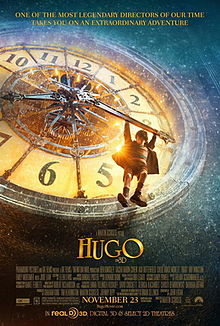
I had noticed that there are multiple actors who appear in at least two Best Picture nominees (I’m looking at you, Viola Davis, Jessica Chastain, and Brad Pitt), but in my pursuit of the trivial, I realized John Goodman and Tom Hiddleston of all people can make the same claim, too. Because of these circumstances, you might think that the map I’ve “drawn” below is rather easy. And it is. If anything, we might now ask ourselves what it means to have supposedly the best films of year littered with faces that pop up across the board. I should also state that I used rules of the game that allow play across performers and therefore prohibit connections through off-screen relationships or filmmaking roles other than acting (which means I couldn’t use Woody Allen’s directing Emily Mortimer in Match Point [2005] to connect Midnight in Paris to Hugo). And I sought to never repeat a name (hence the exclusion of Ocean’s Eleven [Steven Soderbergh, 2001] in the process of connecting Moneyball to The Descendants). Having said all this, I would be interested to hear suggestions for connecting Midnight in Paris and Hugo more economically than I have done.

Since I’m no graphic artist, I apologize that I couldn’t draw a flowchart that would make this more fun to read. But here goes:

BEGIN:
1.) The Artist (Michel Hazanavicius, 2011) with John Goodman, who’s in
2.) Extremely Loud & Incredibly Close (Stephen Daldry, 2011) with Viola Davis, who’s in
3.) The Help (Tate Taylor, 2011) with Jessica Chastain, who’s in
4.) The Tree of Life (Terrence Malick, 2011) with Brad Pitt, who’s in
5.) Moneyball (Bennett Miller, 2011) with Philip Seymour Hoffman, who’s in
The Ides of March (George Clooney, 2011) with George Clooney, who’s in
6.) The Descendants (Alexander Payne, 2011) with Matthew Lillard, who’s in
Hackers (Iain Softley, 1995) with Jonny Lee Miller, who’s in
Trainspotting (Danny Boyle, 1996) with Peter Mullan, who’s in
7.) War Horse (Steven Spielberg, 2011) with Tom Hiddleston, who’s in
8.) Midnight in Paris (Woody Allen, 2011) with Lea Seydoux, who’s in
Robin Hood (Ridley Scott, 2010) with Mark Strong, who’s in
Kick-Ass (Matthew Vaughn, 2010) with Chloe Grace Moretz, who’s in
9.) Hugo (Martin Scorsese, 2011)
END.

If that’s not too much, you can then connect Hugo back to The Artist in the following way:
… Moretz, who’s in
9.) Hugo with Ben Kingsley, who’s in  
Sneakers (Phil Alden Robinson, 1992) with Robert Redford, who’s in
All the President’s Men (Alan J. Pakula, 1976) with Dustin Hoffman, who’s in
Rain Man (Barry Levinson, 1988) with Valeria Golino, who’s in
Cash (Eric Besnard, 2008) with Jean Dujardin, who’s in
1.) The Artist

For the record, I created this map without clicking through Internet Movie Database, although I must admit that I checked it once: to look at the names on the cast list of Hugo in order to find my way back to The Artist.

Addendum: Over a video chat with my sister, we were able to piece together a shortcut from Hugo to The Artist. While brainstorming an approach from the opposite direction, I thought of Missi Pyle and pictured her in Charlie and the Chocolate Factory, which my sister alerted me also features Christopher Lee, who’s in Hugo.

…. Moretz, who’s in
9.) Hugo with Christopher Lee, who’s in
Charlie and the Chocolate Factory (Tim Burton, 2005) with Missi Pyle, who’s in
The Artist

Jump Cut: Without a Shot in Hell

Having delivered my version of a yearly review of cinema in a not-so-timely fashion (I can link to it, for I own the copyrighted material), it’s now time to address the impending announcement of nominations for the 84th Annual Academy Awards. In years past, I offered predictions of the likely nominees in eight major categories and selected whom I “objectively” and personally favored to win. Unfortunately, for those of us who hate the idea of such awards but still watch the Oscars anyway (because of tradition and to be abreast of what’s happening in international film culture), the races in the major categories this season are so predictable. Even if Martin Scorsese scored an upset win for Best Director at the Golden Globes for Hugo (2011), we still know it’s between Alexander Payne’s The Descendants (2011) and Michel Hazanavicius’s The Artist (2011) when it comes to Best Picture. Moreover, Christopher Plummer and Octavia Spencer have emerged as the ones to beat in the Best Supporting Actor and Actress competitions for their performances in, respectively, Beginners (Mike Mills, 2011) and The Help (Tate Taylor, 2011). This sounds so boring you may as well not tune in, right?

So instead of predicting who will get nominated and who among those nominees will probably take home the gong, I’ve decided to do something different this year: below, I (attempt to) make cases for dark horses in various categories, some of which even I am surprised I have an opinion about. It’s my way of both commending film artists and craftspeople and ripping the Academy a new one. Of course, I’ll have egg on my face if any of the following are actually nominated in the attendant categories. Let’s get to it!

Best Original Score: Last year, Trent Reznor and Atticus Ross’s win for The Social Network (David Fincher, 2010) apparently signaled the Academy’s acceptance of electronic scores. Although the Nine Inch Nails duo are likely to be nominated again this year for Fincher’s newest effort, The Girl with the Dragon Tattoo (2011), I would rather see a spot open up for the heart-pumping and energized score that the Chemical Brothers supplied for Hanna (Joe Wright, 2011). A creepy fairytale-like theme recurs throughout, at times picked up by the menacing assassin Isaacs (played by the great Tom Hollander), who gleefully whistles the tune so as to taunt our fierce heroine (Saoirse Ronan) and us, the audience. Moreover, Wright, perhaps owing to his background in staging ecstatic rave parties, marries the Brothers’ dizzying electronic score to the seizure-inducing sequence in which Hanna breaks out of a US military-owned facility, finding her way along the labyrinthine concrete underworld of air shafts and secret passageways. We’re with her in this frantic moment, mostly thanks to the pulse-pounding beats, which push her out of there and throughout the globe-trotting film.

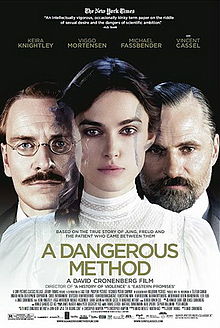
Best Actress in a Supporting Role: Despite the esteem of all three lead performers in David Cronenberg’s newest exploration of our taboo sexual desires, it’s not difficult to single out Keira Knightley in A Dangerous Method (2011). Funnily enough, it has nothing to do with those much-talked about tricks she can pull off with her jaw. As a young, intelligent woman labeled a hysteric in Dr. Carl Jung’s (Michael Fassbender) care at the turn of the twentieth century in Zurich, Knightley kinda goes ugly, and we know how much Academy voters love “ugly” performances (see Charlize Theron in Patty Jenkins’s Monster [2003], Nicole Kidman in Stephen Daldry’s The Hours [2002], and even Halle Berry in Marc Forster’s Monster’s Ball [2001]). But that’s not why she deserves this notice. For me, Knightley made the film, for without her no-holds-barred performance, how could we have been interested in the dry philosophical and academic debates about sexuality and morality between Jung and his mentor Sigmund Freud (embodied by an always interesting Viggo Mortensen)? Knightley imbues her Russian Jewish expat Sabina Spielrein, the crux of the men’s conversations and eventual falling out, with a voracious appetite for provocative ideas and erotic pleasures; it’s no wonder the young and confused doctor, Jung, falls so dangerously for her. It’s a pleasure to watch all three actors–but especially Knightley–engage the heady material of early psychoanalysis with such passion and conviction no matter how much what they say sounds like bullshit today.

Best Actor in a Supporting Role: Jason Reitman’s Young Adult (2011) is a rather bitter pill to swallow, especially for Academy voters, I suspect. It’s not a particularly edgy film, but it is an edgy film to be pushed so flagrantly for Oscar (as it’s been reported that Reitman pushed back the releases of the trailer and the film itself so that it wouldn’t peak too early in the Oscar race, just as his Up in the Air had apparently done in 2009). But enough about Reitman. And rather than choose Andy Serkis for the dark horse in this category as others have probably done (his motion-capture performance as Caesar in Rise of the Planet of the Apes [Rupert Wyatt, 2011] is actually a leading role and the subject of an article yet to come), I choose Patton Oswalt. As Matt Freehauf, Oswalt is heartbreaking, even if his visible disability, his mangled leg due to being the victim of a homophobic hate crime in high school, doubles as Mavis Gary’s (Charlize Theron) invisible disfigurement and ultimately unites these two outcasts from opposite ends of the social spectrum in high school. (That’s a nice way of saying she’s a self-centered, emotionally damaged bitch to his embittered and vulnerable geek.) And it’s just that vulnerability and bitterness that Oswalt imbues in his character that makes him stand out.

Best Actress in a Leading Role: Is Bridesmaids (Paul Feig, 2011) an ensemble or not? This has long been debated, with those who say so quoting the plurality of the title as well as the incisive portrait of competition among two of the eponymous wedding party members. But then there are still others who decry the emphasis placed on Annie’s (Kristen Wiig) miserable lot in life, citing that same pluralism of the title as misleading. Even so, during this awards season, only Melissa McCarthy of the ensemble has picked up any Oscar buzz, for her portrayal of the singular lady Megan, even going so far as to ride the ecstatic raves wave all the way to winning an Emmy for her titular turn on the critically derided Mike and Molly sitcom. No matter how crowd-pleasing McCarthy is as the confident, uncouth, and cuddly Megan, it’s still Kristen Wiig’s show. The Academy in the past has bestowed this accolade on women in comedic roles, but Wiig’s performance walks a fine line between comedy and tragedy. As Annie, a single thirtysomething who feels threatened that she’s losing her best friend since childhood, Lillian (Maya Rudolph), not only to a new husband but also to a new best friend (Rose Byrne, as Helen), Wiig makes us root for her even as we laugh at her. Wiig and her screenwriting partner Annie Mumolo may paint an incredibly pathetic portrait of the sometimes hard-to-love Annie, but I imagine that as we continue to discuss Bridesmaids, the representation of the film’s 30s-set womanhood might soon dominate the conversation. The self-consciousness, desperation, and low self-esteem of Bridesmaids‘ leading lady is so finely drawn and played that to ignore Wiig’s tour-de-force performance is to miss out on one of the film’s greatest wonders. If I still haven’t convinced you to take a closer look at Wiig, recall the wordless scene in which she bakes a single, lavishly embellished cupcake, contemplates it, and then devours it.

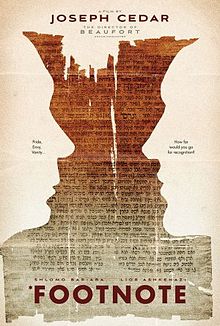
Best Original Screenplay: I’m not going to complain when Woody Allen is the top contender in this category, for I thoroughly enjoyed his Midnight in Paris (2011) and its sharp and funny script. Still, I can take comfort from the fact that, in an alternate universe, Joseph Cedar is nominated and wins for his original screenplay for Footnote (2011), repeating his Cannes 2011 victory. Although it hasn’t been released in theaters yet, I saw this Israeli film at the New York Film Festival. It’s a mixture of genres: melodrama, comedy, thriller. It’s about the professional and personal rivalries between two Talmudic scholars–father Eliezer (Shlomo Bar-Aba) and son Uriel (Lior Ashkenazi). Footnote delivered on film critic and now assistant NYFF programmer Scott Foundas’s promise to us in the audience: it is the most thrilling picture about the dry, academic world of Talmudic scholarship. It’s fast, wordy, smart, and funny. To say any more might ruin the somewhat surprising aural and visual pleasures afforded to the spectator of this great film, which is appropriately universal in theme and scope but myopic in subject matter.

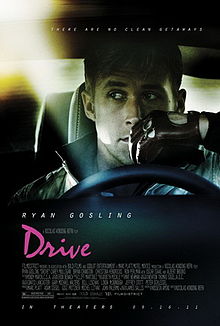
Best Director: It’s a shame that the only major notice that Drive (Nicholas Winding Refn, 2011) is likely to receive is for Albert Brooks’s deservedly praised portrayal of a heavy, Bernie Rose, in the Best Actor in a Supporting Role competition. Especially since we know that he will lose (to the very fine Christopher Plummer from Beginners). I would like to see Refn, like Footnote‘s writer-director Cedar, repeat his Cannes 2011 glory–not only by being nominated for Best Director but also by winning the award. Drive may have divided critics and audiences, but its deconstruction of the action film and the genre’s dualism between violence and humanity, winningly set to the alluring hues and sounds reminiscent of similar works from the 1980s, was so assuredly choreographed. Drive is a bold statement and one of the most cinephilic offerings of the year in a year teeming with them (see Hugo, The Artist, and Steven Spielberg’s War Horse [2011] as examples).

Best Actor in a Leading Role & Best Picture: At this moment, I don’t have any ideas for dark horses in the Best Actor in a Leading Role or Best Picture races. It’s between George Clooney (in The Descendants) and Jean Dujardin (in The Artist) in the former category, and if the Golden Globes are anything to go by, the films they represent will also duke it out in the Best Picture competition. The juggernaut that is The Help won’t win Best Picture and can only realistically expect Octavia Spencer to take home the trophy for Best Actress in a Supporting Role. In any case, I have no real beef with the likely contenders for Best Actor. Clooney and Dujardin are probably going to be joined by Brad Pitt from Moneyball (Bennett Miller, 2011), Leonardo DiCaprio from J. Edgar (Clint Eastwood, 2011), and Michael Fassbenderfrom Shame (Steve McQueen, 2011), who all delivered Oscar-worthy turns. It doesn’t matter to me who wins (although I would rather see Pitt win than Dujardin), but it would be cool to see the dark horse among these five, Fassbender, lead the pack for his near wordless performance as a sex addict in an all-around intriguing and challenging film.

Predicting the nominees–and therefore the dark horses–of the expanded Best Picture category is a bit more difficult. All I will say is that it would be cool to see Drive added to the list, even though I don’t think it was the best picture of the year. In fact, I couldn’t identify one.

Now, I’m going to hope against hope that these actors, writers, directors, and composers wake up on Tuesday to hear their names announced as nominees. I doubt any will be chosen, but I’ll tune in anyway to watch the Oscar telecast, sick of the whole thing and dutifully filling out the ballot as each winner is proclaimed.

Film in 2011: The Ones I Saw

The 69th Annual Golden Globes started ten minutes ago. I’m sure other movie sites are live-blogging the event, and I would never endeavor to do such a thing myself. (I’m not funny enough. Besides, those recaps are always more amusing to read after the fact.) Instead I thought I would take this opportunity to summarize how I experienced the year 2011 through film. I flipped through several volumes of my handwritten film journal and listed the names of all 110 films that I saw between January 1, 2011, and today. And those are just the movies that either premiered or came to theaters in the United States in 2011, regardless of their release date in their country of origin.

This isn’t a “best of 2011” list, and it’s definitely not ordered by what’s most and least favored. In fact, it was only after I listed the 110 titles that I was able to take stock of which 2011 releases I have seen and therefore evaluate them as a group. I have said for weeks that 2011 was a lackluster year for movies; nothing really impressed me and I’ve collected no new favorites for all-time. Whenever “year in review” articles come out, for the critics–and I’m generalizing here–it’s always about which movie-making trends dominated: comic book superheroes, blockbuster franchises, or 3D. They lament the dreadful state of movies and movie-making on all scales and in all styles, but I don’t want to blog about that. However, I will say this: even the “prestige” features that are rolled out in the autumn and are feted for Oscar left a lot to be desired for me. Am I being unfair, though? The movie year 2011 looked less than spectacular for me perhaps because I moved from New York City back home to suburban Washington, D.C., right in the middle of awards season. Without the earlier release dates and easy access to multiple cinemas–mainstream and arthouse alike–to which I’d grown accustomed in New York, I’ve had to either wait to see some movies or forfeit seeing them altogether. But I’m not making any excuses; after all, I started off very clearly stating that this post is about the movies I saw.

It may be too early to say, since the nominations for the Academy Awards have yet to be announced, but none of the ones most likely to be nominated knocked my socks off (and I’ve yet to see two big contenders, The Help [Tate Taylor, 2011] and Extremely Loud and Incredibly Close [Stephen Daldry, 2011]). That’s including The Artist (Michel Hazanavicius, 2011), which I’d been eagerly anticipating since its debut at Cannes. To be completely honest, none of the films on my list did anything that great art is supposed to do. My favorites of the year weren’t the most challenging, intellectually and emotionally stimulating, or poetic pictures I’ve ever seen.

So without much further ado, I give you some totally arbitrary observations of my movie-watching experiences in 2011 (note that each individual list descends in the chronological order that I viewed the features):

The movies I liked the most:
Mozart’s Sister (Rene Feret, 2010)
Hanna (Joe Wright, 2011)
Bridesmaids (Paul Feig, 2011)
Midnight in Paris (Woody Allen, 2011)–the only film I saw twice in the theater
Beginners (Mike Mills, 2010)
The Trip (Michael Winterbottom, 2010)–even if it is a condensed version of an older British TV show
(Foxy) Festival (Lee Hae-yeong, 2010)
Potiche (Francois Ozon, 2010)
Contagion (Steven Soderbergh, 2011)
Drive (Nicholas Winding Refn, 2011)
50/50 (Jonathan Levine, 2011)
Footnote (Joseph Cedar, 2011)
The Skin I Live In (Pedro Almodovar, 2011)
A Dangerous Method (David Cronenberg, 2011)
War Horse (Steven Spielberg, 2011)
Shame (Steve McQueen, 2011)
The Arbor (Clio Barnard, 2010)

The critical and/or commercial darlings I didn’t like at all:
Source Code (Duncan Jones, 2011)
Captain America: The First Avenger (Joe Johnston, 2011)
Sarah’s Key (Gilles Paquet-Brenner, 2010)
The Ides of March (George Clooney, 2011)
The Rum Diary (Bruce Robinson, 2011)–true, it was no one’s darling 
Coriolanus (Ralph Fiennes, 2011)

The most over-hyped:
Moneyball (Bennett Miller, 2011)–I did like it though
Hugo (Martin Scorsese, 2011)
The Muppets (James Bobin, 2011)
Terri (Azazel Jacobs, 2011)
Warrior (Gavin O’Connor, 2011)
The Artist–I didn’t like it enough to call it a favorite 
Margin Call (J.C. Chandor, 2011)

The ones I liked more than I was expecting I would:
Thor (Kenneth Branagh, 2011)
Rise of the Planet of the Apes (Rupert Wyatt, 2011)
Anonymous (Roland Emmerich, 2011)–I know, I know

The ones that disappointed:
Jane Eyre (Cary Fukunaga, 2011)–it’d have been a lot better if they’d included the deleted scenes that were made available on the DVD
Crazy, Stupid, Love. (Glenn Ficarra & John Requa, 2011)
Tinker Tailor Soldier Spy (Tomas Alfredson, 2011)

The ones that really weren’t as bad as the critics and audiences made them out to be:
Anonymous
J. Edgar (Clint Eastwood, 2011)
Larry Crowne (Tom Hanks, 2011)

Now, for the following, the title in bold denotes which of the random groups I liked more (or the most).

The two films that were the most overtly Spielbergian without being directed by Steven Spielberg in 2011: Paul (Greg Mottola, 2011) and Super 8 (J.J. Abrams, 2011)

The only prequels and sequel of blockbuster franchises I bothered to see: X-Men: First Class (Matthew Vaughn, 2011),  Rise of the Planet of the Apes, and Pirates of the Caribbean: On Stranger Tides (Rob Marshall, 2011), which, incidentally, is the worst 2011 film I saw

The romantic comedies about booty calls between friends: No Strings Attached (Ivan Reitman, 2011) and Friends with Benefits (Will Gluck, 2011)

The comedies about grown men who get on people’s nerves because their wanting to see the good in everyone is usually perceived as naivete: Arthur (Jason Winer, 2011) and Our Idiot Brother (Jesse Peretz, 2011)

I realize that it’s difficult to comprehend this experience without knowing the names of all 110 titles I saw from this year. I’m not about to list them here–this has gone on long enough–but to give you a better idea, here are some of the noteworthy movies I have yet to see:

The Iron Lady (Phyllida Law, 2011)
Albert Nobbs (Rodrigo Garcia, 2011)
The Girl with the Dragon Tattoo (David Fincher, 2011)
We Need to Talk About Kevin (Lynne Ramsay, 2011)
Carnage (Roman Polanski, 2011)
The Adventures of Tintin (Steven Spielberg, 2011)
A Separation (Asghar Farhadi, 2011)

Just before I hit the “publish” button, the Golden Globes telecast has ended. Besides Christopher Plummer winning for his supporting performance in Beginners and Woody Allen for Midnight in Paris‘s screenplay, there’s not much here for me to be excited about. So here’s to hoping 2012 is an infinitely better year for movies!

Once Were Little Women

It seems most appropriate to inaugurate this new blog about cinephilia–however misspelled–with a post about the first incidence of it in my life that I can recall. Now that I have cable, with premium movie channels that repeatedly air the film, I am constantly reminded of how big a role Little Women (Gillian Armstrong, 1994) played in my childhood and continues to inform me of who I am.

Before this adaptation of the classic Louisa May Alcott tale, which had been brought to screens of various sizes before, I was more or less a typical eight-year-old movie-watcher. Until the film came to home video after its December 1994 theatrical release, I didn’t pay attention to the conventions of opening and closing credit sequences or what the individual crew members’ contributions entailed. Perhaps it is because we rented the VHS almost on a weekly basis that I became familiar with the strange words “editor” and “director of photography,” and I began to seek out definitions. On a very basic level, I can recall how my relationship with Little Women educated me about the different practices that go into making a film.

We didn’t see Little Women in the theater. The reason is lost to history now. But how we responded to it in my house has taken on a sort of legendary status. Up until the night my sister and I watched the rented video separately and alone, we weren’t exactly the best of friends. We had shared a bedroom, but when we reached a certain age (she’s three and half years older), we decided to go our separate ways. Or maybe it was because she was entering middle school and more interested in playing with girlfriends than with her geeky, needy sister that we split up.

For whatever reason, we were on the outs the day we rented Little Women for the first time. Somehow, she was the first to see the new Winona Ryder movie. And I will never forget how she came into my room to watch my reaction–just as the romantic music swelled as Jo more or less proposed to the penniless German Professor Bhaer (Gabriel Byrne). I had been moved to tears; apparently something similar had happened during my sister’s viewing. We bonded over our shared love of this movie about the relationships between sisters, each with their own distinct personality. We each identified with Jo, the free-spirited, “wild,” proto-feminist and aspiring writer. Rather than turn possessive or territorial over claiming Jo as both our kindred spirit and role model, I think we each let the other embrace the character. For there’s no denying that she, as embodied by Ryder, is the best sister: she is the most intellectually curious, politically minded, and, as she herself says, “hopelessly flawed.” It was only more than ten years later, on viewing it alone for the first time in a long while (even after having seen it more than one hundred times), that I came to realize I am probably a lot more like Beth, portrayed in the film by a heart-breaking Claire Danes, than I originally thought. While I would never be content to stay at home or to go without taking a lover, I think her selfless devotion to her family is something to which I have tried–and often failed–to aspire.

Little Women is also special for my sister and me because we shared a teenybopper adoration for the young actor Christian Bale, who played the March family’s next-door neighbor Theodore “Laurie”/”Teddy” Lawrence. He is, on record, our first and only teen idol, and we weren’t even teens when we started fawning over him. We joined his fanclub (I’m sure I have the membership card and autographed portrait in a box somewhere), swooned over his commitment to the environment (he was a vegetarian in those days and an advocate for wildlife, particularly gorilla, conservation), and sought out every new film of his, even going so far as to leave the suburbs and head downtown to the nearest theater playing Todd Haynes’s Velvet Goldmine (1998). Our enthusiasm for Mr. Bale has faded tremendously; we both go through phases of finding him interesting (American Psycho [Mary Harron, 2000]) and ridiculous (Christopher Nolan’s rebooted Batman trilogy). The point is, we have moved on.

When I catch Little Women on cable these days, I can recite lines–nay, whole monologues–of dialogue along with the actors. Suddenly, my memory transports me to the time when my sister and I made a habit of studying scenes to act out for our own amusement. Our favorite cinematic moments to reconstruct were Jo’s refusal of Laurie’s marriage proposal and Laurie’s conversation with a grown-up Amy (Samantha Mathis) in Europe. In it, they discuss whether or not he can love her for her (and not her name and relations) and whether or not she can love anyone who isn’t rich (but he is, anyway). We must have switched roles from time to time, but I remember playing Laurie most of the time.

These scenes stood out for us not only because they’re dialogue-heavy but because they were the crux of what we thought was wrong with the story: that Jo and Laurie didn’t end up together. We regretted Jo’s decision to not marry Laurie, the sensitive and romantic boy who so clearly has been in love with his best friend for over four years. When she says to a man later on in New York that “I should have been a great many things,” we barked at the screen during every viewing the following bitter reminder: “Like Laurie’s wife!” As for the second scene, we just hated the idea that Laurie could be so desperate to be a member of the March family that he would pursue the vain and heartless Amy.

A couple years ago, I made a startling observation upon rewatching Little Women, one that completely changed my understanding of the film and my own outlook on life and love. Strangely, I accepted the story’s resolution: the couplings of Jo and Professor Bhaer and Laurie and Amy. I recognized that Bhaer was a better match for Jo. He has more common interests (as a philosophy professor), sees her as an equal, and, more importantly, he supports her writing career. Not only does he hand over her manuscripts to his editor and/or publisher friends, he challenges her to write from a more personal place. His lack of enthusiasm for her horror and fantasy stories may be one thing, but his prodding does unlock her stubbornness to write about what she knows (which eventually manifests in a set-to-be published novel based on her own life).

I also realized that it was necessary for Jo to turn Laurie down in the first place. The once romantic proposal scene reappeared to me years later as devoid of passion. And I know what explains this change in my perception: between these readings, I became an ardent feminist. Jo has never wanted to be married because she rightly sees it as undoing her independence as well as her desire to see and experience more of the world. (As a child in a Transcendentalist home, she has grown up with the worldview that one should strive to better herself.) Moreover, when Laurie argues that they should marry because he can financially take care of her and her family, that she won’t have to write unless she wants to, I can respond just as Jo does: appalled and defensive of her creative impulse for expression. How could she, after all, marry someone who doesn’t understand her and her desires, who wants her for selfish reasons? Of course, in the novel, Jo had already met and befriended Professor Bhaer by the time Laurie proposes, but since we’re talking about the filmic adaptation and my differing reactions to the central love stories, we must push that aside for now.

I think I even successfully convinced my sister that Jo’s ending up with Professor Bhaer is the better outcome because he would more likely be an equal partner, what with his taking on the position of teacher at the school Jo wishes to establish at the mansion that she inherits from her great aunt. Besides, as I said before, she essentially proposes to him in the rain, leaving him to come up with a response borne of incredulity: “But I have nothing to give you, my hands are empty.” To which she says, placing her hands in his, “Not empty now.” Laurie can have Amy, and Amy can have Laurie. He’s changed a lot since the reality check Jo provided him. Laurie and Amy, in their more superficial and materialistic posturing, deserve each other.

There’s a lot more to Little Women and me, but it’s not the only (long-running) episode of cinephilia I’ve ever had. Merely the first.